Now Available

My novel, Old Buildings in North Texas, is now available on Audible—or should that be in Audible? This doesn’t mean a lot to me, as I tend to read books rather than listen to them, but my husband, David, assures me that this is a good thing.

“The more avenues for selling, the better the exposure,” he tells me.

Well, there’s no arguing with that. He sits at his computer and explores the Audible website as I hover behind, impatient that I’ve been summoned from another part of the house to watch him slide his mouse around. 

Audible, it turns out, is an entity you have to join, which right away gets me ruffled because, as a general rule, I’m not a joiner.

“You pay a monthly fee,” David explains, “and you download the audio versions of whatever books are available in this format.”

He decides it’s great, pays up, and becomes an Audible member.

We only recently joined the Boat Club, and now he’s joined something else, which I think borders on making too many commitments. Is it wise to go around impulsively joining things? Must we now join a club for books being read to us instead of reading them for ourselves? What’s he going to join next?

“Will you have to swear an oath to be a member of this club?” Sometimes clubs make you recite promises you’ll never keep. I fear that it’ll be the Mother Candle initiation all over again. 

“It’s a book club. No oaths, no promises.”

“And with this monthly fee can you download as many books as you want?”

“Of course not. Then people would join for a single month and unload years’ worth of reading.”

“But it’s not really reading is it?”

“Let’s just see what happens.” He’s much better at “wait and see” than I am.

He calls up the sample of Old Buildings and we listen as a woman I don’t know reads the first few paragraphs. Her voice is of a similar pitch to mine, so it’s not jarring. Her pace is relaxed and even, though she lacks my Texas accent which, as some who’ve listened to the podcast available on my website know, either lends authenticity or, as others might say, is relentlessly distracting.

“Do you know anybody who listens to these Audible books?” I ask.

“I imagine lots of people, like commuters or painters.”

“Painters? What kind of painter—artistic or someone who paints your house?”

“Either one.”

And now I’m wondering about this person who narrates my book. I’ve been informed of her name, Sally Vahle, so I return to my own computer and look her up online. She was born in Minnesota, grew up in Wisconsin, has had small parts in a few movies I’ve seen, and is active in the theatre community in Dallas. I think she was a good choice. I hope she enjoyed my novel.

One advantage that’s clear is that, though Old Buildings in North Texas was published in the UK, on Audible it’s readily available in the US. Also, Audible has generously given me ten promo codes to use for publicity. As I did when Old Buildings was first published, I will happily give these promo codes to anyone who’s a member of Audible, or intends to join, in exchange for reviews on the Audible website.  
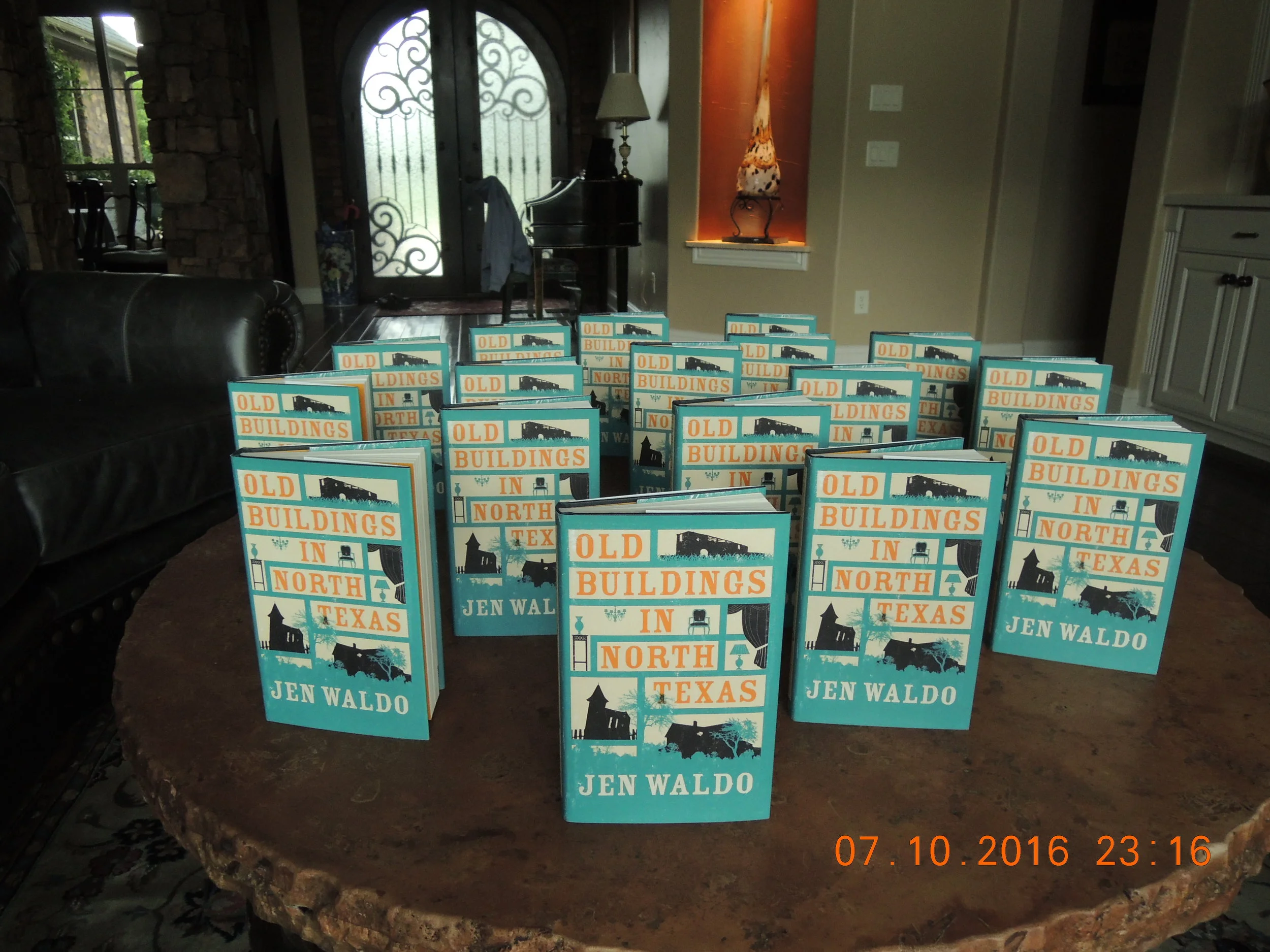
Here they come again! It's a pretty book, isn't it? If you haven't read it yet, here's an opportunity to get it from Audible Books. 
Here they come again! It's a pretty book, isn't it? If you haven't read it yet, here's an opportunity to get it from Audible Books. 
Minor Mysteries

We go to the grocery store. David is grilling steaks for dinner so, in addition to the steaks, we get a potato, mushrooms, and two artichokes. Also, we gather our regular supplies like milk, eggs, and a pack of sliced almonds. Though inefficient, one dinner at a time is the way I’ve always shopped. I have a freshness fetish. Sometimes, when I know I won’t have time to stop by the grocery store the next day, I’ll get two meals. Guests are always surprised when they see how empty our refrigerator is.

We pay, go to the car, and transfer our supplies to the trunk.

But when we get home, the steaks aren’t there.

“Did you throw them away?” David asks.

This is his standard response when something goes missing. Obsessive, I tend to be brutal when it comes to clutter. In Singapore, when David was setting up cable for the TV, I followed right behind him, gathering up the Styrofoam and the boxes, pushing them into the garbage chute as he emptied them. It ended up being a faulty cable box, which meant returning it. Already frustrated that he’d gone to all that trouble setting it up only to find that it didn’t work, David was none too pleased to discover that I’d thrown the packaging away.  

And clutter isn’t the only thing I’m compulsive about. I recently bought some socks that are labeled left and right, a distinction that carries no merit; yet if I put the left sock on the right foot, I take it off and switch it.

Back to the steaks.

“No, I didn’t throw them away.” But him asking makes me doubt myself. It’s true that I often do things I don’t see myself do. Maybe I tossed them in the garbage when I wasn’t looking. I dig through the kitchen trash, but the steaks aren’t there.

“Check the car,” I advise as I continue to put away the groceries.

He doesn’t come back for ten minutes; and when he does, he’s empty-handed and exasperated. Disbelieving that they’re not in the car, I go and check for myself. Yep, they’re not there.

“We must’ve left them at the checkout counter,” I tell him. “You’re going to have to return to the store.”

“Why do I have to go? You go.”

“Okay, we’ll both go.” As neither of us wants to go, this is the only fair solution.

So we drive back to the HEB. I drop David off at the front, planning to idle at a strategic point so that as soon as he comes out I can zip to the door and pick him up. After several minutes, I pull into a parking place, turn the car off, and get out to go see why it’s taking so long. Carrying a grocery bag, he exits as I reach the door.

“That took forever,” I say.

“They said there weren’t any steaks left at the checkout counter. I think the sacker took them.”

“She wouldn’t do that.”

“As she was bagging them she said they looked good. She was practically drooling.”

“You didn’t have to buy new steaks, did you?”

“No, but the people at the front didn’t know what to do and they didn't seem to believe me, so we had to wait for the store manager.” He releases a weary sigh before adding, “She told me to go get two more steaks.”

What happened to the first steaks? Did we leave them in the basket? Did we drop them in the parking lot when we were loading groceries into the car? We have no clue.

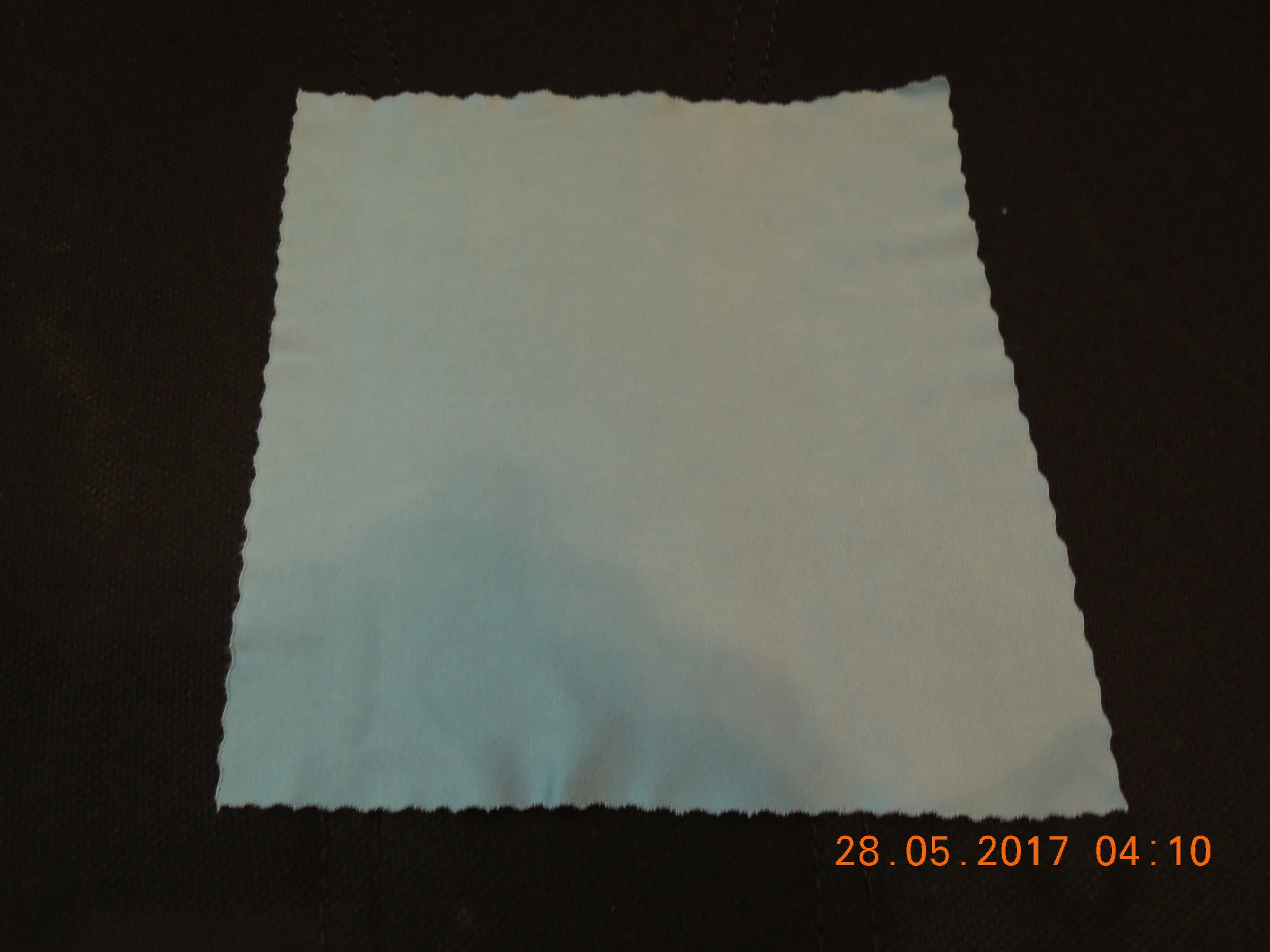
This isn’t the only baffling thing that’s happened lately. A couple of weeks ago I washed my glasses cleaning cloth. It went into the washing machine, but it never came out. I shook out all the clothing laundered with it, and I looked in the washer and the dryer, but it had disappeared. I know Wal-Mart has net bags for storing smaller items during the wash, but I never bothered to buy one. At this point, I anticipated that my washer would soon develop draining issues because of that little blue cloth.

Two weeks later, David brings it into the bedroom and places it on the dresser.

“You found my glasses cloth,” I say. “Where was it?”

“Out on the driveway,” he tells me.

“How did it get there?” This is bizarre. 

“I don’t know, but that’s where it was.”

Several years ago, during our neighborhood progressive Christmas dinner, some sneaky person tucked a wrapped gift for me under our tree. I opened it on Christmas morning to find that it was a set of my own keys, which I hadn’t seen in weeks. I never found out which neighbor held on to them for this specific purpose, though they must have found them hanging from my mailbox. And that’s what I suspect is going on with my cleaning cloth: someone in the cul-de-sac is messing with my mind. But that’s ridiculous. A neighbor didn’t come into my house, pluck an item from my washer, and two weeks later place it in my driveway.

“Oh,” I tell David. “It just hit me what must’ve happened to those steaks. They went home with the people who checked out after us.”

“The sacker took them.”

It bugs me that we’ll never know for sure. And it also bugs me that I had to relearn something, which is that I should take a quick scan of the counter to make sure I have every bag and item before leaving the store. 

It disappeared and reappeared.

It disappeared and reappeared.

A sock for my right foot only.  

A sock for my right foot only.  

The house looks pretty this time of year. David is a great gardener.  

The house looks pretty this time of year. David is a great gardener.  

Mother's Day

From the time they were babies I spoke to them as though they were adults. Weirdly, this led to them calling David and me by our first names, which drew odd looks from people who didn’t know us, and questions from people who did.

“We didn’t correct them when they didn’t call us Mom and Dad,” I’d explain, puzzled that it seemed to matter to others when it didn’t matter to us. “Curtis was born thinking he was an adult. He believes he has an equal voice in our family and we never gave him reason to believe otherwise. Then Sam came along and copied Curtis.”

Telling them about things like danger and manners on an adult level led them to have an ease with adult concepts at a young age and to approach social and scholastic situations from a mature perspective. Both of them could read, add, and subtract before they were in kindergarten. At ages seven and five, they sat still during church and understood doctrines and liturgies that I didn’t grasp until I was much older. And because I didn’t talk down to them, and I read good literature to them on a daily basis, their reading ability was more advanced than that of their classmates. Also, because we traveled to so many interesting locations and came in contact with different cultures, they approached new places and people with a confidence I never had as a child.

My behavior modification tools were bribery and distraction. I punished Curtis only once during his childhood; well, actually he was only three and I was having a bad day. Christmas was coming soon, which in itself causes tension, and Curtis was being annoying—I can’t remember in what way—and I wrote a note to Santa saying that Curtis was being bad and didn’t deserve any Christmas presents, and I stuck it on the refrigerator with a magnet. Oh, the look on Curtis’s face. Eyes filled with tears. Heartbroken. I was immediately filled with shame, took the note down, and apologized. All these years later I still feel awful about it.

Sam got punished twice—once when he was holding my hand and stepped into the street from between cars, which led to a slap on the bottom and a brief but passionate lecture about why I was holding his hand in the first place. And he was punished again when he was four and colored on a patch of wall in the upstairs hallway of our house outside London. Granted, I hadn’t ever told him not to, but he should have known better. I gave him a bucket of soapy water and a washcloth and told him to clean it up. Thirty minutes later when I returned to check on him, he was in tears because the crayon wasn’t coming off. I gave him a hug and called a painter.

That’s it. That’s as difficult as my two sons ever got.

Once the boys and I were having a playground adventure when we witnessed a mother going off on her kid, who was probably right between Curtis and Sam’s ages. So, let’s say five years old.

“Stupid boy!” she shouted. “You stupid, stupid child! Look what you’ve done!”

The three of us looked on. The boy hung his head while his mother grabbed him by the shoulder and shook him again and again, hollering into his face the whole time about how bad he was. Apparently he’d gotten a grass stain on his trousers.

I never, never would’ve spoken to one of my children that way. I never told them that they were anything but wonderful, and I never touched them with any feeling other than affection. When they witnessed this screeching woman, did they grasp how lucky they were to have me? I don’t know if they did, but I sure did.   

Though Curtis and Sam had different personalities, there was very little conflict. They seemed to like each other, though it would be naïve to think they got along all the time; in fact, Sam, as an adult, told me that during his childhood he occasionally felt bullied by Curtis. Honey, I thought when he told me this, you don’t know what being bullied is. My older sister and I fought constantly, roughly, violently. She once delivered a karate chop to my throat, which made me realize that she seriously wanted me dead. Hair-pulling, kicking, scratching, mostly hitting. Our parents didn’t have a clue. (Let me add, just in case I’ve ruffled feelings, that we were children and we grew out of it. We even like each other now.)

David and I enjoyed every minute with our kids. Being parents has been our most profound accomplishment. Things that I miss from when the boys were young:

Every day when Curtis got home from school, he would flop on the couch and tell me literally every detail about what happened from the first bell to the last. He did this from first grade all the way through high school, making time even after he got his driver’s license and joined the tennis team.

Sam was too busy to be as communicative as Curtis. He was social and every one of his days was packed with friends and projects. From a young age he possessed impressive insight; and as early as when he was in first grade, he was the one I turned to when I had a problem understanding someone else’s point of view, or when I needed advice about how to handle a tricky situation.

We’re proud of the men our boys have become.

Curtis, a lawyer, recently married another lawyer, a complex woman with a sense of humor that perfectly complements his. We see them often and are happy to have them near so we can enjoy boating on the lake with them or sharing the occasional meal.  Curtis does a good job of keeping in touch, and though we’re in Marble Falls and he’s in Houston, we know what's going on with him most days.

Sam is in Beijing, building his own company, Mantra. Ambitious, dedicated, and still using his gift of perception as he navigates his way through the business world, he was recently featured in China’s GQ magazine and was interviewed in Mandarin on the Chinese Voice of America. So that’s cool.

Happy Mother’s Day!

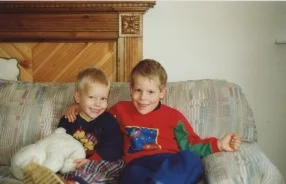
They were always happy!

They were always happy!

At the Robin Hood Statue in Nottingham

At the Robin Hood Statue in Nottingham

They loved Thundercats.

They loved Thundercats.

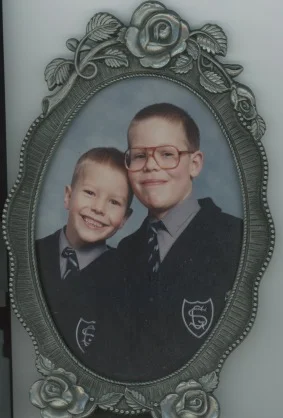
In their school uniforms in the UK.

In their school uniforms in the UK.

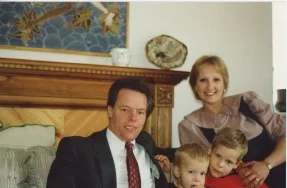
David worked hard at being a dad. He was a baseball coach, a basketball coach, a scout leader, and he led a youth Bible study. 

David worked hard at being a dad. He was a baseball coach, a basketball coach, a scout leader, and he led a youth Bible study. 

This was taken at a celebration at a castle in Holland. 

This was taken at a celebration at a castle in Holland. 

On our way to church. 

On our way to church.