Busy Saturday

On David’s birthday I awaken with a mild cold. Also disappointing, there’s no dead mouse in the mousetrap on the counter of my bathroom. I’ve set a trap for three nights straight and somehow the mouse nabs the bait without triggering the spring. And then he taunts me by leaving his tiny turds next to the place where I brush my teeth. My present to David is a piece of coconut cream pie from The Bluebonnet Café.

About having a cold: I got it at Mahjong. For some reason my fellow Mahjongers don’t clean their tiles. Teresa and I are the only ones who do. In close quarters around the table, women stuff food into their mouths and lick their fingers. Then they touch the tiles. Or they release a wet sneeze into their hands, apologize for it, and then touch the tiles. I’m going to start carrying hand sterilizer, which I should have done years ago. Any thoughts as to how I can tactfully change the way these women do things?

Today’s not just David’s birthday; it’s the annual HOA meeting. This event takes place outdoors, in the pavilion at Capstone Ranch’s private park. It’s been lovely and warm this week, but today it’s chilly, not even sixty degrees, with a stiff wind pushing at us from the north. After only a few minutes, we are all freezing with our teeth-chattering, unable to think of anything except our warm homes on the other side of County Road 401.

We’re called to order by Bryan Teeple, the owner/developer of Capstone. To my amusement, this meeting proceeds along the same lines as the last two. One of our neighbors brings up the rumor that an apartment complex is going in on the other side of the creek, and how intrusive this’ll be so near our little cul-de-sac; and pretty soon everybody’s grumbling fearfully about something that probably won’t ever happen. Then someone else brings up the matter of the deed restrictions and the fact that there are no punitive measures in place for people who break the rules; never mind that at this time all restrictions are being adhered to.  

“Is it fair that I follow the rules and someone else doesn’t?” a man asks.

“There are supposed to be fines,” another person reminds Bryan. “But you don’t enforce them.”

“Why do we have restrictions if it doesn’t matter if they’re followed or not?”

Bryan reminds us of God’s grace and how we should show others the same tolerance God shows us. This doesn’t have the palliative effect he desires, but seems to further incite the few people who’ve raised the issue; though, and I’ll say it again, there are no current infractions. I’m with Bryan on the tolerance issue; sometimes people need a little extra time to get things done. Though I think it was a mistake to bring God into it. This is an HOA meeting, not a church.  

A new topic has been introduced. It seems that at our last meeting the yearly dues were raised by a hundred dollars in order to pay for repaving, with the promise that the dues would go back down this year. But Bryan proposes that we keep the dues at the higher rate. He doesn’t meet our eyes as he makes the suggestion; and when asked why he wants to keep them elevated, he rambles about how something bad might happen and we might need money quickly.

“He’s come with an agenda,” I whisper to David.

David nods in agreement. 

“Can you give us an example of why we would need this quick money?” This from a woman sitting toward the front. It’s a relevant question. All possible needs are covered in the budget.

Bryan tries to think of an answer, but can produce nothing satisfactory.

“I, for one, would prefer to have my hundred dollars,” a man across the pavilion says.         

We all agree that we want to stick to the original plan, sending Bryan into panicked incoherence as he scrambles to find himself more votes. He counts the proxies that have been given to him by people who could not attend. And he counts the number of lots his company owns; but many lots have sold recently, which has taken his power away. No longer in the majority, he cannot override. 

Next he shares a weird metaphor about how easy it is to break one toothpick (demonstrates by breaking) and how hard it is to break many toothpicks (demonstrates by not being able to break).

Meanwhile, confused eyes meet. It’s beginning to look like Bryan’s going to keep us here until he gets his way. For a property developer, a hundred dollars is a puny amount, so why does this matter? Then he attempts to explain the toothpick metaphor.

“What I’m saying is, if we stick together as a community, we’re stronger than if we try to go it alone.”

“Then you got what you wanted,” David says, losing patience in his frozen state. “We’re strong, we’re united, and we want don’t want to pay that extra hundred dollars.” He doesn’t say what we’re all thinking—that Bryan is the lone toothpick. 

At this point the meeting has dragged on for almost two hours. My cold that was no more than a sore throat this morning has, in the cold wind, become a nasty entity, making my sinuses and eyes swell, filling the back of my throat with clumpy foul-tasting mucus.

Saying our good-byes, we are the first to leave. We stop by the house to exchange our inadequate jackets for heavy coats, and head to a country wedding at our friends’ Ranchita.

Getting married are Tom and Gitta (Pronounced Geeta, hard g).  Involved in Habitat for Humanity, regular patrons of the local microbrewery, the Double Horn, and having been involved in fun runs and community events for years, this couple is well known and well liked in Marble Falls. Several hundred people have shown up on their hilltop to celebrate.

This, too, is an outdoor venue, windy and cold, which does not bode well for my health.

Slated to start at two, the wedding is pushed back to three. The alcohol is flowing, so no one minds the delay. And this isn’t the kind of event where people are shy or standoffish. Everybody’s happy to see everybody, even people they don’t know. Various societal groups are represented—teens, gays, artists and musicians, businessmen—but the largest population is made up of old hippies, gray men with ponytails and hairy faces, and their brass-haired wives in colorful polyester.

When Tom and Gitte center themselves beneath the arch, everyone bumps and pushes to get close enough to hear. At the back of the crowd people clamber on to the picnic tables. Phones are aimed. It is a lovely ceremony, presided over by one of their friends. After they both say “I do”, everybody cheers.  Tom and Gitte are giddy. This is a day they’ve been looking forward to for a long time. The onlookers slowly disperse as we all make our way to the side porch of the barn, where barbeque has been dished up in massive amounts. David and I eat, hang around, have wedding cake, talk and mill for a couple of more hours. Around five, I admit to David that I’m wiped out.

We say our good-byes and I realize, as I hug Gitte and tell her how much we enjoyed ourselves and how happy we are for them, that here I am, hugging this woman, this friend, who was probably healthy until I came along. I’ve done the same thing to her that I was griping about my Mahjong friends doing.

I’m sorry! Forgive me, Gitte! I got caught up in the moment.

By the time we get home I’ve got chills and I’m completely stopped up. My ears, too, are plugged with mucus. And I want to cry out every time I swallow. Sudafed keeps me awake, so my choice is between breathing and sleeping. I choose to breath, and it’s the worst night I’ve had in years.
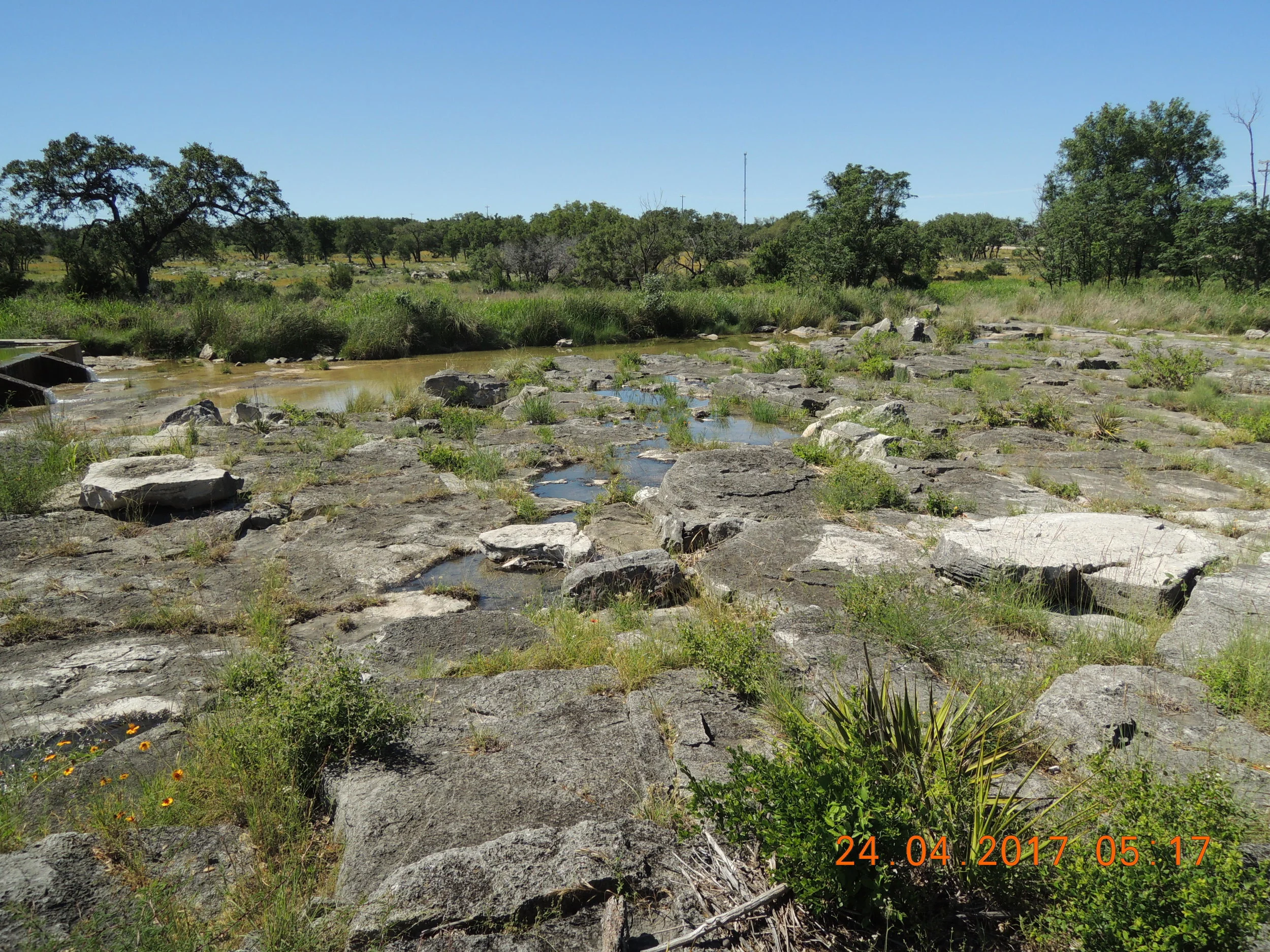


The neighbors have been going on about someone building an apartment complex on the other side of this little creek for years. Let's hope it doesn't happen
The neighbors have been going on about someone building an apartment complex on the other side of this little creek for years. Let's hope it doesn't happen

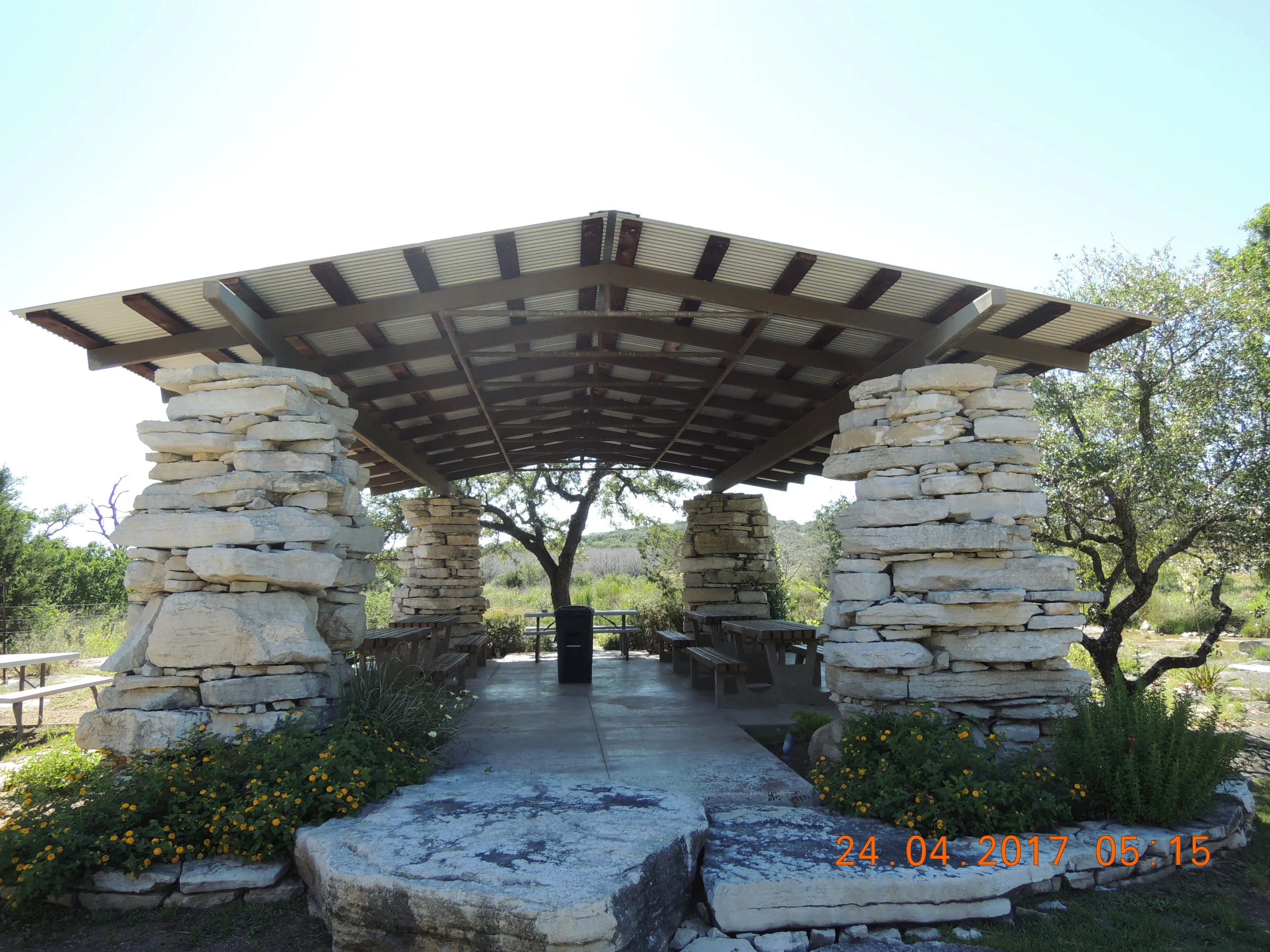
The pavilion. Colder than it looks. 

The pavilion. Colder than it looks. 

They look so happy. 

They look so happy. 

Happening in Marble Falls

A new Chic Filet will be opening soon, just across the way from where we take our recycling. There’s a sign out front that says they’re now accepting applications. Speaking of recycling, what would be helpful is if one of the benefits of our thriving economy was recycling pick-up, rather than us having to load the truck, drive there, and stuff our paper, plastic, and aluminum in overflowing dumpsters. Emphatic signage posted beside the dumpsters says that they don’t accept glass; illegal dumping isn’t allowed; and that the place is under surveillance.  So don’t dump your bedbug-infested mattress here because you’ll get caught for sure. 

The no glass policy irks. I understand that the inevitability of scattered shards makes glass collection imprudent, but it’s not complete recycling if glass is excluded.  Having grown accustomed to recycling glass in Houston, this parochial policy so disturbs David that he’s unable to drop his bottles in the kitchen trash container, but leaves them on the counter for me to take care of, the presumption being that I’m made of tougher stuff.

The new Bealls (pronounced bells) has recently opened. For those who don’t know, Bealls is a department store along the lines of a Target (or, for my British friends, a Marks & Spencer), but with narrower aisles; and it’s more humble in size and stock. It does have a couple of cosmetic counters, so I can purchase my Clinique without going all the way to Bee Cave. The old Bealls across the street is going to be torn down to make room for the new and much grander HEB (the dominating grocery chain in Texas), the notion of which has everyone in the area thrilled. By the way, does anyone know what the initials stand for? I sure don’t.

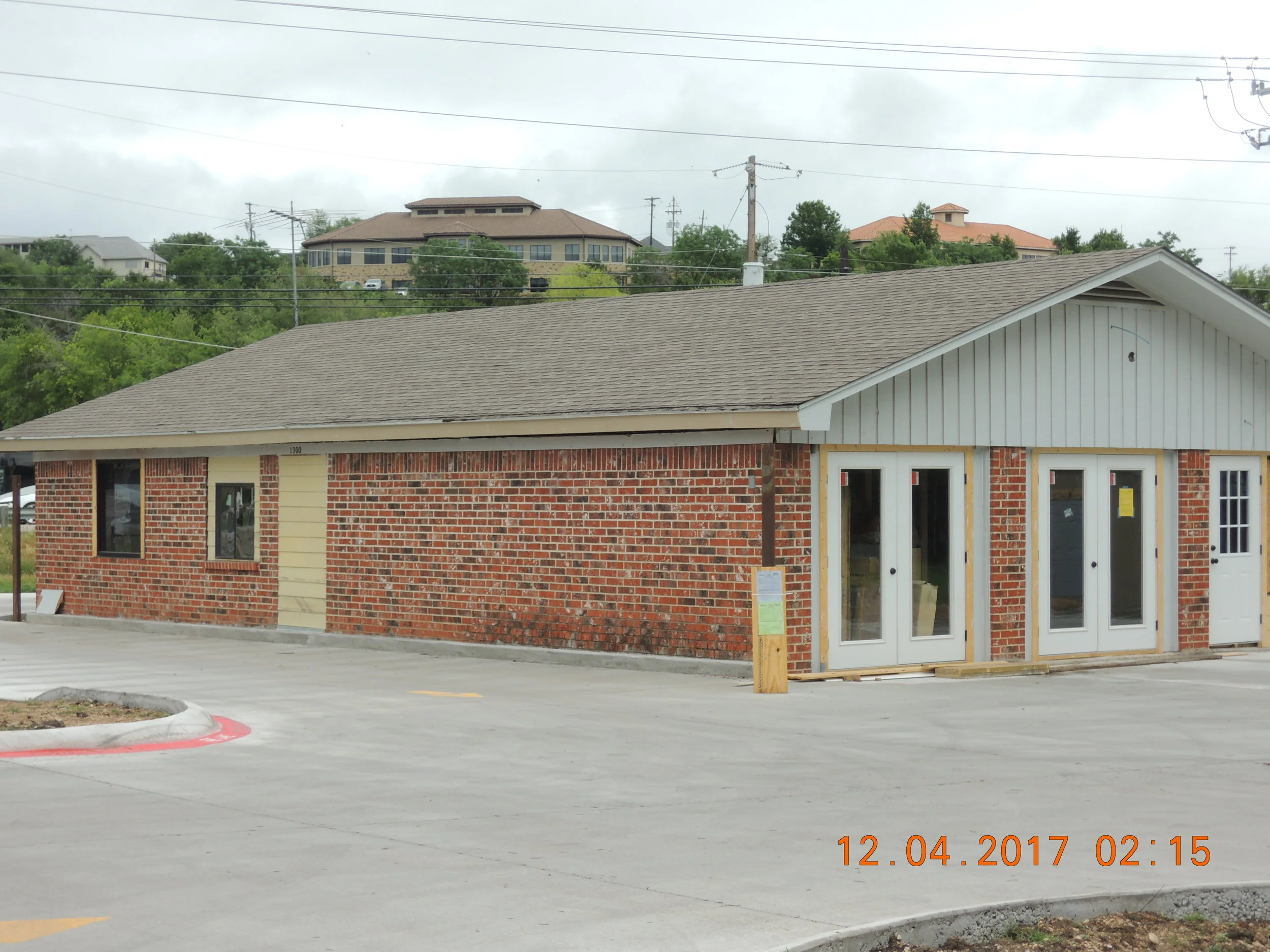
Also, a new coffee place will open soon; though with several buildings standing empty, the question as to why the owner decided to buy land and pay for construction is a puzzler. Why not occupy the empty restaurant by the Home Depot, or the one just beyond the Bluebonnet that’s been for sale ever since we moved here two years ago? But this new business, too, has the citizens of Marble Falls buzzing. It doesn’t take a lot to get a town full of retirees excited, and it’s always nice to have a new place to go.

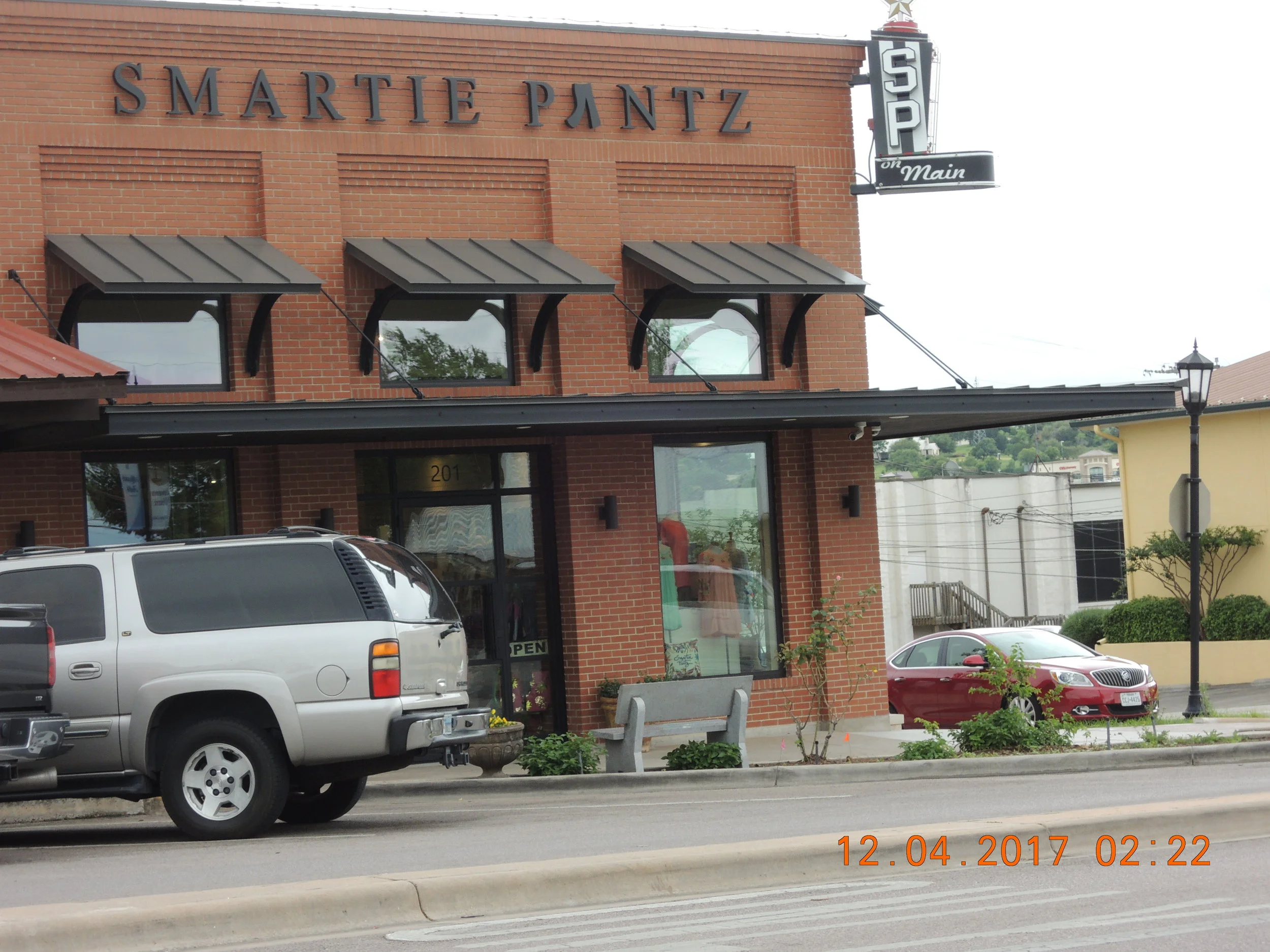
Changes on Main Street tell us that some people are making money. The Italian restaurant, Fornos, moved to a marina on Lake LBJ, a lovely location overlooking a cove across from the Wirtz Dam; but sadly, since the move, the food seems to have gone down in quality, though the service is as good as ever and the view from the outdoor patio is pleasant. In the space it vacated on Main, months of renovations fascinated us all. The building went from being a drab corner to being a charming one, with awnings and good-sized windows displaying clothes for women and children that are lovely, but pricey. I find the name, Smarty Pantz, off-putting, though perhaps there’s an interesting story behind it. The two times I’ve been in there I’ve been the only customer.

On the other hand, one of our favorite local businesses has recently closed—Enjoy Massage.  Apparently a couple of teenaged boys enjoyed their massages a little too much. You’d think masseuses in this straight-laced part of the world would know better. I’m going to miss my weekly reflexology. 

I bet not.

I bet not.

The owner of this shop spent a massive fortune on renovations that took several months.  

The owner of this shop spent a massive fortune on renovations that took several months.  

The new coffee place, not quite finished. 

The new coffee place, not quite finished. 

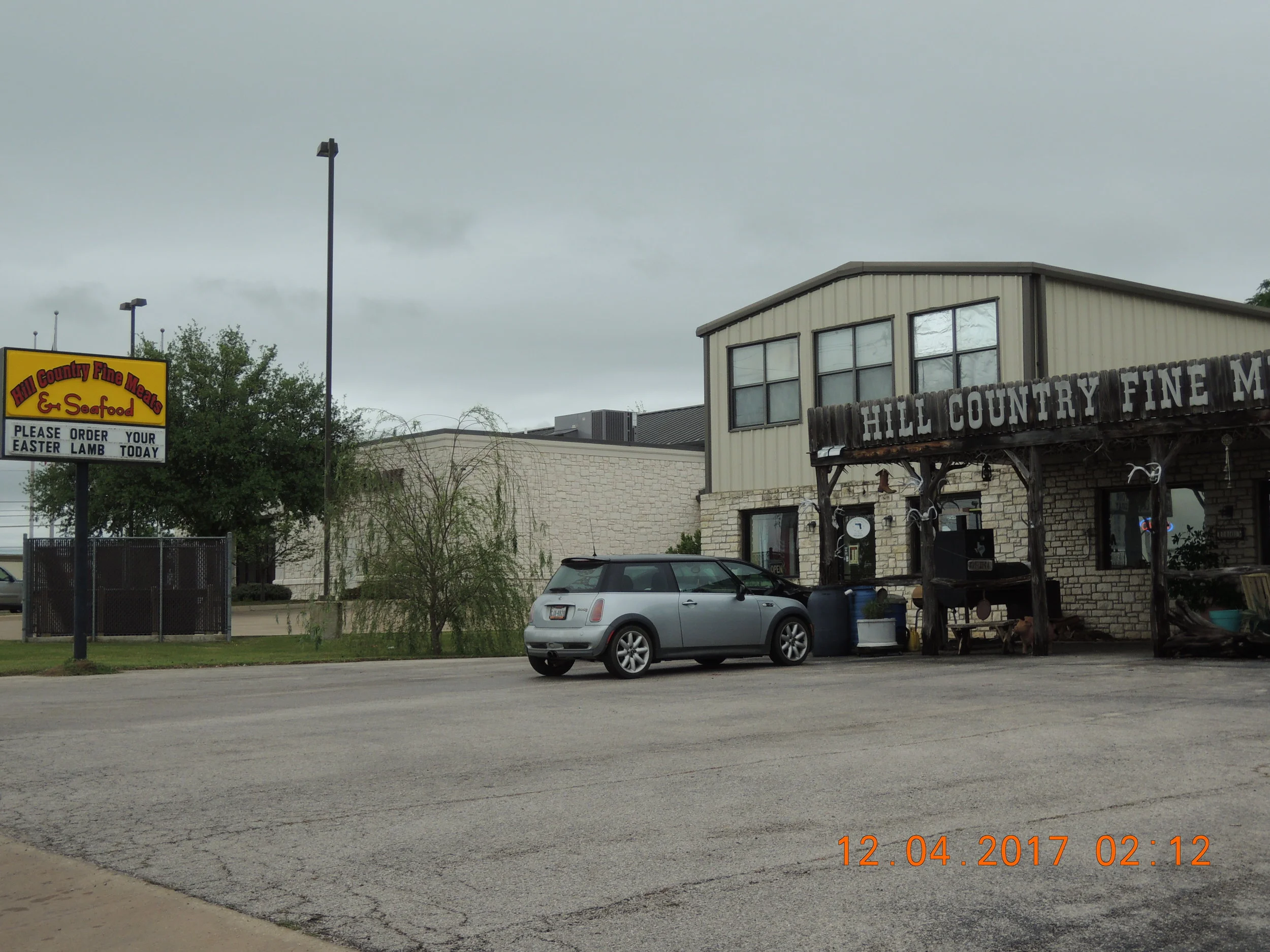
The German butcher has been trying to sell his shop for years. Anybody interested?

The German butcher has been trying to sell his shop for years. Anybody interested?

Boat Club

While we were at the chili cook-off a couple of weeks ago, one of the chefs was advertising his business as well as his chili.  He owns a boat club franchise, an unknown concept to David and me. 

When we first moved to Marble Falls we assumed we’d buy a boat.  There are four big lakes half an hour’s drive from our house.  But then we learned that we are not allowed to store a boat on our property; it’s against HOA rules, which is understandable because only hillbillies have trailers and recreational equipment scattered around their yards. 

So that would mean not only the price of the boat, but the price of its storage; then the hassle of driving a distance to hook it up and haul it out, and the added required time of bringing it home to be cleaned and stocked for an outing.  And, as we had a family boat when I was a child, I’m aware that half the time the boat’s out of commission for one reason or another.  A lot of things go wrong with a boat.  Having fun on the water every once in a while simply wasn’t enough to overcome the bother and cost.  

But we do like to bump around on the waves.  We’ve rented a time or two, which costs four hundred for a half-day.  And we’re curious how this boat club works.  So David makes an appointment with the chili/boat club guy and we set off to a marina on Lake Travis. 

“I hope this guy doesn’t do the hard sell,” I say.  Once, in Bali, an obsequious Indonesian approached David and me on the street and told us that he got paid thirty dollars for every potential customer he was able to bring in for a timeshare presentation, adding that he was trying to support a family and he badly needed the money.  My compassion, which is usually comfortably dormant, kicked in; and we accepted the bribe of a free stay in one of their resorts in return for ninety minutes of our time, which ended up being an agonizing three hours of being intensely badgered by a salesman who told us that if he couldn’t convince us to buy a timeshare he was going to get fired; and if that happened his wife was going to leave him.  When finally we were allowed our freedom we were drained and angry. 

“He seemed okay,” David tells me.  “He made good chili.”

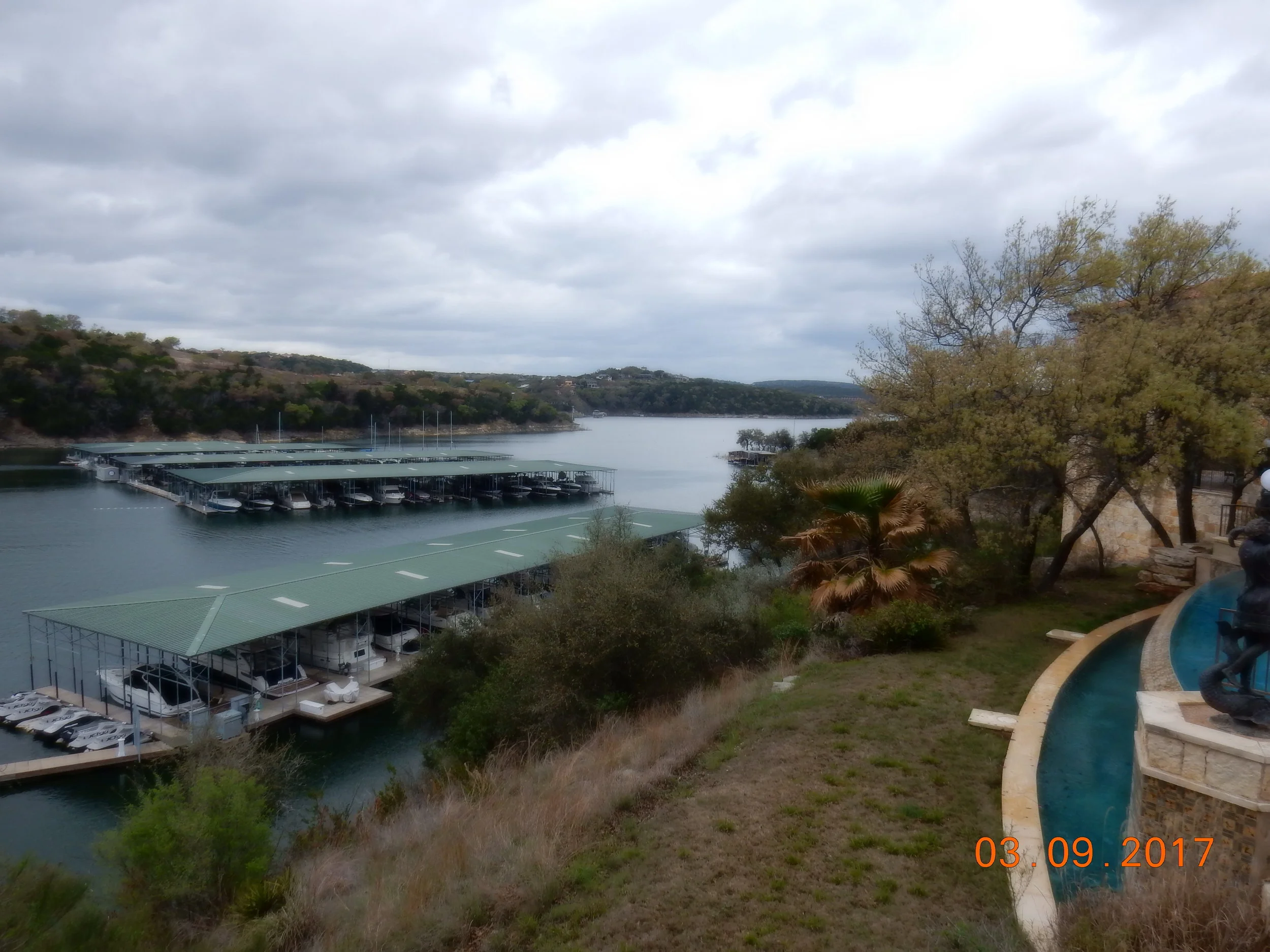
We’re to meet him at a private yacht club, which turns out to be a grand edifice on a cliff overlooking Lake Travis.  Valet service is complimentary.  It’s a clear day, hot for March, and the view over the water is spectacular.  In order to get to the marina below, we must descend in a metal box, which squeaks, rattles, and looks rickety.

“Those are awfully small cables,” David says.  I assess the cables.  He’s right.  They’re much too puny to be trusted with our combined weight.  We watch as a few people get on down below and are slowly carried upward.  

“This is making me anxious,” I say.  The car arrives, the passengers disembark, and I bravely step on, closing my eyes so I won’t have to watch as we die. 

Bill meets us as we step from the lift.  He’s forty-ish, light brown hair, blue eyes.  I can tell by his relaxed posture that he’s not going to try to guilt us into buying what he’s selling.  A boat transfers the three of us to one of the docks.  It’s a large marina—eight extended docks, each accommodating at least forty boats.  The surface beneath our feet is unsteady as Bill leads us through the bobbing maze, pointing out the boats that belong to his fleet.  He stops at one of the pontoon boats and invites us aboard.  No office then, just a man on a boat with an iPad.

He explains the three packages: 

Most expensive—one-time joiner fee of four thousand, four hundred a month, unlimited use locally and at the other hundred and twenty locations nationwide.    

Mid-range—three thousand to join, three hundred a month, access to other locations, unlimited number of times a month, but weekdays only.   

Least expensive—he calls this one “Toe in the Water.”  Two thousand down, two hundred a month, not accepted at other locations, use limited to twice a month, and one of those times can be a weekend. 

We ask questions—what are we responsible for?  Gas.  How about insurance?  He carries the insurance.  Availability?  Always, but book two weeks ahead during holidays.  How long is the contract?  Renewable in a year.  The appeal is that we show up, we know the boat works, we get on it, and we go.  No maintenance, no storage fee, no trouble at all. 

We tell him we’ll think about it and he doesn’t apply any manipulative sales techniques like trying to hold us here, or throwing out better deals, or telling us that his wife’s going to leave him if we don’t buy into his club.  He accompanies us back to the central dock and says good-bye.  On our way to the lift, David and I take a detour through the little floating shop.  I glance at the flip-flops on display in the main aisle. 

“Those flip-flops cost a hundred and ten dollars,” I tell David. 

“Nobody wants to go on the water in the winter months.  So that’s four or five months a year we’d be paying for it when we wouldn’t be using it.”

“An ordinary pair of flip-flops, nothing special about them.” 

“But surely we could find two days a month.”

“And look.  These beach towels are seventy-five dollars a piece.”  They’re nice towels, but not seventy-five dollars worth of nice.

“When you need a towel, you need a towel.”

“We could take a boat out in the winter.  We could bundle up and we'd be the only ones on the lake.”

“This is so much cheaper than buying or renting.  And so much more convenient.”

We end up going with Toe in the Water.  Anyone want to tool around on Lake Travis with us?

The marina from the yacht club.

The marina from the yacht club.

A tiny car carries people down from the yacht club and up from the marina.  The lower building  houses a small and ridiculously expensive shop.  

A tiny car carries people down from the yacht club and up from the marina.  The lower building  houses a small and ridiculously expensive shop.  

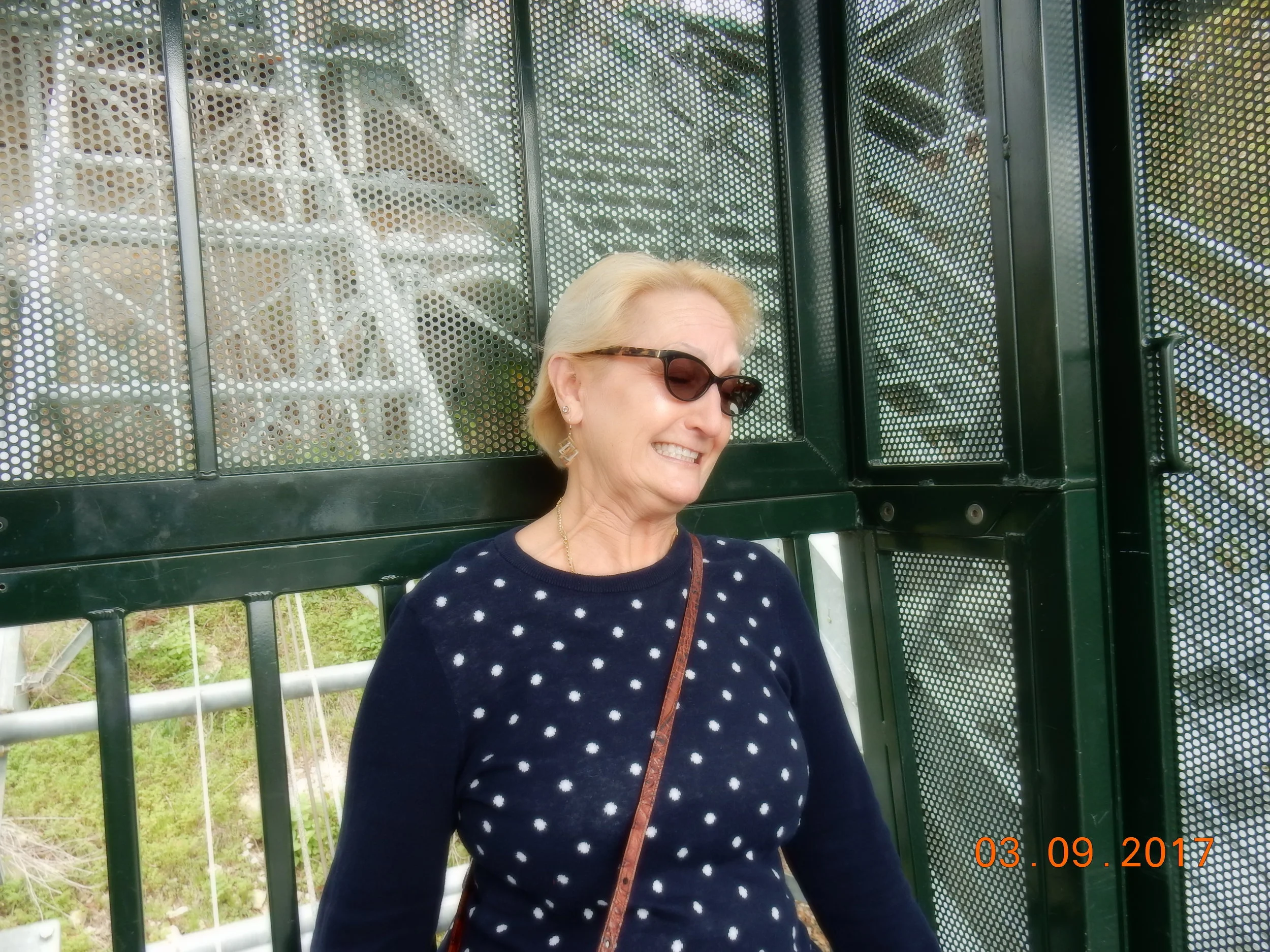
This is me, terrified with eyes closed as we descend.  The sweater makes me look fatter than I am--won't be wearing that again!  

This is me, terrified with eyes closed as we descend.  The sweater makes me look fatter than I am--won't be wearing that again!  

Boats, boats, boats!

Boats, boats, boats!

Chili Cook Off

“I loved your book.”  This is from the woman who sits across from me at the chili cook-off.  I will never get used to people I don’t know knowing who I am.  I’m surprised every time someone I didn’t have to bully into it tells me they read Old Buildings in North Texas, which, by the way, is not about dilapidated structures in the panhandle, but a humorous novel combining drug rehab and urbexing.  If you haven’t read it yet, you’ll love it!

“I’m thrilled you read it,” I tell her.  “Thank you.”  I have decided this is the way I will answer compliments about my work; and I’m pleased to say I’m giving this response more and more often.  I recently did a reading for a book group of eighteen women, and all of them had read it and were enthusiastic.  Thanks, Janice, for inviting me. 

The chili competition is taking place at Spicewood Vineyards, a winery near us.  It’s an annual event drawing a huge crowd, many of which, considering the number of sleek millennials, drove out from Austin.  Our friends, Bill and Carolyn from up the street (the neighbors who still talk to David and me) came early and saved places for us at their table.  Thanks Carolyn.  And thanks, too, for reading OBiNT and recommending it to your friend. 

The area where the cook-off is being held is no more than two acres of lawn and patio.  Leaving our table, David, Diana, and I wend our way through the crowd, crossing to a square composed of awnings and tables where chili is offered in small cups.  Each cook explains what makes his or her particular chili unique and wonderful.

“Made from venison, buffalo, and bloody Mary mix,” one of them says.  I take a small bite; it’s okay.

“Made with pork, brisket, chipotle, and chocolate,” says the woman at the next table.

Some of the more outlandish ingredients are raisins, pumpkins, oysters, Triscuits.  Can such nontraditional concoctions actually be categorized as chili?  Each attendee is to vote for their favorite.  These chili chefs with their slow-cookers take the voting process much more seriously than those of us who are sampling.

“My mouth is on fire,” I tell Diana.  We’ve tasted a dozen out of twenty-two. 

“Yeah, I’ve had enough,” she says.  “I’m going to vote for that young couple in the corner.  They seem nice and their chili is normal.” 

We return to the table, where Carolyn and her friends have set out a generous spread of cheeses, grapes, crackers, and dips.  There are six bottles of wine on the table.  Several hundred chili buffs mingle in front of us, a gift for people-watchers.  The wine goes around the table.  Glasses fill up and are emptied.  David goes off and returns with more. 

“It’s unusual that, in a group this size, I don’t see one obese person,” I tell David.

He scans the crowd, anxious to find an overweight person to contradict my observation.  He can be contrary.  But everyone circulating before us is trim, lustrous, and inexplicably taller than average.  We are surrounded by stunning people.  They’re decked out in fringes, feathers, man buns, high-heeled boots, broad-brimmed hats, unexpected zipper placements.  More like costumes than clothes. 

The band is high quality, and when we hear the opening notes of the Star-Spangled Banner, we all stand.  The vocalist does an excellent job—the national anthem can be tricky; and just as the last note is dying away, three WWII fighter planes buzz overhead.  Impressive timing. 

“That gave me chills,” the woman behind me says. 

It’s at this point I notice that in this group of over five hundred people, not only is everyone exaggeratedly fit and gorgeous, they’re also exaggeratedly white.  Have we inadvertently stumbled into a Klan party?  Much has been said lately about the partitions between cultures and I wonder how a partition was erected here, today.  The publicity regarding this event reached everyone in all the nearby towns; also, obviously, Austin.  Was there some sort of coded message telling brown people to stay away?

This lack of diversity makes me grumpy.  If this massive party had taken place in Houston, every race, religion, and orientation would’ve been represented. 

“Ready to go?” David asks.  Diana and I gather our purses and wraps. 

We make it home around five, my favorite time to pour Zin and watch TV. 


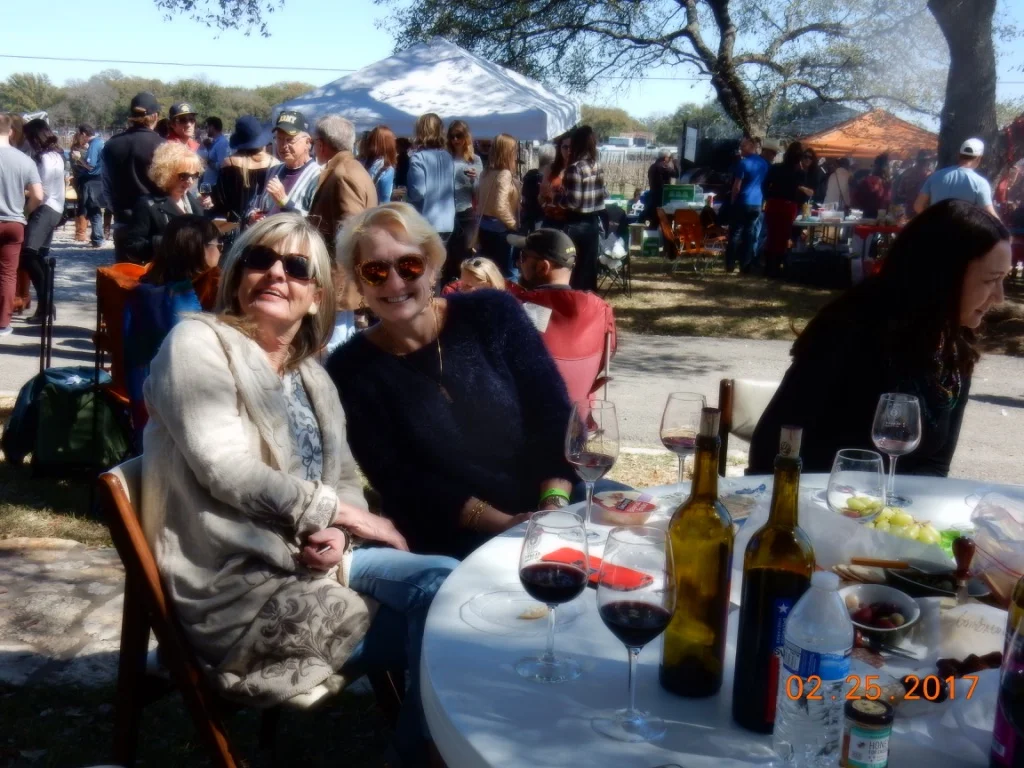
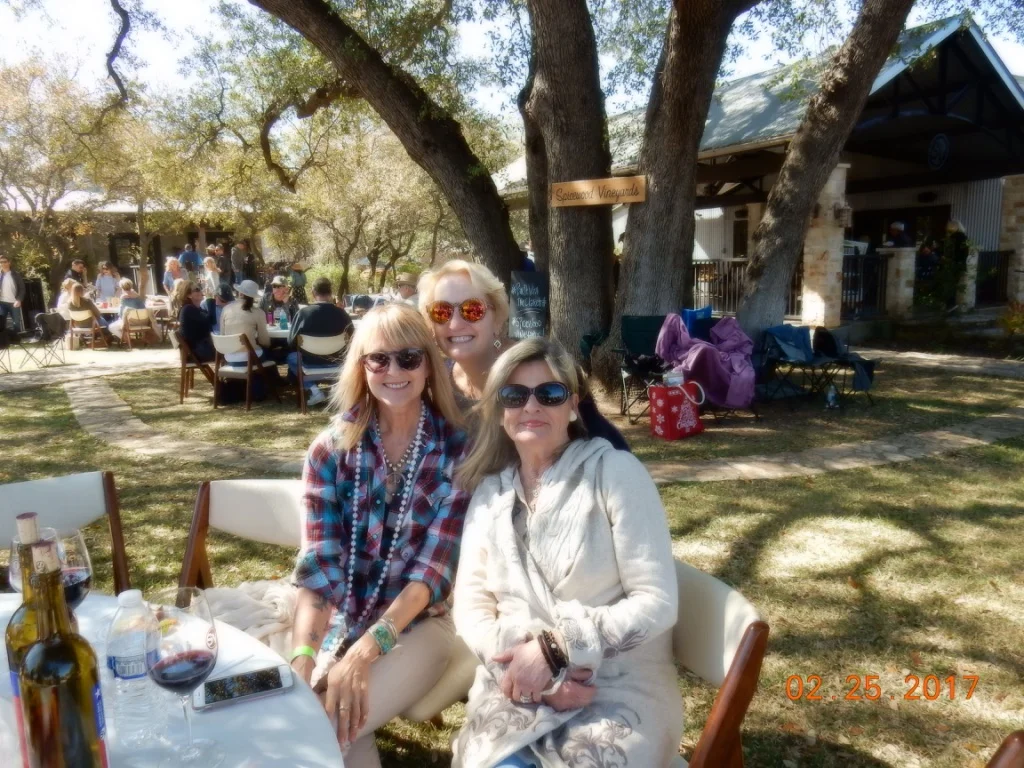
Carolyn and me.  Diana, on my other side, has been talking for a long time to a woman she just met.  She gets along well with everyone.  My sunglasses were given to me by my son, Sam, whose company, Mantra, manufactures and sells them…

Carolyn and me.  Diana, on my other side, has been talking for a long time to a woman she just met.  She gets along well with everyone.  My sunglasses were given to me by my son, Sam, whose company, Mantra, manufactures and sells them in Beijing.  For each pair sold, a portion goes to help a poor rural Chinese child get eye exams and eye care.  

Me, with two people who liked Old Buildings in North Texas.  I have two fans!  Yay!

Me, with two people who liked Old Buildings in North Texas.  I have two fans!  Yay!

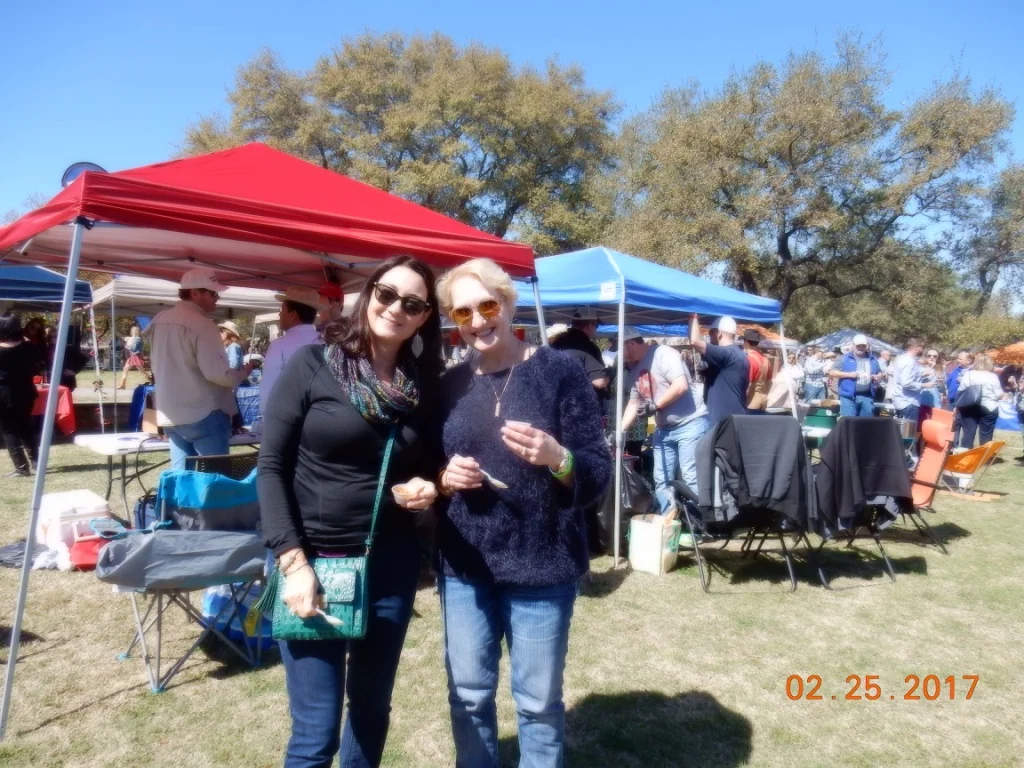
Diana and me.  We've been friends since high school.  

Diana and me.  We've been friends since high school.