Narrows

Yesterday afternoon was woefully unproductive.  In the mood to start a new blog posting, I sat at the computer for fifteen minutes, could think of no subject worth exploring, and commenced to waste a full hour playing Spider Solitaire.

So today when David suggests driving to Spicewood and checking out the Narrows Recreation Area, I’m all for it.  Recreation is one of my favorite things; and every time we pass the sign on the highway with the arrow, one of us says that we should go see what it’s referring to.  Also, anything’s better than having a head so empty that I can’t even come up with an idea. 

For a writer, typing off five hundred words that say nothing is part of the job description.  So why couldn’t I do that yesterday?  The most likely reason for the difficulty is that the novel I’m currently working on is all-consuming.  Here’s the first-page, a teaser:   

Saturday morning, ten o’clock. 

The strategy room on the DA’s floor of the Caprock Tri-County Courthouse, a corner chamber made inharmonious by the sort of imperfections that make me squirm—a landscape hanging crookedly, a bank of cabinets with two drawers not quite closed, a set of blinds with an uneven slat. 

Sitting in the center of a semi-circle, I’m neatly dressed in creased black pants and a silvery silk blouse, none of which I paid for.  It’s my funeral attire, which suits the ambient mood.  My emotions compete—humiliation, resentment, and exhaustion.  These people know I work into the early hours.  The timing was set for their convenience, not mine.

This committee has convened in reaction to my latest and most scandalous felony.   I’m in real trouble this time. 

They all lean in.  Not one of them wants to be here. 

Judge Ramos, round-headed, bald, rotund.  Casually dressed, jeans and boots, his weekend clothes.  For twenty years this man has assigned proportional consequences to Caprock’s miscreants.

Mayor Cantu, petite with burdened eyes and girly lashes.  Reasonable and kind, he sincerely considers what’s best for Caprock before all else. 

Beverly Arnold, thighs straining against her brown stretch pants, three chins, brassy hair from the eighties.  As my high school counselor, it was her job to chastise me for smoking in the bathroom, skipping detention, and sneaking coffee from the teachers’ lounge.  She’s been asked to share her thoughts about my issues, and to recommend accordingly.  High school was years ago, and I can’t imagine that she possesses any insight that’ll shine a helpful light on my current situation. 

Dr. Hamm, highly respected dermatologist.  I’ve never seen him in jeans before, but here he is, in worn denim, with pale green Taggios on his long feet.  By being here, he’s doing a favor for my friend, Fran Furlow.  She’s his office manager and, either because he owes her or she guilted him, he’s agreed to act as my character witness and advocate. 

Wenton Parsons, the DA, my deceased father’s brother.  Guardian of the family name.  Slacks, dress shirt, and tie.  He holds himself to a standard, not because he’s vain, but because he wants to be taken seriously.  His silver hair and moustache, trimmed regularly, bring an intimidating dignity to the proceedings.  I bet he and Mom had a heart-to-heart this morning.  I’ve put him in a tricky position. 

And Henry Joos (pronounced juice), my attorney who’s doing his best to get me out of the mess I got myself into.  Heavy in the chest with no ass at all, his kakis are frayed at the heels and his loafers went out of style years ago. 

The six of them peer at me with identical expressions of dismay and compassion.  Ages range from fifty to sixty-five.  All were friends of my father, principal at High Plains High for twenty years, who died of an aneurism two years ago.  Out of respect for my dad, and because they knew me when I was a child, the last thing they want to do is send me to prison because of a handbag. 

 An excellent beginning, right?  I’m fifty-five thousand words into it and it’s going well, but sometimes a story needs to mull.  So, wanting a break and fresh air, I pull on a jacket.  We get in the car and I drive fifteen minutes on 71 toward Austin, then turn left at the Exxon station.

“We need to have something in the house to serve the kids for breakfast on Monday,” David says as I navigate the tight, pitted road.  “Bagels?”

“How about yogurt?  We don’t need bagels because neighbors keep dropping in with cakes and cookies.”  I sigh.  It’s what people do at Christmas, but it’s too much food.  Maybe Curtis will take a couple of fruitcakes home with him. 

This area we’ve traveling through is so overgrown that we can’t see beyond the vine-draped barbed wire on the side of the road.  It’s creepy and dense, and I suspect the wall of thorny weeds conceals meth houses, which I’ve been told are prolific in this part of the country.  Suddenly the wild growth disappears, opening to reveal a beautiful ranch with a substantial iron gate and a long curving driveway leading to an elegant home.  Longhorns lounge on the front lawn.  I wonder about the relationship between the people who live in this very expensive isolated splendor and their neighbors, the meth people.  Both factions probably voted for Trump, so they have that in common. 

“I think we should have bagels, too,” he says, “just to make sure.”

“I’m telling you, the last thing we need to do is obtain more baked carbs.”  On my counter are three cakes, some kind of German dough balls, brownies, and pumpkin tarts.  Also, one particularly talented woman in the cul-de-sac made truffles that melt on your tongue.  

“Okay, but I’m warning you, if we don’t have enough, it’ll be on you.”

“What, exactly, is going to happen to me?  Will punishment be involved?”  Curtis and Anna are only two people.  We don’t need to gather in more food. 

“Just be warned.”

The road curves, rises and dips, and eventually leads us to a peaceful park overlooking the Colorado River.  A field for kicking a ball around, two picnic tables, and a dock where you can put your boat in the water.  Glorious clean air offering an unlimited supply of allergens.  No one in sight. 

“Well, isn’t this a pleasant place?” I walk close to the water, taking in the breadth and movement of the river.  Why call such a broad expanse Narrows?  “If we were people who picnicked, we could do that here.”

“Whatever breakfast we have on Monday needs to be easy and quick because Curtis and I are leaving for the golf course around eight-fifteen.”

“Is a bagel quicker to eat than a slice of pound cake or a few mini-tarts?”

“I’m just saying, maybe bagels would be better.”

And so on the way home we stop at the grocery store and buy bagels. 
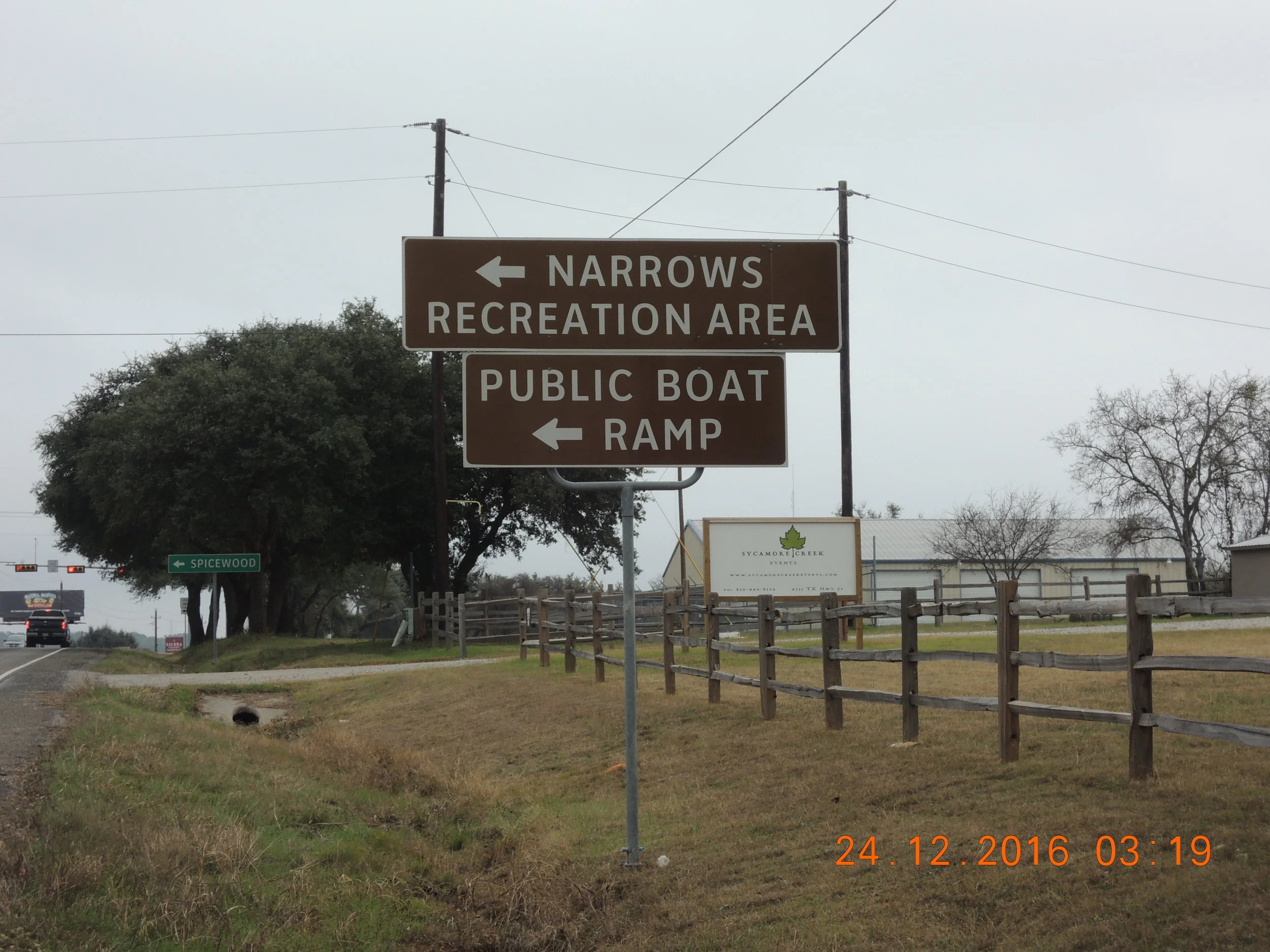
The sign made us curious.  
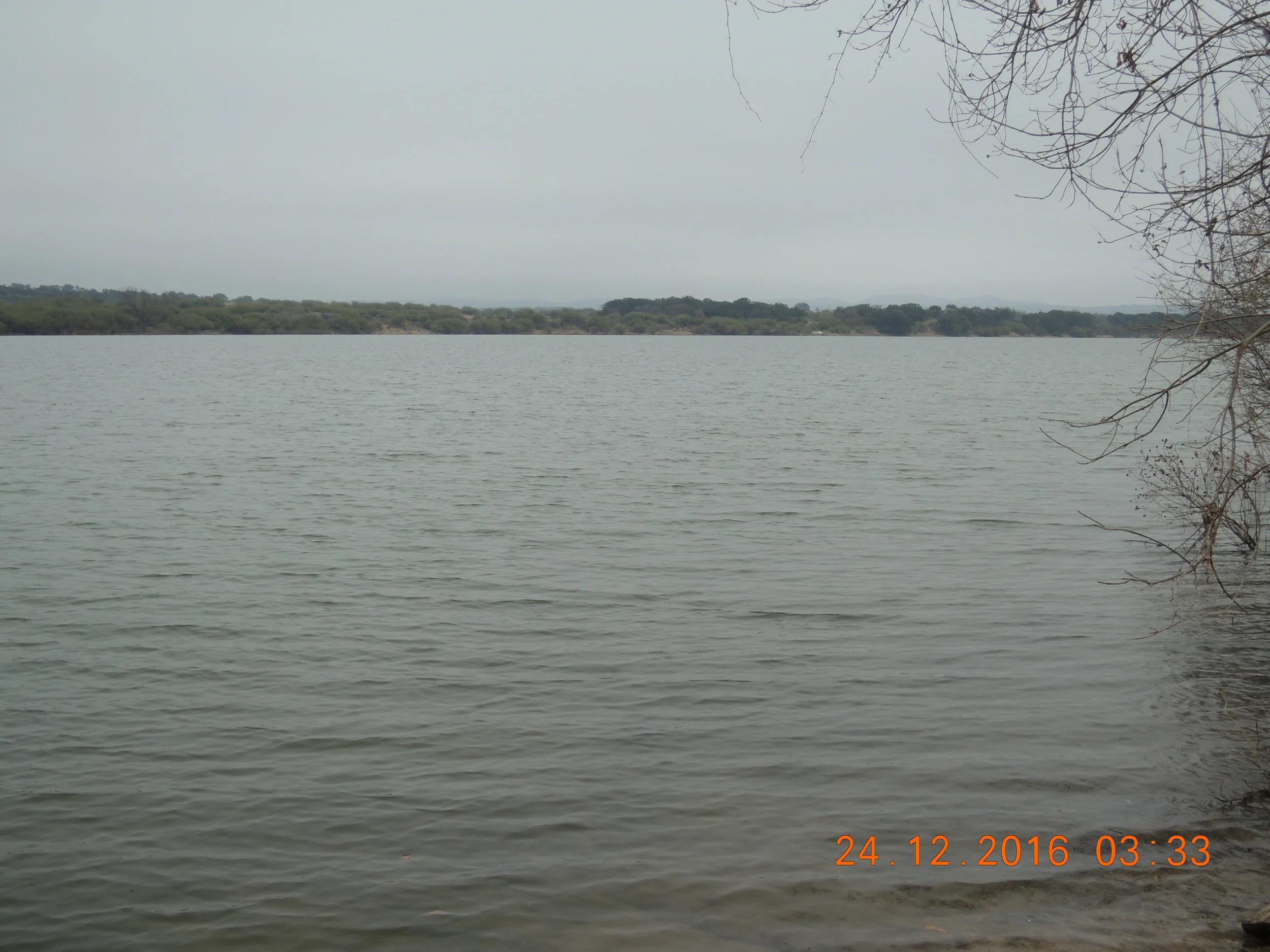
The sign made us curious.  

Maybe naming this broad portion of the Colorado "Narrows" is like calling a bald guy Curly.  
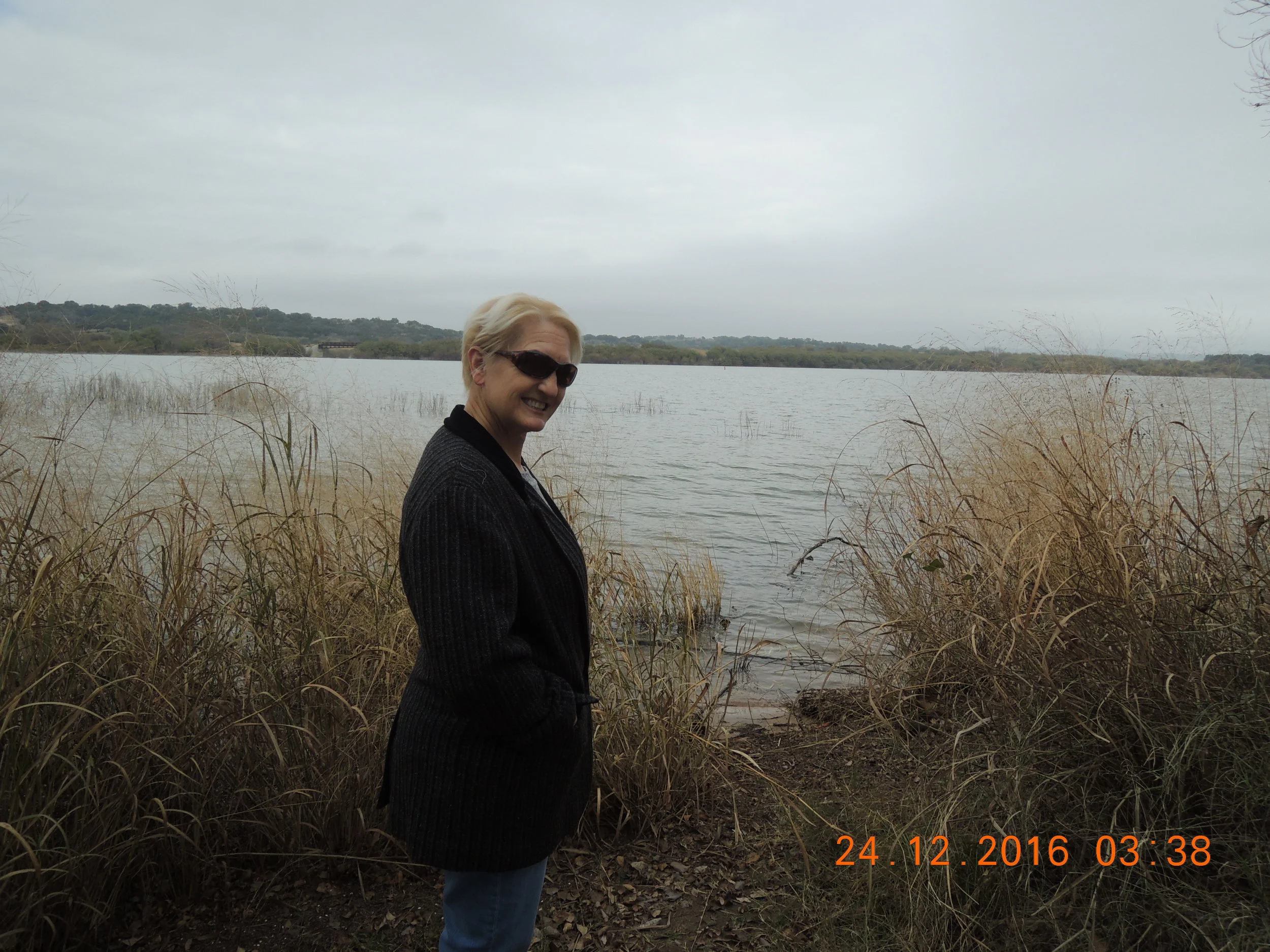
Maybe naming this broad portion of the Colorado "Narrows" is like calling a bald guy Curly.  

Gray sky, gray water.    
Gray sky, gray water.    

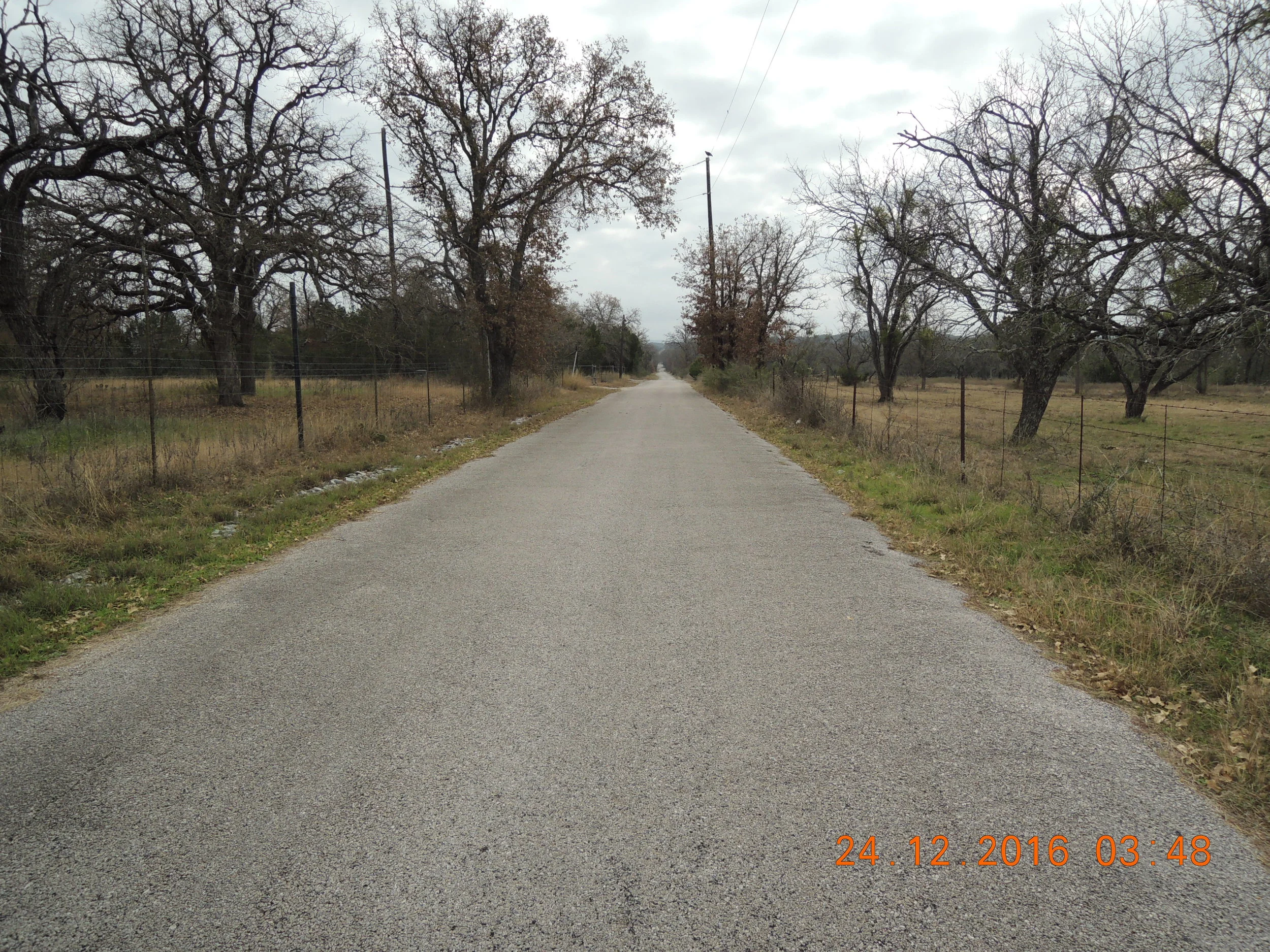
This stretch of road is pleasant, no meth houses in sight.  
This stretch of road is pleasant, no meth houses in sight.  

The Hostage Drawer

Christmas decorations cover every surface.  Today we’re having our annual holiday open house, a time when we invite friends and family to drop in, toast the season with David’s exceptional eggnog, and catch up on the events in one another’s lives.  Last year, though we hadn’t lived here long, more than forty people came.  Though it’s a lot of work, connecting with the members of our various groups outside the usual venue is enlightening.  And it’s always wonderful to see old friends.

This season is also when I write my informative letter, which will be slight this year because, other than the deaths of my mother and my dog—and who wants to hear about that at Christmas?—not much has changed.  The boys are prosperous and healthy and we’re proud of them.  Curtis is engaged to a lovely young woman, wedding in the spring.  Still in Beijing, Sam continues in his buy-one-give-one business plan (company name, Mantra, goal is eye exams for rural Chinese children).  And David is busy with his various local projects—Habitat for Humanity, ushering at church, playing golf.  So, our lives flow contentedly on. 

A couple of months ago I was thrilled by the UK publication of my novel, Old Buildings in North Texas, a topic which introduces a petty, yet consuming, issue.  OBiNT is getting good reviews in England, which is excellent, but I need more of them.   I understand that part of being a writer is that, when you release it you’ve got to let it go.  And I also realize that roping in the few people I know and coercing them into writing reviews is a ludicrously ineffective thing to do.

Nevertheless, I gave nine signed copies to friends and relatives with the stipulation that they post a review.  Every one of them seemed desperate for a signed copy, and they were all agreeable to my terms.  Though I received twenty of the hardbacks from Arcadia, a generous gift, it was my intention to have them available for sale at my upcoming readings.  I obviously have difficulty saying no.  

Reviews are important because a high number of them indicates a high number of readers.  A person browsing online will see an impressive number of comments and think hey, look how many people have read that book.  I should probably read it, too, so I can discuss it with all the cool Literati at parties who are sure to be talking about it. 

Also, it’s Christmas, and in the UK that means giving books as gifts.  The British are a book-loving breed. 

Of the folks who received signed copies and a really good read that cost them nothing, only two have gone to the trouble of doing what they said they would do.  It’s a matter of a few minutes to log on to Amazon UK, say it was a good book, and give it five stars. 

Disillusioned?  Disappointed?  You bet. 

Two women that I don’t know that well—one from Mahjong, and the other, one of David’s friends from Habitat—were interested enough to purchase copies online.  Both of them wrote reviews, and if I didn’t consider them good friends before, I sure do now. 

This situation prompts me to search my memories for a time when I let someone down.  I must have, at some point.  Apparently people do.  Here’s what I came up with:

After college I heard from one friend, Cindy, that another friend, Mary’s, brother had committed suicide.  Cindy didn’t know Mary that well, but I’d been tight with her and her family since I met her at band camp in seventh grade.

“You need to call her,” Cindy told me.  “I ran into her at the grocery store and she said she was depressed and she felt like her friends had abandoned her.”

“Of course I will,” I responded.  “I loved her brother.”  But I never did.  The more time passed, the more difficult it became to make the call.  I was immature and didn’t know how to comfort someone after a loved one had died in such a tragic way.  I never spoke to Mary again, and I’ve felt sorrow over my behavior ever since.

Another time I didn’t meet an obligation was when we were preparing for a move to Singapore, and I was distracted and frazzled; and on Monday morning I forgot it was my turn to help count Sunday’s collection money.  An insignificant incident, but bringing it up indicates how the memory of it still brings me shame.  I have a keen sense of responsibility, an obnoxiously loud conscience, and an inability to self-forgive.    

So, if my recollection has failed me, and if I’ve let someone down and not apologized for it, please let me know and an apology will be forthcoming. 

On the other hand, because of the horror brought on by someone relying on me, I’m stingy with my commitments.  This is a trait passed to me by my father who, if he thought someone was going to ask him a favor, would hide for days.  During my formative years, he often told me, “Jennifer, do never volunteer.”  

One of the friends who receive a copy of Old Buildings in North Texas, but never wrote a review, arrives at our open house.

“Don’t let me forget my cake pan,” she says cheerfully, referring to the pan she forgot to take home with her on Thanksgiving.  As pans go, this is a nice one, substantial and expensive. 

“I’m keeping it until you post the review you promised,” I tell her.  This is what I’ve resorted to.  If she thinks I don’t check UK Amazon every day, she’s crazy. 

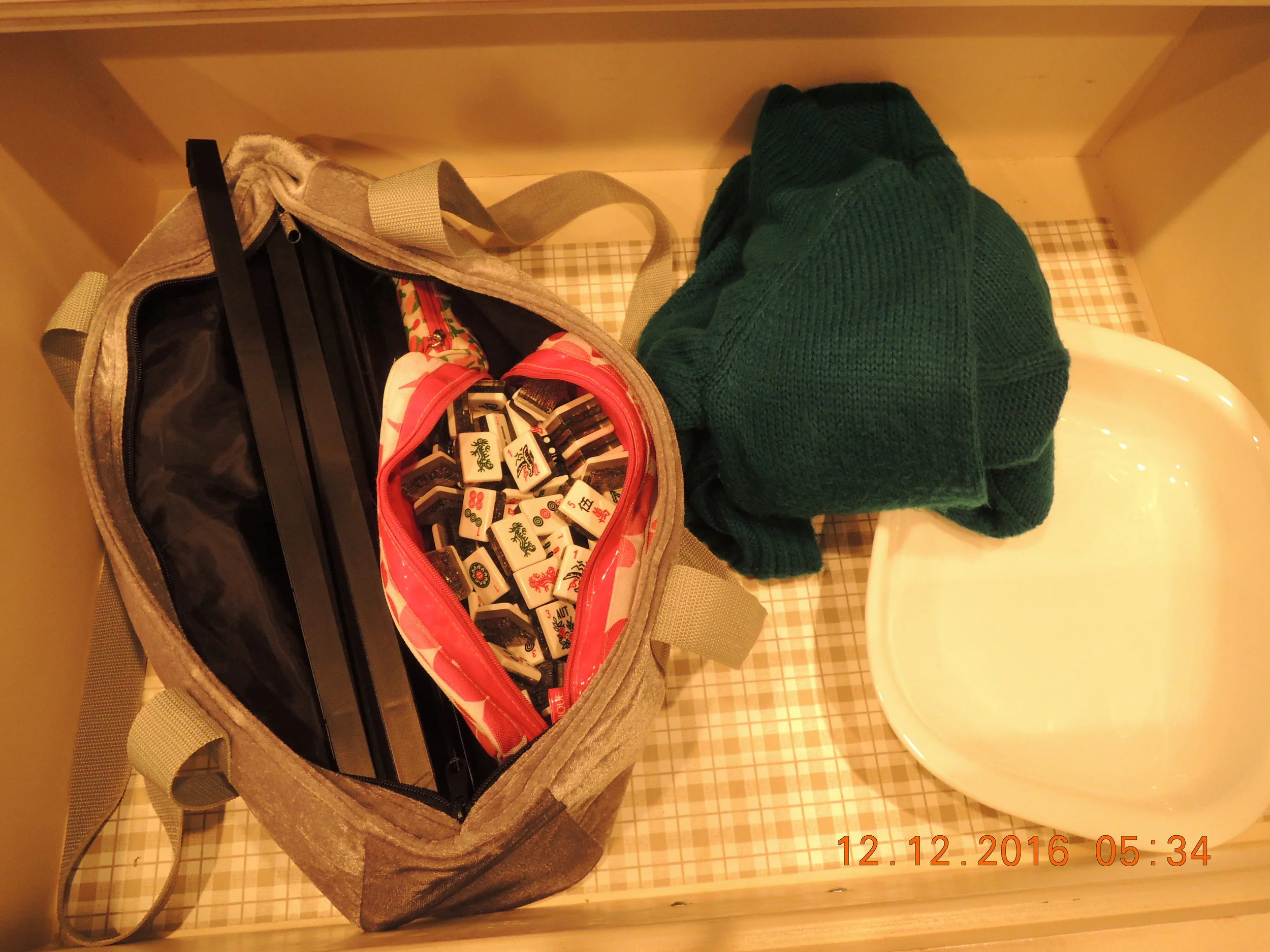
“I haven’t even started it yet,” she responds, which is maddening and hurtful.  Like I said, I wanted reviews for the Christmas season.  I don’t remind her to take her baking pan, and she leaves without it.  It’s being held hostage in a kitchen drawer, next to Kendra’s favorite sweater, which she left here last week, and which will be held until her review appears; also, Eileen’s Mahjong set, which she left in my charge because she had to leave early last week and her set was in use, and which I’ll release to her as soon as I see her review on Amazon UK.  And now—

Let it go, Jen, let it go.

A Mahjong set, a sweater, a nice baking pan.   The hostage drawer.  

A Mahjong set, a sweater, a nice baking pan.   The hostage drawer.  

Santa says "Merry Christmas!"

Santa says "Merry Christmas!"


Sometimes You Wonder

David and I attend a Saturday afternoon event celebrating the opening of The Safe Place, a shelter for families in trouble.  A clean new building with a commercial kitchen, a meeting area, a couple of offices, and quite a few dorm-style bedrooms, it’s a community project, sponsored by several churches and inspired by a larger, similar venture in Austin. 

We’ve had tours and now gather, eating cookies and socializing as we wait for the speeches of recognition and gratitude.  There are probably sixty people in this large room adjacent to the kitchen.  I know a few of them, though not well.  David, who likes helping people and feeling useful, had a hand in getting the center up and running, so he’s bonded with many, and is all over the place, shaking hands and smiling, glad to be part of this undertaking. 

Across the room, I see a friend, Llawela, and her boyfriend, Angus.  Because Llawela, a white-blonde, is delicate and petite, and Angus is dark and six-four with massive shoulders, they draw attention.  They’re a popular couple here in Marble Falls, mainly because Angus is involved in the community, busy with everything from chili cook-offs to working on Habitat houses.  I catch Llawela’s eye, and the three of us begin to gravitate toward one another, stepping around clusters, and coming together at the side of the room.  We give hugs and spend several minutes catching up.  Always on the lookout for interesting bits to insert into my novels or to blog about, I’m fascinated by Llawela’s occupation—she investigates welfare fraud, and is happy to share colorful tales about sneaky crooks, cover-ups, and nefarious accounting schemes.  She also has a sense of humor similar to mine, so we always enjoy ourselves when we’re together. 

A woman catches our attention.  She seems to know everybody, stops to talk at every clutch of folks, laughs a lot.  Nice-looking, too, sixtyish, wiry, and energetic; with an enviable hairstyle, short, professionally streaked platinum.  She’s working her way around the room, placing a hand on someone’s arm or giving an air kiss, which leads me to believe she’s probably the organizer of this kick-off party or maybe a member of the board. 

She arrives at our little knot, introduces herself, “I’m Bev Whatley, Executive Director of The Safe Place.”  

“Jenny Waldo,” I respond, shaking her offered hand, adding, “Congratulations on this new facility.  You must be proud.”

She smiles her agreement, then greets Angus, whom she knows, and shakes hands with Llawela, whom she does not know.  As always, the name Llawela draws a puzzled look.

“It’s Welsh.”  Llawela’s explanation lacks inflection because she says the same thing almost every time she gives her name. 

“Yes, I know.  It’s just that, I once knew another woman named Llawela, and she was Welsh, too.”  Which makes sense, because it’s obviously a Welsh name. 

“Did you used to live on Apple Tree Way, in Austin?” Llawela asks as, squinting, she assesses the woman. 

“Yes.” 

They study one other, searching their memories, waiting for recognition to occur.   And there it is.  Their faces light up. 

“Llawela!”

“Bev!”

Thrilled, they throw their arms around each other in a quick hug, then step back. 

“It’s been twenty years!” Llawela says.

I’m dubious.  If they’re such good friends that they’re overjoyed at bumping into each other, shouldn’t they have recognized one another right away?  People change a lot through a lifetime, but not that much in a twenty-year period of middle adulthood. 

“And you were married to such a jerk!”  The gleam in Bev’s eyes indicates delight in pointing this out. 

“That’s true.”  The pressing of Llawela lips lets me know she’s not happy that this was brought up.  “You moved away.”  There’s snide quality in her tone, and I don’t know why.   

“And you got divorced.”  Bev eyes Angus and, sending him a flirtatious wink, adds, “but I see you’ve found a much better partner now.”

I’m standing to the side, pleased.  What a fun vignette, what a plethora of nuances.   Friends who weren’t friends.  The two discuss old times on Apple Tree Way.  It sounds like it was a difficult period for Llawela, who’s still resentful toward her ex.  She becomes agitated, almost snarling as she tells how he moved his new girlfriend and her kids into the house while she was still sharing the payments.  After a few minutes, Bev thanks us for coming and moves on. 

“That was unexpected, the two of you meeting like that,” I tell Llawela.  “Sometimes I’m amazed at what a small world this is.”

“Here’s a tidbit you’ll enjoy hearing,” she says, giving me her wicked gossip gleam.  Beside her, Angus rolls his eyes, resigned to how we are. 

“Tell me.”  I lean in. 

“I was being tactful when I said she moved away.  What really happened was, she went to prison.  Huntsville, for two years.”

“What?”  Astounded, I track Bev as she turns strangers into friends, a powerhouse for doing good works. 

“She embezzled a lot of money from the company she worked for.”

Intriguing.  People get themselves into all kinds of situations.  Getting caught in a crime, the humiliation of being arrested.  Prison and parole.  A felon for the rest of her life.  How did she get from then to now?  Look at her; well-adjusted, a leader.  How did she end up here, running a place that aids people in crisis?

“I like her hair,” I say, which is what I say about most people whose hair isn’t mine. 

Didn't take a camera with me on that Saturday, so this picture instead of no picture.  Butterflies are all over this plant.  

Didn't take a camera with me on that Saturday, so this picture instead of no picture.  Butterflies are all over this plant.  

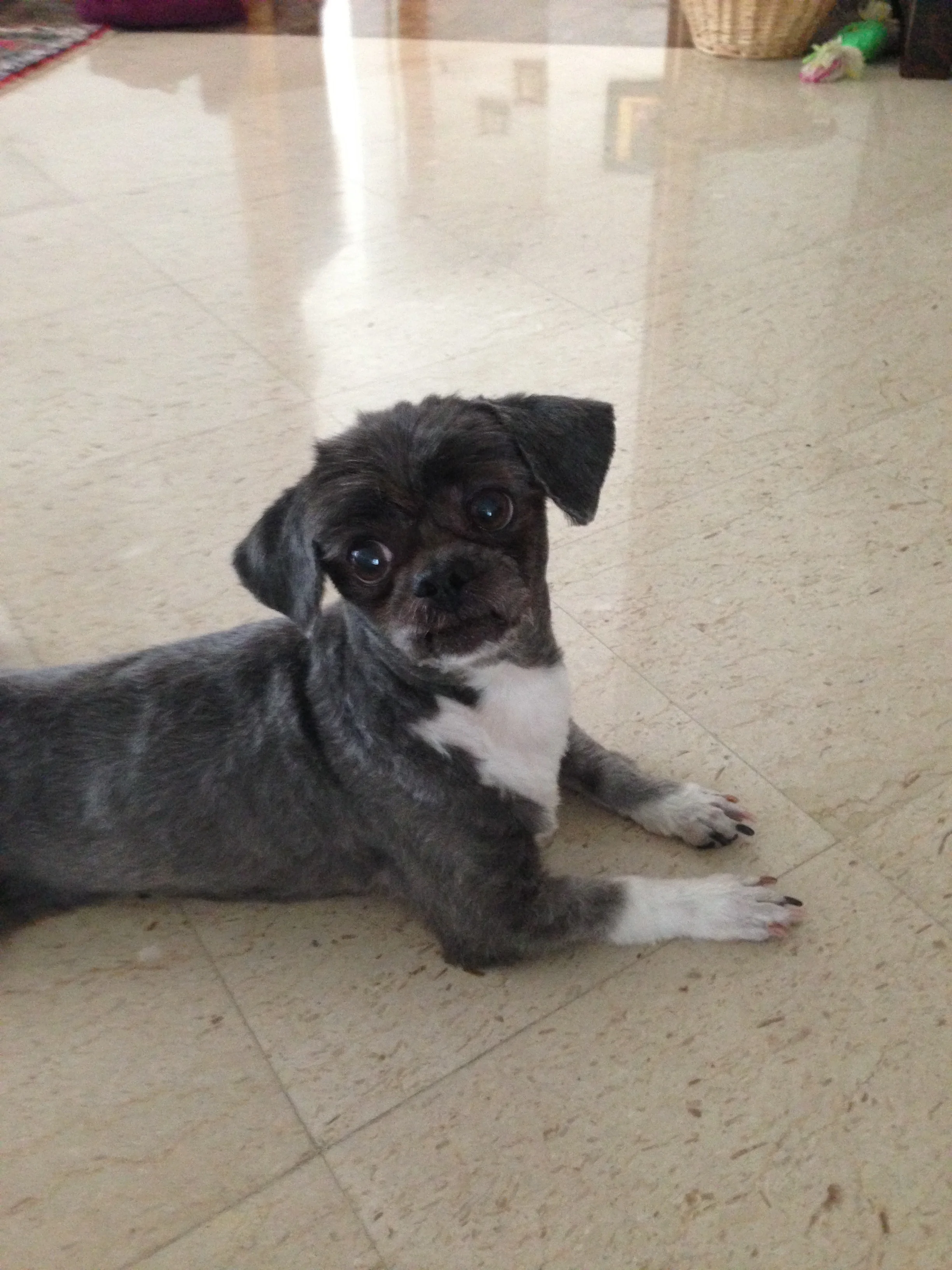
RIP, beloved Trip.  I've lost a piece of my soul.  

RIP, beloved Trip.  I've lost a piece of my soul.  


Hogs and Internet

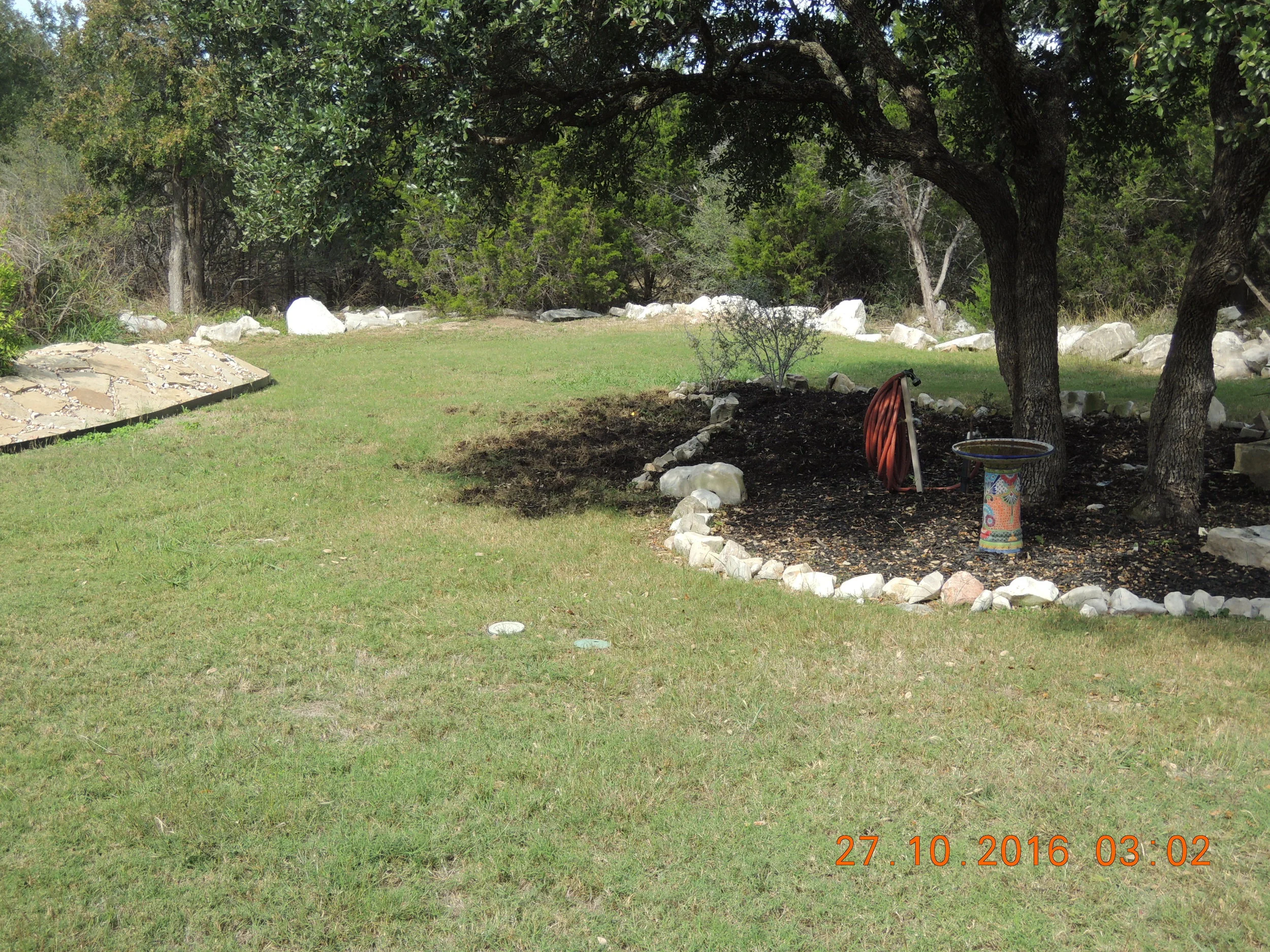
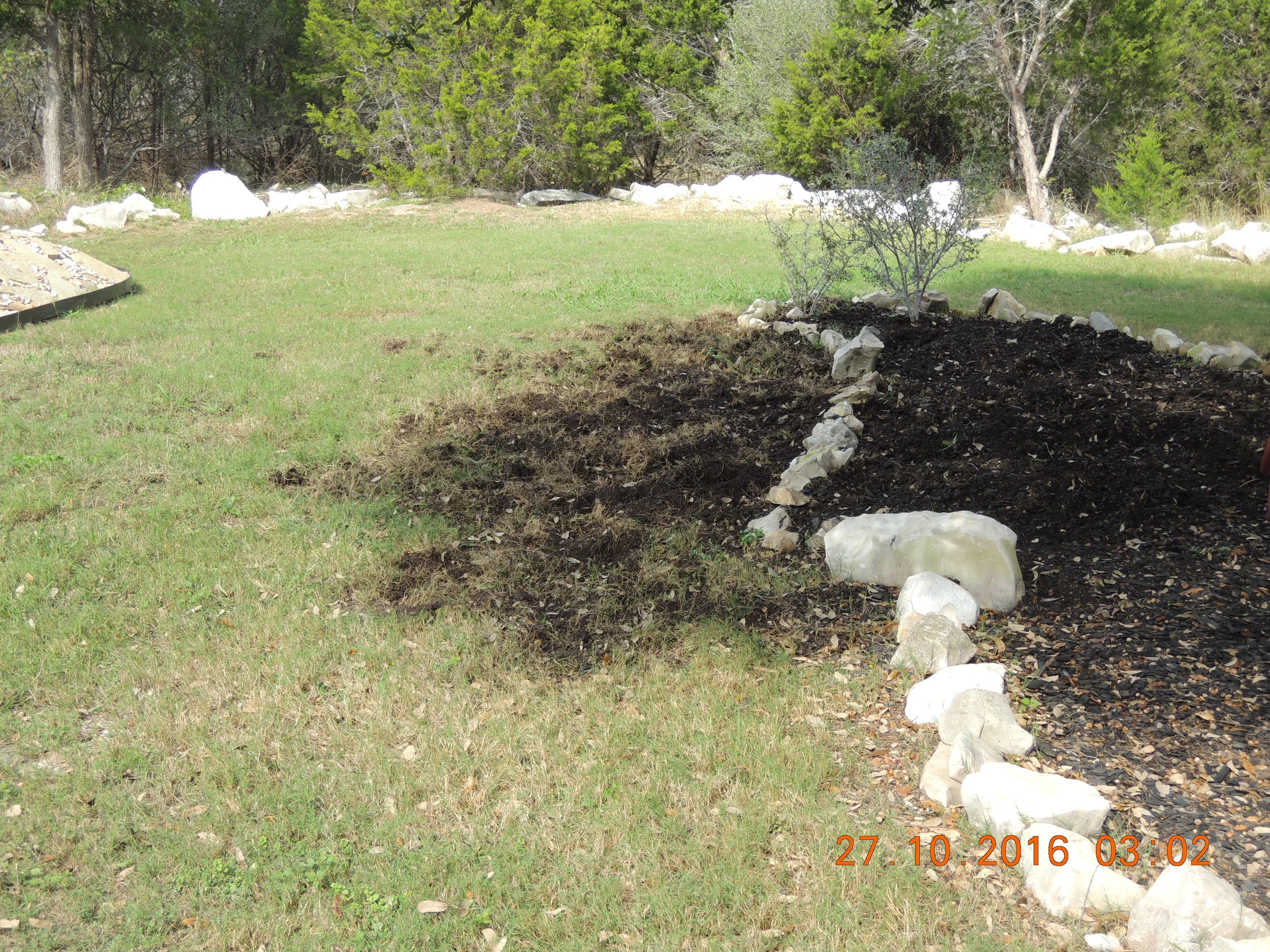
Once again a feral hog has torn up a portion of our backyard, the area between the septic system and the live oak. 

“Perhaps you should sprinkle the area with crushed red peppers,” I tell David, thinking that the hot flavor would be off-putting to a hog. 

David wants to look it up online.  What do other people do when hogs go after their grass?  But we haven’t had internet for a few days.  He canceled Zeecon because it was slow and sporadic, and our new provider has a cap on gigabytes per month.  We used a month’s worth in less than a week, and we don’t even stream.  Calling the provider, David asks for proof of our usage.  But it seems no record is kept. 

“Are you telling me that you have no way to prove that I actually used this much,” he asks, “when I’m telling you that I absolutely did not?”

His tone is calm and condescending, the way he speaks when he’s decided that he’s talking to an idiot.  Because he’s on speakerphone, I’m able to hear both sides of the conversation.  The man on the other end agrees with David that of course there should be some kind of record, but there isn’t.  This is the way the system works, he says, and he’s sorry that David’s unhappy.  So David tells him that he no longer wants to use their service, at which point he’s told that he’ll be charged three hundred dollars for breaking the contract. 

“But you broke the contract when you didn’t provide the service,” David says.  Once again the representative agrees that David has been treated unfairly.  But that doesn’t mean he won’t be charged the three hundred.

Fed up, David ends the call.  He calls three other providers in the area.  Two of them do not service our development, Capstone Ranch.  Another one says he’ll be over the next day to get it set up.  But he never shows.  After staying home most of the day, David calls and asks the man when he’s coming.

“We don’t operate in that area,” the guy says.

“I’ve been waiting all day.  You should have called and told me.”

“Zeecon comes out there,” the guy advises.  Zeecon.  The one David cancelled.  David thanks him and says good-bye. 

“I have a great plot for your new book,” he tells me.  “It’s about what happens when a person can’t get internet in the year 2016 and he goes crazy.”  He looks at me like he expects me to run and start on it right away.

“I’m working on something else right now,” I say.  He does have good ideas sometimes, but this isn’t one of them.  “Does anybody else have a hog problem?”

“Elton says hogs don’t bother him because of his dog.”

This is a sore point with me.  Elton’s dog wanders.  How can Elton claim he loves his dog when he doesn’t pen him?  Dogs have no sense.  They are not people.  They don’t understand what a car or truck can do to them.  One of these days Elton’s beautiful sweet dog is going to be found dead out on 401.  Stupid Elton.

“What we need,” David continues, “is a motion-activated dog barking device.  I could order it online if we had internet.”

“I’d rather not be disturbed by fake barking at three in the morning.  And when it comes on, what are you going to do—run outside and yell at the hog?”

“I’ll shoot it.”  He makes this claim, though we aren’t gun people. 

“And then we’d have a dead hog out there.” 

David calls Zeecon, who doesn’t hold a grudge.  They come out the next morning.  When it’s time for me to go to Mahjong, I go looking for David to let him know I’m leaving.  He’s out on the back deck, looking upward as the two guys mess with the antenna on the roof. 

“How’s it going?” I ask, carrying blind little Trip down the steps and carefully setting him in the grass to do his business.

“They’ve got no line of sight.  They’re reclaiming their antenna.”

“That can’t be right.  We had internet with them before.”  I follow his gaze.  Yep, they’re removing, not installing. 

“They changed tower locations.  They’re recommending Rise.”

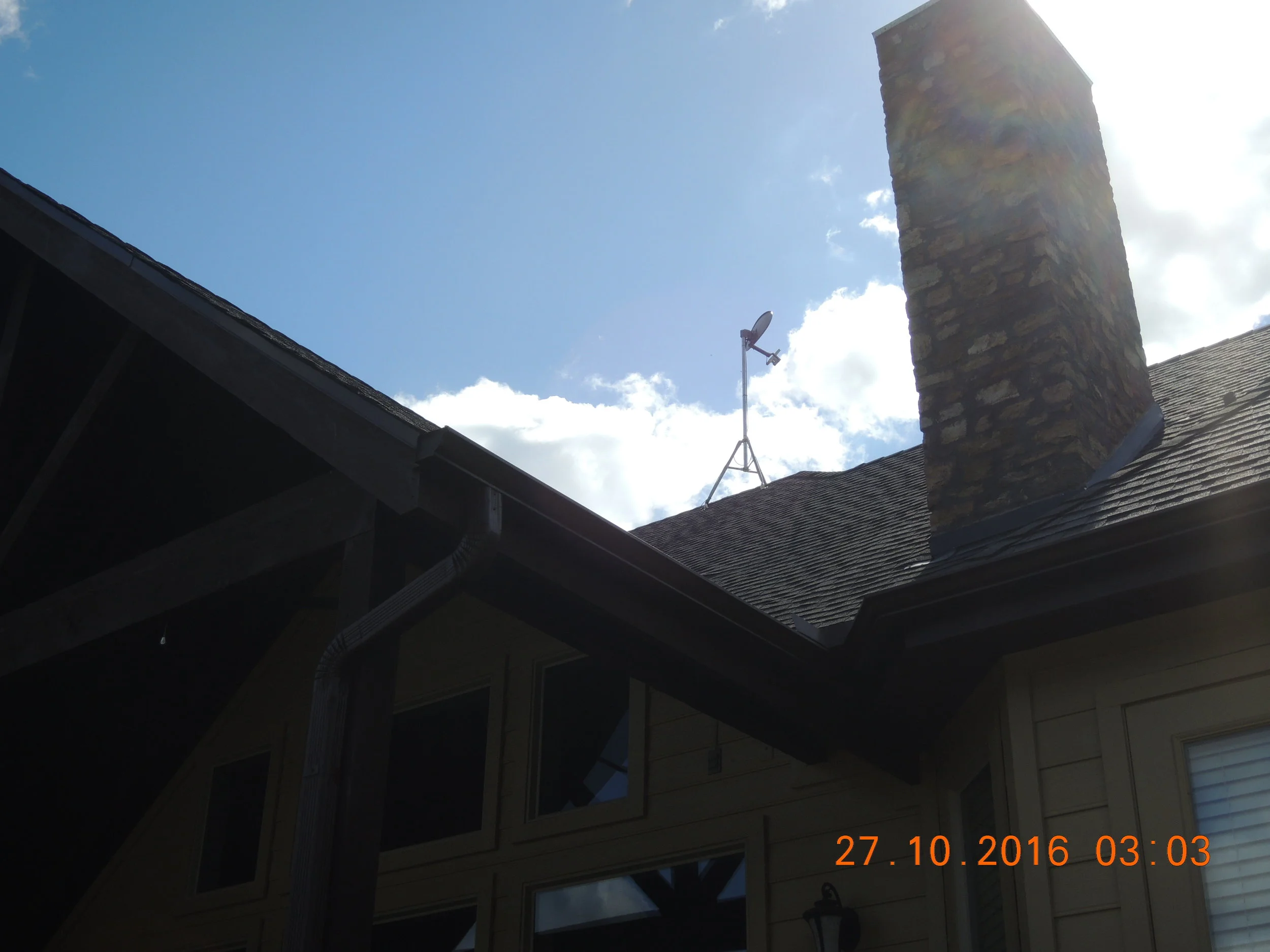
Four hours later, when I get home from Mahjong, there’s a new antenna poking straight up from the highest point of our roof.  David comes out to meet me on the driveway, and we both look up at it.  It’s massive, dominating, completely disrupting the lines of our house.  The whole cul de sac is going to grumble.   

Wayne drives by, rolling to a stop when he sees the monstrosity.  He leans forward and gawks upward as we go out to the street to explain. 

“Are you having hog problems?” David asks.

“Oh yeah,” Wayne tells him.  “What I’ve done is put out mothballs.  I don’t know if it’ll work, but it can’t hurt.”

Mothballs.  Of course.  Much more repulsive than crushed red peppers. 

There it is.  It freaks me out to think of a big ole hog rooting around in our backyard.  

There it is.  It freaks me out to think of a big ole hog rooting around in our backyard.  

Closer, it looks worse.  The grass doesn't look great this time of year, but still. . . 

Closer, it looks worse.  The grass doesn't look great this time of year, but still. . . 

From the back of the house.  At least now we have internet.  

From the back of the house.  At least now we have internet.  

From the front.  Huge.  

From the front.  Huge.