Waldos Triumphant

We have reasons to celebrate. 

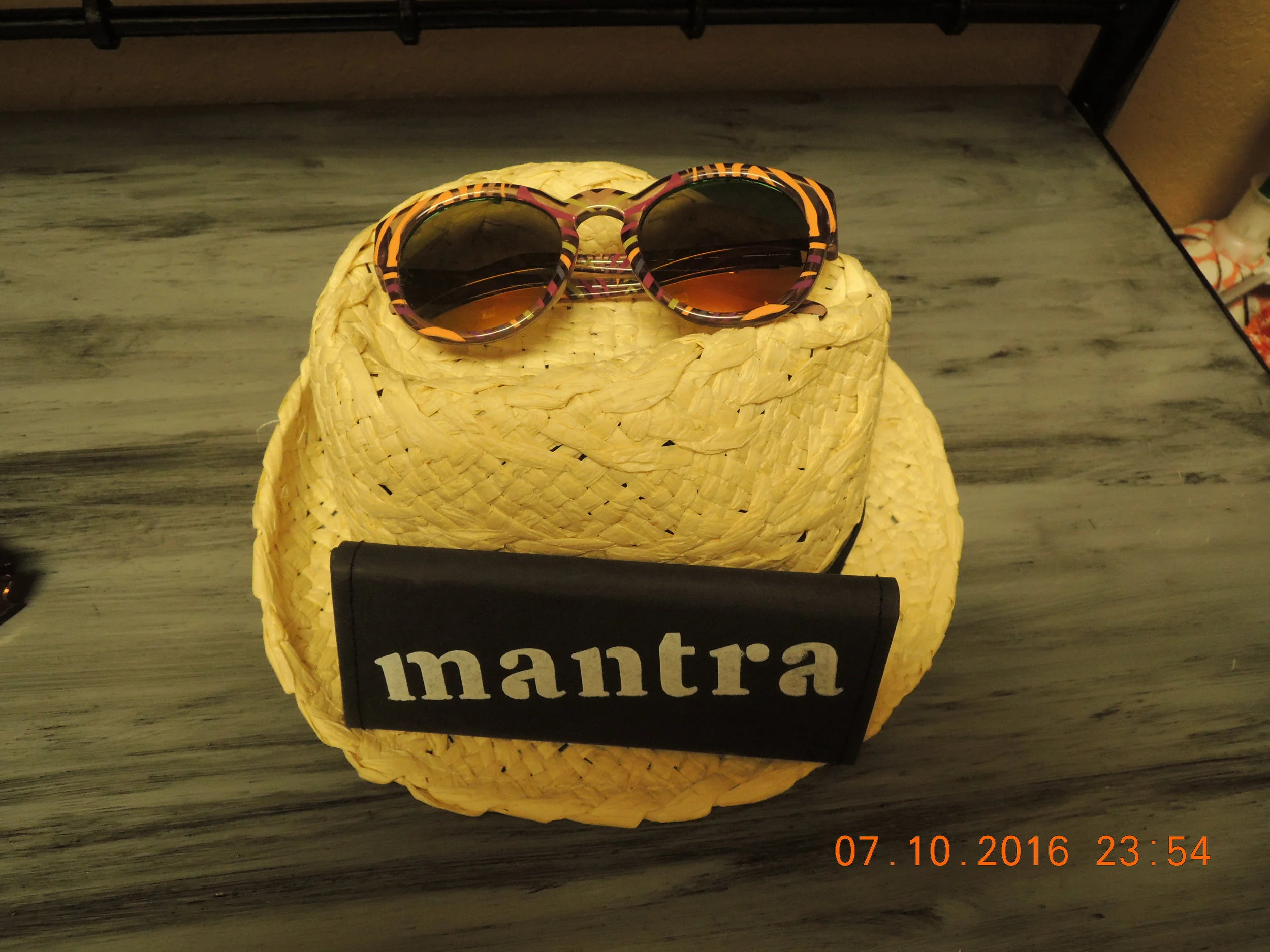
For one thing, Sam and his girlfriend, Julia, visited from Beijing.  I haven’t seen Sam in over a year, but other than a different hairstyle, he’s still the wise and inspiring presence he’s always been.  I say inspiring because he makes people want to live up to their best.  It’s a gift.  He’s been busy getting his company up and running, and a couple of weeks ago Mantra had its official kick-off which triggered a huge number of orders and all sorts of favorable responses, including marriage proposals, requests for television appearances, and rumblings about an upcoming documentary.  The buy-one-give-one concept is new in China, and wealthier people in the city are enamored with the idea of providing eye exams and glasses to poor rural kids—especially as they’re purchasing a pair of really cool sunglasses for themselves.  Yay, Sam!  It was good to see both of them and I feel that Julia—British, works for GB’s embassy in Beijing—got a good idea of what Texas is all about. 

The next thing to be celebrated is that Curtis and Anna are now engaged.  This makes me happy, as the two of them are good for each other.  They share the same sense of humor and are mutually supportive.  I understand, from speaking with other mothers at this stage, that an upcoming wedding can be fraught with conflicts and petty concerns, but regarding these two, I feel a sense of peace.  We love Anna and are happy that she’s to be part of our family.  Yay, Curtis and Anna! 

And then, of course, there’s my personal triumph.  Old Buildings in North Texas is now on the shelves in Great Britain.  It’s obtainable in hardback from Amazon here in the states, and, though both the hardback and electronic versions are available on Amazon.co.uk, UK Amazon isn’t available in the US, so no kindle downloads here.  Oddly, the hardback is much cheaper here in the states, so it’s really no more expensive to order the hardback than it would be to get it electronically.  

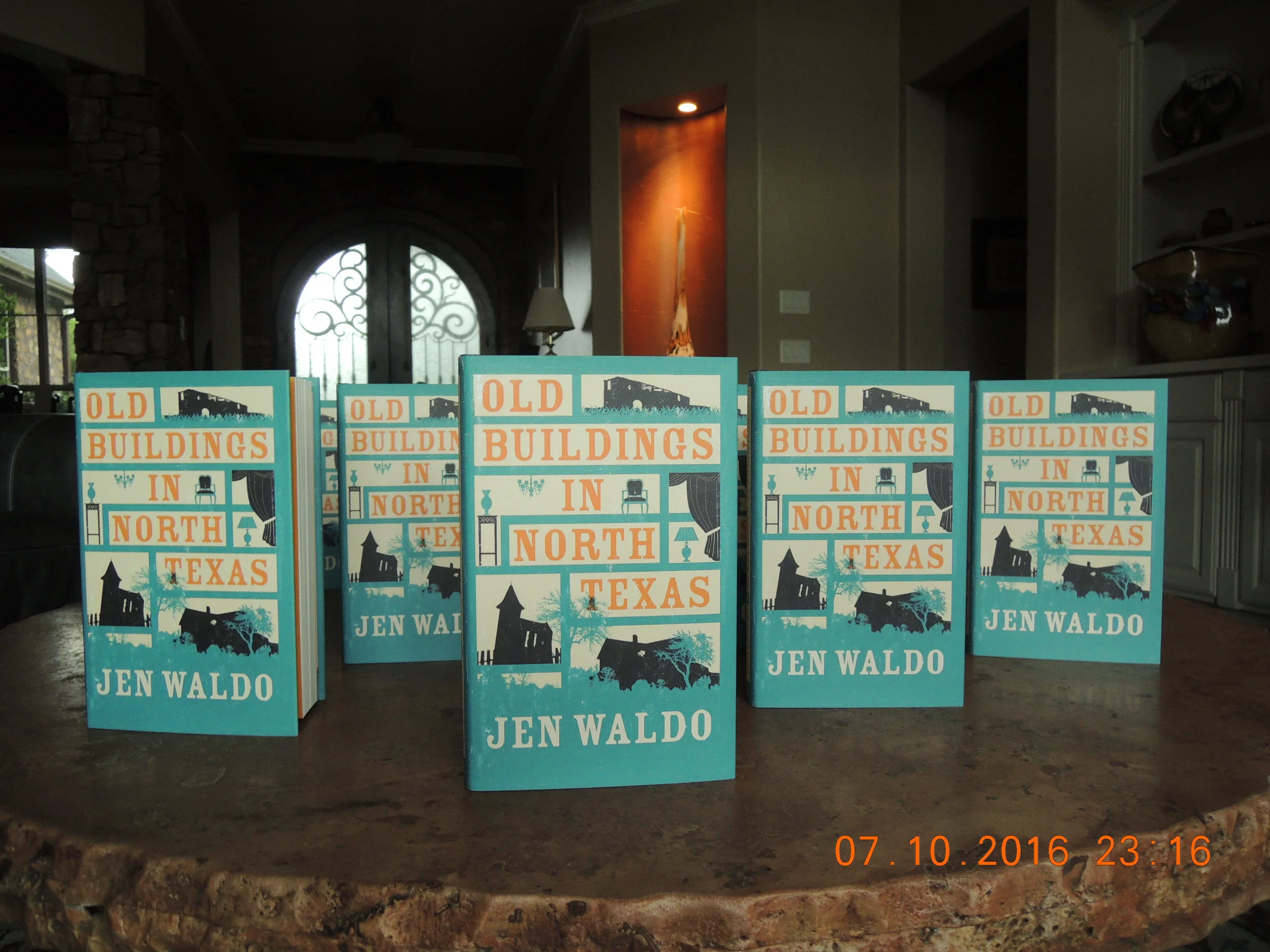
The publishers have done a beautiful job.  The color scheme is teal, gold, and cream, quite eye-catching.  I have several copies and I’ve rearranged them around the house so that I can see one every time I enter a room.  I’m obnoxiously proud.  OBiNT’s success is in the hands of the readers now—and I’ll share a thought about that.

The other day an old friend asked me what the novel was about.  This is a reasonable question that I’ve come to expect.  I gave my friend the nutshell version—a cocaine addict returns to her hometown and, feeling confined, takes up exploring abandoned buildings as a hobby.  There’s more to it than this, of course, but during a verbal exchange this is about as much as the average attention span can absorb. 

As I related the simpled-down version, I could see her expression turning sour.  It wasn’t her thing.  She didn’t approve of a story about a cocaine addict.  She couldn’t imagine how so depressing a subject could be interesting or entertaining.  I wasn’t surprised by her reaction.  I’ve known her for years, and she simply doesn’t read.  Though it’s impossible for me to fathom, many people don’t.  

Despite her reaction, I have faith in the work.  I have, after all, been called, “a unique and astonishing new voice in fiction.”  My writing style is conversational, making it an easy read; it’s amusing, but not shallow.  I love Olivia, the main character, and will admit that she and I share the same dry sense of humor—and I think I’m pretty damned funny.  I cackle over my keyboard all the time.  My friends who’ve read Old Buildings in North Texas tell me that, as they progress through the narrative, they hear my voice in their heads.  Whoa.  That can’t be pleasant.  Try not to do that. 

As to the response to the book, people who know me will be more critical than strangers.  I don’t know why, but that’s the way it is.  And people who don’t know me will think they do, simply because I’m that convincing.  So let me be clear:  I am not a cocaine addict.  I do not smoke, though I sympathize with those who do.  I don’t venture into abandoned buildings.  And I don’t endorse secretiveness and stealing.  On the other hand, people who are good all the time are boring, while flawed characters are stimulating. 

And so, as Old Buildings takes flight, I request positive and supportive feedback.  A five-star rating, and especially a comment or review on Amazon would mean a lot to me. 

Now I move on to Why Stuff Matters, my next novel, which will be on the shelves in the next six months, give or take.     

Sam and Julia gave me flowers to celebrate.  
Sam and Julia gave me flowers to celebrate.  

An army.  I plan to save them to autograph at readings.  I'll send an autographed copy at cost (don't want to go broke!) to anyone not named Waldo who promises to write a review on Amazon.    
An army.  I plan to save them to autograph at readings.  I'll send an autographed copy at cost (don't want to go broke!) to anyone not named Waldo who promises to write a review on Amazon.    

I made an advertising tableau of the sunglasses Sam gave me.  The lenses are polarized and mirrored.  I like mirrored lenses because people can't tell that I'm asleep.  

I made an advertising tableau of the sunglasses Sam gave me.  The lenses are polarized and mirrored.  I like mirrored lenses because people can't tell that I'm asleep.  

Here we are at Saltair, in Houston. Though the red eyes make us look possessed, we're really quite normal.  It was a great evening.   
Here we are at Saltair, in Houston. Though the red eyes make us look possessed, we're really quite normal.  It was a great evening.   
Time and Effort

On Sunday morning we decide to go into Austin for a walk along the lake, and then brunch afterward.  Austin is an easy drive, forty-five minutes of pleasant hill country, and no traffic.  And in the city there are always interesting things to look at and do, but for some reason we don’t come in as often as we’d like. 

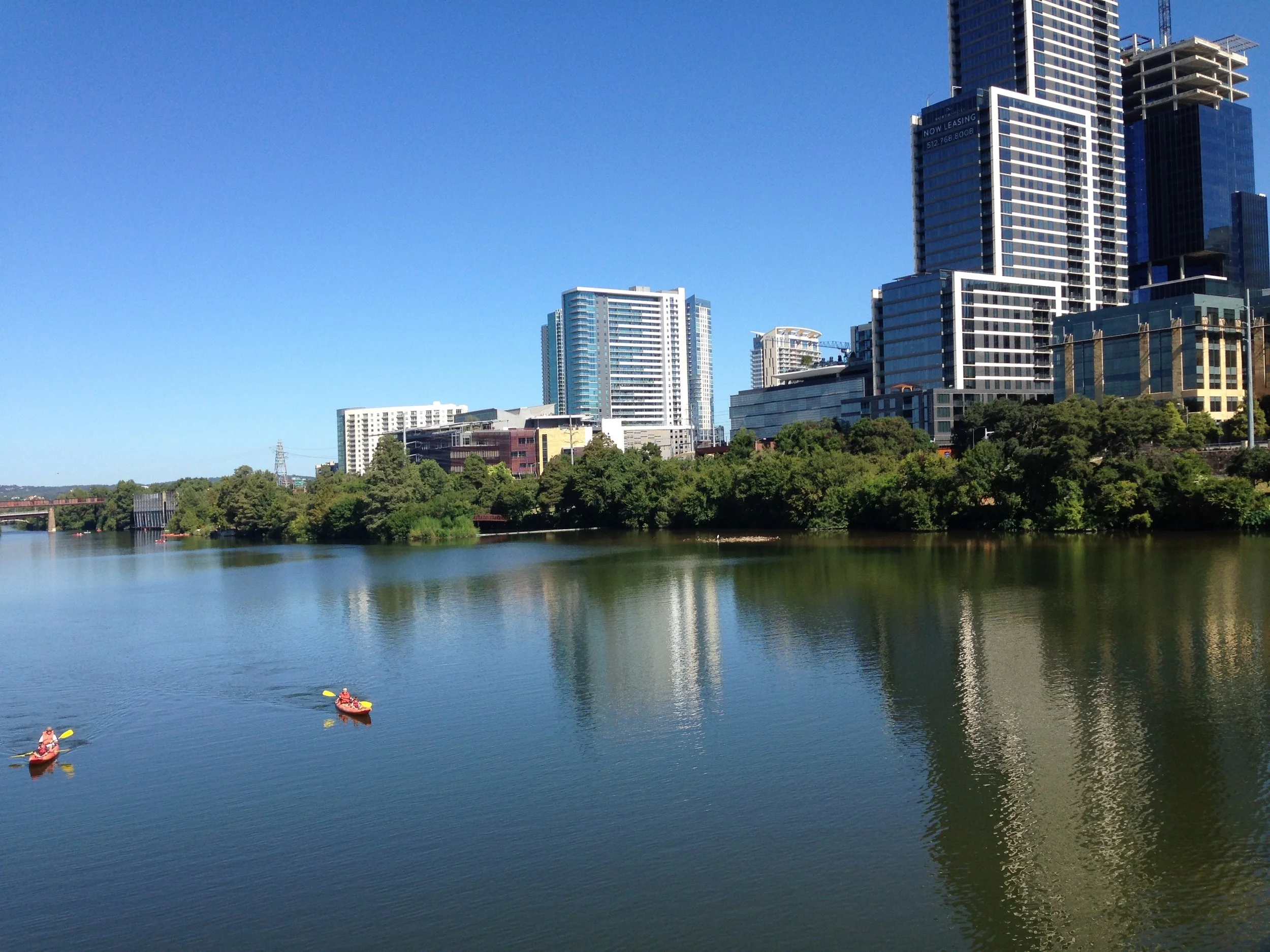
I park on Third and Congress, a few blocks from Lake Austin.  We walk past trendy shops, all closed on Sunday morning, to get to the walking trail, which stretches for miles in both directions, on both sides of the lake.  David had a hip replacement a couple of weeks ago, and I’m having a disc fusion next week, so we’re both sore and feeling sorry for ourselves.  Both athletes and fatties populate the trail.  The fatties only get out of their chairs when their partners make them.  We slip in between two other couples, joining the long queue of walkers and adjusting our pace.  I laugh and David asks, “What?”

“I wonder how long it’ll be before thinking about that stupid vest stops making me laugh.”

Then he laughs too.  The vest is hilarious. 

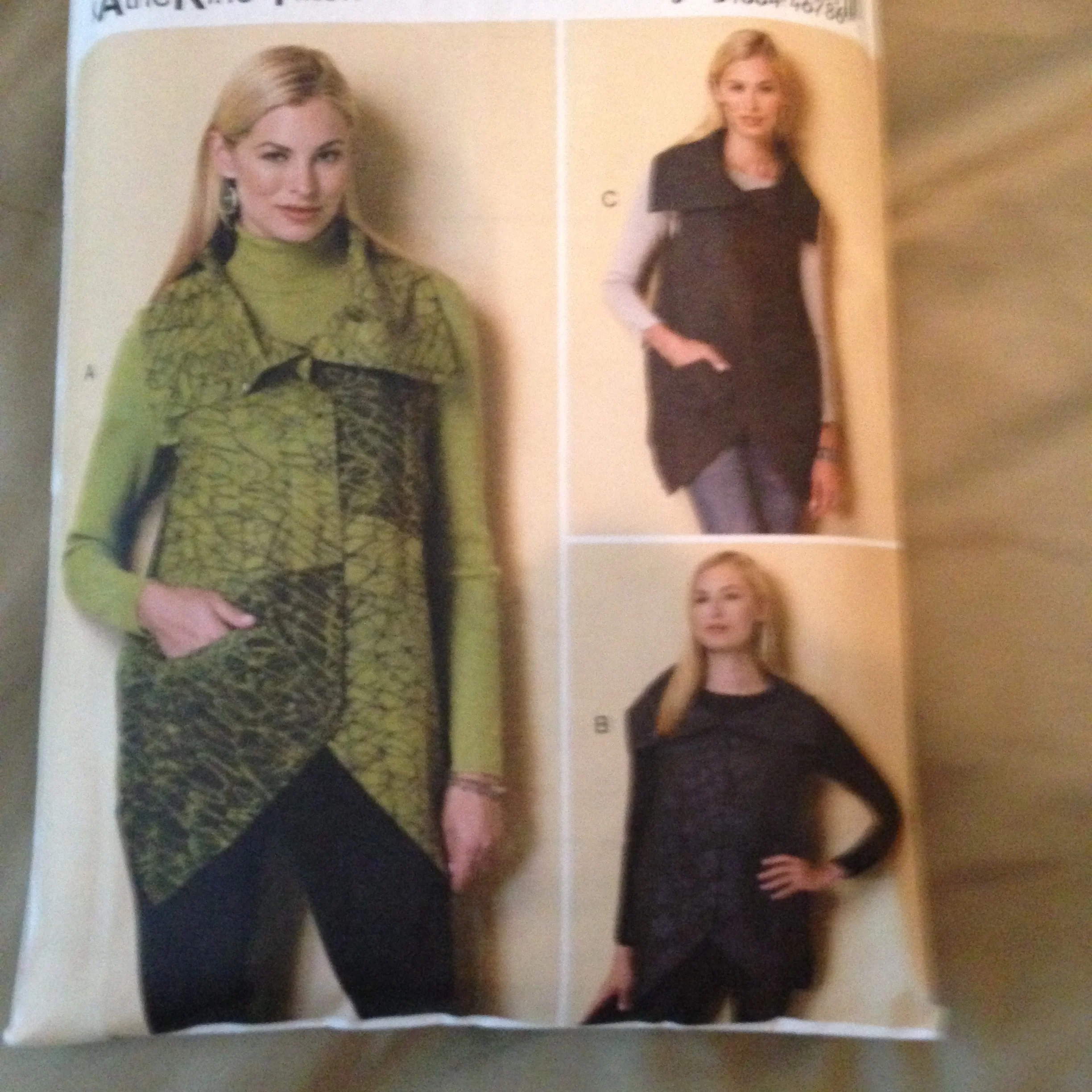
I’ll start with the silk:  Mossy green.  I got it in Cambodia a couple of years ago.  At the time I also bought a couple of yards of yellow, from which I made a lovely top—but it fell apart after only a couple of wearings, so I’m not talking about a durable weave.  And for this reason I didn’t want to invest a lot of time or effort into the green.  I ordered a vest pattern from Butterick, thinking foolishly that vests are always quick and easy, and they make a nice accessory.

Every pattern comes with a size chart and, sensible as always, I took my measurements and ordered accordingly.  While the retail world panders to customers’ egos by vanity sizing, patterns have remained true to their sizing for over a hundred and fifty years.  In a store I’m a ten, but as far as Butterick is concerned, I’m a fourteen, which is, frankly, more believable.    

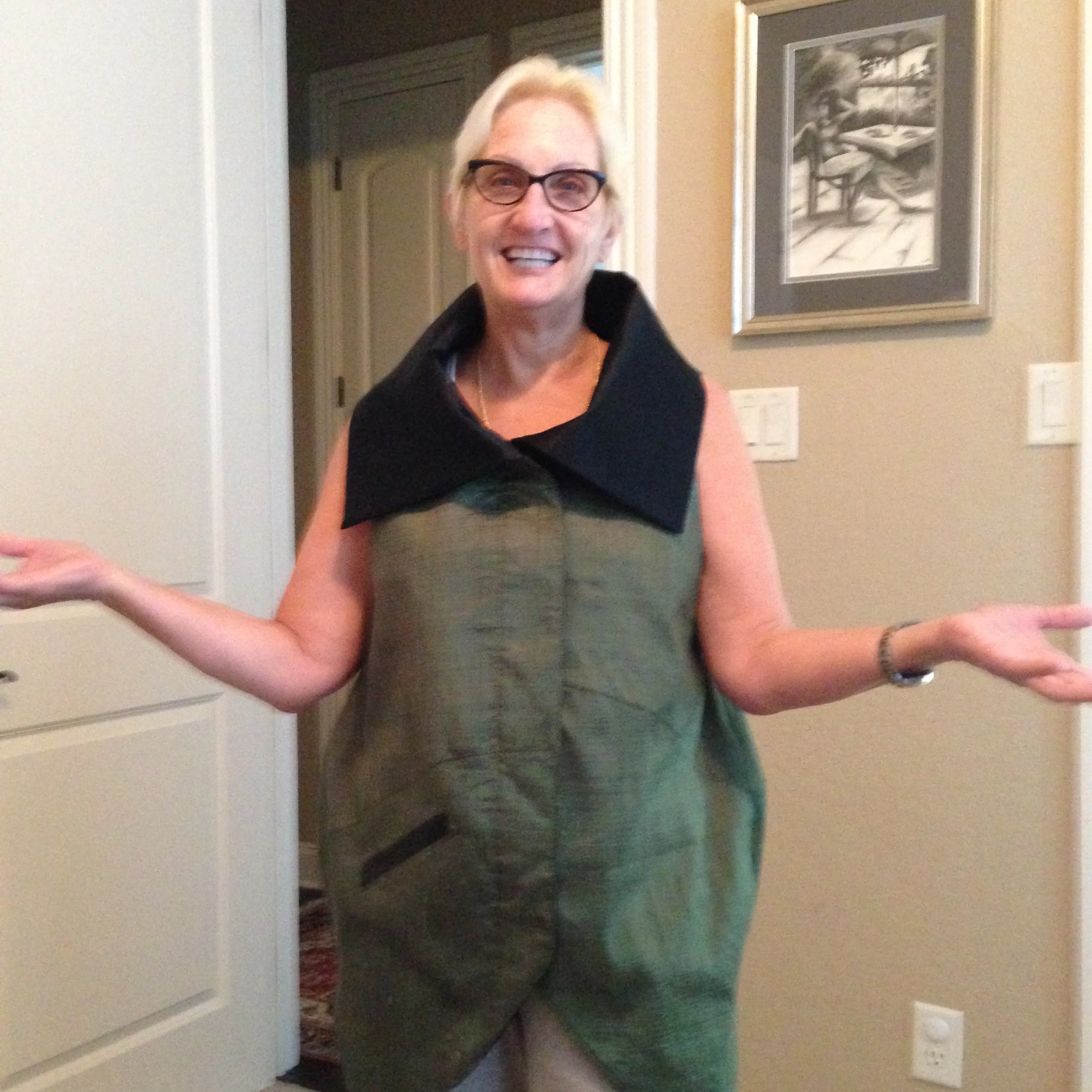
The vest was far from easy.  With a hidden fly, complicated facings, and a zigzag hem, I was in a state of mossy confusion the whole time I was making it.  Every couple of hours, I’d go find David and say, “I cannot imagine how this thing’s going to look,” or “This vest is going swallow me.”

This is the longest walk David’s been on in several months, and his limp is becoming more pronounced.  Honestly, I can’t wait until he gets beyond this.  I have no patience with his stopping to stretch every few minutes.  Also, while people-watching in Austin is always entertaining, there’s construction going on all over the place.  We’ve taken detours over root-roughened terrain and, at times, have been instructed by orange cones to walk in the street.   

“Are you ready to turn around?” I ask.

“At the next bridge.” 

The bridge is broad, with benches, planters overflowing with green, and a generous view in both directions.  A man with a telescope invites us to come look at sunspots.   

“It’s fixed just right,” he says.  I hunch over, see the sunspots, and am unimpressed.  “You saw ’em?” he asks, excited.

“Yes.”

“Did you know that this is International Solar Sidewalk Sunday?” he asks.

“No, I didn’t know.”  And this does impress me.  That we should be walking on this very day, when people all over the world stand on sidewalks and talk to strangers about sunspots, seems wondrously serendipitous.   

David, too, looks at the sunspots, though he does a better job of pretending to be excited than I.  We continue to the other side of the bridge, inadvertently arriving at the dog park, which is smelly and chaotic, with dogs chasing each other, barking, flying into the water.  My little dog, Trip, would be scared to death of this place.  He’d be trembling in my arms, begging me with his blind eyes to take him to safety. 

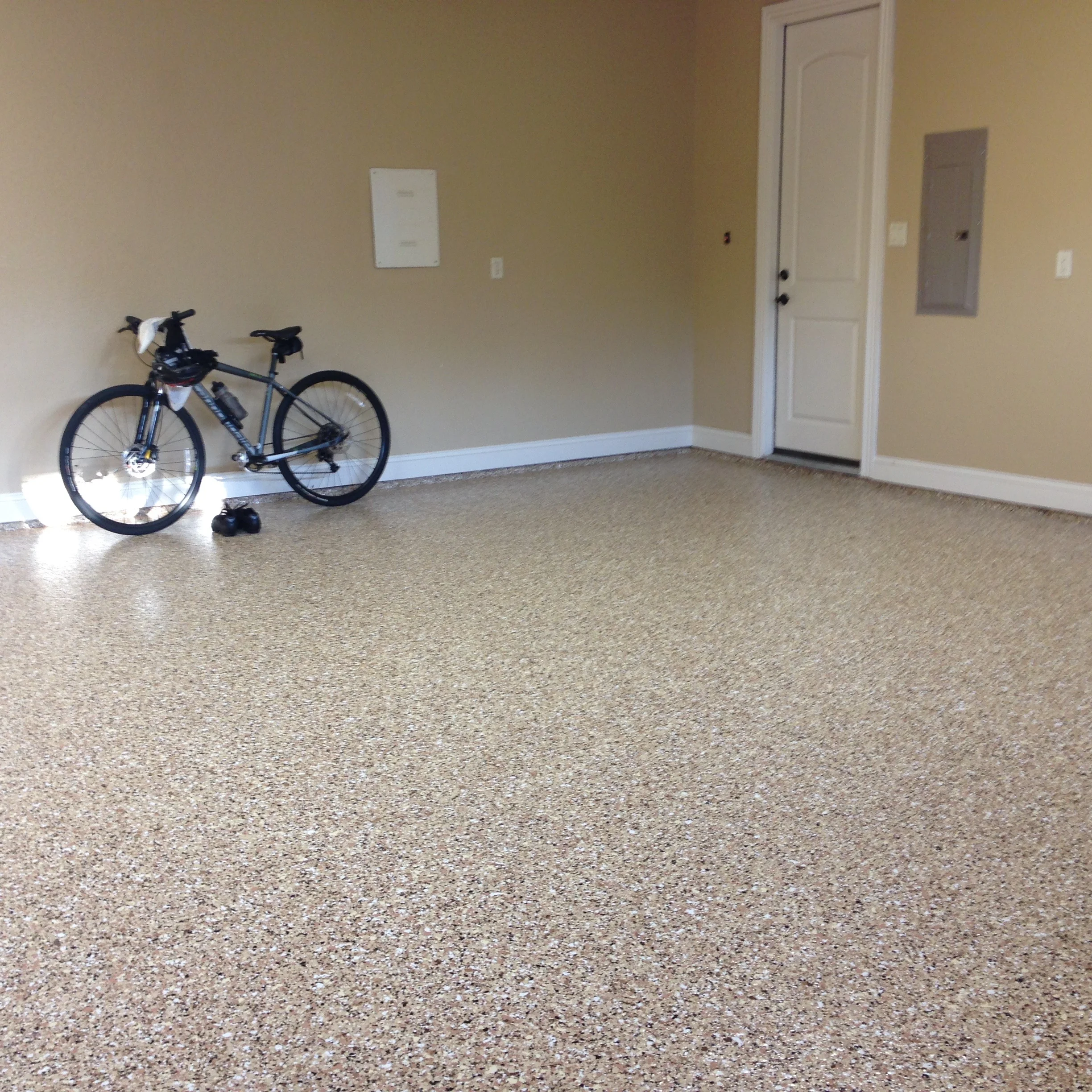
Back to the vest, which has nothing at all to do with the garage.  We’re getting the garage remodeled, the reason for which eludes me; but apparently this particular garage floor and that space-saving shelving, have always been a dream of David’s.  The floor:  first, two men sanded, power-washed, and hit it with a shiny adhesive; then they sprinkled multi-colored chips, let it stand for a few days, sanded it again, and covered the whole thing with a layer of epoxy that made the whole neighborhood woozy.  Apparently this type of flooring is much coveted.  Many manly men have dropped by, whistled, admired, and made plans of their own. 

When I finished the vest, David was in the garage patching the drywall in preparation for the installation of the shelving, which will take place in a few days. 

“Are you ready for a laugh?” I ask, poking my head into the garage.

“What?” David looks up, sees me step on to the new floor wearing the vest, and laughs.  “You look like a munchkin.”

“I guess I’ll have it if I ever need a costume.”  I’m both horrified and despondent.  I ended up spending twenty hours making the thing, when it should’ve only taken four.  “It doesn’t look anything like the picture.  The picture looked cute.  This looks ridiculous.”

“If I were you, I’d write a letter of complaint.”  David is a letter-writer.  I am not.

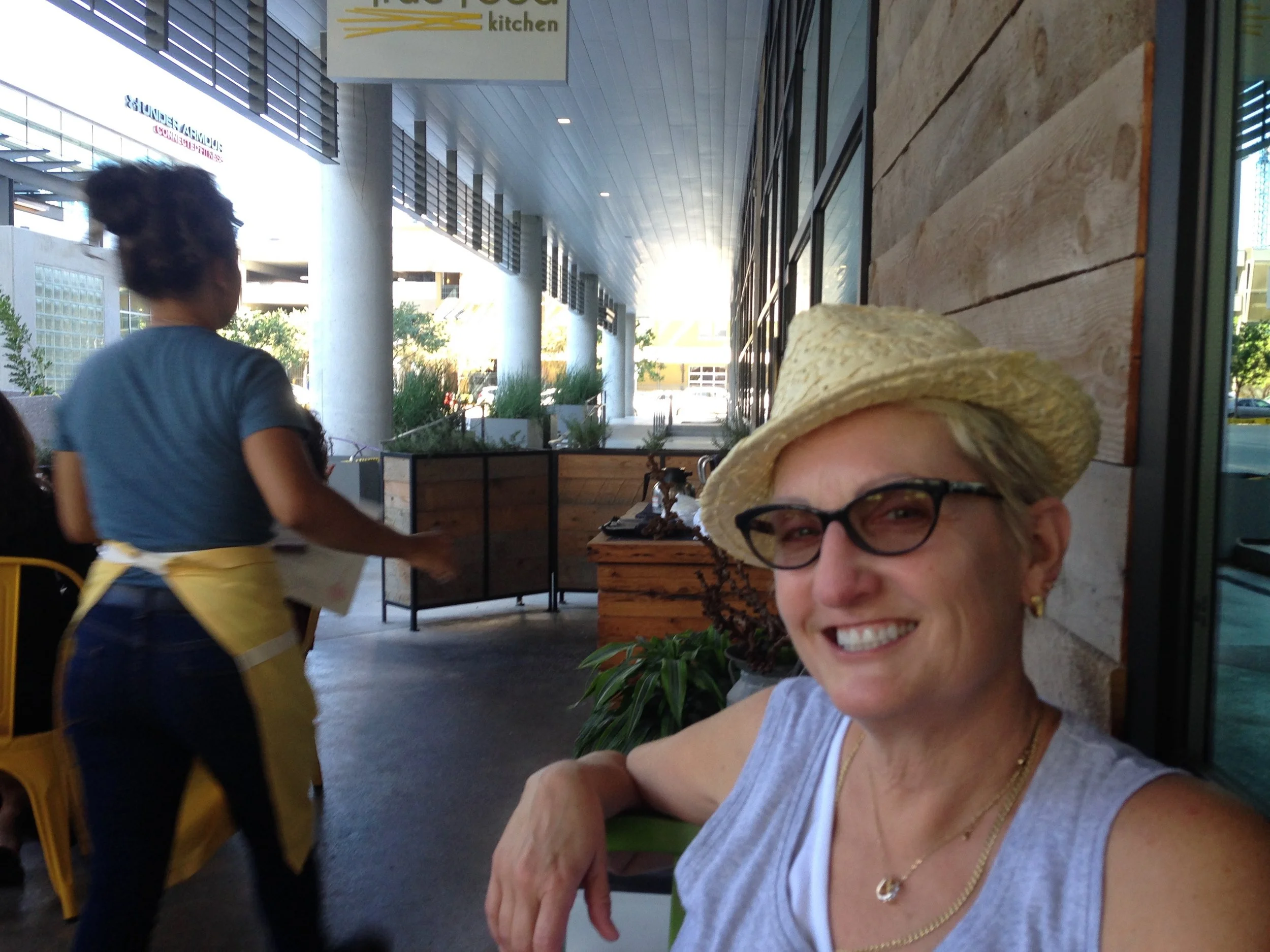
And the memory of the vest is why we chuckle on the Lake Austin walking path.  When we’ve returned to our starting point, we head toward brunch.  True Food.  It’s all about organic.  I have a Greek salad with hummus, always a good choice.  David orders the best pancakes he’s ever put in his mouth.  I try a bite of his.  He’s right.  They’re wonderful.

“One hundred percent natural.”  He’s impressed that natural can also be tasty.

“Organic doesn’t mean it’s not fattening,” I say. 

“It must be healthy, though, because it’s natural.”

“Just keep telling yourself that.” 

He slathers on the natural butter, pours on the natural syrup.

A couple takes the booth next to us.

“Look,” I say.  “It’s Howard and Bernadette, from The Big Bang.”

“Wow.  It is.”

These two people have gone to a great deal of trouble to look like characters from a sitcom—over-sized buckle, hip-huggers, and bangs for him; the shellacked golden hair, glasses, and short-waisted dress for her.  They spent time and effort in order to look like a popular TV couple; I spent time and effort on an article of clothing I’ll never wear.  Which is more stupid? 

True Food, a trendy brunch spot.  The Bloody Mary was good.

True Food, a trendy brunch spot.  The Bloody Mary was good.

View from the bridge.   

View from the bridge.   

If there's a competition for the most beautiful garage floor, we'll win it for sure.  

If there's a competition for the most beautiful garage floor, we'll win it for sure.  

This is what the vest is supposed to look like.  

This is what the vest is supposed to look like.  

What the what?  This thing is never leaving the closet.  

What the what?  This thing is never leaving the closet.  

The Last Lodge

We catch the boat in Seward, a small town at the head of Resurrection Bay.  We’ve been looking forward to this portion of the trip where we’ll follow the dramatic fjords and perhaps catch sight of whales.  A boat this size disappeared about a year ago, and there was speculation, bordering on certainty, that it was taken out by a whale.  So, as I am understandably fearful, I share the story with my travel mates, who are unimpressed; they’re more concerned about throwing up than whale danger.  

This is the roughest sea I’ve ever traveled.  Up, up, up to the crest; then Slam! into the valley of the wave.  Repeat a billion times.  I don’t tend toward seasickness, so I sadistically enjoy every up and down of it while every one around me moans and turns green.  It is, however, disappointing that the heavy fog hinders fjord viewing. 

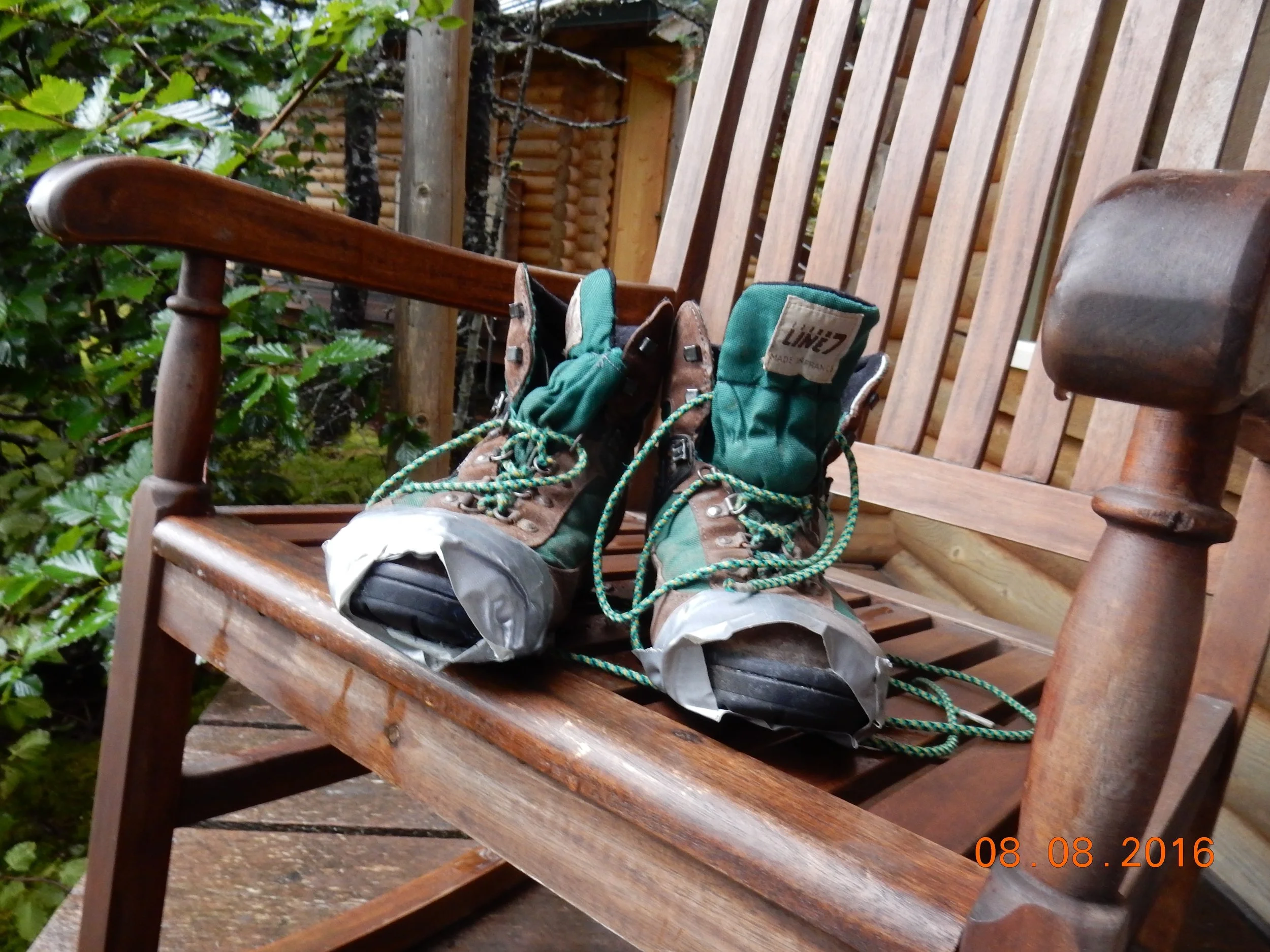
We arrive on a beach and are told that it’s an easy mile-long hike to the Kenai Fjords Glacier Lodge.  It’s on this short walk that disaster catches up with David—his hiking boot falls apart!  The sole, barely attached at the heel, flops all over the place.  Toes are exposed.  This couldn’t be more suitably timed, as, when we were packing, David informed me, in a rather pompous tone, that he’s had those boots longer than he’s known me.  Thirty-three years.  (Well, gee, David, we were going to Alaska.  Maybe you should have invested in a new pair.)  But all was not lost.  A woman gave him a tiny bungee string to hold the shoe together until we got to the lodge; and Dennis, a member of our tour group, offered the extra pair that he’d brought along, just in case they were needed.  Whew.  Misfortune overcome.  This is the sort of thing that seems inconsequential when it happens to someone else, but it’s a big deal when it happens to you.  Mortified that his gear fell apart, and sorrowful over the demise of one of his oldest belongings, David mourned the loss for a whole hour.  Then he perked up and got on with things, wearing someone else’s shoes. 

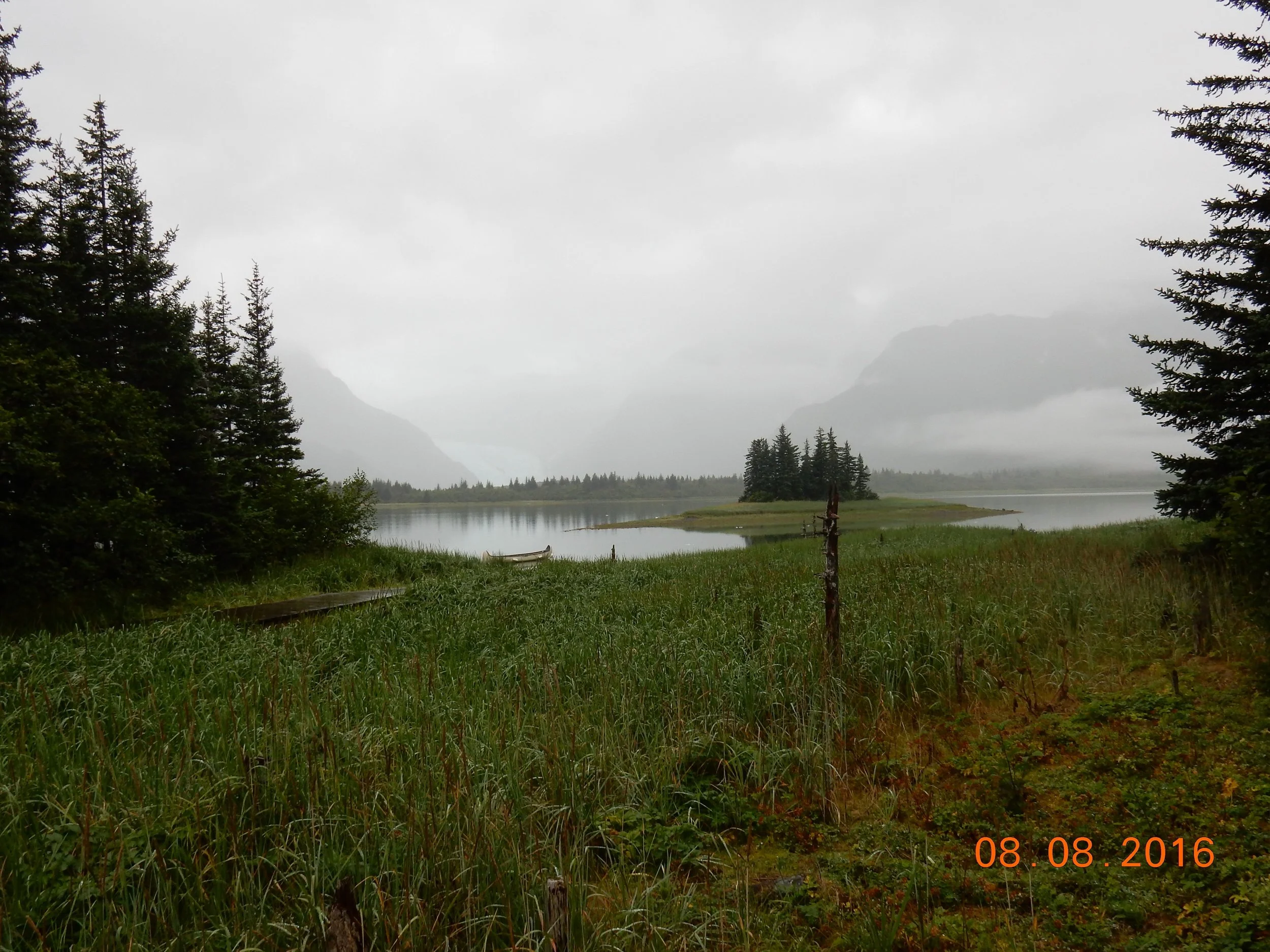
The lodge is stunning.  Nestled in a tidal lagoon, it overlooks Pederson Glacier.  The bay is a mirror dotted with floating mounds of white.  Otters are everywhere, cute with their playful eyes.  Right in front of the dock, a seal’s round head pops up, twinkling eyes visible, then disappears again.  It thinks it’s being sneaky.  We see you, seal. 

Of the three places we’ve stayed, this is the nicest.  The cabins are large and, thankfully, have bathrooms.  Most importantly, this lodge has a designated drying room, made arid by the hot wind from the generator.  As were the other lodges, the location is remote.  There is no garbage pick-up.  They produce their own power and process their own waste.  Every aspect is designed to leave only the tiniest footprint. 

Delicious food, charming guides, a nice wine bar, a surplus of equipment in excellent condition—these things are appreciated, but all fade when compared to the breathtaking scenery.  I’m sure there are other lodges like this in Alaska, where tourism thrives and the isolated pristine wilderness is the attraction; but in all my travels I have never seen a place as beautiful as this—the jagged gray mountains patched with glaciers that from a distance look insignificant, but grow to massive proportions upon proximate approach.  The water, ocean and glacier, the bluest blue.  Air so pure that it makes me dizzy.  Every once in a while, a great Boom!  A part of a glacier has broken off.  Echoes for miles.  Calving. 

We’re kayaking to the Aialik Glacier.  We don comical gear—rubber boots, rubber overalls, two rain jackets; and an oddly flared skirt over it all.  Plus lifejackets.  And then we tromp the mile to the shore, uncomfortable and looking ridiculous in the absurd skirts.  During our travels, we’ve combined and split away from other tour groups, and this activity is open to all who are staying at the lodge, but the only guests who’ve elected to come along are the people we started out with, the ones we’ve become quite close to.  One by one we squat into our places in the kayaks, encouraging one another and enjoying ourselves.  The skirt edge fits tightly over the rim of the seat; and this, we’re told, will keep us dry.  By this time, I know better.  To be in Alaska is to be wet. 

David and I aren’t experienced kayakers.  He sits in back, working the rudder as he rows, attempting to control where we go.  I’m in front, rowing hard, putting my shoulders into it.  But for some reason David can’t keep the bow going straight.  We go one way, then the other.  This body of water is still; no current, no waves.  Maybe the rudder’s broken.  As a group, we’re aiming toward a distant island, and the glacier beyond.  I’m putting all this effort into gliding forward, yet we’re zigzagging.  It’s a waste of energy.  So I decide that when we’re not heading where we should be, I’ll stop rowing. 

“You can’t keep a beat,” David complains, as though he’s doing everything right back there. 

“So says the scientist to the music major,” I tell him.  “I’m a human metronome.”

“We’re supposed to row in sync.”

“If you want me to row then keep this thing true.  It’s stupid to row in the wrong direction.” 

Out of sorts with one another, we continue our efforts in sulky silence.  For about three glorious minutes on the outgoing trip, we get it right—flawless, coordinated, advancing quickly in the right direction. 

And during this brief spell, I hear Dawn, in a neighboring kayak, say to her son—“Look at David and Jenny.  Cooperating, going forward smoothly.  Only when you’ve been married for years can you achieve that kind of harmony.”

Harmony.  Ha.  Sometimes something can look one way when it’s really not that way at all. 

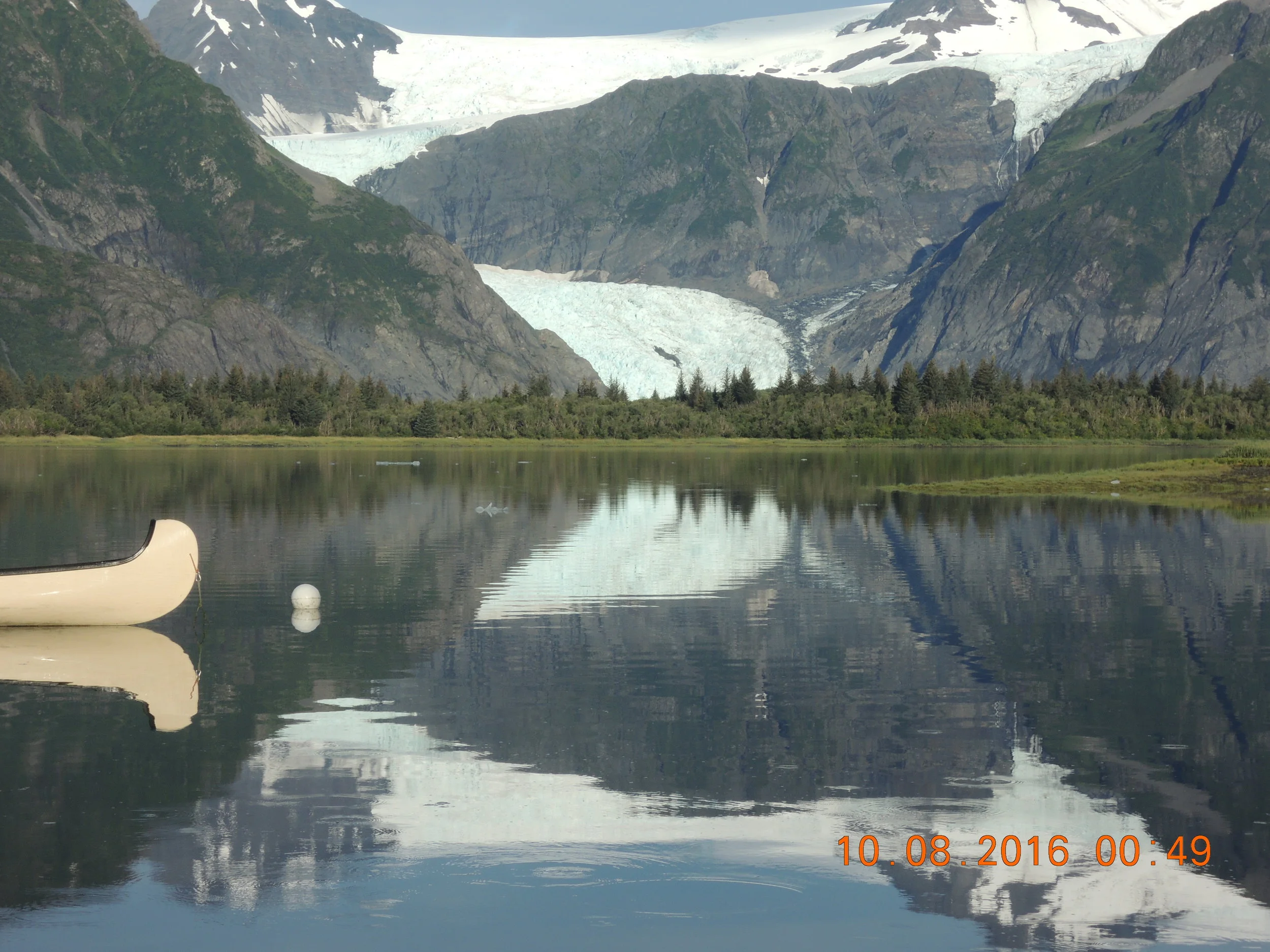
We arrive at the base of the massive glacier.  With icebergs floating around us, everything is eerily still, silent, enchanted; time stops.  We cease rowing and talking, and simply gaze at the magnificence for fifteen minutes or so.  Then we complete the circle around the island and zigzag back to our starting point on the shore. 

A view of the glacier from the kayak.

A view of the glacier from the kayak.

Even the best hiking boots don't last forever.  

Even the best hiking boots don't last forever.  

The view from the lodge.  Because of the fog, the glacier is barely visible.

The view from the lodge.  Because of the fog, the glacier is barely visible.

View of the lodge from the end of the dock.  

View of the lodge from the end of the dock.  

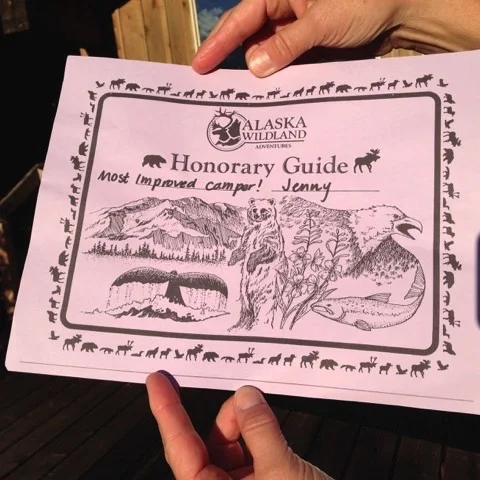
On our last night at the lodge, Elias, our guide, asked us to meet for a "ceremony."  Knowing he was going to advise about tipping practices in Alaska, I teased by asking if it would be an awards ceremony.  He made this especially for me. …

On our last night at the lodge, Elias, our guide, asked us to meet for a "ceremony."  Knowing he was going to advise about tipping practices in Alaska, I teased by asking if it would be an awards ceremony.  He made this especially for me.  

Rafting the Kenai

We convene at the boathouse after breakfast.  It’s raining.  Not a heavy rain, just a constant flinging of light drops.  Because the Kenai River is the progeny of glacier and sun, we’ve dressed warmly.  I’m wearing long johns under quick-dry pants; four layers up top—silk camisole, wool undershirt, fleece zip-up, and rain jacket.  And now we’re going to add another layer.  We mill and bump as the helpers distribute mismatched overalls, rain jackets, and boots—all in thick formless rubber, and smelling of dirty hair and armpits.  Hands push through sleeves, feet cram into tall boots; bend forward to swing suspenders over shoulders.  We’re all so horrifyingly unfashionable that I don’t want to look at anybody.  Our hiking boots are packed away; we’re told that we’ll be reunited with them at the end of our journey.

Three hoods hang from the back of my neck.  I pull each one over my head.  There are two Velcro wristbands on each wrist, and I pull them tight so the water won’t get in.  More than anything, I don’t want to get wet and cold. 

An awkward bunch, we troop to the river, where we receive instruction on how to get in.  There are three rafts, each holding six passengers and a guide.  One by one, we press into the calf-high water, sit on the fat pontoon, and swing our legs over and around.  And we’re on our way.

It stops raining; hoods come off. 

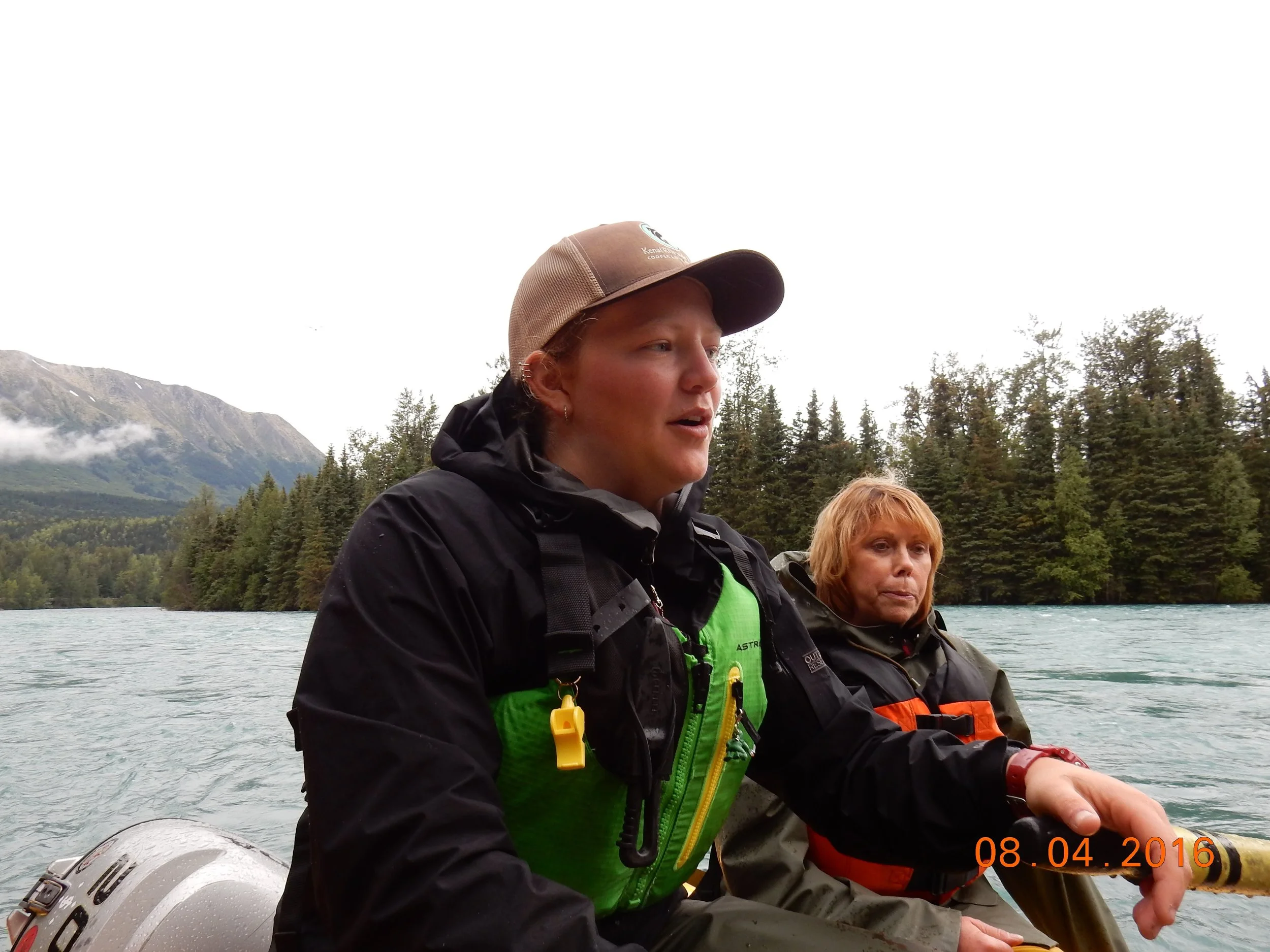
Our guide starts talking as soon as we’re on the river.  She has a squeaky voice, which is going to make me crazy.  From the beginning of this trip to the end, we find out more about this twenty-something woman than we want to know.  While she yammers ceaselessly, I ponder how some people love to tell strangers their inner thoughts, their plans.  Is this good or bad?  Preserve some mystery, I want to tell her. 

While the river’s broad and fast moving, the white water we encounter is no more risky than a mild amusement park ride, though splashes are involved.  And even wearing all these layers, the water seeps in.  I was diligent in closing off my wrists, yet my wool and fleece layers are soaked to the elbows within the first half hour.  I remove my sopping knit gloves and stuff them into a lifejacket pocket.  Then I try to keep my hands warm by curling them into my breasts beneath the lifejacket, but it doesn’t help. 

The rain starts up again.  Three hoods for one head.  The drawstrings of the outer two hoods are tight beneath my chin.  The snaps at my throat are closed.  And still my hair, neck, back, and chest get soaked. 

How are my fellow travelers doing?  Dawn and Ronnie are rocking along on the back pontoons, most proximate victims of the verbal onslaught from our guide.  Dawn looks uncomfortable.  She tends to get sick when she’s on the water.  I ask her if she’s okay, and she says she’s fine, but she’s speaking through closed teeth because her jaws are so tense.

David sits across from me.  He looks content, not nearly as cold as I am.  His glasses are covered with droplets.  Laura is next to me.  She’s gifted when it comes to spotting eagles and their nests.  Though she’s shivering, her eyes twinkle.  From this vantage, we’re surrounded by an impenetrable wall of green, broken by crags of granite, which she seems to find exhilarating.  Her husband, Adam, is across from her.  Happy to bob along, he’s playing with thoughts inside his head.  Every once in a while he’ll emit a “heh, heh, heh.” 

If it weren’t for the cold I’d be enjoying this.  The pace is pleasant.  The scenery is spectacular.  The air is pure.  Eagles are perched in the branches of the trees.  Periodically they take flight, claiming the sky.  Their whistle is dainty; incongruous with their wingspan and majestic demeanor. 

“Are you cold?” I ask Laura. 

“I’m freezing,” she tells me.  “My feet are soaked.”

At least my feet are dry.  At this point the rain goes from slight to torrential.  The spots on David’s glasses become waterfalls. 

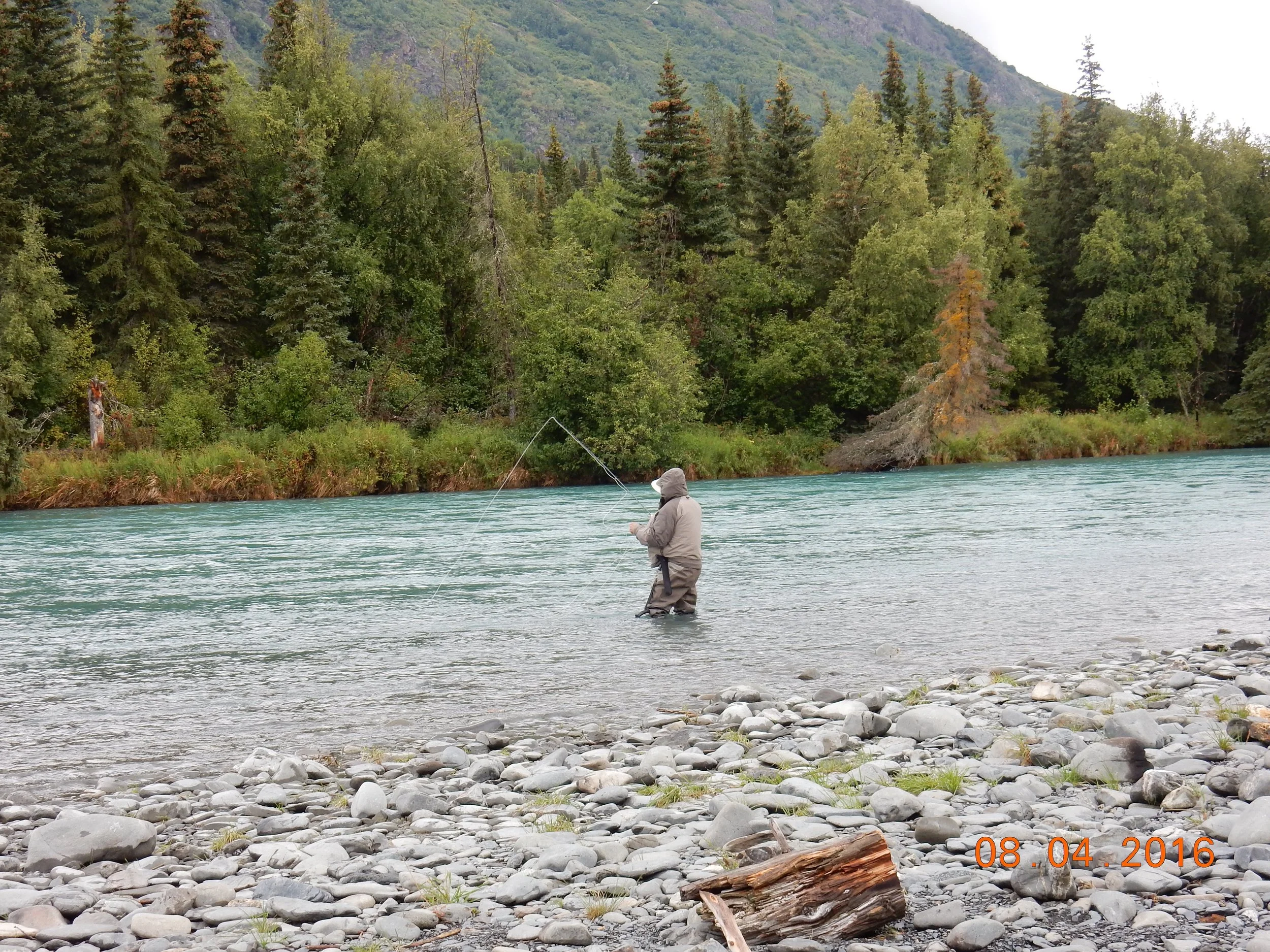
We round a bend and come upon a fishing tour.  Twenty people, dressed in the same ugly gear we’re wearing, standing out in the water, poles and nets at the ready.  Though they’re right on top of each other, they’re having luck.  There’s a reason why they’re all in the same pool—this is where the spawning salmon gather.  After that, until we reach Skilak Lake, we’re never out of sight of fishermen scooping their salmon.   

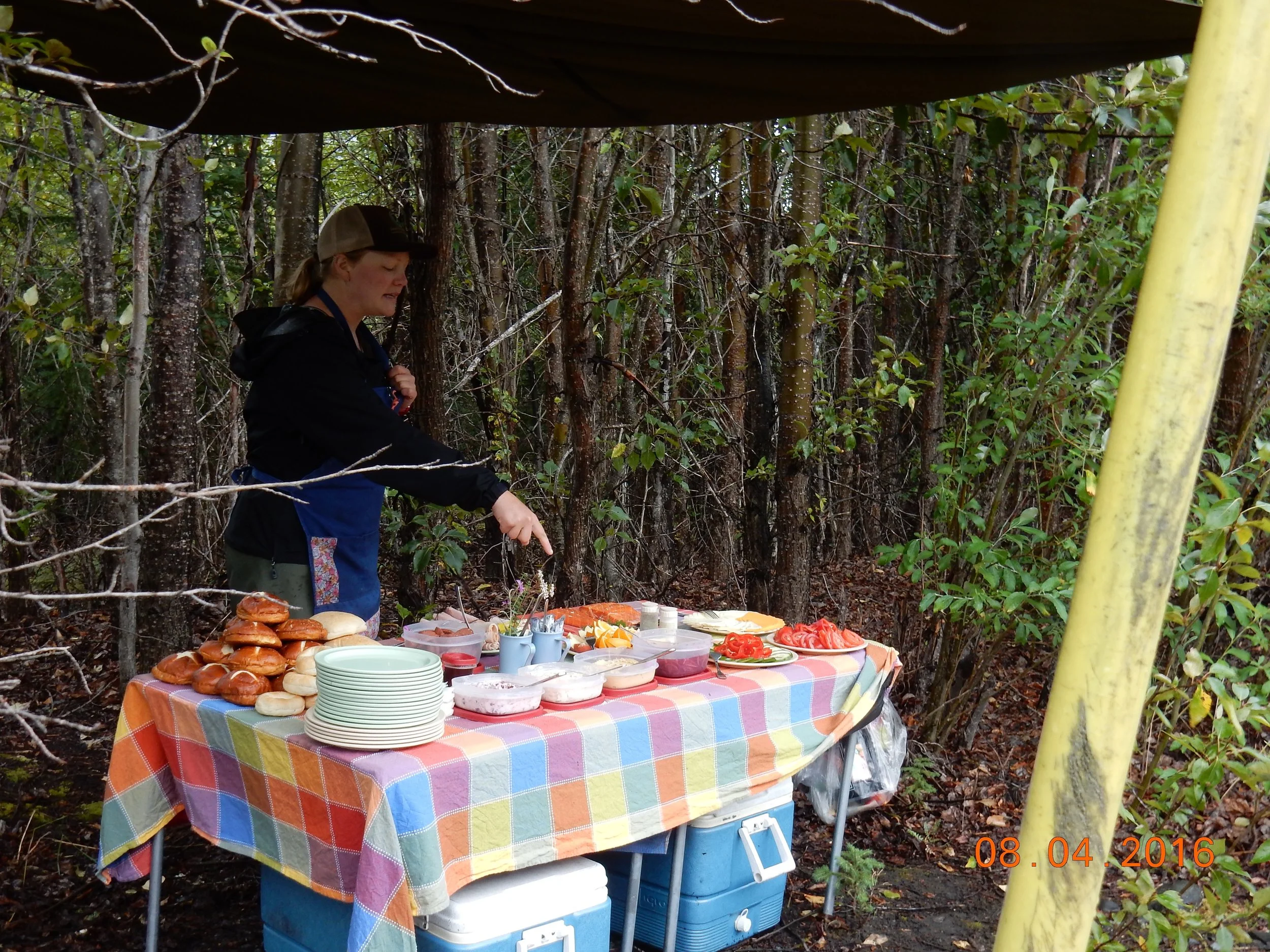
After a while our rafts come to bank on a rocky beach.  The guides leap out, set up a table and a tent to keep the rain out, then spread an impressive picnic of salmon, salad, bread, several gourmet cheeses. 

The rain has let up a bit, but the sky still drips. 

“Ladies to the right, gentlemen to the left,” one of the guides announces.  And that’s the way we find out that if we need to pee, which we all do on account of our reactive bladders, we must seek a private place in the wet Alaskan woods. 

One by one we wander in our designated directions.  As I squat between two trees, my cold butt exposed, I worry about Alaska.  I understand that these areas we’re visiting are remote and that infrastructure is impossible and destructive to the environment.  But we’ve seen a hundred people fishing.  Our raft group transports twenty-one; but we’re not the only rafts on the river.  And even if these tours don’t happen daily, they must happen several times a week.  So it’s conceivable that, during an average week during the summer, between eight hundred and a thousand people are peeing along the shores of the Kenai River.  This can’t be good.

And next, a rant.  There is a couple traveling with their children.  The mother moves her two kids to the front of the line.  Then she hovers with them over the salmon, meat and cheese plate, bread choices, encouraging them in their decisions, reminding them of past experiences and preferences, discussing the nutrient content of every item.  The mother is aware that she’s holding us up, that more than a dozen people are standing in the rain waiting for her to move her children along.  She smiles at us, not in apology, but as an invitation for us to identify with her in the intrinsic difficulties and joys to be found in motherhood.  And I am deeply offended.  David and I traveled all over the world with our children, and never once did we make them feel that their needs were more important than the needs of others, or that they deserved special treatment simply because they were small.  Rant over. 

We hang in klatches while we munch.  The women shiver while the men manfully claim that they’re comfortable.  We reboard the rafts for more of the same.  Ninety minutes later the river opens on to Skilak Lake, which is reputed to be serene and lovely, but on this day is rough, with white caps higher than the sides of the raft.  We must cross this hazardous obstacle in order to get to our next destination, Kenai Back Country Lodge.  An hour of up-and-down drenching hell.  Icy water coming at us from below, from the sides, from above.  David, at the front, is soaked.  The fierce waves attack him as though they harbor hatred. 

David is a good sport, always.  Not so, me.  I’m stewing in misery.  After we arrive at the opposite shore, ragged and beaten by the elements, we are told to drop our gear on the beach.  We’re handed our boots—my hands are too cold to tie them—and directed to the central hall and dining room, where we’re given an introduction to the lodge. 

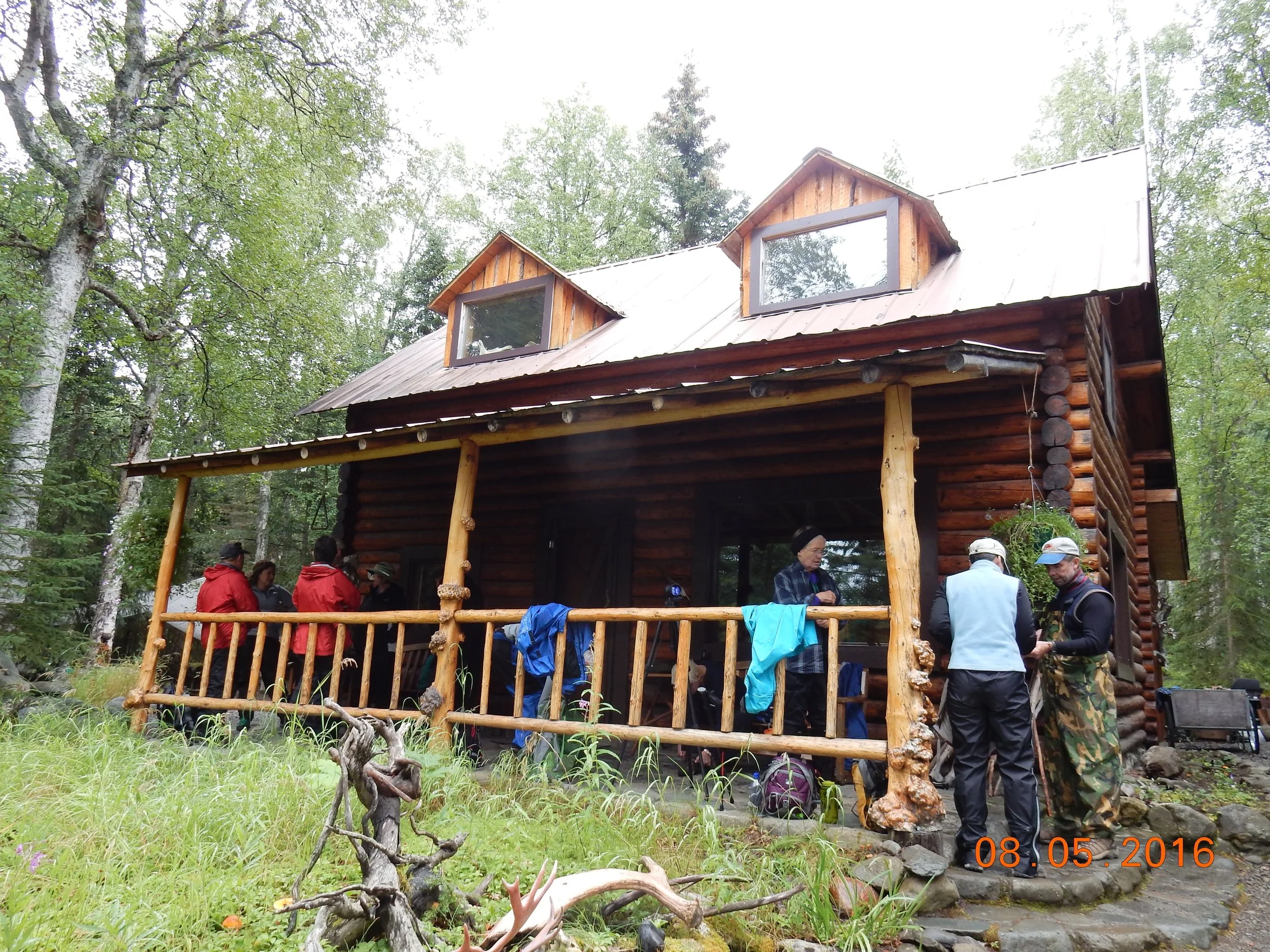
The guides are upbeat, proud of this remote location, expecting us to be impressed by the amenities they work so hard to maintain.  Using jolly voices, they tell us that, wet as we are, the lodge has no drying facilities.  And no plumbing in the cabins, either, so if we need to use the restroom in the night we’ll need hiking boots and a flashlight.  Also, there is no electricity in the rooms.  And the walls of the cabins are canvas, not real walls at all. 

This is all very upsetting.  I approach the sideboard, pour a glass of Merlot, and retreat to our quasi-cab, where I change into dry clothes and give myself a lecture about living in the moment and handling difficult situations.  It doesn’t do the trick.  The warmest clothes I brought with me are dripping and we’re going to be in this cold place for two days.  David calmly unpacks and changes, silently tolerating my grumbles.  I return to the main hall, pour more wine, return to the canvas cabin, and sulk for another forty-five minutes.  By dinnertime I’ve mellowed a bit, so at least now I can sit around a table and be civil.  The food is delicious, but I’m too exhausted to care.  Everybody else had the same day I did, but they seem to have recovered quicker, adjusted better than I have.  Maybe after a night’s sleep . . . 

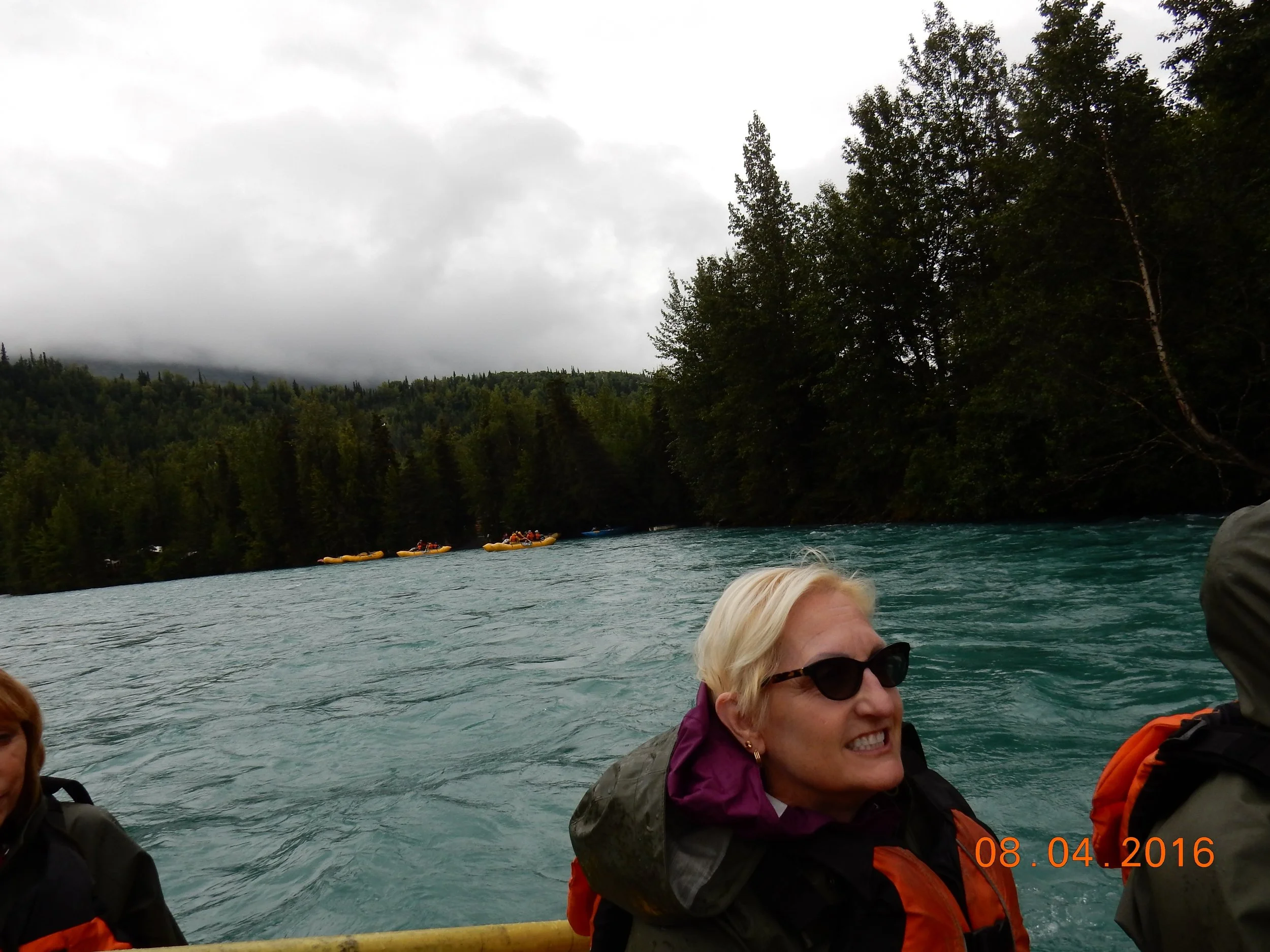
See what an outdoor woman I am?  I don't mind wearing smelly clothes or having flat hair at all.  

See what an outdoor woman I am?  I don't mind wearing smelly clothes or having flat hair at all.  

This is the guide.  Her mouth's open because she's talking.  Behind her is Dawn, who is ordinarily a pretty woman, but looks tense in this photo (sorry, Dawn).  

This is the guide.  Her mouth's open because she's talking.  Behind her is Dawn, who is ordinarily a pretty woman, but looks tense in this photo (sorry, Dawn).  

A rainy day picnic.

A rainy day picnic.

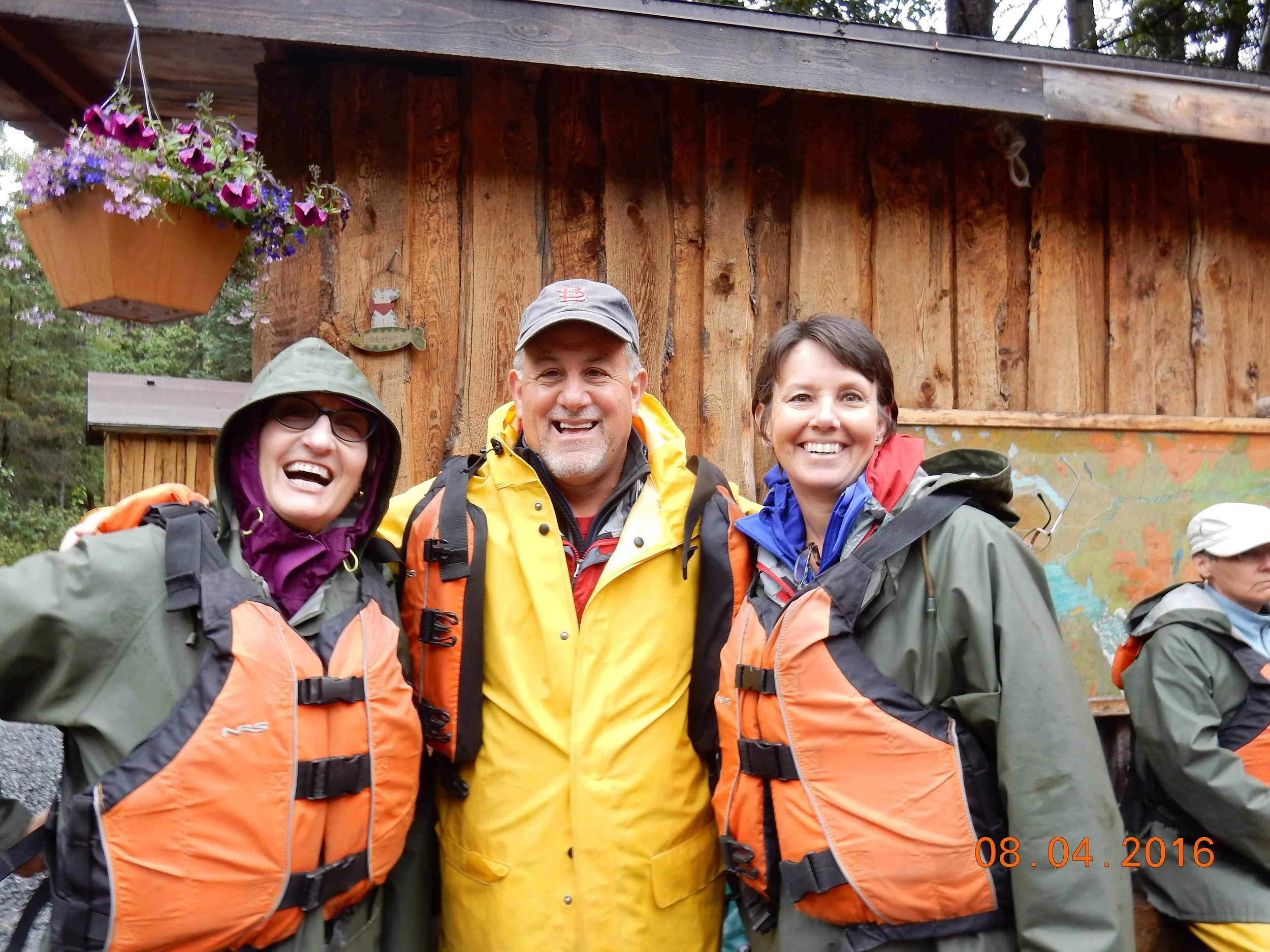
Me, with Dennis and Cheri.  Cheri actually took the time to read the literature, so she was better prepared than I in that she brought along a travel potty.  

Me, with Dennis and Cheri.  Cheri actually took the time to read the literature, so she was better prepared than I in that she brought along a travel potty.  

This guy looks cold.

This guy looks cold.

The lodge gathering place.  Wine is inside.  

The lodge gathering place.  Wine is inside.  

The next day we went for a six-mile, rough terrain hike.  

The next day we went for a six-mile, rough terrain hike.