Beatrice Crawford Haenisch Peery

Born and raised in Amarillo, October 15, 1935.  Youngest of six kids.  Father a mechanic, mother a seamstress.  Enjoyed music—violin and choir in high school; later played organ and piano for church; also sang soprano in the church choir, often solos.  Not intellectual; though, for some reason, enjoyed Russian novelists—Dostoyevsky, Pasternak, Tolstoy. 

She was a faithful Christian.  Daddy once stated, scornfully, that she was at the church every time the doors opened.  He, himself, only attended every once in a while, hoping to obtain salvation through association. 

Momma married at nineteen, to a German immigrant many years her senior.  Daddy wanted a good life for us all, but he had his demons.  His confusion about raising girls in a society that was unfamiliar to him, his unrealistic expectations of us all, his disappointment that he was living a life far short of his intended destiny, his fear of responsibility—all converged to form a controlling and bewildered man.  And my mother, anxious to please, submitted to his erratic reign until she could do so no longer.    

As a child, I viewed her life, and was exhausted.  She worked forty hours a week as a bookkeeper.  At home, she cooked the meals, did the laundry, cleaned the house, and was in charge of paying the bills—and she was expected to sit down with my father every Saturday morning and give a full accounting of the weekly expenses, down to the number of pieces of boloney consumed.  She attended every softball game, concert, play, and awards ceremony.  She made our clothes (taught me to sew, in fact, so that even today it is one of my joys).  She believed in supplemental learning, and drove us to piano, tennis, flute, clarinet, dance, gymnastics, and swimming lessons.  She taught piano lessons, and was a Sunday school teacher, a Brownie leader, and a room mother. 

She was careful about how she conducted herself before her daughters.  I never heard her tell a lie.  Nor did she curse or gossip.  She never let anyone down when they needed a favor.  She was dependable, generous, unassuming, cooperative, and optimistic.

And always, there was my father, looming in the background, criticizing and blaming her for every little thing that wasn’t perfect.  Sometimes, consumed by his misery, he would go weeks without talking to her. 

There came a time when she admitted to herself that she wasn’t happy.  When Resi and I were grown, she and Daddy got divorced.  After this, during my few years between college and marriage, Momma became my best friend.  We formed a tight knot of females—Momma, my younger sister, Trina, and I.  The girl cousins were around sometimes.  And I usually brought along a couple of friends who are still dear to me.  All these happy women, around my mom’s kitchen table.  Even our dogs were female. 

We had fun every day.  Momma dropped her tension.  Though she didn’t make a lot of money, she enjoyed deciding what to do with the small amount she had.  It was a freedom she’d never known; and she liked making decisions about the little things—what flowers to plant out front, what TV shows to watch, what route to take.  And, what I enjoyed most was that she laughed at all my jokes—and who doesn’t like that?

She supported me when, after only two dates, I decided to move to Cairo and live with David.  She stood by Resi through three marriages, two of them brutal, and one of them glorious.  She loved Trina the most—the youngest daughter, the one who rebelled, the saint who took care of her and held her hand in death. 

When Momma was in her early fifties the company she was with transferred her from Amarillo to Houston.  David and I thought this was great.  Though we were living in England, Houston was where we always came back to; so we’d get to see her more often.  She’d get to know the kids and they’d get to know her.  And when Trina decided to join Momma in Houston, we were thrilled. 

When, in her early sixties, Momma decided to marry Frank Peery and move to Adrian, David, Trina, and I were horrified.  Frank was in his late seventies, and he clearly came from a stratum of society where women had always seen to his needs immediately, silently, and humbly.  He was ill mannered and he grunted childishly when the conversation strayed from him.  He might have been a Methodist minister, but he was not nice.  But it was her life, her adventure.  Other than tactfully voicing our concerns, we simply had no say. 

Adrian is an hour west of Amarillo, and even further away from anywhere else.  She was isolated.  And Frank wasn’t a talker.  When, after a few years, he had a stroke, Momma became his nurse and slave, which is what the scheming old buzzard had in mind all along. 

She was distraught when she found out he’d run up debts in her name.  She’d gone into the marriage with a comfortable amount of savings, but he left her broke.  She sold the rotting old house he’d taken her to, put him in a nursing home in Houston, then moved back in with Trina, into the house she still owned in the Memorial District.   

She was in her late sixties by this time, and the damage done by years in a solitary situation, combined with being bankrupted by a man she trusted, had damaged her mental faculties.  She repeated herself, forgot things, got lost while driving, couldn’t follow conversations, wasn’t able to make simple decisions, became obsessed with things that happened long ago or never happened at all.

Alzheimer’s.  Our mother was lost. 

Her heart stopped beating on July 25, 2016. 

You were loved, Bea.  Rest in Peace.
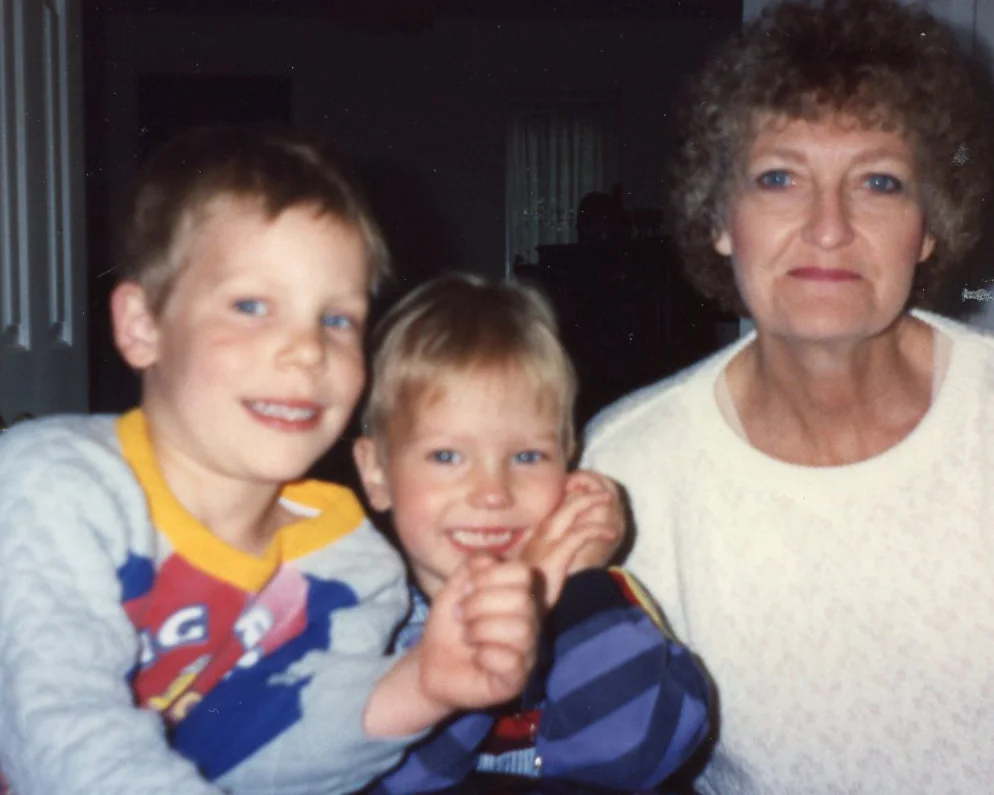
Momma, happy with Curtis and Sam.  This was taken when she visited us in Beaconsfield, about an hour west of London.  
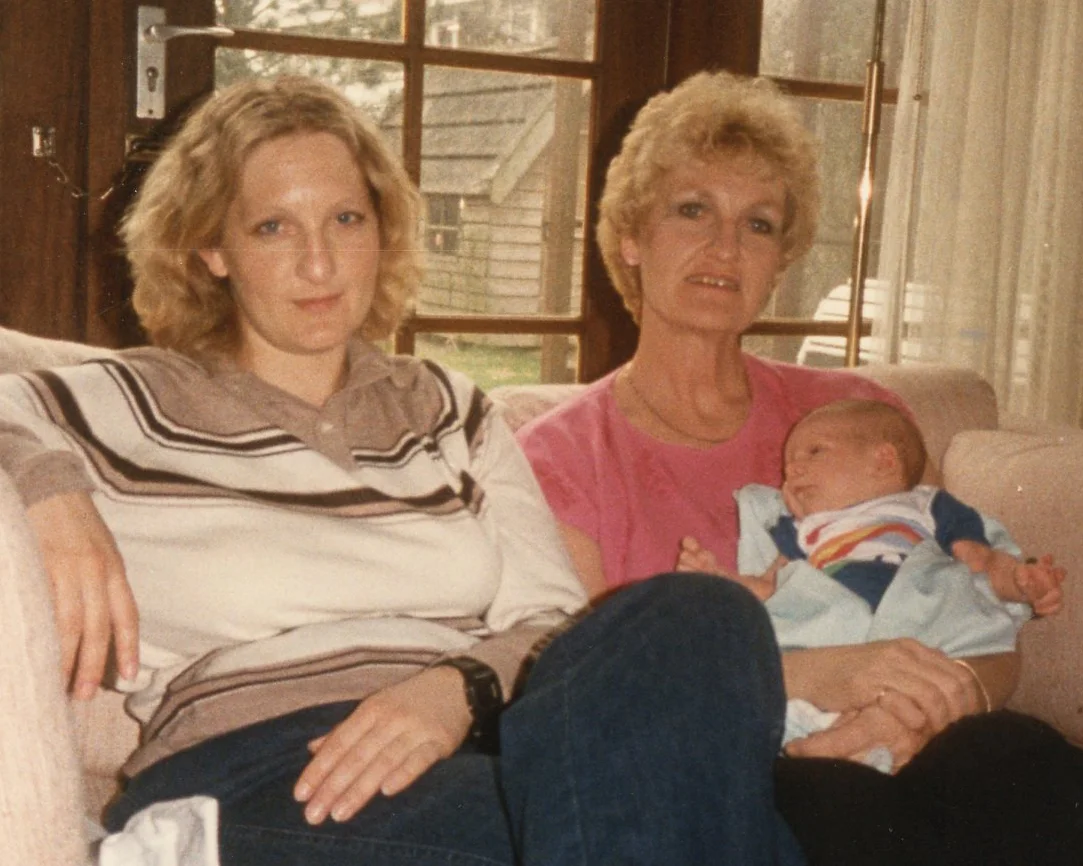
Momma, happy with Curtis and Sam.  This was taken when she visited us in Beaconsfield, about an hour west of London.  

In Holland  Curtis was a week old.  
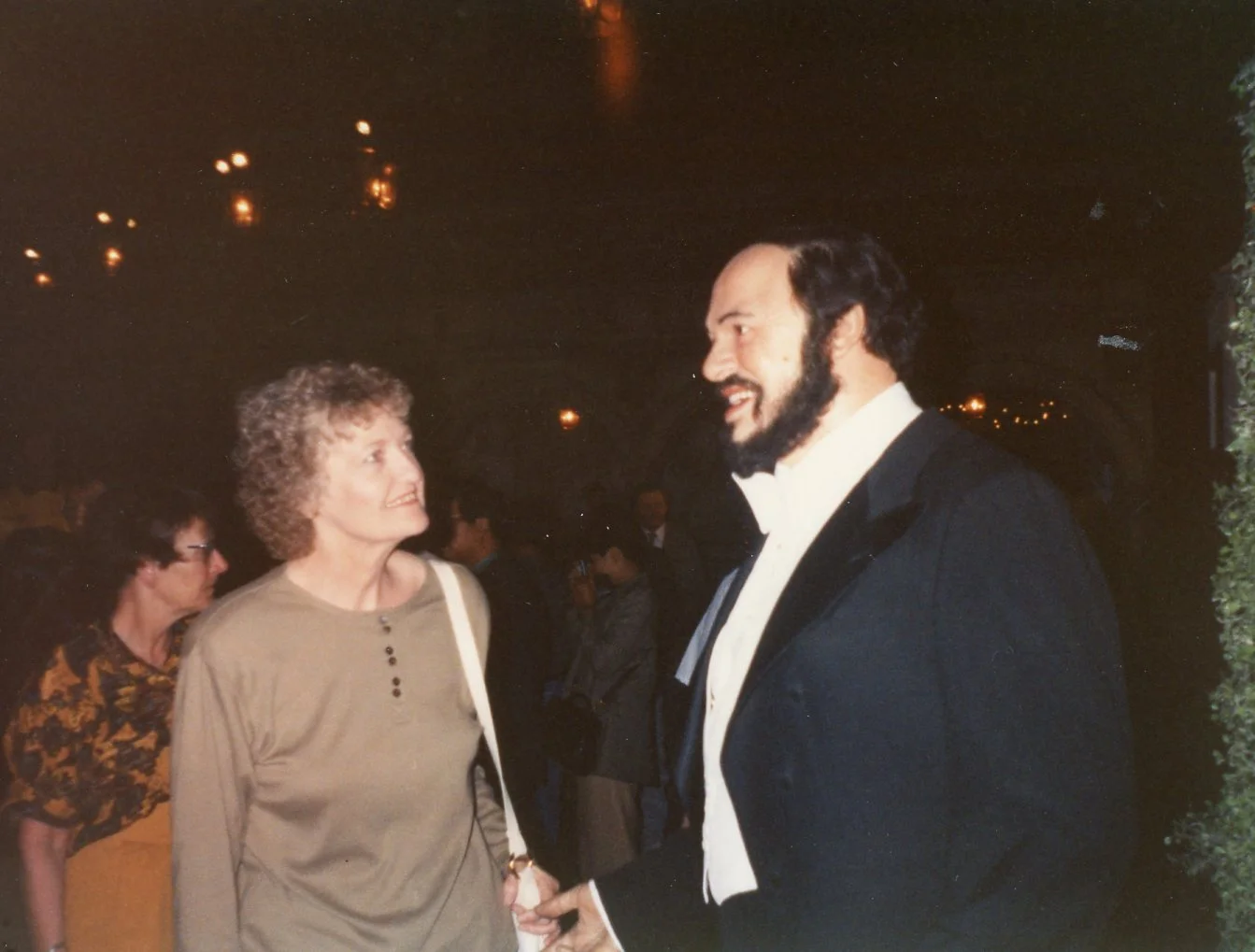
In Holland  Curtis was a week old.  


She enjoyed the wax museum in London.  
She enjoyed the wax museum in London.  

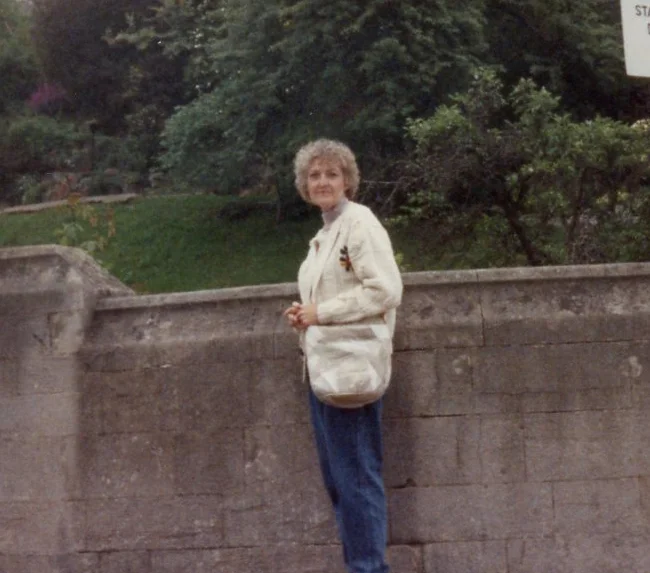
Outside a garden in Edinburgh.  I have no pictures of her during her younger years--those are in albums at Trina's.  

Outside a garden in Edinburgh.  I have no pictures of her during her younger years--those are in albums at Trina's.  
Jury Joy

David’s expression is one of sadistic glee as he hands me my little piece of mail.  It’s a summons to jury duty, a notice most people dread.

“Oh goodie!” I say.  “I love jury duty.”

“Right.”  Sardonic, disbelieving.

“Really,” I insist, because it’s true.  “Strangers with weird ideas and bizarre traits.”  Mumblers, scratchers, hair-chewers.  A writer’s dream.

The information card specifically says, “Appropriate clothing required.”  I wonder what that means in this part of the country.  Lately I’ve been noticing women scuffing around out in public in house shoes.  Will they show up for jury duty wearing shoes that look like pillows?  

Traffic is light and I arrive early.  I show my ID and the clerk sends me to a waiting area where about twenty people mill.  We’re asked to fill out a form that indicates whether we want to claim the ten-dollar stipend or donate it to charity.  We’re given a list of a dozen local organizations from which to choose.  I request that mine be given to the Family Crisis Center.  The man next to me puts a check in front of every charity.  I imagine an accountant hunched over a counter, dividing ten dollars twelve ways, allocating eighty-four cents to each. 

Within minutes the number of jurors has swollen.  We’re overflowing into the outer corridor.

“There’s going to be three hundred of us,” my charitable neighbor says, “which means something big’s going on.  Burnet’s the crack capital of the world.”

Really?  I had no idea.  Burnet, by the way is pronounced, “Burn it!”

I study my fellow jurors’ sartorial choices.  Men—jeans and plaid shirts, boots and big belt buckles.  Women, either dowdy or slutty, depending on what their bathroom scale advises; though some ignore what they know.  I’m surprised by the variety of ages; every stage of adulthood is represented, not just the retirees who dominate the hill country.  And not a brown face among us. 

“Two trials today,” the woman behind me chimes in.  “Theft and spousal abuse.” 

Oh boy; nasty and shocking, a side of life I only see on screens.  Witnesses will cry.  Defendants will stare out of hostile eyes.  The drama will be exceptional.  The contrasts, stunning. 

“How do you know this?” I ask.

“The docket’s online,” she tells me.  And now I’ve learned another new thing. 

We sign in at a table and are shown into a large comfortable courtroom.  I scan from wall to wall.  Wanting the best view of every detail, I aim toward a center seat.  The woman behind follows along and takes the seat next to me, which is too bad because she’s large and spills over, leaving me only a portion of my space. 

“Have you been called for jury duty before?” I ask.

“I get called pretty often, but am always dismissed right off.”

“Why?”

“Because I work at Walmart.”

This makes no sense to me.  Deciding she must be crazy, I let the conversation die and turn to the novel I’m reading, A Man Called Ove, a depressing selection which Amazon, based on the last several books I’ve bought, assumed I’d enjoy.  It’s about a suicidal widower, a rigid curmudgeon, who misses his wife.  While the story deserves to be told, there are simply too many wasted and meaningless words.  Every other sentence has “ . . . Ove is the sort of man who does . . .” or “ . . . Ove is not the sort of person who likes. . .” Why not just say, “Ove does,” or “Ove doesn’t like?”  I realize that this brief phrase, “the sort of,” is in support of a style, but once or twice was enough to relate the gist.  To do it every time the protagonist thinks or acts is grating.  I want to go through the thing with my finger on the delete key

The bailiff announces the arrival of the judge; and we all rise as The Man enters through a door behind the podium. 

I try to present a solemn demeanor—straight back, gaze attentive—and I paste a stern expression on my face.  In order to get chosen as a juror, I must stand out as someone who likes to judge other people. 

“Please be seated,” the judge says, sinking regally into his throne.  We sit.  “Thank you all for coming today, but one of the cases has pled out and the other defendant, who was out on bond, has skipped.  And believe me, when we recapture him, he’ll wish he hadn't done that.”

Sounds like Burnet County needs Stephanie Plum!

“And so I’m sorry for the waste of your time, and once again, we appreciate your service.  You’re dismissed.”  He rises, turns, and disappears through his special door. 

I should have given my positioning in the room more thought.  The man in the seat closest to the exit had the right idea.  I turn and watch as he zips through the door.  Mountains of flesh have me blocked on all sides.  We stand and move like packed hogs, pressing into the aisles, through the doorway, the hallway, the foyer; and we burst out into the scorching sunshine where a hundred and fifty cars and trucks are backed up all the way to the rear of the building.

The morning had so much potential, and then nothing happened.   

A lady passing by asked why I was taking a picture.  I told her it was because I was thrilled to be here for jury duty.  She laughed.  

A lady passing by asked why I was taking a picture.  I told her it was because I was thrilled to be here for jury duty.  She laughed.  

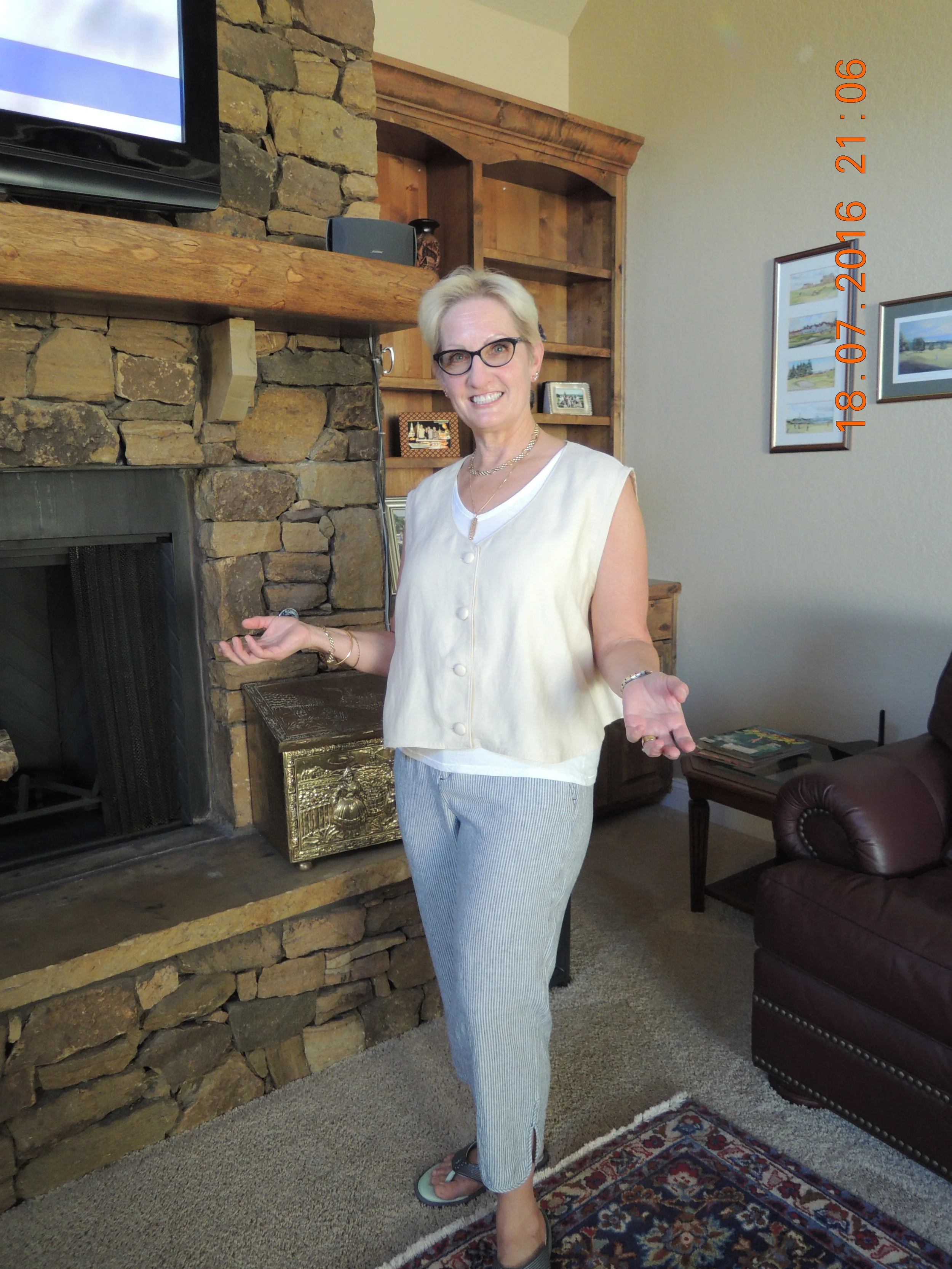
This is the way I chose to dress for jury duty.  With proper sandals, of course, not flip-flops.  Appropriate?  

This is the way I chose to dress for jury duty.  With proper sandals, of course, not flip-flops.  Appropriate?  


Tile Talk

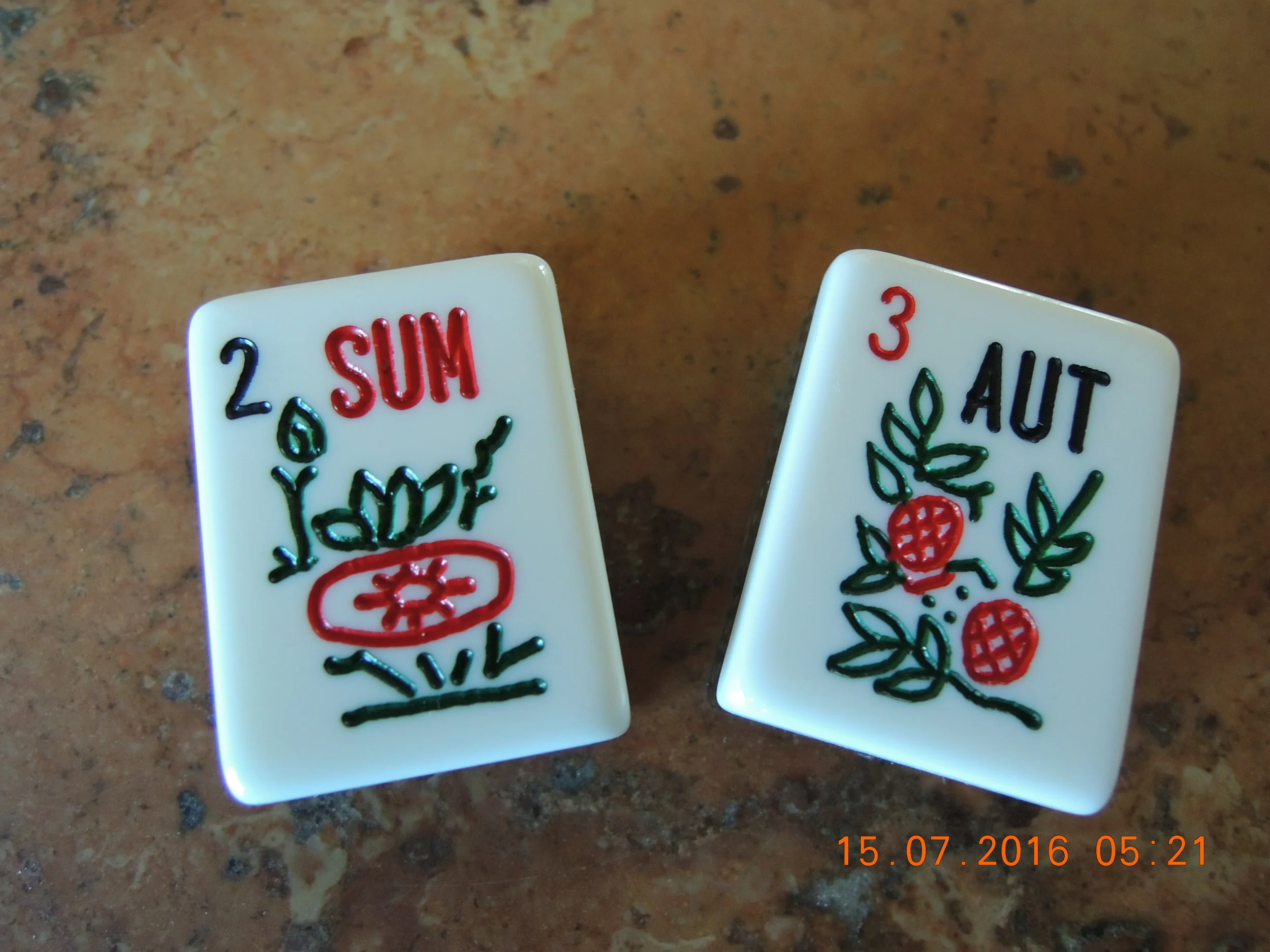
“My mother-in-law broke her hip,” Amy, a Mahjong friend, tells us.

“That’s terrible.”  My response is without thought or sincerity.  My mind is on the tiles in my rack.  What started out as a lovely aroma has rapidly turned into a stink. 

“We’ve been expecting it,” Amy continues.  “She’s in her late eighties and she falls at least once a week.”

“My, my,” Lucille murmurs.  She plucks a tile, looks at it; it’s no use to her and she discards, identifying it—“three bam.”

“Every time it happens, Arnie has to call us to come help get her up.  She weighs three hundred pounds.”  Arnie, I assume, is the father-in-law.  Amy shakes her head despondently, takes the next tile in line, makes an adjustment in her rack as she adds it to her hand, and discards a wind.  “And then Arnie, ninety-one years old, hits a deer while he’s following after the ambulance.  His car was too damaged for him to continue on, and he’d forgotten to charge his phone, so he was stranded on the side of the road with a dead deer.”

“That’s terrible,” Kendra says, her eyes not moving from her rack as she takes a tile and barely glances at it before tossing it on the table, saying, “North wind.”

“So finally someone driving by figures out that here’s an old man in trouble,” Amy says.  “So they stop and offer their cell phone and he calls us and we go pick him up and take him to the hospital to be with Catherine, who, by this time is in a panic because she’s scared to death something happened to him.”

I pick up a one dot, view it sadly, discard it.  All I need is a pair of flowers.  There are eight of the stupid things.  I figured my chances were good.  But at this point, five have been discarded.  Pairs are tricky:  I can’t complete a pair from the discards unless it’s for Mahjong.  Amy picks a tile, discards a flower.  Damn!  Two left, and I need them both.  If I can just draw one, at least I’ll have a chance.  Kendra draws, discards a four dot.  My turn.  Be a flower, be a flower, I say in my mind.  It’s a two crack.

And still Amy talks.

“And then, while we’re in the emergency room waiting for someone to talk to us about her x-ray, Arnie starts making a fuss about how long it’s taking.”  Dismayed, she makes a smacking noise.  “Well, his wife is in pain, and he’s frustrated because there’s nothing he can do about it, so he goes out into the corridor and starts stopping random hospital workers, shouting in their faces and waving his arms until someone calls security.”

Kendra discards the seventh flower.  My hand is lost.  At this point all I can do is try to keep another player from getting what she needs.  Kendra and Lucille have enough of their hands exposed so that I know what to avoid discarding.  Amy hasn’t exposed anything except the details of her horrible weekend. 

“We took him outside and calmed him down, but then he just collapsed in tears.  There he was, in Bill’s arms, crying like a baby.  He hasn’t spent a night away from his wife for ages, maybe not since they got married over sixty years ago.”

Yes, Amy’s talkative.  But it’s not self-centered jabbering.  Even now, the story she relates is about someone else’s misery.  In our Mahjong group, she knows the names of everybody’s children, and the names of their children’s children.  She knows all the women’s health issues and their husbands’ health issues.  In fact, so overtly thoughtful is she that I, who, in the best of moods, can only be described as irascible, once asked her how she could be so nice all the time, and she answered, “I love everybody.”  And I believed her. 

Lucille takes a tile, discards. 

“They set her hip with screws and cable.  Cable.  I’ve never heard of such a thing.”  Amy takes her tile, immediately rejects it. 

Kendra grabs the next tile.  Her lashes flutter as she places it in her rack.  She got something she needs.  She discards an east wind. 

I pull a joker, and immediately thump it in the middle—as jokers can’t be part of a pair, I have no use for the thing—which causes Lucille to emit an unhappy grunt.  She could’ve used it. 

“And now Arnie’s staying with us,” Amy says.  “He’s so worried about Catherine that he can’t sleep or eat.  And when we got a call this morning that she’s going into a rehab facility, he started crying again.”

Lucille pulls her tile, discards it. 

“Is it really rehab, or is it a nursing home?” I ask.  Having witnessed my own mother-in-law’s long decline, I know all about the conveyor belt for elderlies.

“They’re calling it rehab.  But we all know she’s never going home again.”  She lifts her tile, looks at it, and, perking, announces, “Mahjong.”

My first reaction isn’t generous.  I wanted the win.  I wanted the tiles to be on my side.  Also, Mahjong takes concentration, and she was talking the whole time.  Does her mouth work separately from her brain?   

Mahjong players speak of "the winds of chance," and "the whimsy of the Mahjong gods."  In addition to being capricious, Mahjong is karmic.  Because Amy's had a tense few days, Mahjong will be kind.  Wiggling with joy and straightening in her chair, she's anxious to move on to her next win.  Expediently she collects her winnings and starts shuffling the tiles.  She makes Mahjong ten out of thirteen hands (unprecedented!), talking nonstop the whole time.  

This pair of flower tiles is taunting me.  

This pair of flower tiles is taunting me.  

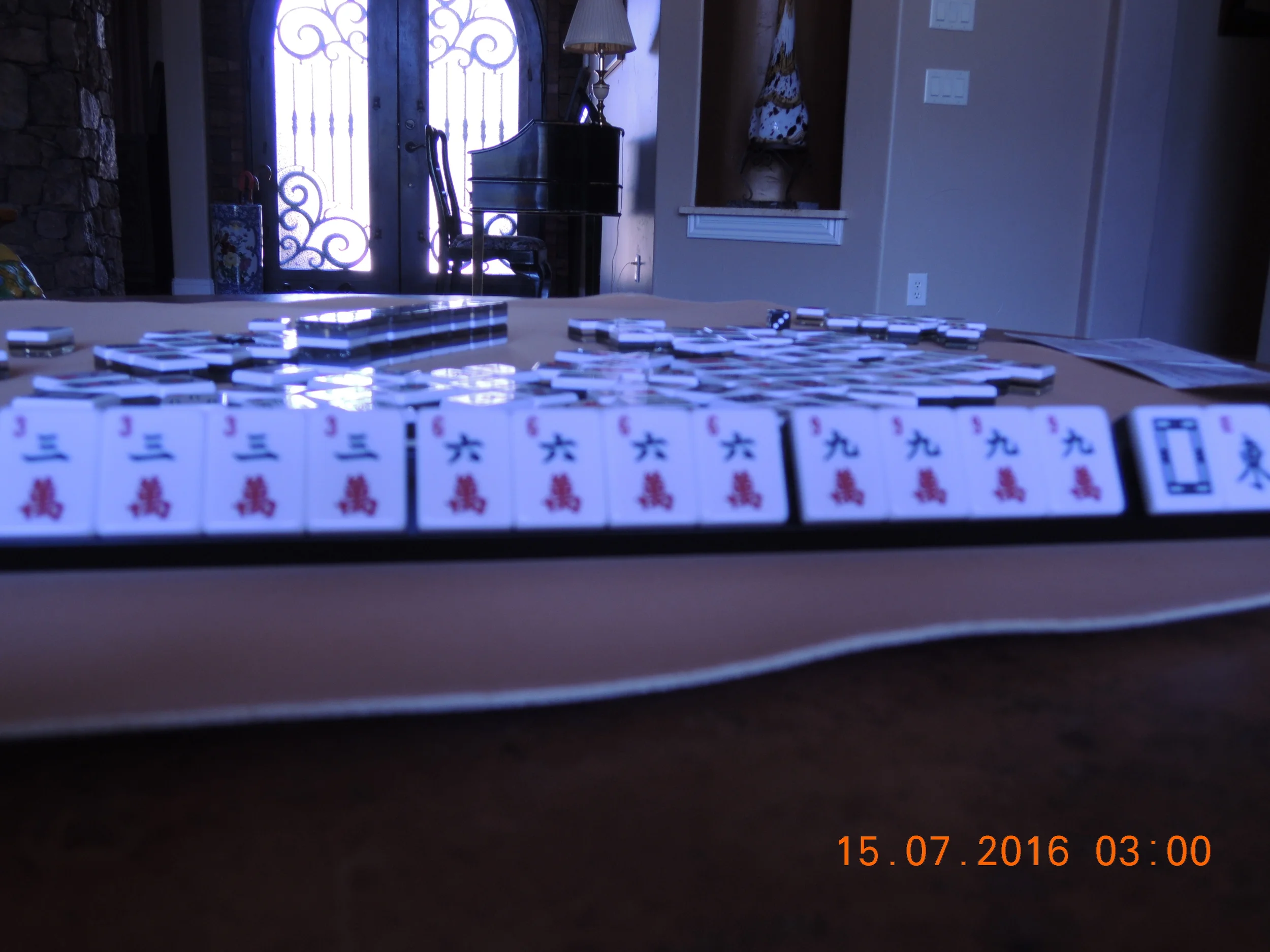
Isn't this a beautiful hand?  No jokers, and I pulled it all myself. didn't take a single discard from the center.  The white dragon and east wind don't belong, though.  Oh, for a pair of flowers.  

Isn't this a beautiful hand?  No jokers, and I pulled it all myself. didn't take a single discard from the center.  The white dragon and east wind don't belong, though.  Oh, for a pair of flowers.  

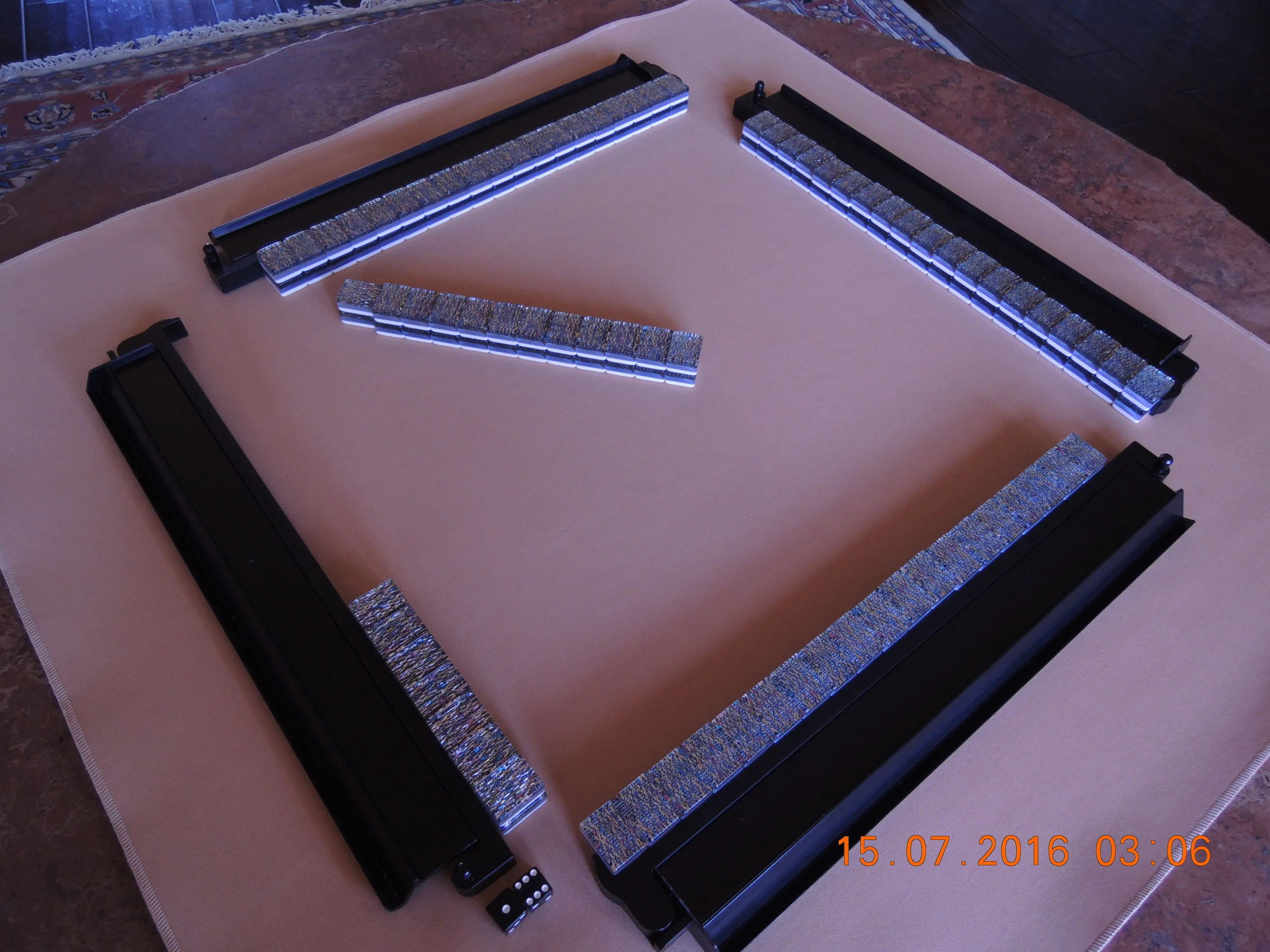
Ready to play?  I played with a woman in Singapore who believed that the ends of the walls need touch so the evil spirits can't get in.  

Ready to play?  I played with a woman in Singapore who believed that the ends of the walls need touch so the evil spirits can't get in.  


Politics: Two Rank Odors

I enjoy thoughtful political commentary and a dignified exchange of ideas, so it’s understandable that this last year of media coverage contrived to incite, and the insubstantial and childish yammering of the candidates, has left me disappointed.  I need to get away from the television for a while.  So David and I decide to rent jet skis and bounce around on Lake LBJ for a couple of hours. 

“I don’t like to be splashed,” I remind him as we swing our legs over and settle into the saddles.  A while back he did a dig-in hard turn and sent spray all over me; then he laughed like it was funny, but I didn’t think so.  “I like to stay close to the shore and contemplate the houses.” 

“When I want to have real fun,” he tells me agreeably, “I’ll go to the middle and not disturb you at all.”  I’m dubious. 

As I'm inching through the No Wake Zone, isolated with my thoughts, my mind goes exactly where I don’t want it to go—politics.  The closer the election gets, the more despondent and bewildered I become.  In a country rich with visionaries, philosophers, scientists, and elocutionists, it’s nonsensical that we must choose between an ambitious woman so dedicated to her legacy that she’ll say whatever it takes to get elected, and a divisive sociopath who has no clear plans and mouths his hyperbole in the grating idiom of a Valley Girl.  The man is an embarrassment before the world. 

And Hillary has been in the public eye for so long that the notion of seeing her and listening to her (recently she moderated her voice because polls told her she was “too strident”) for another four years is abhorrent.  Do I trust her to do what’s best for the country?  No.  I trust her to do what’s best for her.  Move aside, used-up woman.

Also, they’re both seventy; and yes, some people are sharp at seventy, but not as sharp as they used to be.  

So this is where my thoughts go as I dip and rise with the waves.  There is no wind, but the water’s choppy.  Herons are everywhere.  One skims over the foamy crest right in front of me.  It lengthens its neck, stretching toward the treetops, flapping its wings as it finds a perch.  Oh.  There are a couple of nests up there.  Sublime.

Crossing under the bridge, we’re on the Colorado River, a soothing band of blue with a wall of untamed greenery on the left and houses on the right—modern mansions adjacent to modest weekend rentals.  I expected it to be hot out here, but the misty breeze makes it pleasant.  Several people have arranged their chairs in a semi-circle on a sandbank.  Feet resting in the water, they drink from cans, tell stories, and tease each other.  I’m glad they’re having a good time. 

I’m acquainted with a woman, Vivvi, who thinks Trump is going to save us all. Trump declares that women love him, but I doubt the existence of these women.  Other than the few who are paid to speak for him (surrogates, an unexpected term in this arena), who are these devotees?  What kind of woman isn’t offended by his derisive remarks about menstruation and wrinkles on faces that are no longer youthful?  What woman isn’t bothered that his wife’s portfolio holds nude shots?  (I’ve heard they’re quite tasteful; but still, foreign leaders would have easy access to naked pictures of our first lady).  And so, when Vivvi came down on his side, I went to some trouble to question and observe.  Here’s Vivvi in a nutshell: 

She didn’t go to college.  She doesn’t like to read, but will flick through a fashion magazine if she’s stuck in a waiting room.  She enjoys reality TV.  Though she’s never owned or fired a gun, she’s against gun control—and don’t get me started on that; also, she thinks that Planned Parenthood is evil—again, don’t get me started.  She wears ankle bracelets, toe rings, low-cut tops.  She drips accessories—scarves, jewelry, belts, hair ornaments; and her accessories match her clothes.  Her husband insults her publicly.  I’ve witnessed it.  So, she’s a throwback.  Come on, Vivvi, even Edith Bunker evolved.  When I asked Vivvi why she liked Trump, she said, “Because he says what he thinks.”  Good Lord, if a president goes around saying what he thinks, we’ll all be lost!

Up ahead, David turns back, signals that he wants to return to the main portion of the lake.  I guess it’s time.  We can hardly follow the Colorado all the way to the Rockies.  With a shrug I make a tight turn.  I’m impressed with myself when I crank it up to forty—what a daredevil I am.  Under the bridge, back to the lake.  True to his word, David is doing his circling and splashing out in the center, far away from where I chug contentedly along.  First one direction, then the other.  When we get to the dam it’s time to head back in. 

It’s been a relaxing break, helpful in that I’ve reached a peace of sorts:  whether we vote for the witch in the gingerbread house or Swift’s Yahoo, the country will be fine.  How much damage can one person do in so short a time? 

GW pops into my mind.  Stop it.  Shut it down right now. 

A nice view of Lake LBJ..

A nice view of Lake LBJ..

Facing the opposite direction, toward the Wirtz Dam.

Facing the opposite direction, toward the Wirtz Dam.

David, after an afternoon on the lake.  

David, after an afternoon on the lake.