Reunion

I’ve been out of the country during every class reunion, though I’ve had no burning wish to attend.  What I remember about high school is that our graduating class was exceptional, and I never measured up.  Self-worth issues?  Absolutely.  During those years I was so busy figuring out who I was, trying to juggle a job and school work, band and family (bi-polar father, meek mother, rebellious sister—always drama on the home front), that I was overwhelmed, definitely not comfortable, not successful, not smart.  All I had to offer was mediocre flute-playing; some would’ve said I was good, but these encouragers didn’t know what good was, and I definitely wasn’t that. 

By exceptional I mean that a major portion of my classmates became not only professionals like doctors and lawyers, but Ivy League professors and internationally renowned musicians.  Hell, we even had an astronaut, Rick Husband, who died in the Columbia tragedy in 2003.  I never knew him.  The Amarillo High School Class of 1976 was amazing. 

And, now that I’m traceable to an address in the US, I’ve received notice that the fortieth reunion is rolling around.  Some gung-ho person has organized it and put out an agenda.  And I think—why not?  I’ve raised two brilliant and well-adjusted sons.  I’ve lived in seven different countries and am intimately familiar with the customs of people throughout the world.  I’ve logged over a hundred dives in the Red Sea, shared a meal with the Masai, slipped around on glaciers in New Zealand, explored Petra; and I know the aromas of the backstreets of every major European city.  I’m married to the same man I started out with.  I have an MFA, and I’m a published novelist with actual fans.  Why not attend the reunion, hold my head high, and take my place among the winners?

Because, though I was that shallow once, I'm not that shallow now.  Why would my high school inadequacies matter in the context of my present?  Shamefully, I was well into my thirties before I realized that we all feel out of place at times.  For every instance I felt inadequate, someone else felt equally ugly or foolish or in pain.  I was too lacking in empathy to realize it. 

The names of the people who plan to attend are listed on the reunion website.  There are more names I don’t recognize than names I do.  Some names pop up, and I remember the person, the face, the teacher who taught the class we shared.  For the most part the memories aren’t pleasant.  I remember this brown-haired girl, her face, her attitude.  She didn’t like me and I don’t recall why; but most likely it was because I offended her in some way.  I remember this no-chinned guy.  He had good reason not to like me—I was unkind toward him, sharp-tongued.   

And the horrible memories flood my psyche.  I was mean.  I was a mean girl.  I was impatient and I made fun of others and I felt superior for no reason and I was harshly judgmental and unforgiving.  Compassion wasn’t in my vocabulary.  I cried for myself, but no one else.  At the same time, I was intimidated by the intelligent, the talented, the gorgeous, the rich, the confident.  In short, I was a mess.  I’m happy with who I am now, but who I was then is someone I don’t want to become reacquainted with.  Would seeing those people and returning to that place cause me to revert?  I fear so. 

Also, inexplicably, as part of the re-union prep, we’ve been instructed to carry a Sandy (school mascot) with us on vacation and take pictures of it in all the interesting places we visit.  We’ve been asked to send in a copy of our senior picture.  I have no idea where mine is.  We’ve been asked to send in pictures of our grandkids—I have none of those at this point.  This sounds like a lot of work when I thought all that would be required would be showing up and wearing a nametag.  Also, it seems that, just like so many times in high school, a lot of pointless activity is required for an event that should be pretty straightforward.  See, I say I’ve changed, but on a very basic level, I haven’t.  I still don’t want to put forth the effort it takes to conform. 

“But don’t you find that you keep up with the people you care about?”  This from my high school friend, Diana, when we discuss attending the reunion.

“Yes, I guess I do,” I tell her.  Because of Facebook and responses to my blog, I know where my friends are, what they’re up to. 

“And the wind blows constantly up there,” she reminds.  We both shudder at the memory of the relentless biting wind, and how a trip from the car to the door plants grit in your hair, the inside of your nose, the creases in your upper eyelids.  

Amarillo.  I write about it.  Most of my novels are set there.  I know the flat countryside, the gnarled mesquite, the crackle of winter grass beneath my boots, the pirouettes of the tumbleweeds, the brick churches on every corner, the overcrowded happy hours, the smell of the feedlots.  Don’t think I’ll be getting back there any time soon. 

Here is an AHS Sandie, which represents the dust devils found in the panhandle.  Though its expression is fierce, I always thought it look like a lump of butterscotch pudding:  

First Sentences

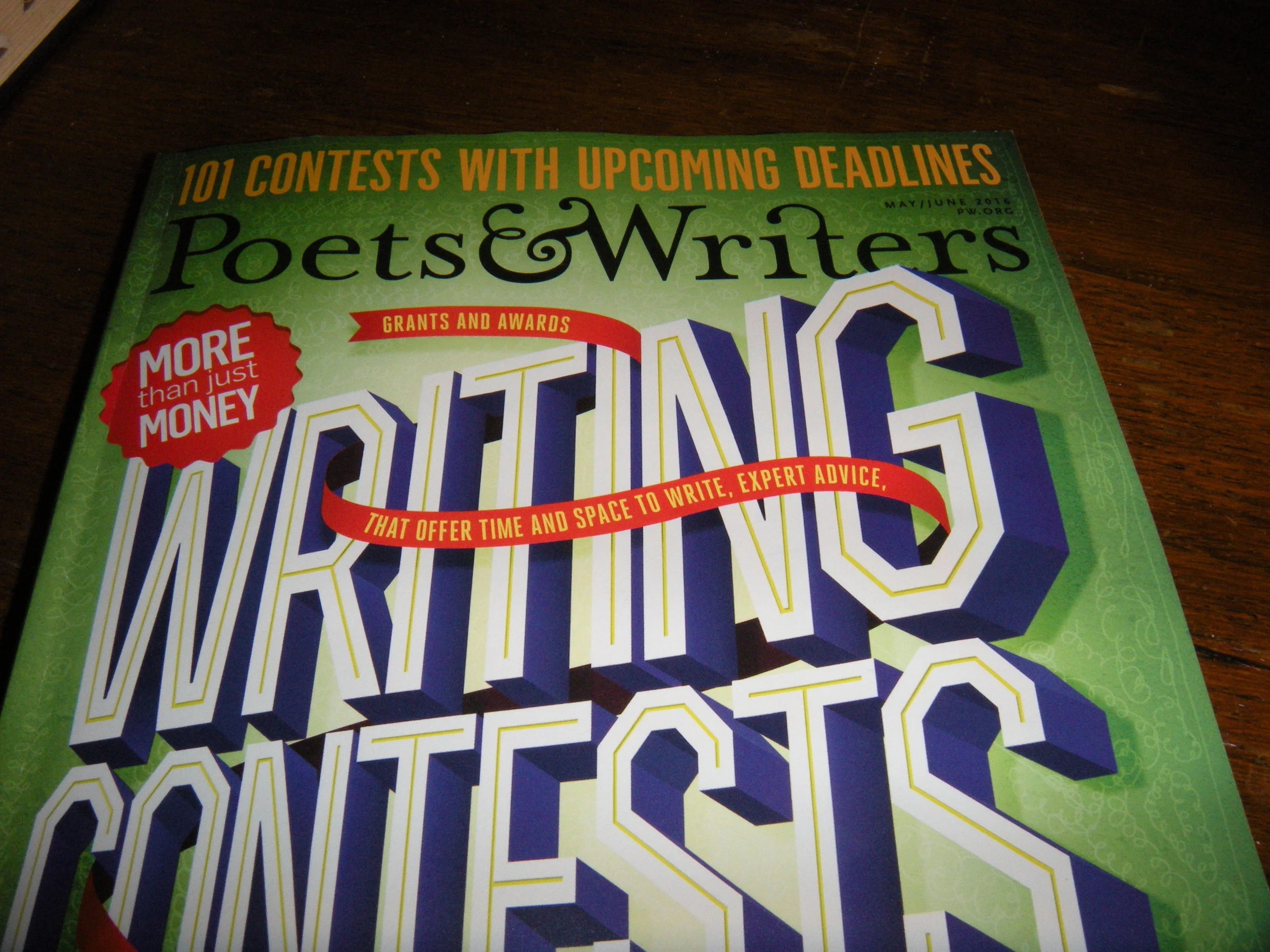
I recently came across a feature in Poets & Writers, entitled Page One:  Where New and Noteworthy Books Begin, which offered P&W’s editorial staff’s selection of exceptional first sentences in recently released books.  While style and content preferences are subjective, simply stated, a first sentence should draw the reader in and set the tone.  Here are a couple of openings, plucked from the article, that do exactly that:

“Ronnie swore it was talk and nothing more.”  From Late One Night, by Lee Martin.  And:

“Ten years ago, I helped a handful of men take my brother’s life.”  The Reactive, by Masande Ntshanga. 

Both of these strong sentences make me want to read further.  They predict violence and strife and soured relationships.  They tell me that an interesting story’s coming. 

This one, I’m not so crazy about:

“In June, the book club was at Zoe’s house, which meant that Elizabeth had to carry her heavy ceramic bowl of spinach salad with walnuts and bits of crumbled goat cheese a grand total of half a block.”  Modern Lovers, Emma Straub.

This is all over the place—two names, three types of food, a book club, and a walk.  I’m not drawn in.  I don’t care about Elizabeth and her heavy bowl.  It sets the tone, but it’s not something I want inside my head. 

Also, this next one bothers me; however, it is translated from French, so maybe that’s the reason for the befuddling lack of color:  

“She was Malinka again the moment she got on the train, and she found it neither a pleasure nor a burden, having long since stopped noticing.”  Ladivine, Marie NDiaye.

The lack of clarity is unsatisfying.  I reread it, feeling that I’ve missed something.  I’m put off that Malinka seems at ease with her duplicity.  I’d read a little further in this one, though, because the mystery (why does she change to Malinka on the train?) interests me. 

There are certain openings that are so offensive that I read no further.

Foul language is a turnoff.  Because vulgarity signals a lack of vocabulary and imagination, not to mention a lack of taste, my thought when I find a “Fuck” in the first sentence is that this author’s going to be limited, and will rely heavily on the shock factor.  I’ve probably missed out on many good reads because of this literary handicap; but really, who wants to read two hundred pages of that?

This first sentence (from my collection, not P&W’s) taken from The Cowboy and the Cossack, by Clair Huffaker, is written from the perspective of a teenaged cowboy in the 1880’s.  It meets the goal of a first sentence—to interest the reader and set the tone—but the weak attempt to capture a nonexistent dialect remains annoyingly unnatural throughout.  A forced narrative makes me feel itchy and sick.  I read it from front to finish, feeling like I needed to throw up the whole time.  Having said that, if you’re looking for a fun read, and don’t mind an amateurish style, you might like it.  Here’s its opening:

“It’s the spring of ’80 on the coast of Siberia when our greasy-sack outfit first runs up against those Cossacks.”

Keeping in mind the goal of a first sentence, I examine a few of my attempts and compare them to those declared outstanding by Poets & Writers. 

“I own the only building in a two-mile radius that has a basement.”  This is from Why Stuff Matters, to be published by Arcadia early next year.  Trying to assess it with a fresh eye, I’m not thrilled; but I’m not displeased either.  The sentence’s significance is based on a regional awareness—if you’re from northwest Texas, you understand that mention of a basement signals the imminent arrival of a tornado.  A reader from elsewhere might not comprehend the implication.  Does it make a reader want to read on?  I just don’t know!  How about this one?

“Before they’d let me out of rehab someone had to agree to act as my legal custodian.”  This is from Old Buildings in North Texas, to be released in the UK in September.  Once again, ambivalence.  It lays out a universal situation—every person on the planet knows an addict.  And the phrase “had to agree” portends conflict, hinting that the relationship with this custodian will not go smoothly.  But I’m noticing a pattern—my sentences are similar to those I chose as my favorite examples from Poets & Writers.  I suppose it’s good that I like my own work.  

Here’s the opening sentence of a mystery series, as yet unnamed, that I’m trying to get off the ground:

 “During the break several of us slip through the side door and troop to the sidewalk across the street.”

Hardly inspiring.  It tells of a person with friends.  Slipping through the side door implies some sort of furtive activity.  Does it make the reader want to continue?

I’ll finish with what is probably the most famous first sentence ever written, from Charles Dickens’ A Tale of Two Cities.  Its balance is exquisite, and the assertion that we all believe ourselves to live in extraordinary times creates universality and a sense of continuity that is almost holy.  On the other hand, it is so old-fashioned, so overblown, that no modern writer would dare release such a run of words in this instant-gratification world:

It was the best of times, it was the worst of times, it was the age of wisdom, it was the age of foolishness, it was the epoch of belief, it was the epoch of incredulity, it was the season of Light, it was the season of Darkness, it was the spring of hope, it was the winter of despair, we had everything before us, we had nothing before us, we were all going direct to Heaven, we were all going direct the other way—in short, the period was so far like the present period, that some of its noisiest authorities insisted on its being received, for good or for evil, in the superlative degree of comparison only.   

Now that’s a first sentence.  Does it set the tone and draw the reader in?  Or, because it’s obviously going to be a slog, does it cause the reader to close the book and reach for Nora Roberts? 

Though it's mostly advertisements about MFA programs and writers' retreats, the articles are helpful and informative.  

Though it's mostly advertisements about MFA programs and writers' retreats, the articles are helpful and informative.  

This is the article you have to thank for this rather dry and self-aborbed posting.  

This is the article you have to thank for this rather dry and self-aborbed posting.  

Texas Wine Adventure

This weekend David and I are hosting a tasting at a local winery.  Tere, Anna, and Curtis come to the house, and we drive from there.  We meet the rest of our friends at the winery.  The place is bustling.  A tour bus has recently arrived.  I check the twelve of us in at the counter and we’re led to the mashing floor where we’re given a history of this particular winery (I’m not really captured at this point); and then we listen to a lecture about the process (mildly interesting to the science-minded).

I’m distracted because I’d rather spend time with my friends than the wine.  Only Tom and Gitte are relatively new to us—David met Tom through Habitat, and we look forward to getting to know them better.  Except for Curtis and Anna, the rest are people I went to high school with in Amarillo; and spending time with them is a nostalgic business, stirring up memories of my hometown and old times and what it meant to have adventures with good friends.  No one knows you as well as your buddies from way back when, and I want to race ahead to the social part of the day, the conversations and catch-ups.  But first we must hear about what to do with grapes. 

Wine is not something I associate with the hill country of Texas, but apparently it’s a big deal; we’re practically Napa of the south.  The road between Johnson City and Fredericksburg is packed with wineries, and twenty-seven more permits have been issued for the next year. 

Few of the Texas wineries actually grow their own grapes—oh, there are vines in nearby fields to lend ambiance, but to produce the amount these wineries bottle, the vintners must bring in grapes from Oregon, Washington, and—this one amuses me—Lubbock.  Yes, Texas Tech friends, Llano Estacado still marches on; and surprisingly their grapes are revered. 

After the educational segment, the twelve of us circle around a table while a presenter pours a small amount in each of our glasses, elaborating with great enthusiasm about the types and combinations of grapes used to make each wine; the inspiration behind the wine; the flavors drawn from the soil; the weather requirements for the sweetest grapes and the thinnest skins—this goes on for a long time while, nestled in my palm, is a glass containing ten drops of wine.  We all don interested expressions, though mainly what we want to do is down the wine and move on. 

Being surrounded by these people that I’m so fond of makes me ponder the question of why, for all these years, I’ve felt bitter toward my hometown.  Amarillo was brown and windy and the people seemed unimaginative and inert.  I felt, when I was young, that the primary goal of the collective population was conformity.  No exotic flowers were allowed to flourish in the infertile soil.  Success was a good thing, but too much of it was impolite.  Yet, considering this exceptional group, the majority of which come from there, I realize that I’ve been closed and wrong.  The hard dirt of the panhandle, despite the mediocre schools and the derivative mindset, gave the world some exceptional people.  Back to the wine.

Each winery has a club.  If you join their club you get three bottles of wine three times a year, a free glass of wine at the winery once a month and, periodically, a free tasting.  Also, you get a members’ discount on every bottle.  Several couples we know have joined three or more wineries, which causes me to surmise that these wineries are thriving because all the retirees in Marble Falls and Llano are desperate for something to do. 

A counter-intuitive aspect of this winery culture is that the people who wear matching shirts and strive to find original adjectives are not necessarily employees—in many cases they’re volunteers who are actually reimbursed with bottles of wine.  Am I wrong, or is this the opposite of volunteering?   

After we’ve finished the testing we move to the patio, a shady area with a view over the vineyard and a live band set up in the corner.  Our friends pull two benches together while David and Curtis transfer snacks from the truck.  I hang back to buy bottles of wine.  We drink and eat and laugh and tell jokes.  A cake comes out and we sing happy birthday to Curtis and David, finishing the bottles just as the winery is closing—but it’s too early for us to say good-bye.  We invite everyone to our house, which isn’t far, where we sit around the fire pit, look out at the cedars and hummingbirds, eat more food, and drink more wine.  Slowly people depart.  Tom and Gitte ran a five K this morning and they’re exhausted.  (Congratulations on placing first, Gitte!)  Nonny and Mary Ann have a long drive to get home.  (Bye, drive carefully!)

Then around the circle it’s just Diana and Charlie, Tere, David and me.  Curtis and Anna listen from a nearby lounge chair, unimpressed by our reminisces, which are foreign and absurd to them—a legal drinking age of eighteen, the get-high-for-lunch-bunch at school, kids skipping classes because they were so bored, bored, bored.  Tere and Diana were two of my best friends from high school.  We have stories.  A while later Diana and Charlie head out.  (See you soon!)  The kids go to bed.  Tere, David, and I stay up talking.  It’s been a long time since I’ve had a chance to pick Tere’s brain and, as always, there’s much to be learned.  She’s heading in a new direction, passionate about new evidence proving the correlation between mental and physical well-being; positing that when self-contempt (we all hate ourselves a little) is replaced with self-compassion (forgive yourself), a person is not only physically healthier, but healing is more likely to occur.  (Hope it goes well, Tere!)

It’s after one when we get to bed.  In the morning David calculates that we drank wine for ten hours straight.  Babe, we’re too old for this. 

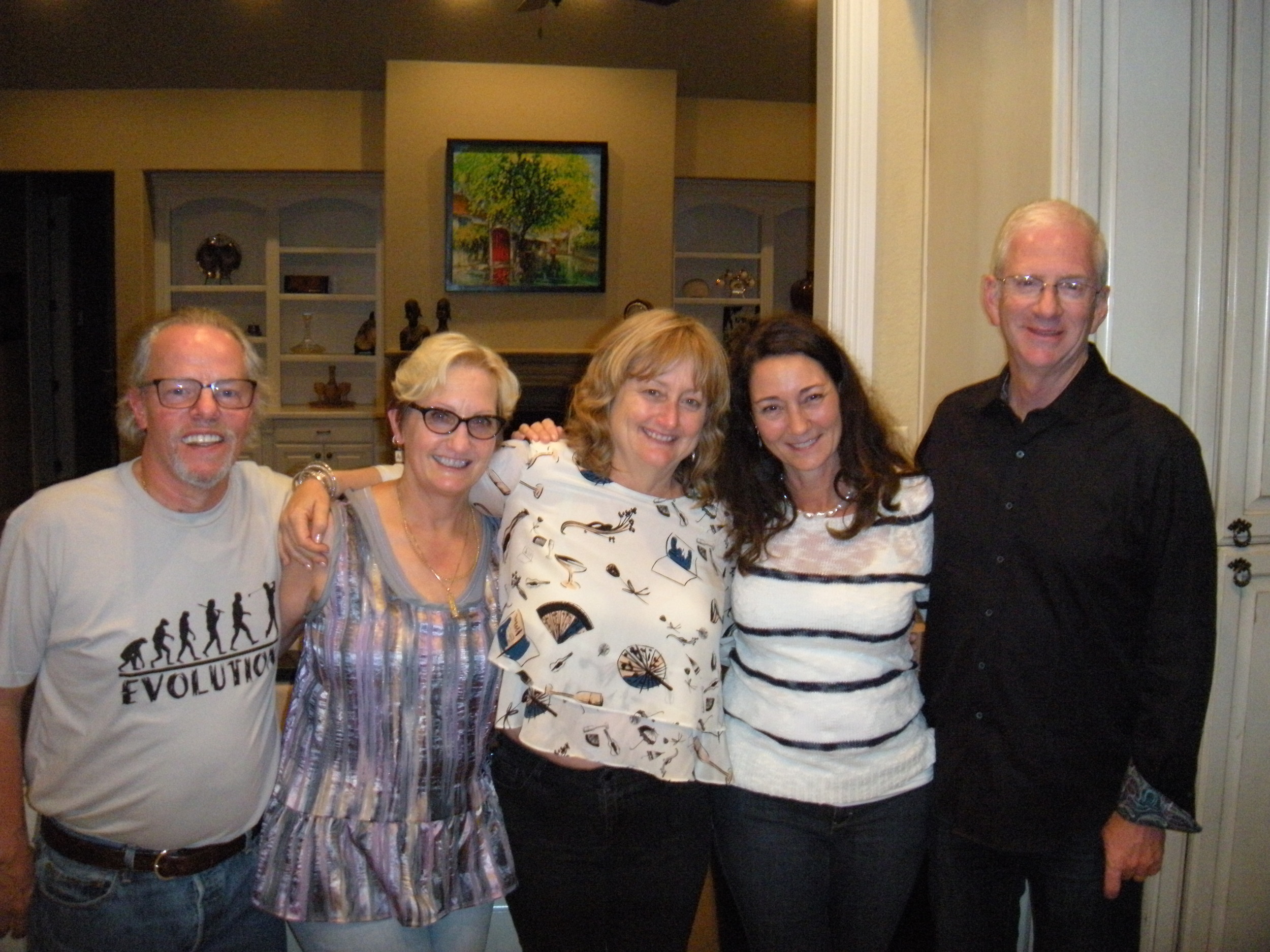
David, me, Tere, Diana, and Charlie.  

David, me, Tere, Diana, and Charlie.  

At the winery.  Nonny and Mary Ann in front.  Mary Ann helped pass out cake.  Thanks, Mary Ann. 

At the winery.  Nonny and Mary Ann in front.  Mary Ann helped pass out cake.  Thanks, Mary Ann. 

Tom and Gitte.  David and Tere in chairs.  Our back yard.

Tom and Gitte.  David and Tere in chairs.  Our back yard.

On a different topic:  The cleaning lady occasionally brings her nine-year-old daughter with her.  The little girl scratched this into the leather of our new custom-ordered couch.  We are heartsick.  

On a different topic:  The cleaning lady occasionally brings her nine-year-old daughter with her.  The little girl scratched this into the leather of our new custom-ordered couch.  We are heartsick.  

A Walk is Good

Walking along the Terry Hershey footpath in Houston, I have issues to ponder.

A couple of years ago I decided to write a mystery series.  There seems to be a market for them.  There’s nothing funny about murder, but I know myself well enough to know that the humor will come through.  Would someone want to read a book on a serious subject that doesn’t take itself seriously?  Sure; I do it all the time.  I can think of several amusing mysteries where people die in bloody horror in every other chapter. 

I wrote the first book, Caprock Snoop, and was pleased with it.  The protagonist, Fran Furlow, is nosey and interfering; a control freak and a compassionate bully; tiny and feisty; and she comes with a compelling backstory.  She lives to get to the bottom of things.  She gets knocked around a time or two, but how else would I show her to be so impressively intrepid? 

Now I’m almost finished with the second in the series, and half an hour ago I wrote myself to a complete stop.  There’s no place to go except forward, but something about the previous chapters nags at me.  Did I take a wrong turn?  Write an inconsistent dialogue?    

So, a walk to clear my head. 

Here’s the plot:  Someone’s murdering Caprock’s senior population and leaving their bodies in unexpected places—the back of a car, the gazebo in the park, the locker room at the city pool.  Clues and suspects pop up everywhere and Fran sorts through the plethora.  Meanwhile, she obsesses over her friends’ bad habits, attends support groups, and deals with her two co-workers who, after thirty years of working in the same office, decide to abandon their spouses and move in together. 

Are the motives of the villains—a grandmother/grandson duo—believable?  When confronted by Fran, the grandmother claims the deaths to be mercy killings—the victims are in pain and suffering from dementia; but the grandson has been robbing the victims, which is hardly altruistic.    

My mind veers.  I’m here in Houston to give moral support to my sister.  Her boyfriend of twenty years died a couple of months ago, and last week our mother wasn’t able to get out of bed.  It was time to call in hospice care.  And now helpful strangers are popping in to do evaluations, discuss the legalities, and prepare Trina for what’s coming. 

Trina is exhibiting undeniable signs of depression.  I won’t get into the personal bits of it, but she’s really going through a hard time.  I’ve seen her become desperately anxious, almost panicked, over what’s coming.  She’s closely involved, almost intertwined, with our mother.  This is going to be painful.  As I put one foot in front of the other, I promise myself that I’ll do better, get down to Houston more often, call more.  Trina needs to know she’s not in this by herself, though she pretty much is. 

Back to my analysis.  Why did the grandmother and her grandson leave the bodies in such peculiar places?  It was an interesting turn when I wrote it, but in the end the purpose behind it seems weak.  The explanation the grandmother offers is that they were trying to publicize the plight of the demented elderly, a lame rationalization.  There must be another, more credible, reason for the weird choices.  Perhaps some psychological significance to each location?  This is the inherent difficulty in my organic method—sometimes I write myself into the back of a cave, at which point I’m forced to retrace, rethink, and rewrite.  Hair-pulling is involved. 

As the backbone of the book is the strong main character, is the inexplicable location of the victims really that important?  Of course it is.  An irrefutable component of the bond between the writer and the reader is that if a writer doubts what she’s writing, the reader will, too.

The air is warm and humid.  The foliage is lush and green, and the birds are loud and cheerful.  I take a deep breath of the heavy air and sigh it back out.  All will be well.  I’ll fix the story.  Trina will get through this.  Our mother will get to where she needs to be.  Though I was glum when I started out, my heart feels lighter as I arrive back at the house. 

I’m inside for only a minute when there’s a knock on the door.  It’s the hospice minister.  Not too concerned that I’m a sweaty mess, I invite him in.  He seems a mild man, unexpectedly large and hairy.  Trina greets him and leads him back to the bedroom where Momma slumps in the hospital bed and looks out at surroundings that are incomprehensible to her.  She’s more feral than domesticated these days.  Yesterday when she was hungry she lifted Trina’s hand to her mouth and bit it.  I hope she doesn’t bite the minister! 

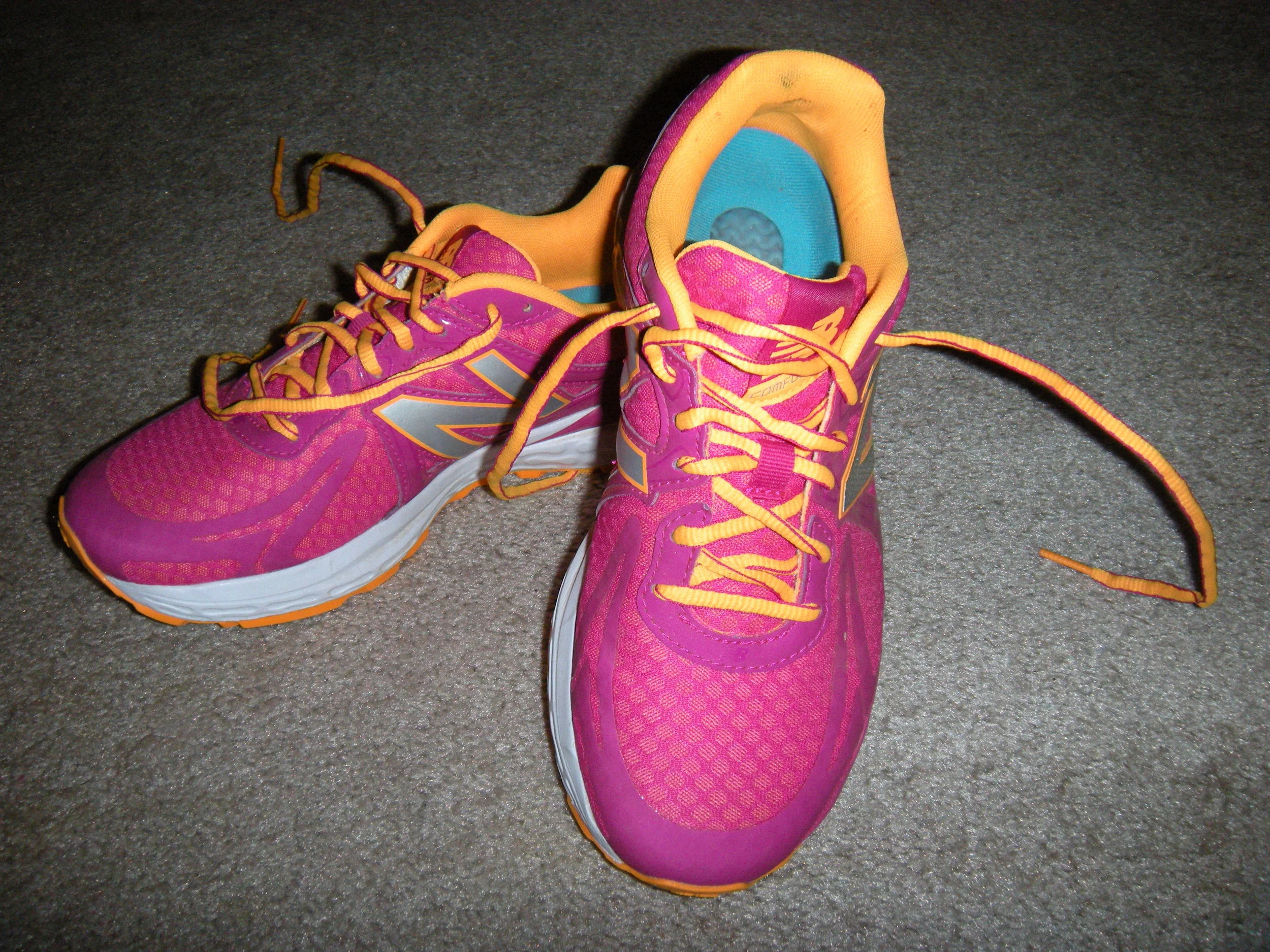
These shoes that I walk in are absurdly garish.  

These shoes that I walk in are absurdly garish.  

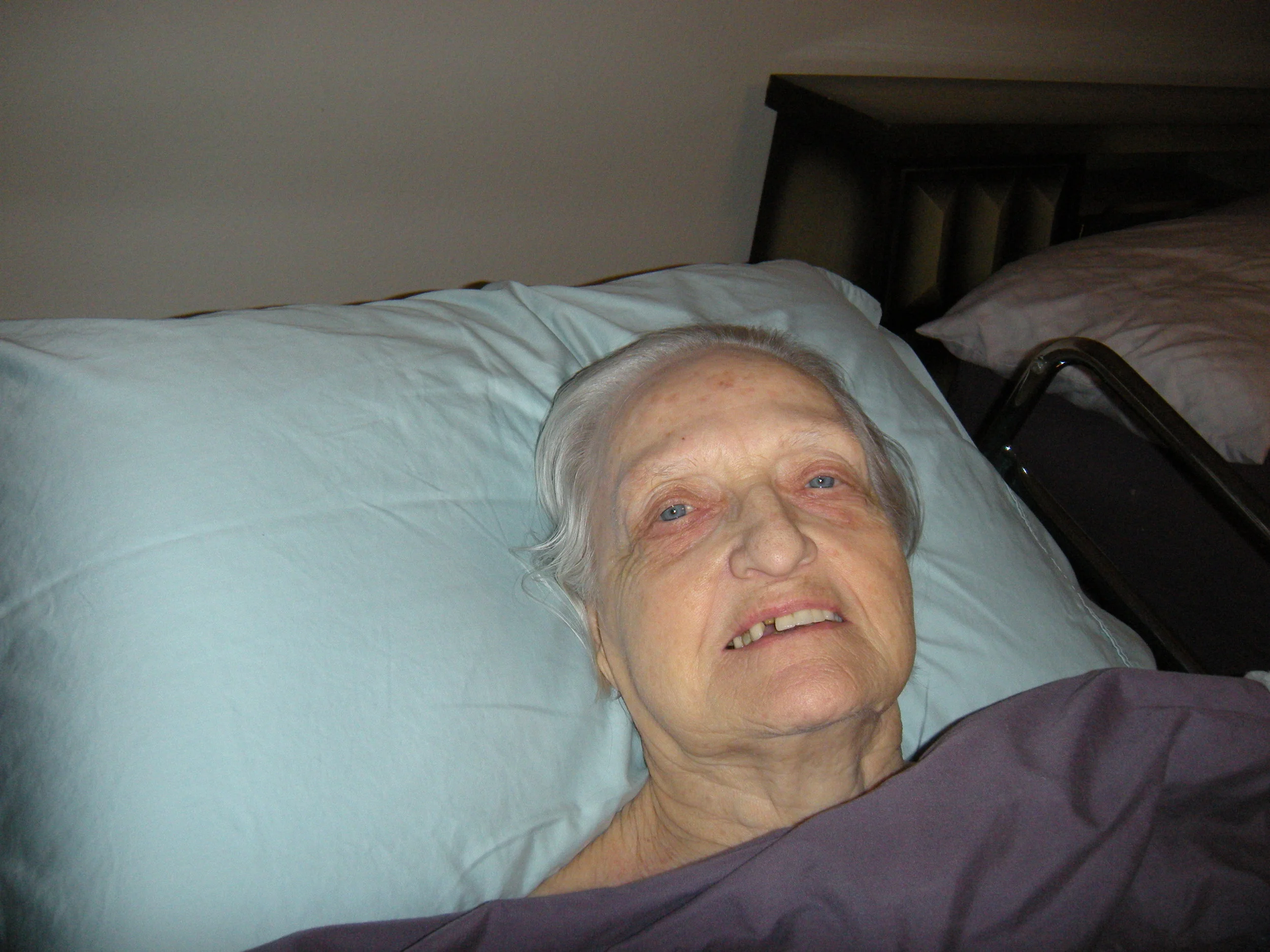
Bea Haenisch Peery.  It's sad that mothers eventually change and die.  

Bea Haenisch Peery.  It's sad that mothers eventually change and die.  

Trina has a good job with a finance company.  Is it a blessing or a curse that she's allowed to work from home?  

Trina has a good job with a finance company.  Is it a blessing or a curse that she's allowed to work from home?  

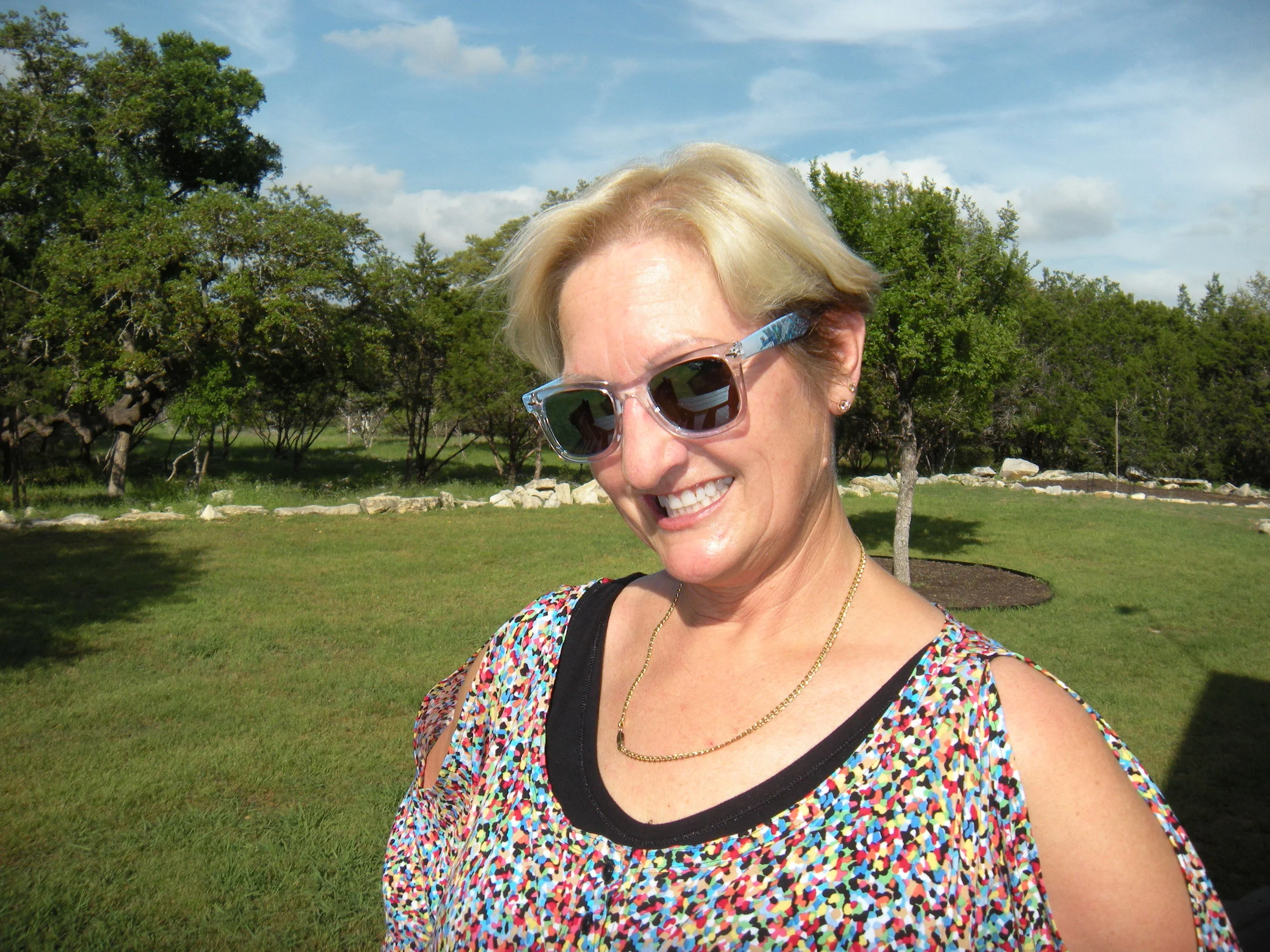
The sunglasses I'm wearing are inspired by the rural children of China.  I bought them from Sam's company, Mantra, in Beijing.  The theme of their next line will the hutongs.  

The sunglasses I'm wearing are inspired by the rural children of China.  I bought them from Sam's company, Mantra, in Beijing.  The theme of their next line will the hutongs.