Tile Talk

“My mother-in-law broke her hip,” Amy, a Mahjong friend, tells us.

“That’s terrible.”  My response is without thought or sincerity.  My mind is on the tiles in my rack.  What started out as a lovely aroma has rapidly turned into a stink. 

“We’ve been expecting it,” Amy continues.  “She’s in her late eighties and she falls at least once a week.”

“My, my,” Lucille murmurs.  She plucks a tile, looks at it; it’s no use to her and she discards, identifying it—“three bam.”

“Every time it happens, Arnie has to call us to come help get her up.  She weighs three hundred pounds.”  Arnie, I assume, is the father-in-law.  Amy shakes her head despondently, takes the next tile in line, makes an adjustment in her rack as she adds it to her hand, and discards a wind.  “And then Arnie, ninety-one years old, hits a deer while he’s following after the ambulance.  His car was too damaged for him to continue on, and he’d forgotten to charge his phone, so he was stranded on the side of the road with a dead deer.”

“That’s terrible,” Kendra says, her eyes not moving from her rack as she takes a tile and barely glances at it before tossing it on the table, saying, “North wind.”

“So finally someone driving by figures out that here’s an old man in trouble,” Amy says.  “So they stop and offer their cell phone and he calls us and we go pick him up and take him to the hospital to be with Catherine, who, by this time is in a panic because she’s scared to death something happened to him.”

I pick up a one dot, view it sadly, discard it.  All I need is a pair of flowers.  There are eight of the stupid things.  I figured my chances were good.  But at this point, five have been discarded.  Pairs are tricky:  I can’t complete a pair from the discards unless it’s for Mahjong.  Amy picks a tile, discards a flower.  Damn!  Two left, and I need them both.  If I can just draw one, at least I’ll have a chance.  Kendra draws, discards a four dot.  My turn.  Be a flower, be a flower, I say in my mind.  It’s a two crack.

And still Amy talks.

“And then, while we’re in the emergency room waiting for someone to talk to us about her x-ray, Arnie starts making a fuss about how long it’s taking.”  Dismayed, she makes a smacking noise.  “Well, his wife is in pain, and he’s frustrated because there’s nothing he can do about it, so he goes out into the corridor and starts stopping random hospital workers, shouting in their faces and waving his arms until someone calls security.”

Kendra discards the seventh flower.  My hand is lost.  At this point all I can do is try to keep another player from getting what she needs.  Kendra and Lucille have enough of their hands exposed so that I know what to avoid discarding.  Amy hasn’t exposed anything except the details of her horrible weekend. 

“We took him outside and calmed him down, but then he just collapsed in tears.  There he was, in Bill’s arms, crying like a baby.  He hasn’t spent a night away from his wife for ages, maybe not since they got married over sixty years ago.”

Yes, Amy’s talkative.  But it’s not self-centered jabbering.  Even now, the story she relates is about someone else’s misery.  In our Mahjong group, she knows the names of everybody’s children, and the names of their children’s children.  She knows all the women’s health issues and their husbands’ health issues.  In fact, so overtly thoughtful is she that I, who, in the best of moods, can only be described as irascible, once asked her how she could be so nice all the time, and she answered, “I love everybody.”  And I believed her. 

Lucille takes a tile, discards. 

“They set her hip with screws and cable.  Cable.  I’ve never heard of such a thing.”  Amy takes her tile, immediately rejects it. 

Kendra grabs the next tile.  Her lashes flutter as she places it in her rack.  She got something she needs.  She discards an east wind. 

I pull a joker, and immediately thump it in the middle—as jokers can’t be part of a pair, I have no use for the thing—which causes Lucille to emit an unhappy grunt.  She could’ve used it. 

“And now Arnie’s staying with us,” Amy says.  “He’s so worried about Catherine that he can’t sleep or eat.  And when we got a call this morning that she’s going into a rehab facility, he started crying again.”

Lucille pulls her tile, discards it. 

“Is it really rehab, or is it a nursing home?” I ask.  Having witnessed my own mother-in-law’s long decline, I know all about the conveyor belt for elderlies.

“They’re calling it rehab.  But we all know she’s never going home again.”  She lifts her tile, looks at it, and, perking, announces, “Mahjong.”

My first reaction isn’t generous.  I wanted the win.  I wanted the tiles to be on my side.  Also, Mahjong takes concentration, and she was talking the whole time.  Does her mouth work separately from her brain?   

Mahjong players speak of "the winds of chance," and "the whimsy of the Mahjong gods."  In addition to being capricious, Mahjong is karmic.  Because Amy's had a tense few days, Mahjong will be kind.  Wiggling with joy and straightening in her chair, she's anxious to move on to her next win.  Expediently she collects her winnings and starts shuffling the tiles.  She makes Mahjong ten out of thirteen hands (unprecedented!), talking nonstop the whole time.  
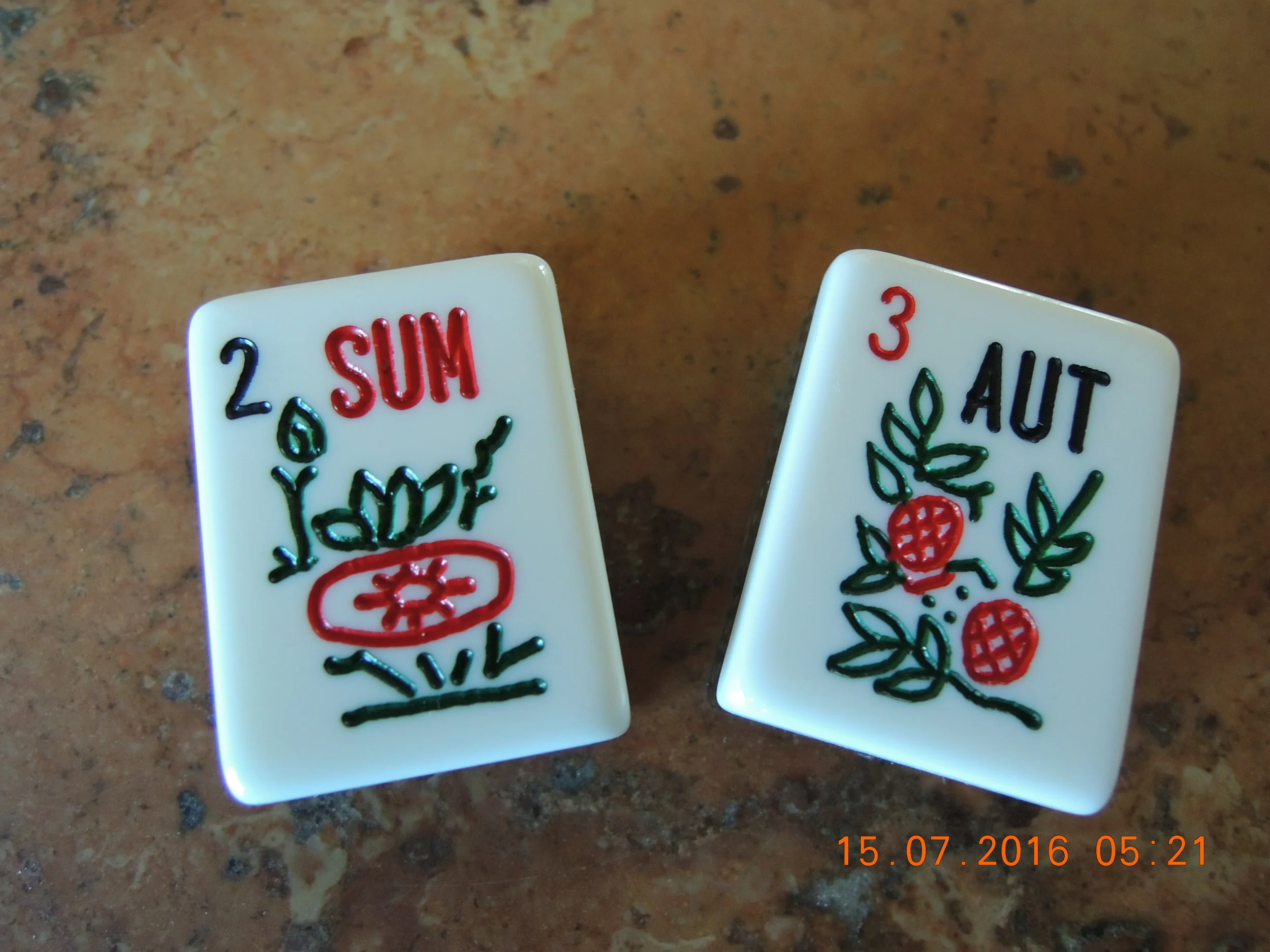
This pair of flower tiles is taunting me.  
This pair of flower tiles is taunting me.  

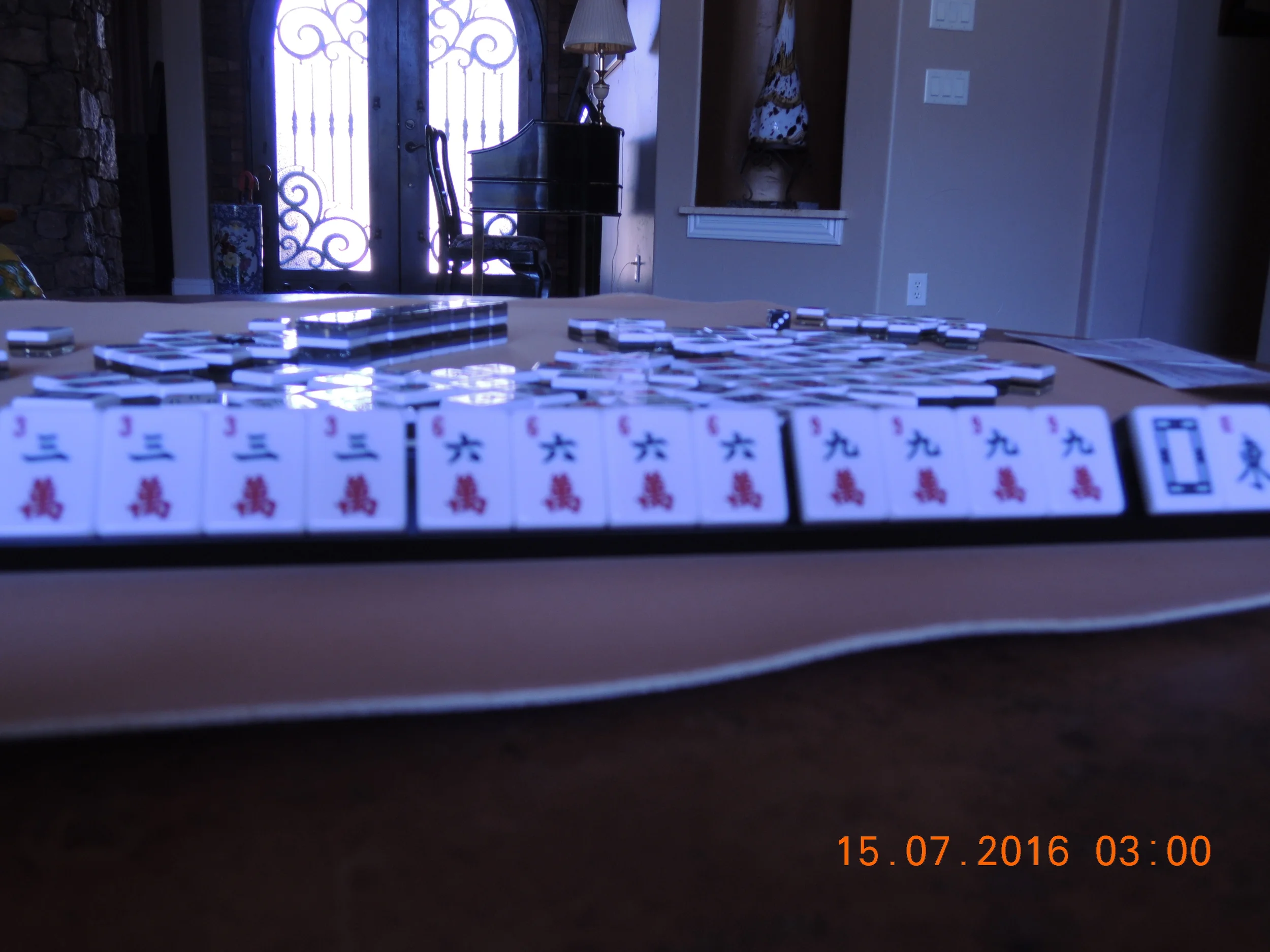
Isn't this a beautiful hand?  No jokers, and I pulled it all myself. didn't take a single discard from the center.  The white dragon and east wind don't belong, though.  Oh, for a pair of flowers.  
Isn't this a beautiful hand?  No jokers, and I pulled it all myself. didn't take a single discard from the center.  The white dragon and east wind don't belong, though.  Oh, for a pair of flowers.  

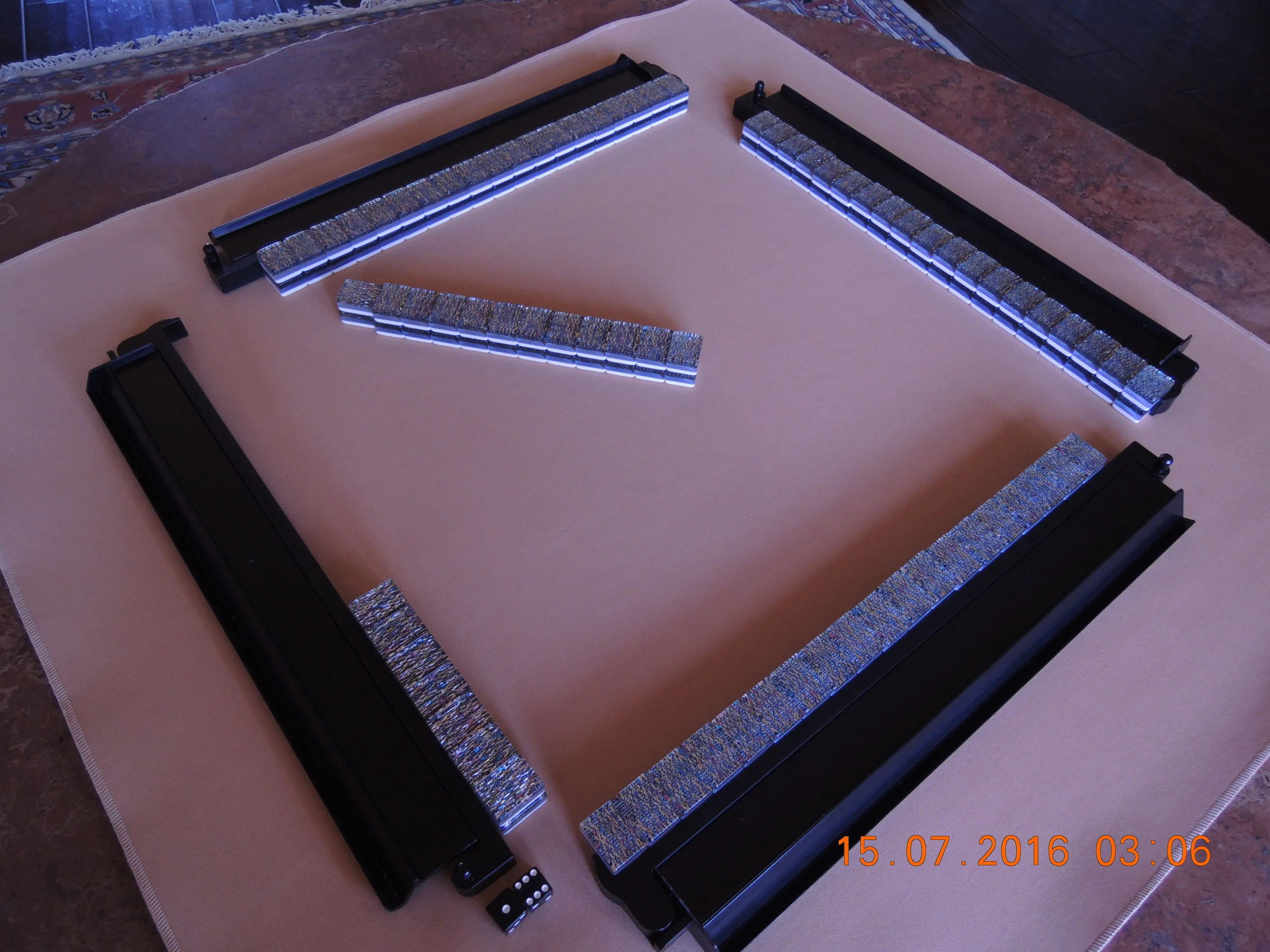
Ready to play?  I played with a woman in Singapore who believed that the ends of the walls need touch so the evil spirits can't get in.  

Ready to play?  I played with a woman in Singapore who believed that the ends of the walls need touch so the evil spirits can't get in.  


Politics: Two Rank Odors

I enjoy thoughtful political commentary and a dignified exchange of ideas, so it’s understandable that this last year of media coverage contrived to incite, and the insubstantial and childish yammering of the candidates, has left me disappointed.  I need to get away from the television for a while.  So David and I decide to rent jet skis and bounce around on Lake LBJ for a couple of hours. 

“I don’t like to be splashed,” I remind him as we swing our legs over and settle into the saddles.  A while back he did a dig-in hard turn and sent spray all over me; then he laughed like it was funny, but I didn’t think so.  “I like to stay close to the shore and contemplate the houses.” 

“When I want to have real fun,” he tells me agreeably, “I’ll go to the middle and not disturb you at all.”  I’m dubious. 

As I'm inching through the No Wake Zone, isolated with my thoughts, my mind goes exactly where I don’t want it to go—politics.  The closer the election gets, the more despondent and bewildered I become.  In a country rich with visionaries, philosophers, scientists, and elocutionists, it’s nonsensical that we must choose between an ambitious woman so dedicated to her legacy that she’ll say whatever it takes to get elected, and a divisive sociopath who has no clear plans and mouths his hyperbole in the grating idiom of a Valley Girl.  The man is an embarrassment before the world. 

And Hillary has been in the public eye for so long that the notion of seeing her and listening to her (recently she moderated her voice because polls told her she was “too strident”) for another four years is abhorrent.  Do I trust her to do what’s best for the country?  No.  I trust her to do what’s best for her.  Move aside, used-up woman.

Also, they’re both seventy; and yes, some people are sharp at seventy, but not as sharp as they used to be.  

So this is where my thoughts go as I dip and rise with the waves.  There is no wind, but the water’s choppy.  Herons are everywhere.  One skims over the foamy crest right in front of me.  It lengthens its neck, stretching toward the treetops, flapping its wings as it finds a perch.  Oh.  There are a couple of nests up there.  Sublime.

Crossing under the bridge, we’re on the Colorado River, a soothing band of blue with a wall of untamed greenery on the left and houses on the right—modern mansions adjacent to modest weekend rentals.  I expected it to be hot out here, but the misty breeze makes it pleasant.  Several people have arranged their chairs in a semi-circle on a sandbank.  Feet resting in the water, they drink from cans, tell stories, and tease each other.  I’m glad they’re having a good time. 

I’m acquainted with a woman, Vivvi, who thinks Trump is going to save us all. Trump declares that women love him, but I doubt the existence of these women.  Other than the few who are paid to speak for him (surrogates, an unexpected term in this arena), who are these devotees?  What kind of woman isn’t offended by his derisive remarks about menstruation and wrinkles on faces that are no longer youthful?  What woman isn’t bothered that his wife’s portfolio holds nude shots?  (I’ve heard they’re quite tasteful; but still, foreign leaders would have easy access to naked pictures of our first lady).  And so, when Vivvi came down on his side, I went to some trouble to question and observe.  Here’s Vivvi in a nutshell: 

She didn’t go to college.  She doesn’t like to read, but will flick through a fashion magazine if she’s stuck in a waiting room.  She enjoys reality TV.  Though she’s never owned or fired a gun, she’s against gun control—and don’t get me started on that; also, she thinks that Planned Parenthood is evil—again, don’t get me started.  She wears ankle bracelets, toe rings, low-cut tops.  She drips accessories—scarves, jewelry, belts, hair ornaments; and her accessories match her clothes.  Her husband insults her publicly.  I’ve witnessed it.  So, she’s a throwback.  Come on, Vivvi, even Edith Bunker evolved.  When I asked Vivvi why she liked Trump, she said, “Because he says what he thinks.”  Good Lord, if a president goes around saying what he thinks, we’ll all be lost!

Up ahead, David turns back, signals that he wants to return to the main portion of the lake.  I guess it’s time.  We can hardly follow the Colorado all the way to the Rockies.  With a shrug I make a tight turn.  I’m impressed with myself when I crank it up to forty—what a daredevil I am.  Under the bridge, back to the lake.  True to his word, David is doing his circling and splashing out in the center, far away from where I chug contentedly along.  First one direction, then the other.  When we get to the dam it’s time to head back in. 

It’s been a relaxing break, helpful in that I’ve reached a peace of sorts:  whether we vote for the witch in the gingerbread house or Swift’s Yahoo, the country will be fine.  How much damage can one person do in so short a time? 

GW pops into my mind.  Stop it.  Shut it down right now. 

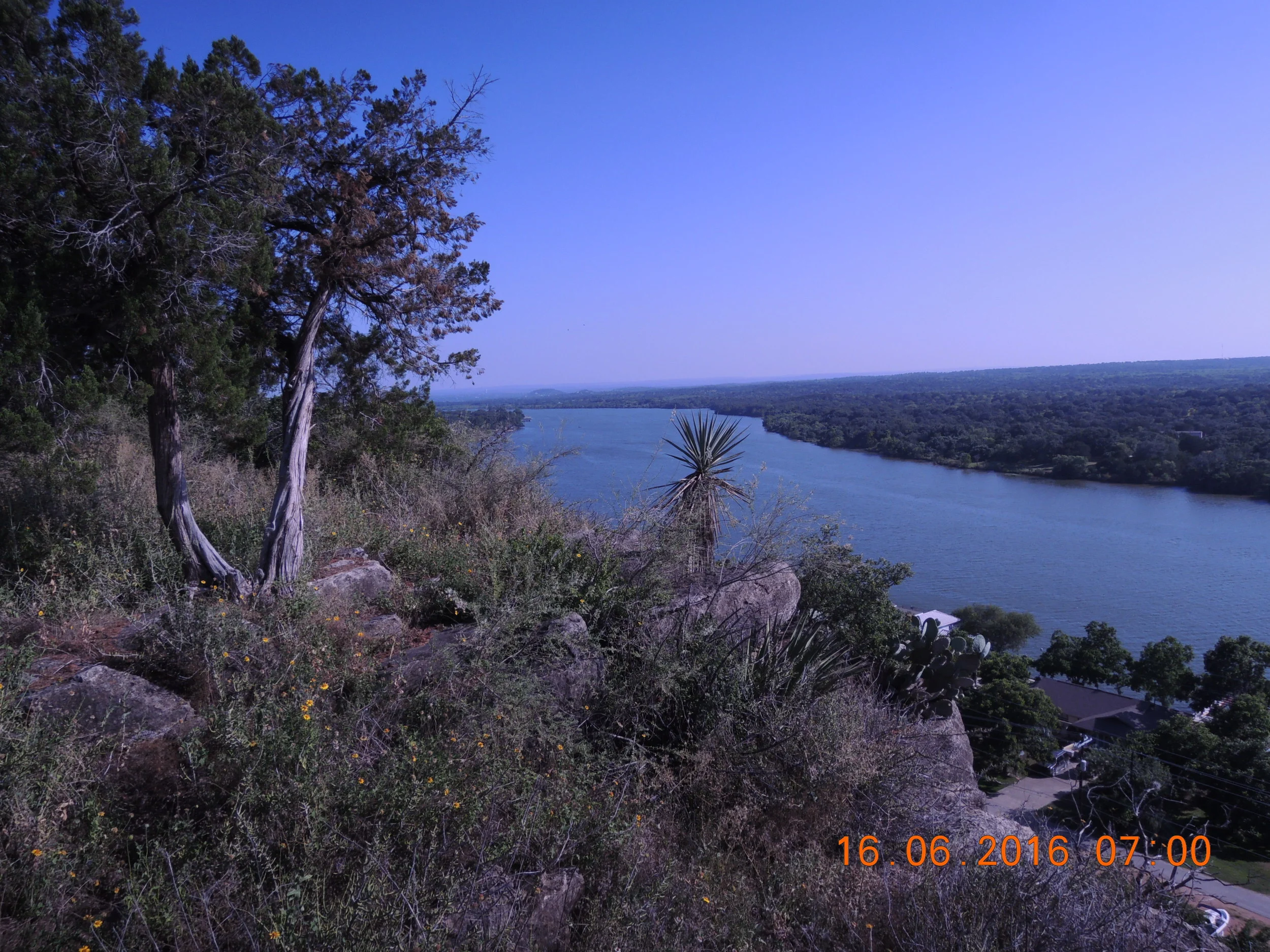
A nice view of Lake LBJ..

A nice view of Lake LBJ..

Facing the opposite direction, toward the Wirtz Dam.

Facing the opposite direction, toward the Wirtz Dam.

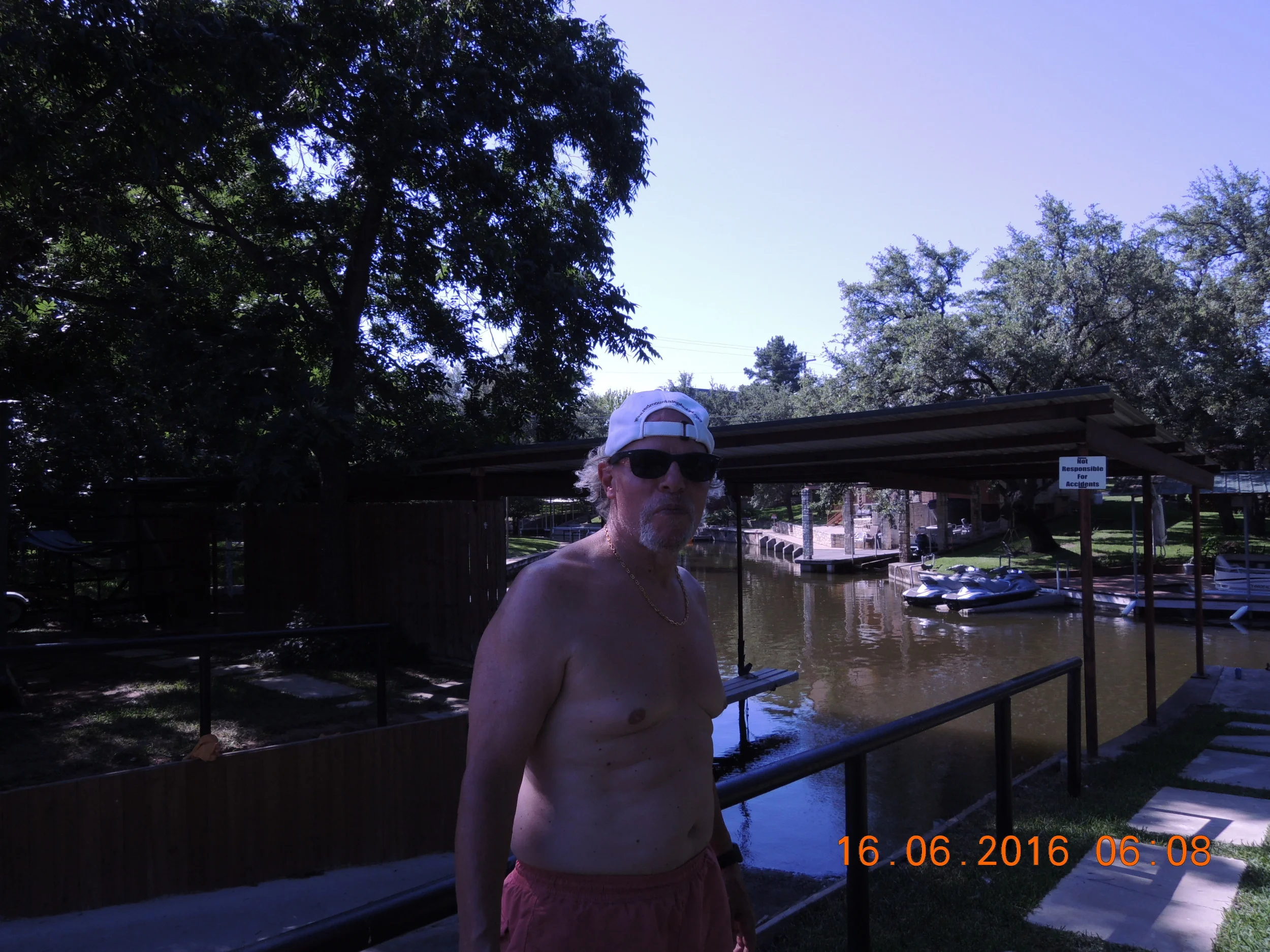
David, after an afternoon on the lake.  

David, after an afternoon on the lake.  


Reunion

I’ve been out of the country during every class reunion, though I’ve had no burning wish to attend.  What I remember about high school is that our graduating class was exceptional, and I never measured up.  Self-worth issues?  Absolutely.  During those years I was so busy figuring out who I was, trying to juggle a job and school work, band and family (bi-polar father, meek mother, rebellious sister—always drama on the home front), that I was overwhelmed, definitely not comfortable, not successful, not smart.  All I had to offer was mediocre flute-playing; some would’ve said I was good, but these encouragers didn’t know what good was, and I definitely wasn’t that. 

By exceptional I mean that a major portion of my classmates became not only professionals like doctors and lawyers, but Ivy League professors and internationally renowned musicians.  Hell, we even had an astronaut, Rick Husband, who died in the Columbia tragedy in 2003.  I never knew him.  The Amarillo High School Class of 1976 was amazing. 

And, now that I’m traceable to an address in the US, I’ve received notice that the fortieth reunion is rolling around.  Some gung-ho person has organized it and put out an agenda.  And I think—why not?  I’ve raised two brilliant and well-adjusted sons.  I’ve lived in seven different countries and am intimately familiar with the customs of people throughout the world.  I’ve logged over a hundred dives in the Red Sea, shared a meal with the Masai, slipped around on glaciers in New Zealand, explored Petra; and I know the aromas of the backstreets of every major European city.  I’m married to the same man I started out with.  I have an MFA, and I’m a published novelist with actual fans.  Why not attend the reunion, hold my head high, and take my place among the winners?

Because, though I was that shallow once, I'm not that shallow now.  Why would my high school inadequacies matter in the context of my present?  Shamefully, I was well into my thirties before I realized that we all feel out of place at times.  For every instance I felt inadequate, someone else felt equally ugly or foolish or in pain.  I was too lacking in empathy to realize it. 

The names of the people who plan to attend are listed on the reunion website.  There are more names I don’t recognize than names I do.  Some names pop up, and I remember the person, the face, the teacher who taught the class we shared.  For the most part the memories aren’t pleasant.  I remember this brown-haired girl, her face, her attitude.  She didn’t like me and I don’t recall why; but most likely it was because I offended her in some way.  I remember this no-chinned guy.  He had good reason not to like me—I was unkind toward him, sharp-tongued.   

And the horrible memories flood my psyche.  I was mean.  I was a mean girl.  I was impatient and I made fun of others and I felt superior for no reason and I was harshly judgmental and unforgiving.  Compassion wasn’t in my vocabulary.  I cried for myself, but no one else.  At the same time, I was intimidated by the intelligent, the talented, the gorgeous, the rich, the confident.  In short, I was a mess.  I’m happy with who I am now, but who I was then is someone I don’t want to become reacquainted with.  Would seeing those people and returning to that place cause me to revert?  I fear so. 

Also, inexplicably, as part of the re-union prep, we’ve been instructed to carry a Sandy (school mascot) with us on vacation and take pictures of it in all the interesting places we visit.  We’ve been asked to send in a copy of our senior picture.  I have no idea where mine is.  We’ve been asked to send in pictures of our grandkids—I have none of those at this point.  This sounds like a lot of work when I thought all that would be required would be showing up and wearing a nametag.  Also, it seems that, just like so many times in high school, a lot of pointless activity is required for an event that should be pretty straightforward.  See, I say I’ve changed, but on a very basic level, I haven’t.  I still don’t want to put forth the effort it takes to conform. 

“But don’t you find that you keep up with the people you care about?”  This from my high school friend, Diana, when we discuss attending the reunion.

“Yes, I guess I do,” I tell her.  Because of Facebook and responses to my blog, I know where my friends are, what they’re up to. 

“And the wind blows constantly up there,” she reminds.  We both shudder at the memory of the relentless biting wind, and how a trip from the car to the door plants grit in your hair, the inside of your nose, the creases in your upper eyelids.  

Amarillo.  I write about it.  Most of my novels are set there.  I know the flat countryside, the gnarled mesquite, the crackle of winter grass beneath my boots, the pirouettes of the tumbleweeds, the brick churches on every corner, the overcrowded happy hours, the smell of the feedlots.  Don’t think I’ll be getting back there any time soon. 

Here is an AHS Sandie, which represents the dust devils found in the panhandle.  Though its expression is fierce, I always thought it look like a lump of butterscotch pudding:  

First Sentences

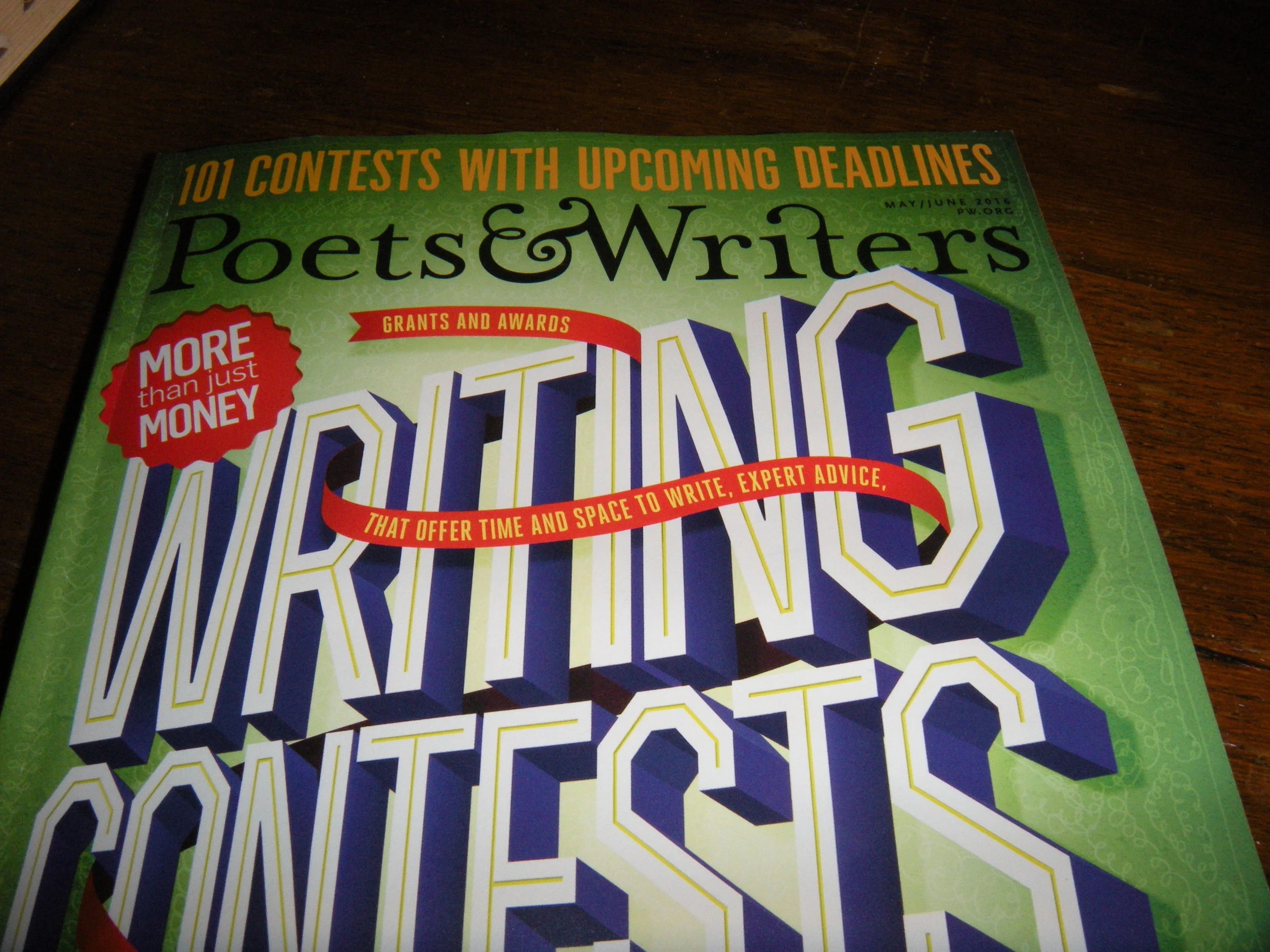
I recently came across a feature in Poets & Writers, entitled Page One:  Where New and Noteworthy Books Begin, which offered P&W’s editorial staff’s selection of exceptional first sentences in recently released books.  While style and content preferences are subjective, simply stated, a first sentence should draw the reader in and set the tone.  Here are a couple of openings, plucked from the article, that do exactly that:

“Ronnie swore it was talk and nothing more.”  From Late One Night, by Lee Martin.  And:

“Ten years ago, I helped a handful of men take my brother’s life.”  The Reactive, by Masande Ntshanga. 

Both of these strong sentences make me want to read further.  They predict violence and strife and soured relationships.  They tell me that an interesting story’s coming. 

This one, I’m not so crazy about:

“In June, the book club was at Zoe’s house, which meant that Elizabeth had to carry her heavy ceramic bowl of spinach salad with walnuts and bits of crumbled goat cheese a grand total of half a block.”  Modern Lovers, Emma Straub.

This is all over the place—two names, three types of food, a book club, and a walk.  I’m not drawn in.  I don’t care about Elizabeth and her heavy bowl.  It sets the tone, but it’s not something I want inside my head. 

Also, this next one bothers me; however, it is translated from French, so maybe that’s the reason for the befuddling lack of color:  

“She was Malinka again the moment she got on the train, and she found it neither a pleasure nor a burden, having long since stopped noticing.”  Ladivine, Marie NDiaye.

The lack of clarity is unsatisfying.  I reread it, feeling that I’ve missed something.  I’m put off that Malinka seems at ease with her duplicity.  I’d read a little further in this one, though, because the mystery (why does she change to Malinka on the train?) interests me. 

There are certain openings that are so offensive that I read no further.

Foul language is a turnoff.  Because vulgarity signals a lack of vocabulary and imagination, not to mention a lack of taste, my thought when I find a “Fuck” in the first sentence is that this author’s going to be limited, and will rely heavily on the shock factor.  I’ve probably missed out on many good reads because of this literary handicap; but really, who wants to read two hundred pages of that?

This first sentence (from my collection, not P&W’s) taken from The Cowboy and the Cossack, by Clair Huffaker, is written from the perspective of a teenaged cowboy in the 1880’s.  It meets the goal of a first sentence—to interest the reader and set the tone—but the weak attempt to capture a nonexistent dialect remains annoyingly unnatural throughout.  A forced narrative makes me feel itchy and sick.  I read it from front to finish, feeling like I needed to throw up the whole time.  Having said that, if you’re looking for a fun read, and don’t mind an amateurish style, you might like it.  Here’s its opening:

“It’s the spring of ’80 on the coast of Siberia when our greasy-sack outfit first runs up against those Cossacks.”

Keeping in mind the goal of a first sentence, I examine a few of my attempts and compare them to those declared outstanding by Poets & Writers. 

“I own the only building in a two-mile radius that has a basement.”  This is from Why Stuff Matters, to be published by Arcadia early next year.  Trying to assess it with a fresh eye, I’m not thrilled; but I’m not displeased either.  The sentence’s significance is based on a regional awareness—if you’re from northwest Texas, you understand that mention of a basement signals the imminent arrival of a tornado.  A reader from elsewhere might not comprehend the implication.  Does it make a reader want to read on?  I just don’t know!  How about this one?

“Before they’d let me out of rehab someone had to agree to act as my legal custodian.”  This is from Old Buildings in North Texas, to be released in the UK in September.  Once again, ambivalence.  It lays out a universal situation—every person on the planet knows an addict.  And the phrase “had to agree” portends conflict, hinting that the relationship with this custodian will not go smoothly.  But I’m noticing a pattern—my sentences are similar to those I chose as my favorite examples from Poets & Writers.  I suppose it’s good that I like my own work.  

Here’s the opening sentence of a mystery series, as yet unnamed, that I’m trying to get off the ground:

 “During the break several of us slip through the side door and troop to the sidewalk across the street.”

Hardly inspiring.  It tells of a person with friends.  Slipping through the side door implies some sort of furtive activity.  Does it make the reader want to continue?

I’ll finish with what is probably the most famous first sentence ever written, from Charles Dickens’ A Tale of Two Cities.  Its balance is exquisite, and the assertion that we all believe ourselves to live in extraordinary times creates universality and a sense of continuity that is almost holy.  On the other hand, it is so old-fashioned, so overblown, that no modern writer would dare release such a run of words in this instant-gratification world:

It was the best of times, it was the worst of times, it was the age of wisdom, it was the age of foolishness, it was the epoch of belief, it was the epoch of incredulity, it was the season of Light, it was the season of Darkness, it was the spring of hope, it was the winter of despair, we had everything before us, we had nothing before us, we were all going direct to Heaven, we were all going direct the other way—in short, the period was so far like the present period, that some of its noisiest authorities insisted on its being received, for good or for evil, in the superlative degree of comparison only.   

Now that’s a first sentence.  Does it set the tone and draw the reader in?  Or, because it’s obviously going to be a slog, does it cause the reader to close the book and reach for Nora Roberts? 

Though it's mostly advertisements about MFA programs and writers' retreats, the articles are helpful and informative.  

Though it's mostly advertisements about MFA programs and writers' retreats, the articles are helpful and informative.  

This is the article you have to thank for this rather dry and self-aborbed posting.  

This is the article you have to thank for this rather dry and self-aborbed posting.