Heaven to Hell

In the two and a half days we’re at Acadia National Park we hike eighteen miles. The skies are clear and the temperature is perfect. In Bar Harbor we enjoy our wonderful hotel and the touristy shopping. Every meal we have is delicious and one evening we’re entertained by ancient Celtic tunes played on an acoustic guitar. We’re sad to leave the area. I highly recommend a visit to Acadia and Bar Harbor.

Our next lodging turns out to be more adventurous than I prefer. Following the rather frantic voice in our phone, we drive four hours southwest, to Huttopia, a cluster of canvas covered frames with wooden floors on a serene lake in the White Mountains. When we arrive it’s so hot and humid that my clothes stick to me. The apathetic receptionist tells us that we can’t drink the water and that we’re to recycle. She knows nothing about the area, though she’s heard talk of hikes. Unhelpful as she is, she tells me I have beautiful eyes so she’ll always have a place in my heart.

I try to be a good sport about things, but our new temporary home is a huge disappointment. The information on Huttopia’s website touts space to sleep five, indoor and outdoor dining areas, a stovetop and refrigerator, and a full bathroom. And on the surface, all this is true; except that what they’re calling a stovetop is actually a crappy burner on the porch, and the two and a half beds could only sleep five if they’re talking about four-year-olds. Most dismaying is that there’s no storage room anywhere, which means the suitcases take up the table. And the bathroom is the size of a closet. Not only do we have to put the sheets on the beds, but we’re expected to strip them and deliver them somewhere when we depart. I know I sound spoiled, but this place is costly. 

Also, we’re asked to wash our dishes before we leave, which in my mind means we’ll be eating off dishes that were (or weren’t) cleaned by the previous tenant. I thoroughly scrub the dishes before we eat off of them. As I’ve stated in previous write-ups, this trusting the guests to prepare for the next guests is a stupid and careless concept. 

The next morning it’s so cold that neither of us can get warm. We huddle in three layers beneath blankets, muttering that surely it’ll warm up later in the day. There’s a heater that’s on a thirty-minute timer. It puts out little heat, though the glow creates the illusion. 

Even worse, though, is the hike that claims to be four miles long but is closer to seven. And it’s not a hike, it’s a climb, a steep one. I’m horrible at going both up and down. Five hours in I’m so exhausted that I’m fighting tears. And shamefully, my every stumbling step is accompanied by a bitter expletive. Complaining is probably the best and worst thing I do. 

“Come and look at this view,” David says when we reach the peak. He stands right on the edge of a granite shelf looking down over a beautiful valley. 

“You think I haven’t heard myself for the last two hours? If I were to stand there nobody on the planet would blame you for giving me a push.”

He shrugs and takes a few pictures. It takes us longer to get down than it did to get up, altogether five-and-a-half hours of misery. I’m so bone-weary that I can’t lift my feet and I hurt everywhere. I tell David that if he asks what’s for lunch when we get back I’m hitting him with my walking stick. He chuckles. He’s a much better sport than I am. 

The next morning I’m appalled to see that, though we left it clean the night before, our tiny food prep counter is covered with mouse turds. I fondly recall how, before we moved to our country home outside Marble Falls, I didn’t know what a mouse turd looked like. Shuddering in revulsion, I wipe the mousy surface with the same sponge I used earlier for washing dishes; and will use again when I wash up before we go. It is what it is.

After this episode, we drive an hour to catch the Cog Train to the summit of Mount Washington. If you’re ever in this area you should definitely do this. A particularly arduous segment of the Appalachian Trail, Mount Washington is the tallest peak in New England. When we reach the top it’s twenty-eight degrees and we’re consumed by a cloud. I buy a pair of gloves in the gift shop. 

On the way back to our frigid tent/hut we stop for lunch in Conway, at a nondescript restaurant called The Lobster Trap. And indeed, there is a splintered lobster trap by the entrance. David orders baked halibut and I have clam chowder; and believe me, a person doesn’t lose weight by ordering clam chowder for lunch every day. A couple of hours later David gets sick. Traveling can be hard on the system.

The view from the top of the White Ledge Loop, a hellish climb.

The view from the top of the White Ledge Loop, a hellish climb.

The two of us in front of the cog train at the bottom of Mount Washington. This was a fun and interesting excursion.

The two of us in front of the cog train at the bottom of Mount Washington. This was a fun and interesting excursion.

From the top of Mount Washington. The mountain is in the clouds three hundred days a year. If you catch it on a clear day you can see a hundred miles in every direction.

From the top of Mount Washington. The mountain is in the clouds three hundred days a year. If you catch it on a clear day you can see a hundred miles in every direction.

Our bathroom at Huttopia. I bumped my knees when I sat on the toilet. Also on this entire trip there have been no lids on toilets, which is disgusting, and only the cheapest toilet paper.
Our bathroom at Huttopia. I bumped my knees when I sat on the toilet. Also on this entire trip there have been no lids on toilets, which is disgusting, and only the cheapest toilet paper.
The Northeast

I usually like to go along with things, but this looks like a lot of traveling.

We’re taking JetBlue, which worries me. Not a week goes by without an airplane falling out of the sky. And JetBlue is especially concerning because some years ago one of their planes crashed in Florida, leaving a perfect plane-shaped outline in the swamp. The image stuck with me. But, contrary to expectations, this turns out to be a new aircraft and it’s very nice. The seats are leather so the odor of a million farts won’t be absorbed by upholstery. Also, there’s more legroom and all the technology works. 

Because the flight was delayed for a couple of hours we don’t arrive at Logan until midnight. But don’t worry—we still make last call at the airport Hilton’s bar and a glass of wine is exactly what’s needed. 

The next morning we uber into South Boston and move our luggage into a B&B, Encore, that’s run by a jovial old German whose partner is involved in Boston’s theater scene. Masks and theater posters are on every wall. The partner, whom we don’t meet for the two nights we’re there, is an Edward Albee fan, or maybe even a friend. Several poster ads for his plays hang in our room. And if you look closely you’ll see that they’re signed by the cast, directors, and producers. 

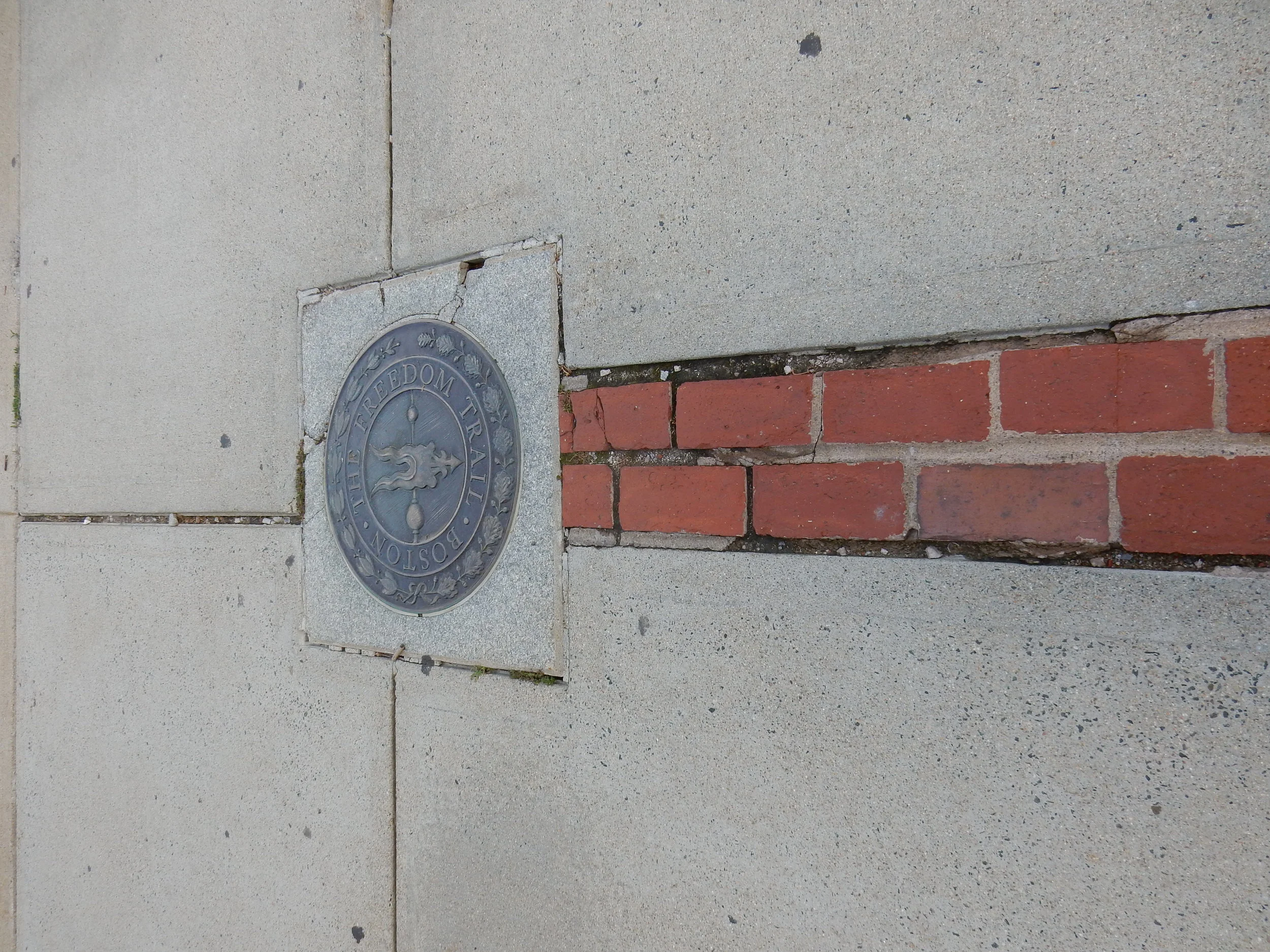
The first day we walk the Freedom Trail, which begins at Boston Commons and ends at Bunker Hill. It takes four and a half hours to cover the entire thing. The path is made clear by red bricks laid in the sidewalk. I highly recommend this adventure that passes by Paul Revere’s house, the site of the Boston Massacre, statues of famous revolutionary leaders, the Old North Church, etc. When we get back to the room we collapse on the bed and take a nap. That evening we go out for Indian food, which, tragically, is unavailable in Marble Falls. Lamb vindaloo! 

The next day our feet are sore from walking across all those cobbled streets and it’s quite chilly, so we take a tour bus that basically follows the same route, only with the driver’s entertaining commentary. We leave the bus at the Barnes and Noble, where we go in and ask at the information counter if they have Old Buildings in North Texas which, unsurprisingly, they do not.

“It’s an unusual book by an excellent new author,” I tell the woman. “Why do you not have it in stock?”

“I’ll order a copy right now,” she says. 

“Not one copy,” I say. “Twenty at least. It’ll fly off your shelves.”

Her smile tells me she thinks I’m demented. David and I thank her and leave. 

“It was my understanding that Old Buildings was to be distributed in the states,” I whine to David. “Arcadia has a distributor that they’re paying to distribute it. Doesn’t that mean it should be in book stores?”

“Call them. Find out.”

David believes in being proactive while I believe in not bothering anybody. 

The next day we pick up our rental car and drive up the coast to Portsmouth, New Hampshire. The town is quaint, a cobbled shopping street with a hundred restaurants and two hundred shops full of t-shirts, mugs, and hats. Because we’re post-season, the number of tourists is manageable. We visit an enjoyable ten-acre walking museum, Strawberry Banke, which preserves and presents three hundred years of the history of Puddle Dock, one of the first Portsmouth neighborhoods. I like looking at old stuff and there are costumed artisans to explain and demonstrate everything from boat building to cooking. 

Every restaurant advertises lobster rolls, which seem to be an area specialty. So that evening we each order one. There might be variations, but what we’re given is a huge amount of lobster that’s been marinated in garlic butter and wrapped in a warm heated roll. I get the smallest on offer and David gets the next bigger size. They’re expensive and rich. The advantage seems to be that the lobster is peeled for you. What’s not to love about that? But I’m talking about consuming five thousand calories at the end of the day. That lobster roll will be with me until I die. 

Our Portsmouth hotel is generic, which I confess I prefer—two queen beds, cable, a desk for writing, and no interaction with a maniacally hospitable host. 

The next morning we’re once again on our way, this time to Portland, Maine. Another touristy area, this one bigger and right on the waterfront. More t-shirts and restaurants. Once again we’re on foot. Five miles from the outmost tip of a wharf to the observatory, the highest point in the city, from Longfellow’s home back down to the water where we eat salads, trying to fool ourselves into believing that fresh greens and grated carrots will cancel out last night’s lobster rolls. 

We spend the night at Fleetwood House, a B&B run by a woman well into her seventies who, needing supplemental funds for her retirement, spent a small amount to make her extra rooms habitable. She’s friendly and generous with her recommendations about local restaurants and attractions, but there’s no disguising that she’s not able to keep up. My feet are filthy after walking barefoot across the floor of our room. When I dry my face on a hand towel my cheeks end up coated in dust. And I don’t want to think about what the grainy bits in the sheets mean. The breakfast, toast and fruit, is presented attractively, but no protein. Bye, Portland. You were worth visiting. 

Next up, Bar Harbor and Acadia National Park. A couple of my Marble Falls friends recently returned from Acadia and one of them—was it Cathy or Jane?—said that Bar Harbor was so over-the-top packed with tourists that they could only tolerate it for the length of a single meal before moving on. As David and I have reserved a room in the biggest hotel on the busiest street, we have no choice but to disregard their opinion.

The Bar Harbor Grand is exactly what I require at this point. Luxuriously large room with a generous writing surface, accommodating staff, on-site parking (this can be a problem), and a wine shop next door where I found a lovely Australian Malbec.

Tomorrow we will go hiking. 

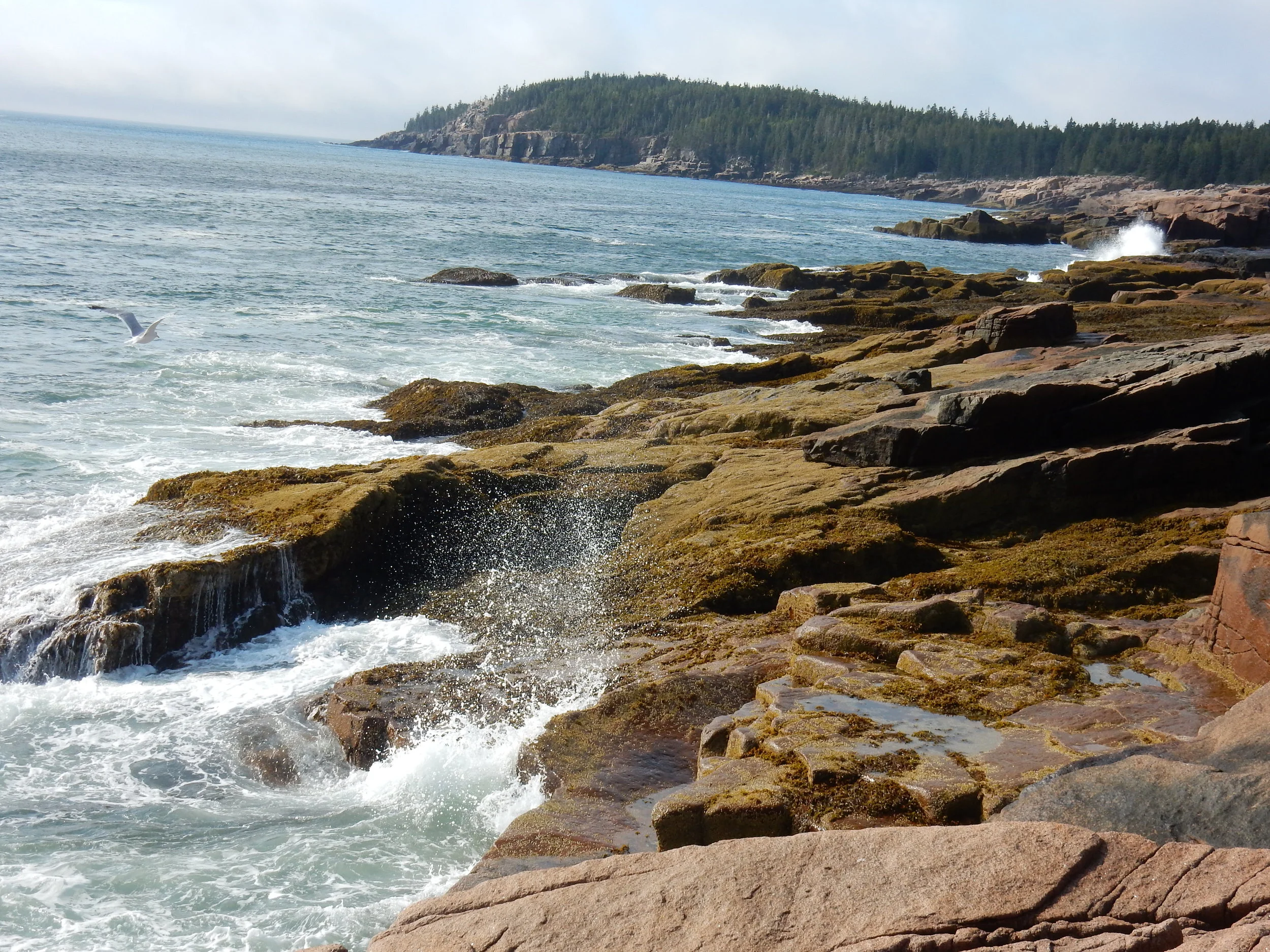
Acadia’s dramatic coast.

Acadia’s dramatic coast.

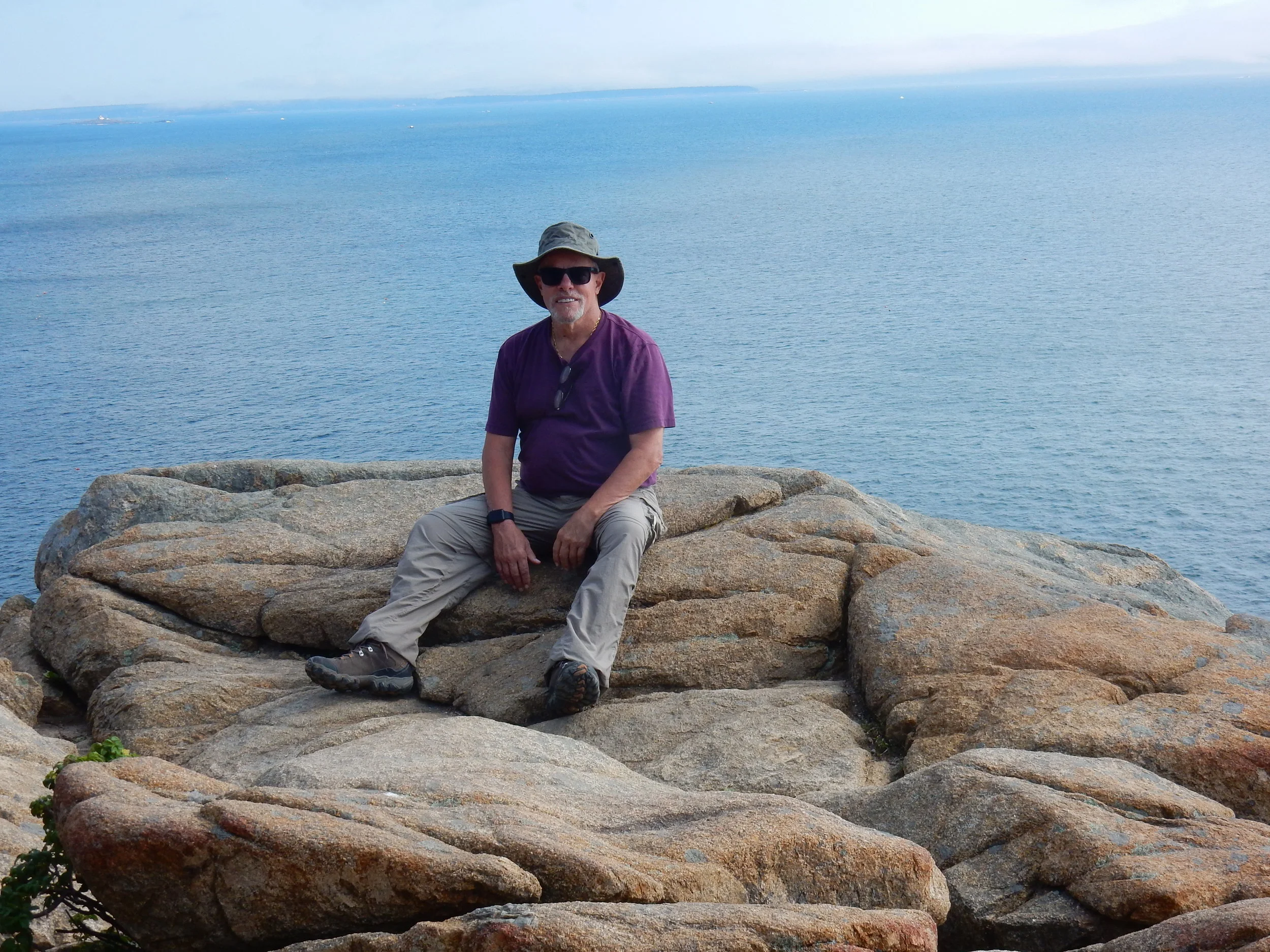
David at Otter’s Point. I can’t believe we made it all the way up there!

David at Otter’s Point. I can’t believe we made it all the way up there!

The beginning of the Freedom Trail. Follow the red bricks for miles and miles and . . .

The beginning of the Freedom Trail. Follow the red bricks for miles and miles and . . .

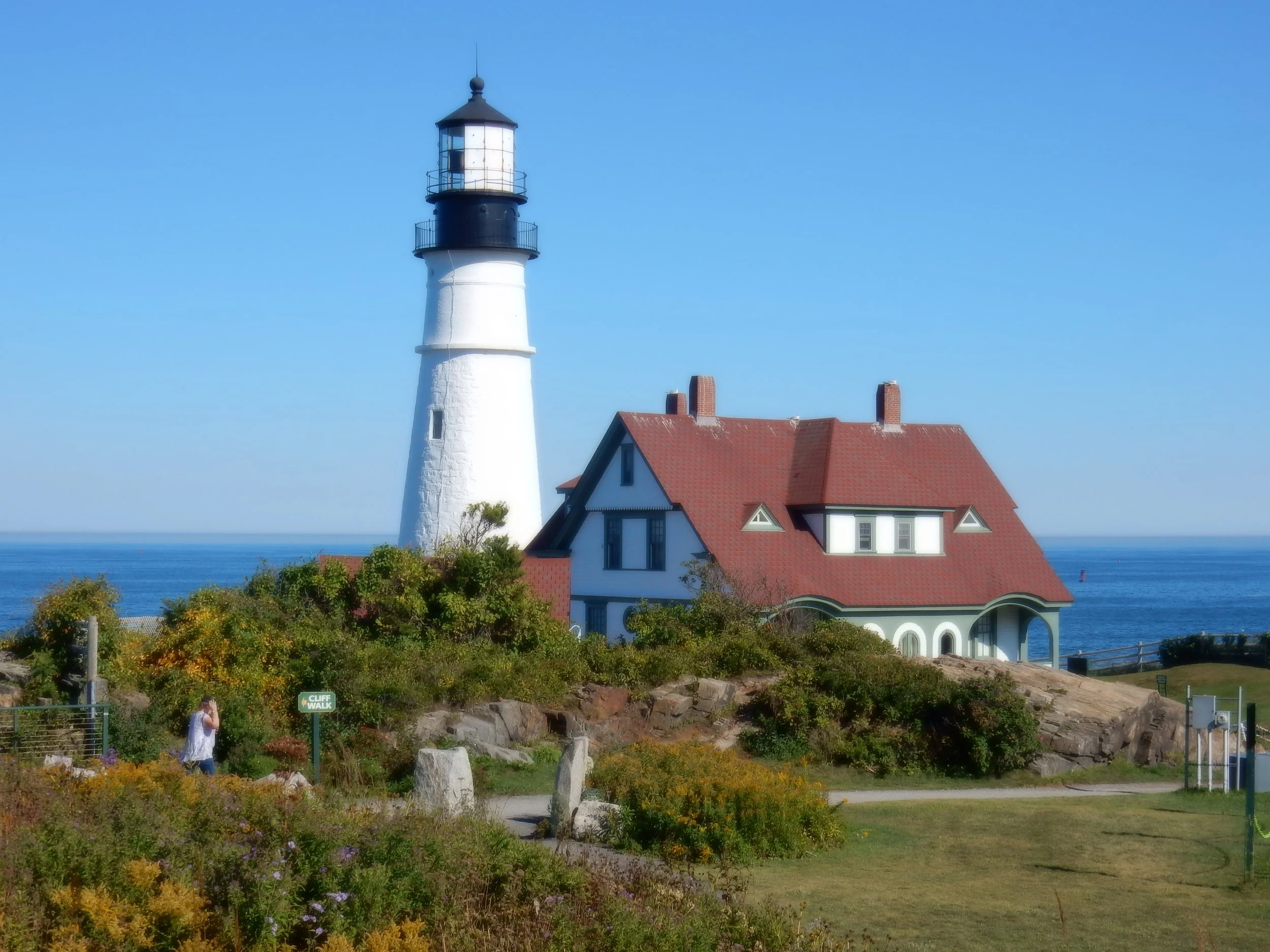
The most photographed lighthouse on the east coast, just outside Portland, Maine.

The most photographed lighthouse on the east coast, just outside Portland, Maine.

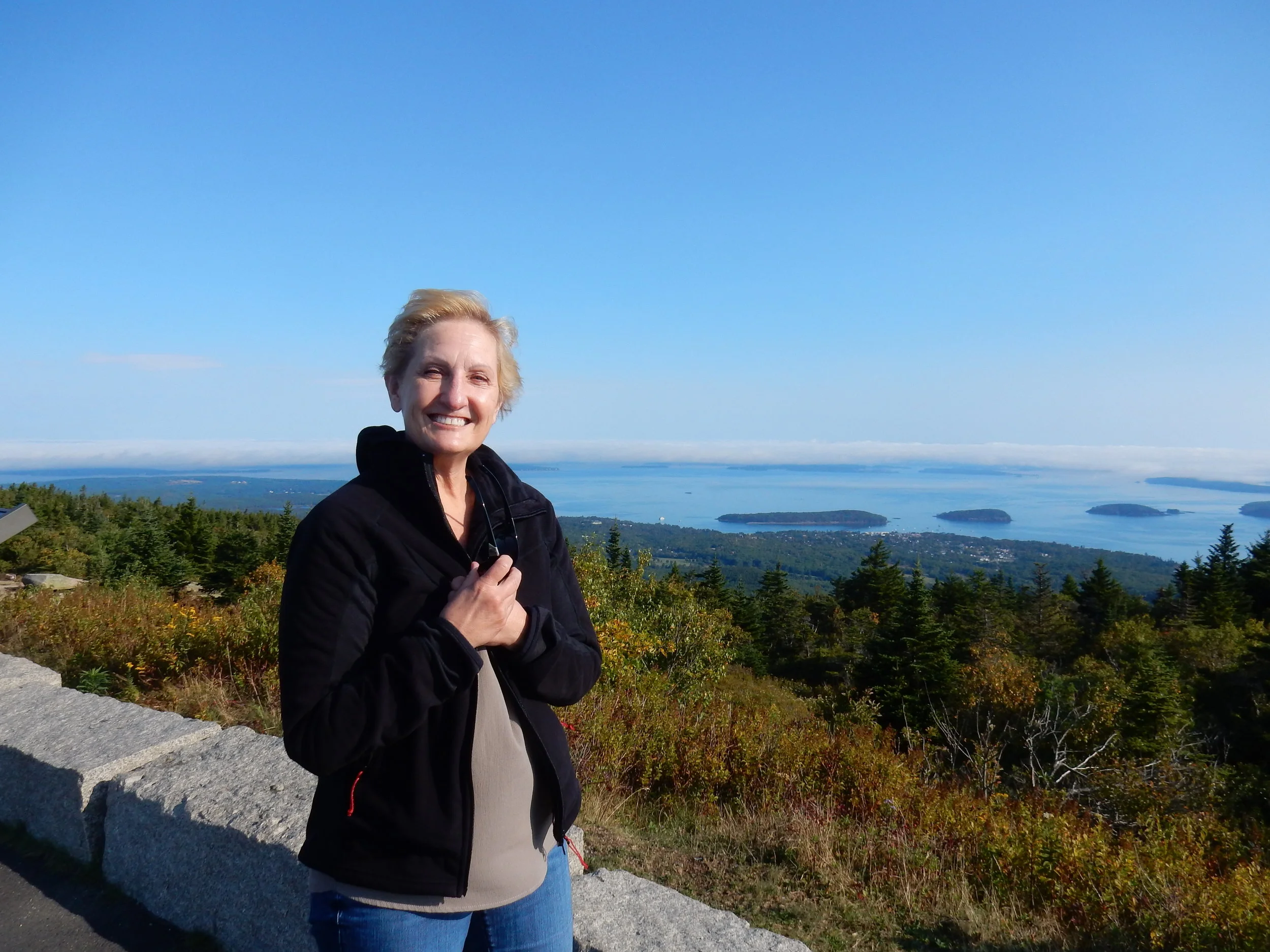
Taken on Cadillac Mountain. Acadia is majestic. See the fallen cloud in the background? I’m a little cold.

Taken on Cadillac Mountain. Acadia is majestic. See the fallen cloud in the background? I’m a little cold.

Education: Apologize, Why?

Curtis and Anna often forward interesting articles to us. Today Curtis has sent one concerning a controversial school assignment in Cuyahoga Falls, Ohio. I don’t know anything about Cuyahoga Falls, but from what I glean, this is a progressive school district, with both teachers and parents wanting the best for their kids. The article in its entirety can be found on Yahoo Lifestyles, titled Controversial School Assignment Asks Who is “Deserving” of Life. Have a look at this description of the project:

The assignment, which was given out by an unidentified teacher at Roberts Middle School in Cuyahoga Falls, Ohio, instructed students to examine a list of 12 people selected to fly on a spaceship to another planet to avoid the Earth’s destruction. However, due to the ship’s space limitation, students must cut four people, ranking the list into “most deserving” and “least deserving” of life.

The list included people from different ethnicities, educational backgrounds, and sexual orientation; some were famous athletes or actors; some were old, some young; one of them had addiction problems and another was mentally handicapped. 

I gotta say, this is just the sort of project I would have loved as a kid. The discussion would have been lively and self-awareness would have taken an upsurge. And there’s the added personal benefit that, early in the school year it would serve the purpose of separating athletes from musicians, princesses from tomboys, and intellectuals from morons. Useful information indeed—but wait a minute, is the objective to teach tolerance or build partitions? Maybe it’s an attempt to help young people build respect for one another even though their interests and backgrounds are diverse. 

The parents protested, deeming the assignment disturbing and inappropriate for the age group: it was given to seventh and eighth graders. Is thirteen too young to consider disquieting concepts or to explore the leanings of one’s soul? I don’t think so. 

“This paper divides,” said Bernadette Hartman, a mother of one of the students. “It doesn’t pull anybody together.” 

“What did he expect to get out of this?” asked Denise Patron, speaking of the teacher. 

Do these parents fear that contemplating weighty concepts will give their kids brain pain? 

Maybe the teacher thought it would be a good idea to encourage school children to think, surely a righteous goal of all teachers. These mothers’ names sound Caucasian, right? I’d be interested in hearing an Asian homosexual athlete’s opinion about this venture.  

One parent, however, brought up a relevant point—as this was intended as a first of the year ice-breaker, and a teacher might judge a student according to who they want to kick off the ship, might a prejudice be introduced that could influence dealings between teacher and student for the whole year? I suppose this could happen. Teachers aren’t perfect. 

 “One of the District’s goals this year,” reasons Todd Nichols, Cuyahoga’s school superintendent, “is training in the areas of diversity awareness and social justice. In this case, the intent of this assignment aligned with the goals of the District.” 

This sounds sensible and justifiable. But then he abandons his stance by offering this apology:

“The teacher and District offer their most sincere apologies for the offense caused by the content used in this assignment.”

It must suck to apologize when you’ve done nothing wrong. Why did the parents interfere? They seem to sincerely believe that this assignment was going to harm their children in some way. How can teachers teach if every time an innovative idea comes their way they must first run it by every parent of every child in the classroom? 

Common sense dictates that kids are resilient. I doubt lives would have been ruined if the parents had had the patience to wait and see the results of the assignment rather than assuming a traumatic outcome. One of the inherent truths about sending your children to school is that they are away from your watchful eye for several hours a day. If you choose to send your child to school, you’ve got to trust the system instead of tearing it down. The parents who protested in Cuyahoga, Ohio need to choose their battles more wisely. They should have let that teacher do his job. 

No illustrative picture, so just me this time. 

No illustrative picture, so just me this time. 

The Fall

The concrete is damp and the rubber soles of my shoes are thick and dense, like the toe brake on roller skates, which is why the shoes stop moving and my feet continue on. The fall is terrifying and the one-inch gash on my left cheek is embarrassing. The bloody line on my face sends me racing to the first aid section of the drug store to get whatever that stuff is that helps lacerations heal without leaving scars.  

It’s called Mederma and it really works! After a single application the gash looks less red and angry. I wonder what would happen if I put this all over my whole body. Would every blemish and old scar fade away? I’m tempted. My advice to the vain among us: keep Mederma around because you never know when you’ll fall on your face. Unfortunately, it doesn’t work instantly. The gash’ll be the first thing people notice about me for the next week. 

“You tell everyone who asks about it that I’m left-handed,” David says as we’re on our way to church. He knows how this looks and he’s adamant that people know he helped, not harmed. 

“It’s funny that you think anyone is going to ask,” I tell him gloomily. “People will assume the worst.”

“No one assumes the worst at church.”

But, as usual, my understanding of human nature is accurate. As we enter the sanctuary our fellow congregants steal furtive glances then look away. Because they’re determined to be tactful (though there’ll be talk later) I have no opportunity to clear David’s name. Also, I’m compelled to explain that ordinarily under these circumstances I simply would’ve stayed away. But I have altar guild duty and so am bound by my annoying sense of responsibility to attend, a situation that serves to reinforce my father’s emphatic advice which resonates from my childhood: “Jennifer, do never volunteer!”

This same sort of surreptitious conclusion jumping happened years ago when we were living in Cairo. David and I were playing squash and he caught my eye with the side of his racket. I was a beginner and had taken a stance in the wrong place, so it was my mistake. By the time we walked into the Swissair that evening to meet friends for dinner I had quite a shiner. David and I thought it would be entertaining to see if the other couple brought it up. They didn’t; though in retrospect I guess we should have set the record straight. Steve and Molly probably still think of me as a victim and David as a violent man. 

Another result of the fall is a badly bruised knee. I’ve never been a proponent of icing sore joints or injuries, mainly because I’m cold enough already. Right now, in the middle of the summer, I have heavy fuzzy socks on my frozen feet. This particular ice pack, purchased when David had a shoulder issue, is meant for use at joints and it wraps handily over and around my knee. Lore has it that the cold is supposed to lessen swelling, which will ease the pain. I’m dubious. When has cold ever felt good?

To my amazement, when I remove the ice pack, the knee feels better. But only temporarily. Ten steps later it’s sore again. No warriors for me for a while.

As well as coming down hard on my knee, I tried to catch myself with my hand, which is now purple and swollen at the base of my thumb, into my palm, and down my inner wrist. Right handed, I’ve never given much thought to how much I use my left hand; but now I’m aware because it hurts every time I clench it. So, also no downward facing dogs. 

I don’t often feel fragile, but I do now; and this fragility leads to a lack of mindfulness. I pull out from the driveway and can’t remember if I closed the garage door. I go to the grocery store and forget to buy eggplant for the moussaka. I stand in my closet and can’t remember why I’m there. I guess the knowledge to hang on to here is that bodies heal. Also, it could have been so much worse. 

I've tripped over these dangerous toes several times, so it was inevitable that one day I wouldn't be quick enough to save myself. They're are now retired. 

I've tripped over these dangerous toes several times, so it was inevitable that one day I wouldn't be quick enough to save myself. They're are now retired. 

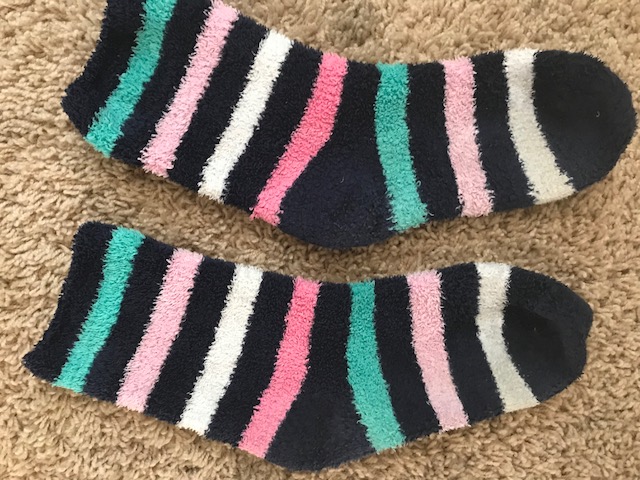
Warm socks are vital any time of year if you're me.

Warm socks are vital any time of year if you're me.

A new addition to my medicine cabinet. 

A new addition to my medicine cabinet.