Beginnings

After I type the last sentence of a manuscript, I have no idea what to do next. So I return to the beginning of the project I just completed and toy with it. I run a spell and grammar check. I fiddle with the chapter titles. And, in fussy mode, I review my characters to make sure I haven’t inadvertently used too many names that start with the same letter. Though this seems superficial, having a cast consisting of Donald, Daisy, Dick, and Drew can be a distraction.

But eventually, though I will long for the familiarity of the finished book and the friends I made there, I must say good-bye and move on.

I tuck the finished work into a file and pull up a white screen. I stare at it for a while, then play a few games of solitaire. For the next few writing sessions, I allow myself to mourn the loss. Solitaire, blank page, solitaire, blank page.

After a few days of this wasteful floundering, I apply a rule, a game of sorts, in which I’m not allowed to push away from the computer until I’ve written something. If I produce no more than a single sentence, at least I’ll have something to get me started the next morning.

Here is an opening that started that way—no story, simply a description of a room that came clearly to mind. I wrote it up and left the computer. Then I spent the day looking forward to returning to it because it wasn’t only about the setting; it was also about the main character, Karen:

Saturday morning, ten o’clock. The strategy room on the DA’s floor of the Caprock Tri-County Courthouse, a corner chamber made inharmonious by the sort of imperfections that make me squirm—a landscape hanging crookedly, a bank of cabinets with two drawers not quite closed, a set of blinds with an uneven slat.

The fact that a few wrongly situated items caused Karen to squirm told me that this was a character I could work with. I imagined a woman with OCD, under constant assault as she navigated her way through a day. To what degree did her OCD affect her relationships and her work? How did she react when she came upon a filthy counter or a misplaced item at the super market? Also, there was the inevitable question—why is Karen at the DA’s office on a Saturday morning? I had to continue writing to find out. 

A time or two, while fretting over getting a new project off the ground, a character has leapt, fully formed, onto the blank screen. A rare gift, this occurrence renders a plot in which the character calls the shots. From the opening of Old Buildings in North Texas, meet Olivia:

Before they’d let me out of rehab someone had to agree to act as my legal custodian. There it is, the snappy truth about why, at the age of thirty-two, I live with my mother. She now has control over every aspect of my life, from my finances to my laundry. One little cocaine-induced heart attack and it’s back to my childhood to start over.

From the moment of her arrival, Olivia pleased me. I knew the color of her hair, her build, and her background. She was furious with herself over her mistakes, and she was admirably devious. She was resourceful and witty. She was arrogant, bitter, and empathetic. She lived with me for a year, and I miss her.

When a starter idea simply isn’t there, I often rely on the most universal topic there is—the weather. This first paragraph is set in Sugar Land, southwest of Houston:

It’s so humid outside that the air molecules are sweating. The sky is churning and burdened, filled with smudged shades of gray. I didn’t realize it was so stormy. I’ll be racing the rain throughout my entire run.   

Is a stormy day interesting enough to pull a reader in? I’m not sure. But an interesting facet of the narrator’s character is found in the last sentence: she is such a slave to her exercise routine that she’s willing to go for a run in a storm. In fact, this discipline eventually reveals a well-meaning martinet, a woman so obsessed with propriety and procedures that she’s unable to communicate with people who aren’t as exacting as she is.

Here’s another kickoff containing weather:

Eddie steps outside the store when the rain begins. There isn’t a cloud in sight, hasn’t been all day. In fact, the sky is so bright and clear that just looking at it causes his eyes to water. The downfall stops as suddenly as it started and, to his delight, the eastern sky presents a double rainbow. You don’t see that every day and he takes it as a sign that something good is about to happen.

But the next thing that happens is the opposite of good—Eddie’s ex-wife shows up.

In Why Stuff Matters, I opened using both factors—the capricious weather and a strong, fully defined personality, Jessica, a grieving widow in charge of the elderly concessionaires in an antique mall. Here’s her voice:

My antique mall is the only building in this part of town that has a basement, so as soon as our county is included in the tornado warning that streams across the bottom of the television screen, I tromp down to the main floor from my third floor living quarters, unlock the front door, and prepare to be overrun for the fourth time this month.

The first chapter ends with Jessica, the main character, standing just inside her glass storefront as she watches a tornado destroy the apartment complex across the street. It’s a dramatic opening that morphs elegantly, unexpectedly, and humorously into a microcosmic revelation concerning humankind’s grasping nature.

It was a pleasure to write about and come to know Jessica. Why Stuff Matters is an unusual and entertaining read, which I think you’ll enjoy.
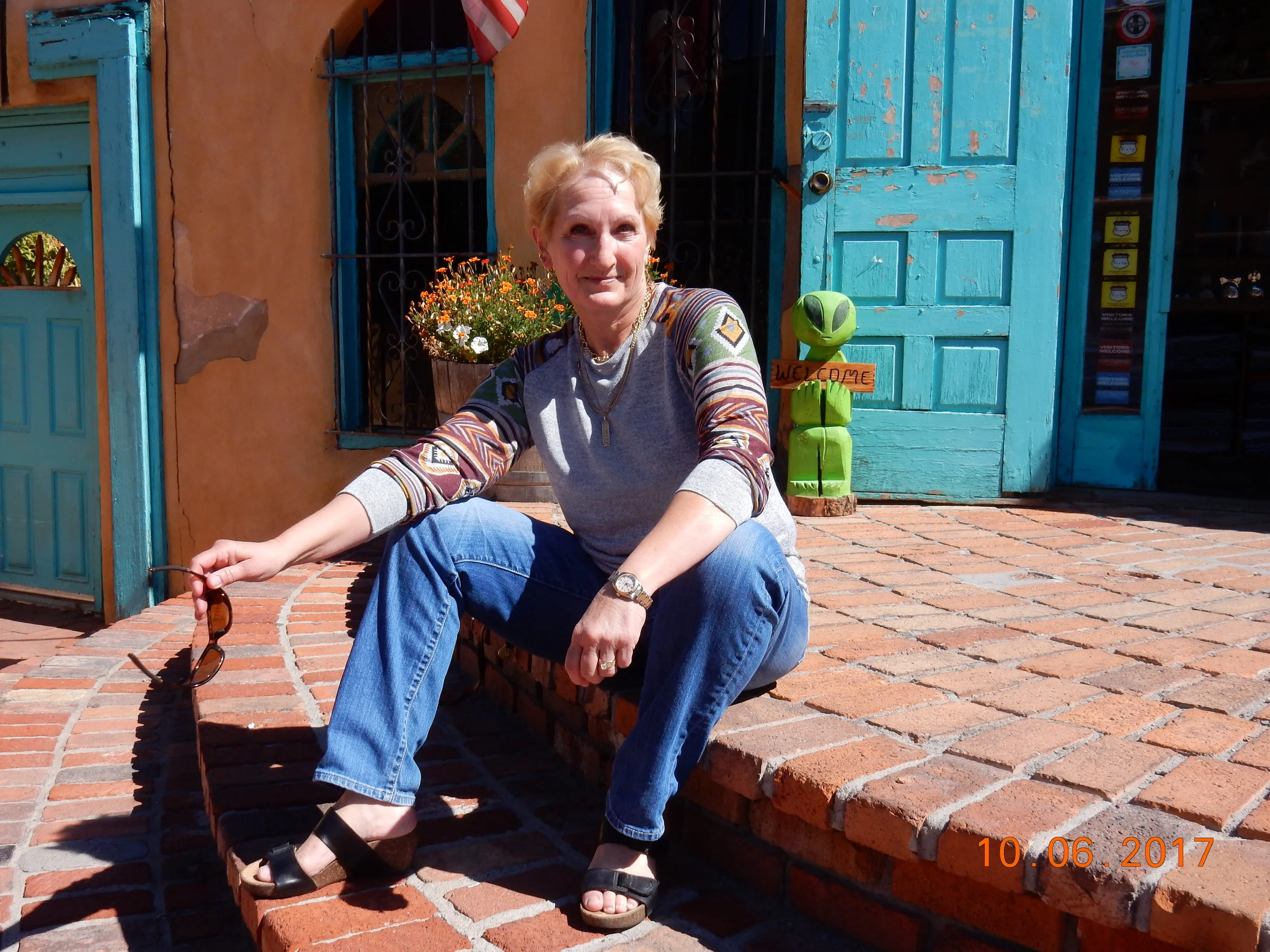
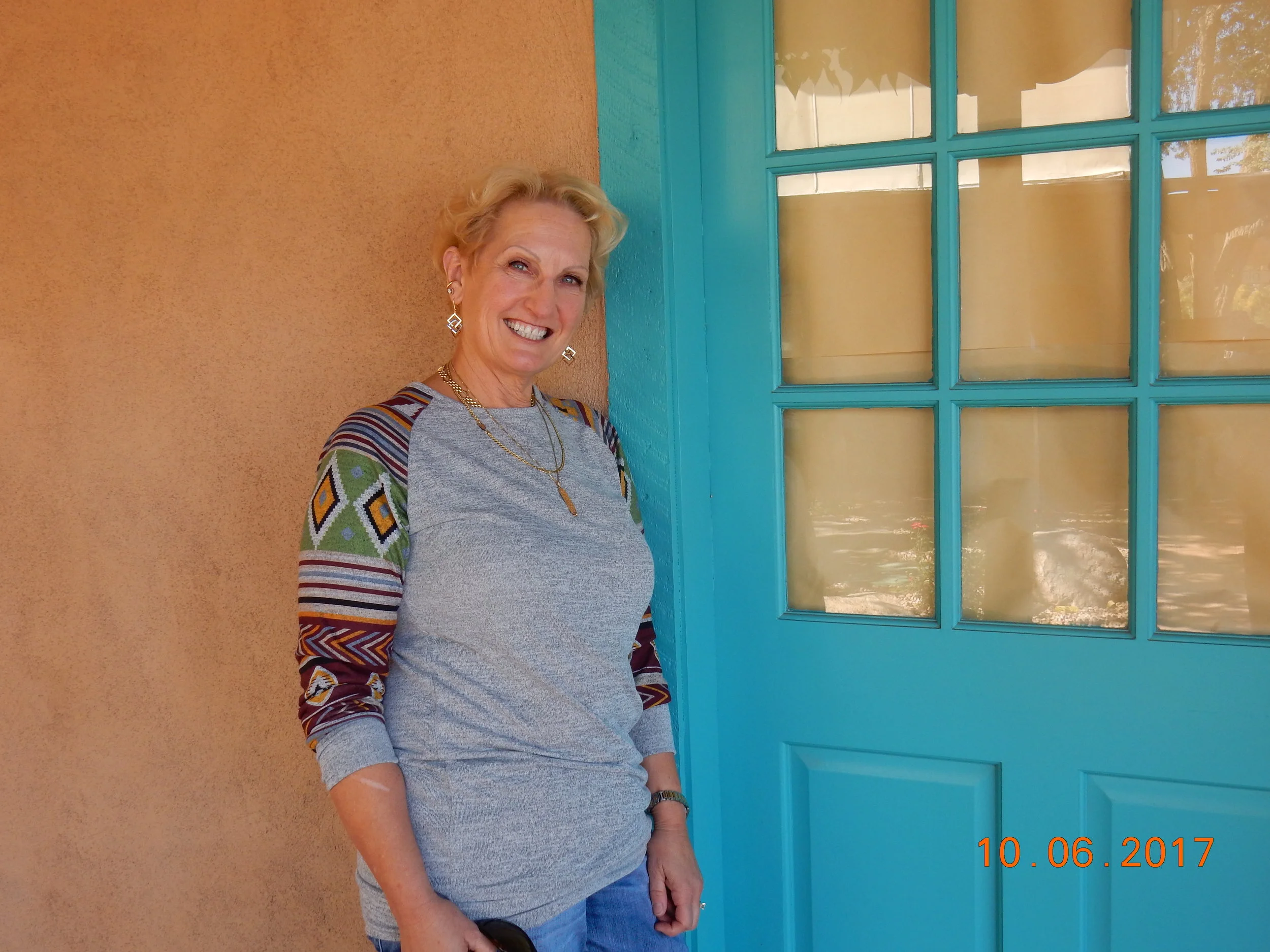
A sunny day in Albuquerque.
A sunny day in Albuquerque.

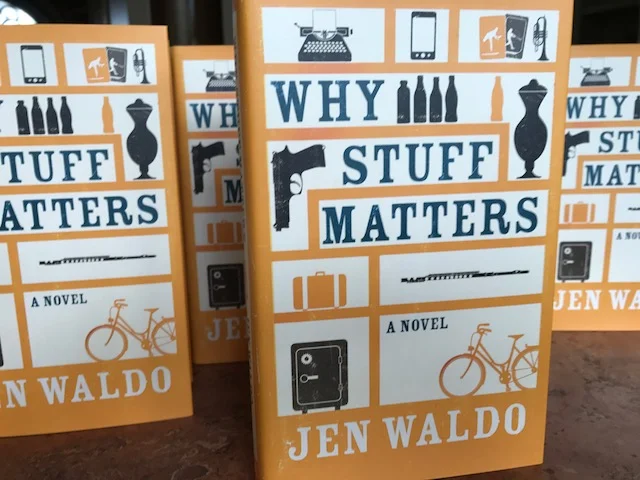
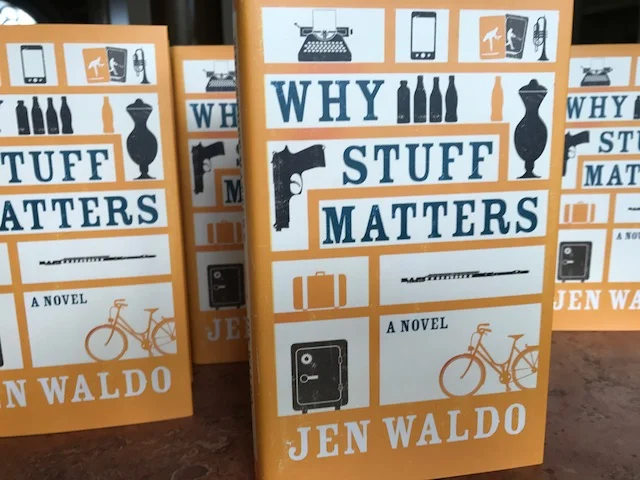
I've been looking at this book cover a lot this week. It's very attractive. 
I've been looking at this book cover a lot this week. It's very attractive. 

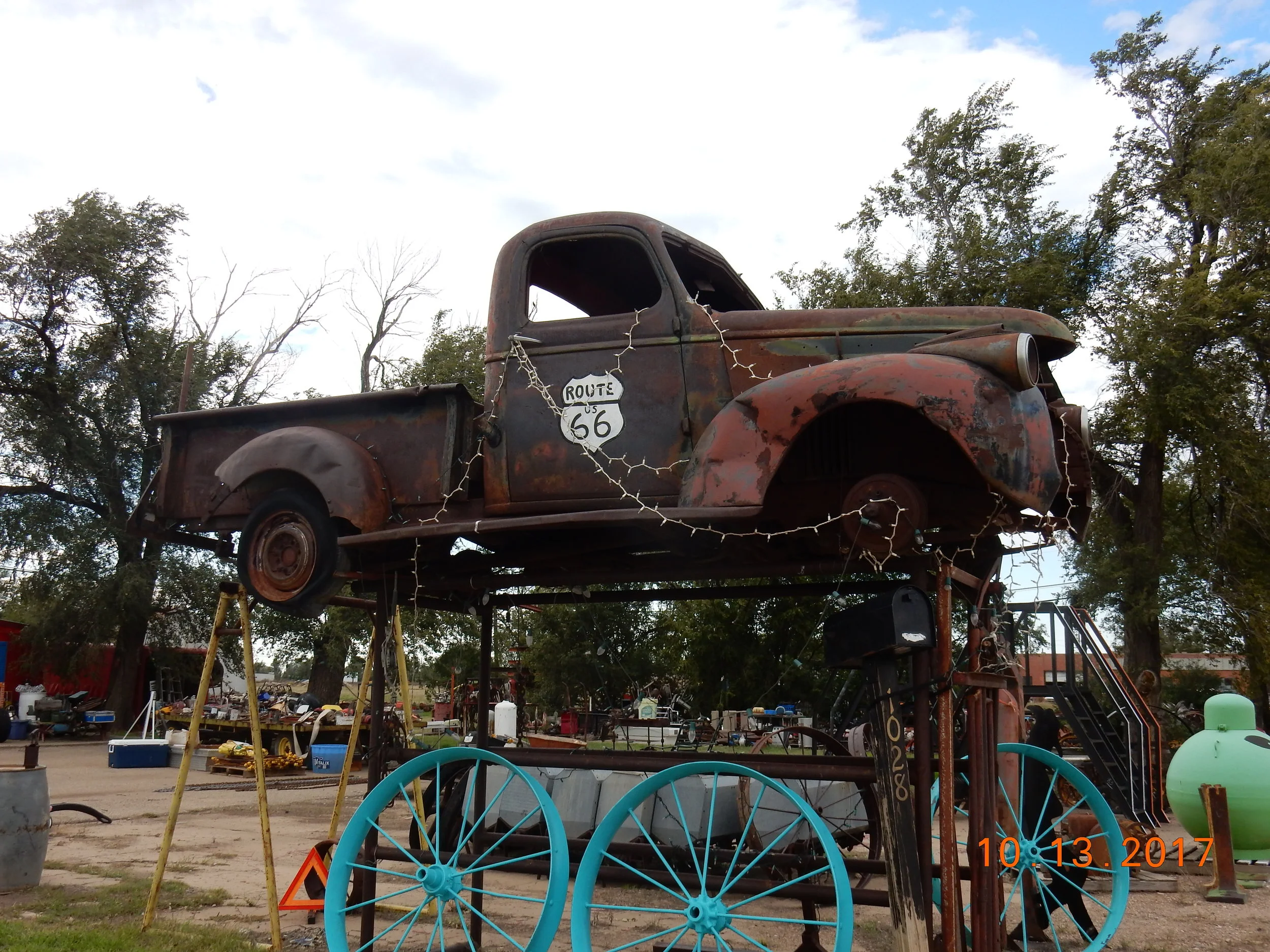
Taken in Vega, TX. This stuff is of no use whatsoever, but somebody loves it.
Taken in Vega, TX. This stuff is of no use whatsoever, but somebody loves it.

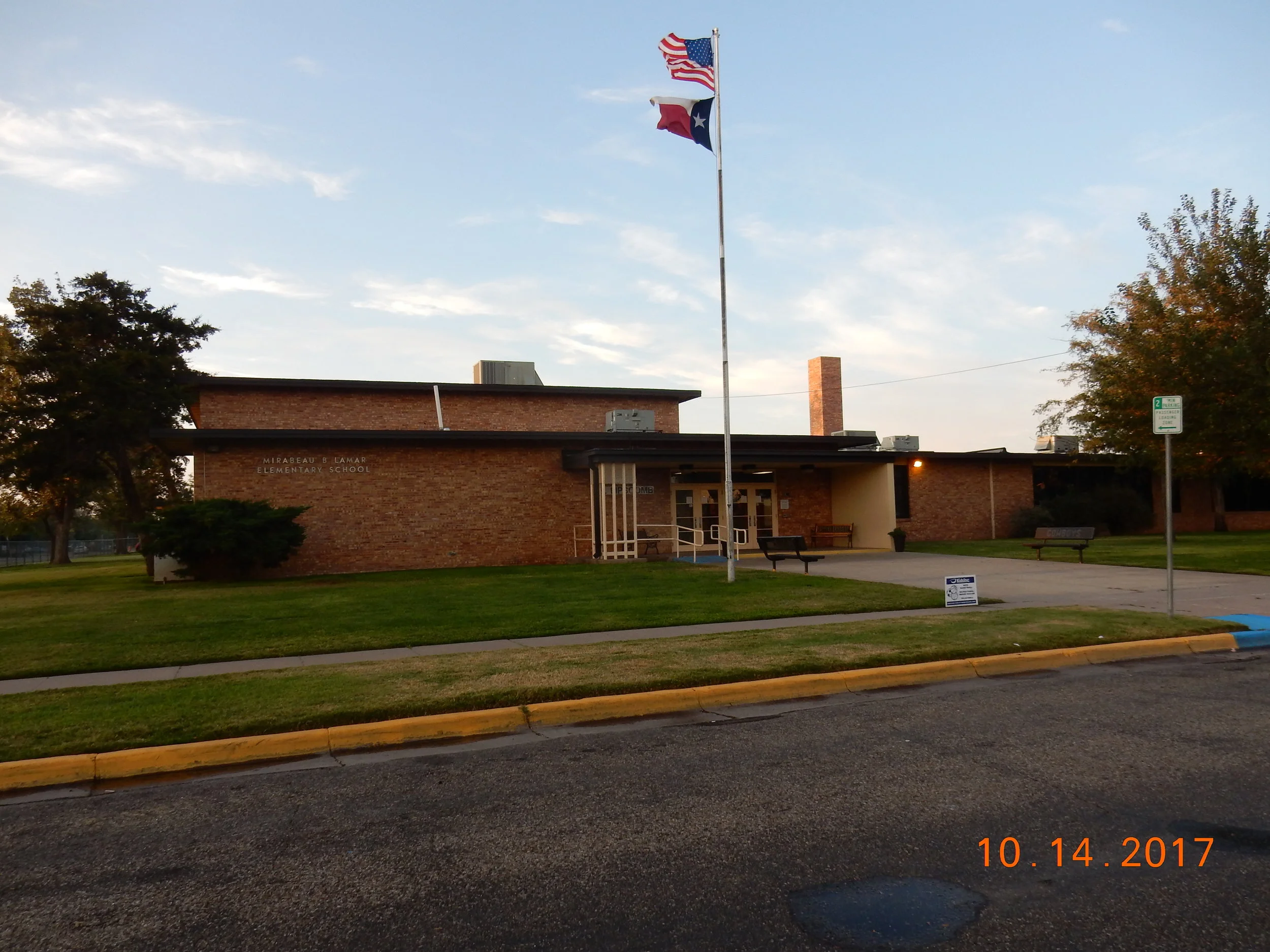
This is where I went to elementary school. Look at the flags. The only reason for this picture is to show that the wind blows all the time in Amarillo, Texas. 
This is where I went to elementary school. Look at the flags. The only reason for this picture is to show that the wind blows all the time in Amarillo, Texas. 

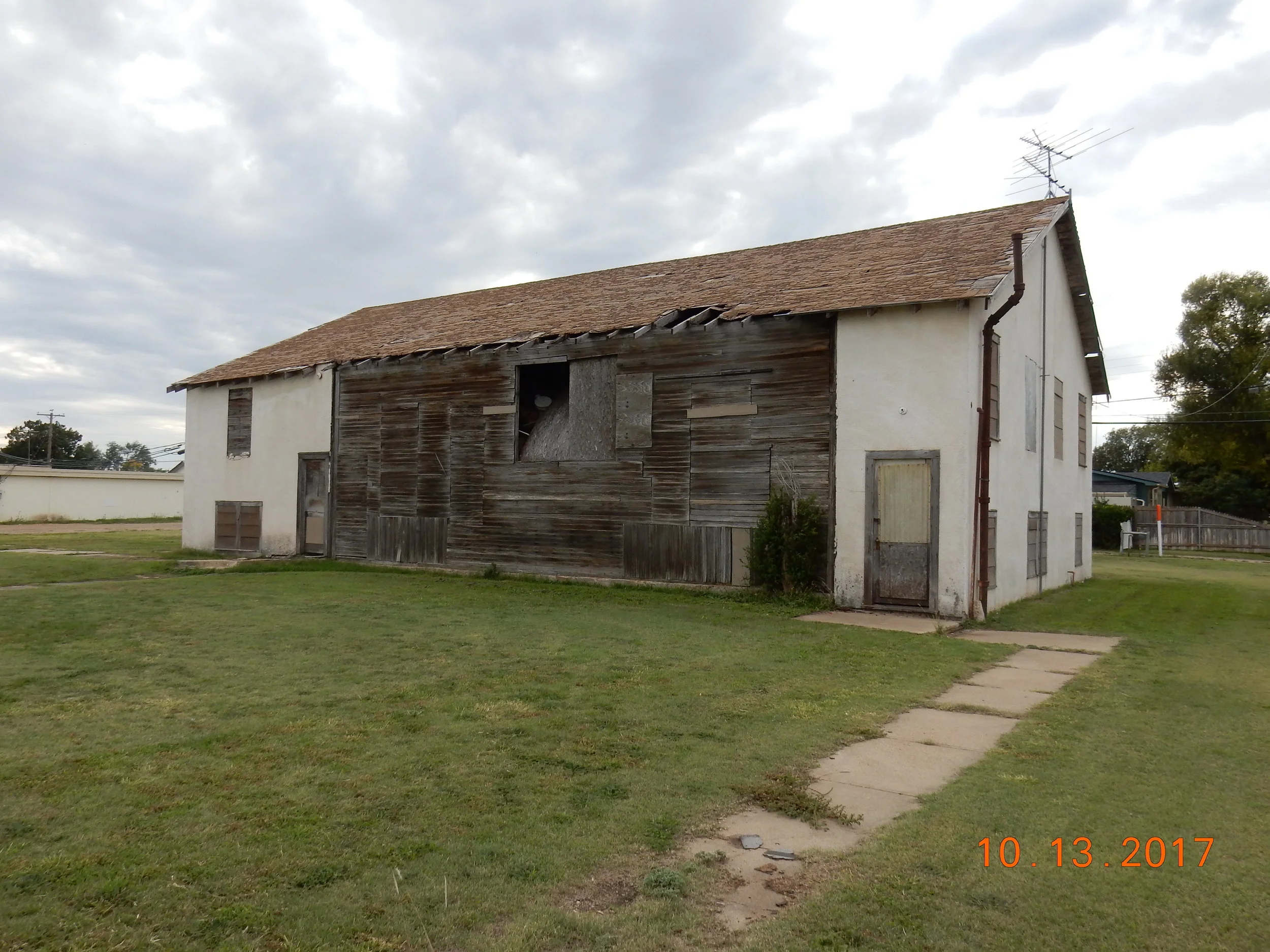
I know this blog tour is supposed to be about WHY STUFF MATTERS, but this old house speaks to anyone who's read  OLD BUILDINGS IN NORTH TEXAS. 
I know this blog tour is supposed to be about WHY STUFF MATTERS, but this old house speaks to anyone who's read  OLD BUILDINGS IN NORTH TEXAS. 

Wonderful News!

My new novel, Why Stuff Matters, will be released in the UK on October nineteenth. I’m currently involved in a blog tour, where I write essays and do Q&A’s for different British blogs. I’ve noticed that a few of these blogs have won awards for being stars in literary critique circles, so I have high hopes for good reviews and good sales.

Why Stuff Matters is about a grieving widow, Jessica, who inherits an antique mall from her mother. The elderly people who have booths in the mall are eccentric, cynical, and so acquisitive that they undercut one another, scheme over the possessions of the dead, and, in one case, kill in order to hang on to their stuff. When Lizzie, Jessica’s precocious and larcenous twelve-year-old stepdaughter, is dumped on Jessica’s doorstep, the dynamic between old and young is hilarious. I had so much fun writing it!

And more good news is that my publisher, Arcadia, has such faith in my novels that they’re getting a foot in the door of the American publishing industry by distributing Old Buildings in North Texas in the US starting in April. It’s a bit overwhelming, but also an honor, to be their flagship.

So, as you can see, I’m quite excited by how things are going.

Though I’m busy writing, I’m also traveling.

We are in Albuquerque for the International Balloon Fiesta, which attracts “hundreds of thousands” (quoted from their website) from all over the world, and provides the lion’s share of the annual income for the town and its tourist industry. The weather is gorgeous, the people are nice, and the restaurants, shops, and galleries are interesting. The main event is the Mass Ascension, a designation that holds cultish undertones and rings oddly to the ear. The Mass Ascension takes place on opening morning, when over six hundred balloons float upward from a grassy field at sunrise. It sounds like a magnificent sight.

But Albuquerque messed up.

We get on the hotel shuttle at five-thirty in the morning, which takes us to a park-and-ride in a mall parking lot, where buses will pick us up to take us to the balloon park. When we arrive at the mall our driver is shocked to see a line of two thousand people, three quarters of a mile long.

“This doesn’t look good,” she says, concerned. “I’ve been driving this shuttle for six years and I’ve never seen a crowd like this.”

It’s dark outside, and very cold. Getting to the end of the line is a hike, but spirits are high. Kids still in their pajamas scamper around. Old women huddle beneath blankets. As usual, I haven’t dressed appropriately. Freezing, I tuck myself between David and a man I’ve just met, hoping for vicarious warmth. All around us, strangers talk and laugh with one another. In our conversations with the neighbors in front and back, it’s evident that many have paid for airline tickets and expensive hotels rooms in order to see this one event.

The line is so long and circuitous that the buses we are supposed to board aren’t in sight. The sky grows lighter. We shuffle forward at a pace of twenty yards every five minutes.

At sunrise, seven o'clock, the event that we traveled so far to behold, and got up so early for, takes place twenty minutes away. Twelve hundred people still wait for rides in the mall parking lot. Fury flies through the air.

There is no apology, no acknowledgement that a mistake was made, no explanation, no refund. Speculation abounds among the frustrated and enraged people.

“How did this happen?” Freezing feet stomp hard into the tarmac.

“My ticket’s right here.” Waves the ticket so all can see.

“What do we do now?” A disbelieving whine. This question is applicable. We have been dropped here and have no transportation back to the hotel until nine-thirty.

A common speculation makes its way through the line. This massive error is being blamed on “the computer”. The weak-ass excuse is that “the computer” sent everyone who bought their ticket online to this particular parking lot instead of evenly dividing them between the five other pick-up points. 

I pull out my phone and search for the nearest breakfast place. There’s an Egg and I just up the street. David and I leave the line and head toward the restaurant.

Anyway, the whole situation is rotten, rotten, rotten. It’s left me feeling sour and vindictive toward Albuquerque. Twelve hundred people. Fifteen dollars per prepaid ticket. Eighteen thousand dollars. I hope Albuquerque chokes on it.

This morning we’re on our way to Steamboat Springs in Colorado. 

Isn't it beautiful? I have a few advance copies and, as the supply lasts, I'll send a signed copy to any friend who promises to post a review on amazon.co.uk.

Isn't it beautiful? I have a few advance copies and, as the supply lasts, I'll send a signed copy to any friend who promises to post a review on amazon.co.uk.

As you can see from the similar cover design, Why Stuff Matters is a partner book to Old Buildings in North Texas. They both take place in the same town--Caprock, which is the setting of many of my novels, and is based on my hometown, Amarillo,…

As you can see from the similar cover design, Why Stuff Matters is a partner book to Old Buildings in North Texas. They both take place in the same town--Caprock, which is the setting of many of my novels, and is based on my hometown, Amarillo, Texas.  

I was happy on the day before the fiasco.  

I was happy on the day before the fiasco.  

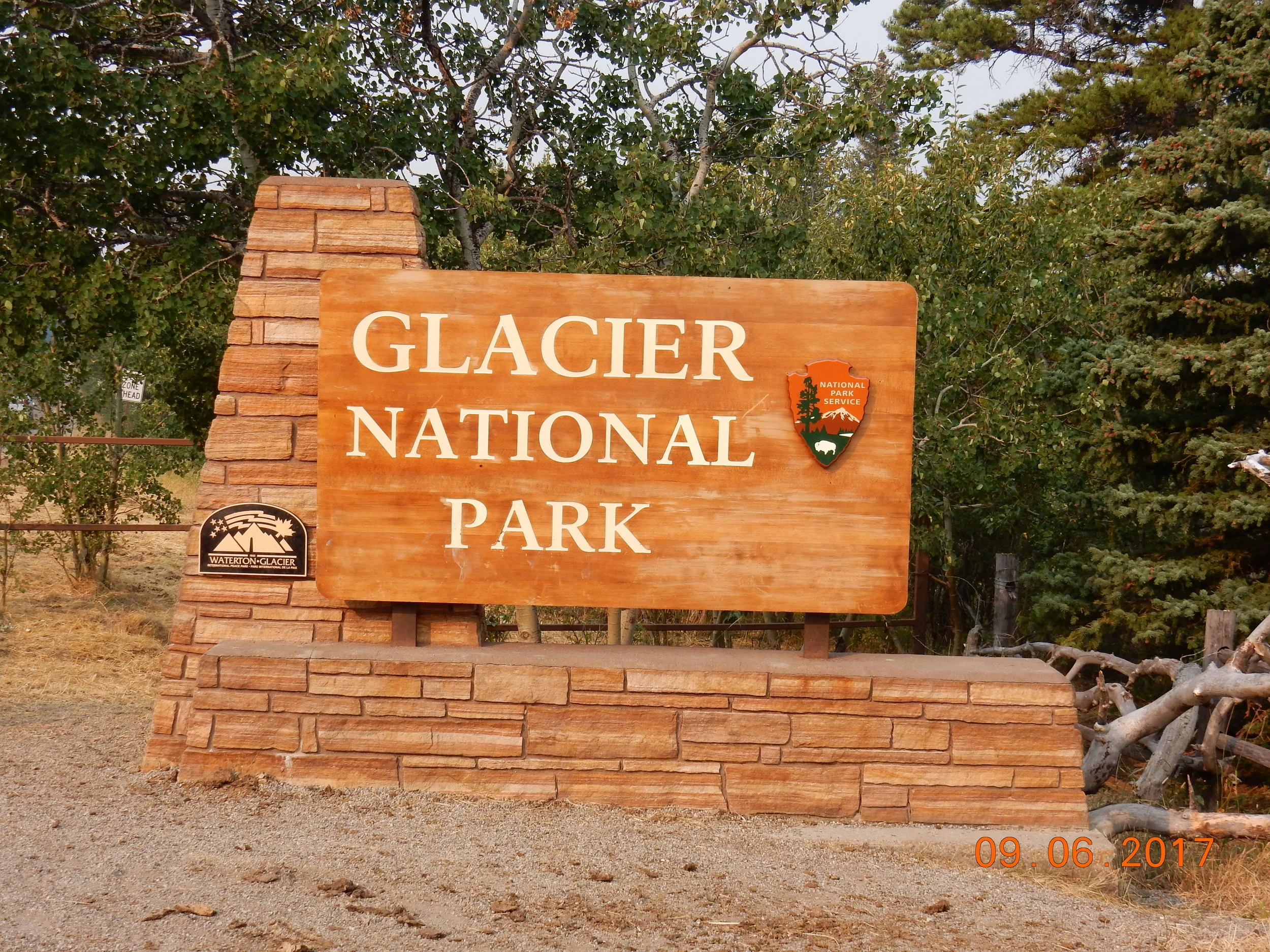
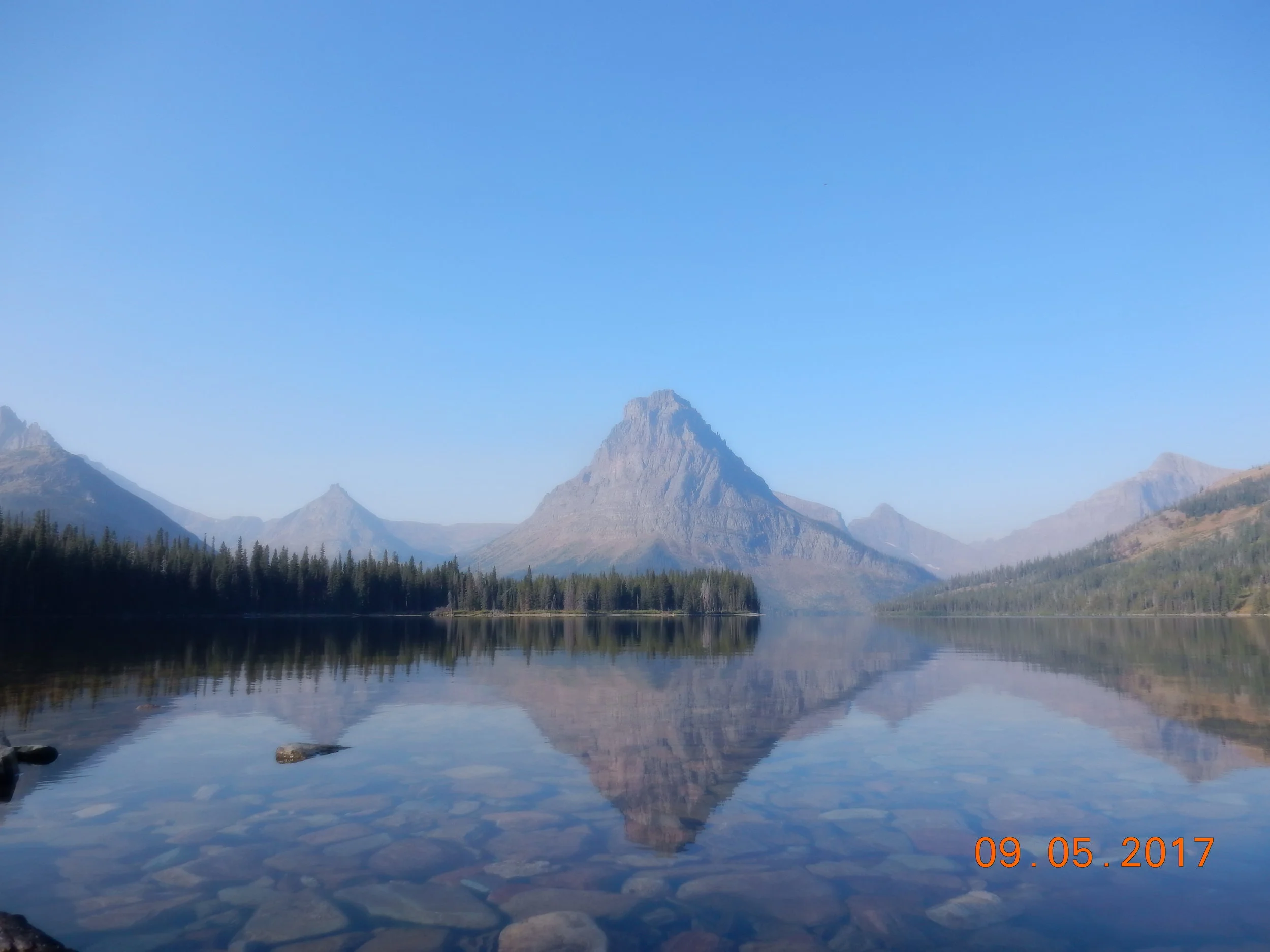
The Glacier Experience

David wants to go to Glacier National Park, so that’s what we do.

On our first morning in Glacier we take a Red Bus Tour, thinking it’ll be a good way to learn about the park and get a feel for the various hikes. Hiking is basically all there is to do here. Having done no research, I packed cold weather clothes. To my dismay, the temperature is in the eighties; but honestly, the word glacier is in the name of the place, so cold weather is a given. Yet I smolder in my sweaters, jeans, thick socks, and hiking boots while everyone else runs around sleeveless and in shorts and sandals. It’s not the first time I've been inappropriately clothed and it won’t be the last.

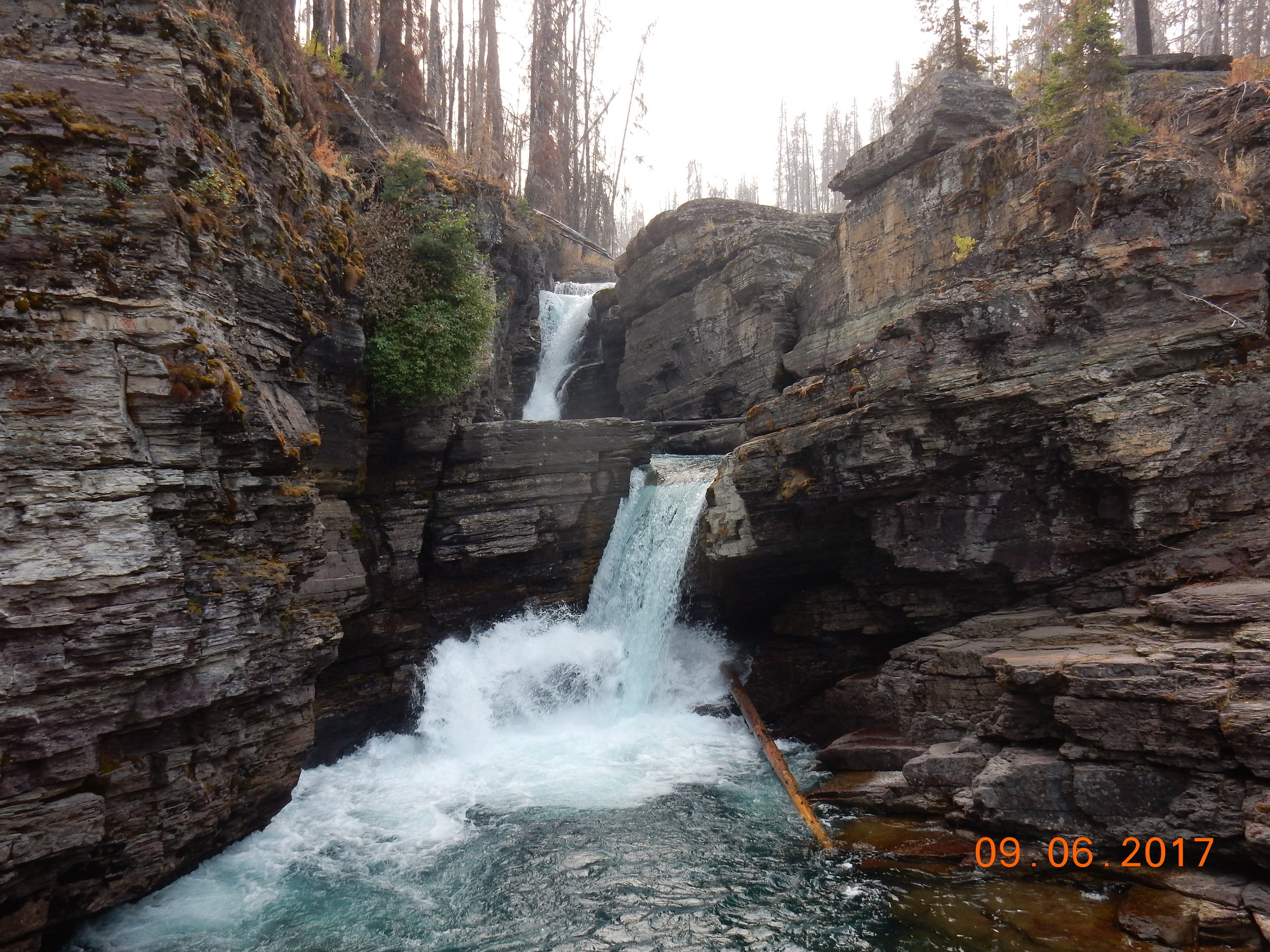
The air smells of smoke. And the sky, which should be a blinding blue is, instead, a hazy gray. Our bus driver/guide tells about the Sprague Fire, which has closed a portion of the park. The fire started a couple of months ago when a tree was struck by lightning. So far it’s taken out thirteen thousand acres. 

“It’s what nature does,” our guide merrily informs. “The fire renews the forest.” He sounds like he’s in love with fire.

The tour takes us up the Going to the Sun Highway, a motorway made up of switchbacks overlooking steep cliffs, filling me with the horrifying knowledge that we’re going to fall over the edge and die. But instead of dying we arrive at Logan’s Lodge, which marks the Continental Divide. Above us, smoke. Below us, smoke. There’s much talk of bears, moose, and mountain-climbing goats, but a goat could cross a hundred feet in front of us and we’d be unable to see it. 

“No one seems concerned about this fire at all,” I tell David.

“Part of the experience,” he says.

The first day the smoke is bearable. The second day it’s less so. By the third day the sun isn’t visible and our fellow hikers wear filter masks. Our rental car is covered in ash. People doggedly go about the business of enjoying their vacations. There are mountains all around us, but we can’t see them.

As advised by friends, we spend four nights in West Glacier in Apgar village, and three nights in East Glacier, at St. Mary’s Lodge. Both cost as much as a four star hotel room, but they definitely aren’t that.

In Apgar the cabin we stay in has a ceiling so low that we can touch it—and we are not tall people. The shower is so tight that I bump my elbows every time I turn. The toilet paper is like wax paper. The sheets are clean, but the fabric is pilled. There is a one-person-at-a-time kitchen. Taped to one of the cabinets is a note asking us to please wash the dishes. I don’t give this much thought until it’s time to go and I run tepid water over the cups and silverware and stick them in the drainer.

“I hope the last tenant did a better job washing the dishes than I did,” I say.

“I don’t think expecting the paying customers to be responsible for cleaning the dishes for the next people is a wise policy,” is David’s response.

When it’s time to move from Apgar to St. Mary’s we stop for a hike at Two Medicine. As I’m standing in the restroom line, the woman in front of me mentions that she’s been staying at St. Mary’s and is now on her way to Apgar.

“How was St. Mary’s?” I ask. “We’re going to be there tonight.”

“They charge way too much for what it is,” she says.

I like the room at St. Mary’s Lodge better than the cabin in Apgar. It has a television and a comfortable shower and the sheets are softer. With no kitchen, though, and only a couple of restaurants in the area . . . oh well, we didn’t come here for the cuisine. This part of the park, too, is full of smoke. I’ve begun to cough, my nose is bleeding, and my eyes are red and burning.

When David asks at the front desk where the nearest liquor store is, the man tells us that the Canadian border is only twenty minutes away.

“Let’s go to the duty free and get some Grey Goose for the room,” David suggests. So that’s what we do.

“Why are you coming to Canada?” the border guard asks as she examines our passports.

“We’re going to the Duty Free,” David tells her, pointing across the street to the white square building with signage that declares Beer! Souvenirs! Cigarettes! Duty Free!

The woman grunts acknowledgement and returns the passports.

We drive across the street, park, go in and find our Grey Goose. The clerk, a woman in her early twenties, is the only other person in the shop. After David pays, he grabs the bottle to carry it out, but the clerk stops him.

“I have to deliver it to you,” she explains as she takes a choking grasp of the neck of  our Grey Goose. “Just drive over there and wait beneath those trees.” She points to a cluster of thin trees thirty yards away, just beyond the border station. Though we’re familiar with the procedures involved in buying duty free, this seems unnecessarily clandestine.

We get in our car. She follows us out and, clutching our bottle, clambers into a van. We drive across the street with the van following close behind. She has left the shop unattended, which goes against every known retail directive; but, as nobody but the border guard is in sight, I guess the shop is safe from marauders. But still, what would she have done if there had been other customers in the store? We circle behind the Canadian border office and come to a stop beside the three scrawny trees. There’s a sign posted on one of the trees that says DUTY FREE PICKUP AREA. The clerk gets out, approaches David’s window, hands him the Grey Goose, and tells us to have a nice evening. She gets in her van and drives back across the street.

Sometimes rules force people to act in absurd ways. Bewildered, we chuckle all the way back to our room in St. Mary’s, where we sip Grey Goose from plastic cups and watch the coverage of Hurricane Irma.

DSCN0859.JPG
Smokey!

Smokey!

This cute little bar was forty miles from anything. We ate a really nice lunch here. 

This cute little bar was forty miles from anything. We ate a really nice lunch here. 

In taking this picture, David slipped on the rocks and scraped his arm pretty badly. 

In taking this picture, David slipped on the rocks and scraped his arm pretty badly. 

Every once in a while the air would clear for a few minutes. 

Every once in a while the air would clear for a few minutes. 

Everybody on the hiking trail was offering to take pictures of everybody else on the trail. 

Everybody on the hiking trail was offering to take pictures of everybody else on the trail. 

Action on the Hogs

“Are you going to the meeting with the hog trapper?” Curtis asks me.

He and Anna are staying with us because of Hurricane Harvey. Their neighbors have informed them that their Houston home isn’t under water, so they’re relieved about that. Now they’re anxious to get back to their own space, but heading in that direction at this point would be unthinkable.

On the other hand, the weather in Houston has resulted in a gentle rain for Marble Falls, a benign soaking at the end of a two-month drought. But just because we’re happy to have the rain doesn’t mean that if I walk up the street to talk about hogs, I won’t end up getting wet.

“I’m considering it,” I respond. “A person who traps hogs for a living is bound to be interesting. But what should I wear?” It’s not my appearance that concerns me; it’s the question of rain gear. Will an umbrella be enough, or should I don my quick-dry pants, hiking boots, and a poncho? It depends on so many things—the angle of the rain, the length of the meeting, the temperature.

“It’s wet out there,” he says. “I, too, am curious about catching hogs.”

"If you get wet you can always get dry again,” is David’s reasonable contribution.

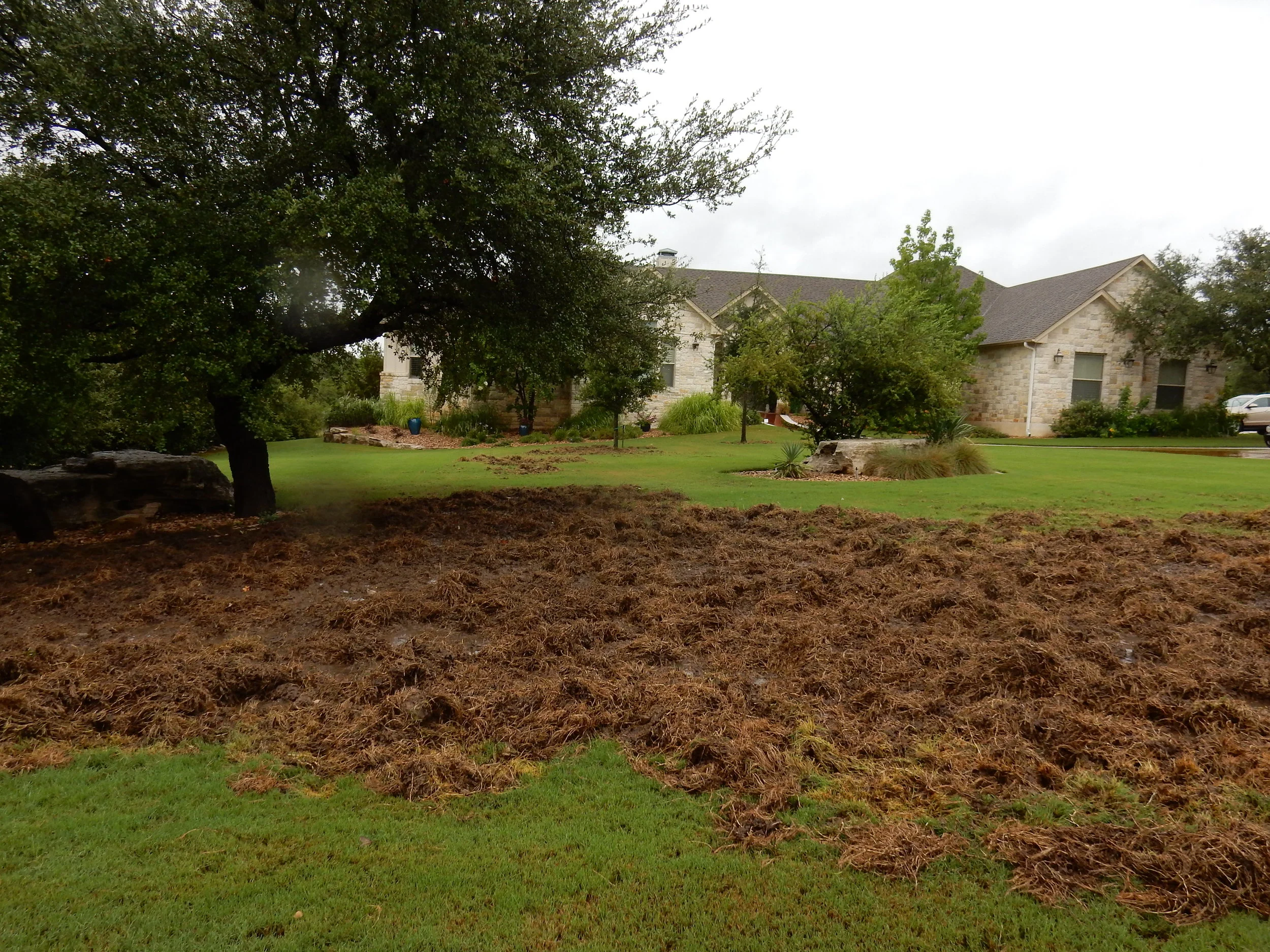
Though the hog damage in our yard has been minimal, David has been concerned about the nighttime prowling of the hogs, especially after the destructive swine completely wiped out a neighbor’s lawn. Sad, too, because her grass was the greenest and most weed-free in the cul-de-sac.

Anna is reading and wants to stay dry, so she chooses not to meet the hog catcher, though she assures us that she's with us in spirit. At one o’clock David, Curtis, and I walk up the street and hang out in front of our neighbor’s savaged lawn. I decided that an umbrella is enough in the way of rain protection, though the lower portion of my jeans is already damp.

Always happy to help, David takes some pictures of the destruction. The homeowner and her boyfriend come out to greet us.

“I’m sorry about your lovely grass,” I tell her.

“I saw the hogs last night around ten. They’re big, like over two hundred pounds.” Using hand and arm gestures, she shows how tall they are, and how big around. “And then they were out here again this morning around five.”

She and her friend introduce themselves to Curtis. And I’m shallow enough to feel pride because he’s tall and broad-shouldered and is wearing a Columbia Law t-shirt.

The man who lives across the street meanders over.

“I want to meet this hog trapper,” he says.

Apparently we aren’t the only ones who are bored with playing backgammon and discussing the rain.

A big red truck drives by.

“I bet that’s him,” I say. He slows and looks at us but doesn’t stop. He's sporting a home-cut mullet. See? Intriguing from the get-go.

A friendly couple from further up the street arrives.

“I want to get a look at this hog trapper,” the wife says. “I have questions.”

“They’re hitting our grass every night,” the husband says. “But our damage isn’t as bad as this.” He looks at the pitiful state of the woman’s yard and shakes his head, which causes the rest of us to do the same. She’s going to have to redo her entire lawn.

The red truck pulls up again, this time from the opposite direction. Our hog trapper emerges, approaches, and introduces himself. We circle around him like he’s a celebrity. In addition to the disastrous hair, he wears a t-shirt with the sleeves cut out, making room for his fleshy biceps. The shirt says Port Aransas across the front, an indication that he stands in sympathy with the victims of Hurricane Harvey. Also, several of his front teeth are missing, a clue that he’s been in a bar fight or two.

“Oh yeah,” he says, shaking his head sadly as he views the plowed-up grass. “You got hogs alright.”

“How’s this going to work?” asks a neighbor.

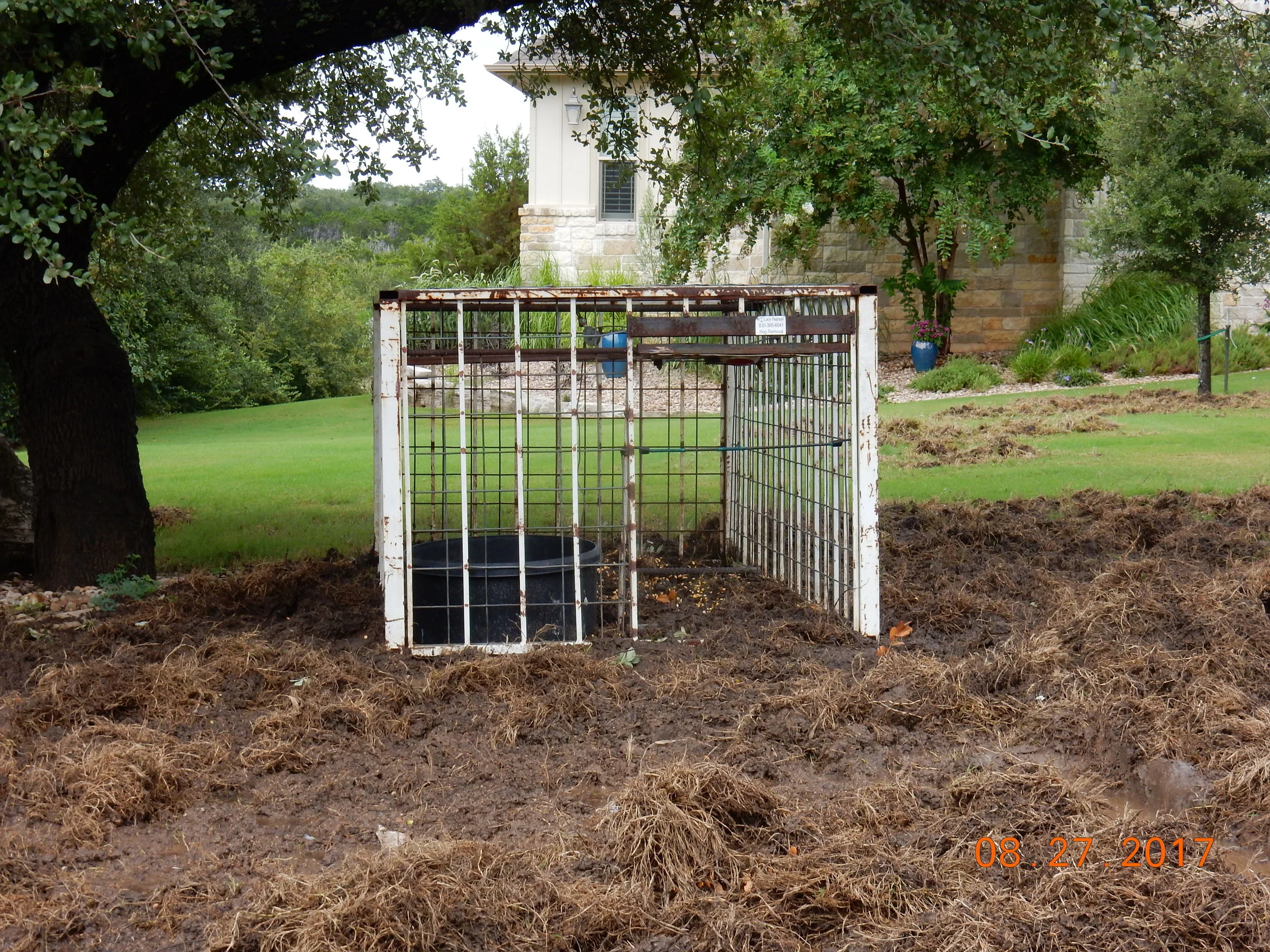
“I’ll put out a couple of cages. I’ll give you my number and when you get one, give me a call and I’ll come get it. I have to come all the way from Burnet, so I won’t just stop by every day to check.” Burnet’s twenty minutes up the highway.

“What about other animals getting in the cages?” someone else asks.

“Oh, I’ve caught a deer or two, and you don’t want that. There’s a quick release. Just unhook the door and the deer’ll run on out.”

“How long will the cages be here?”

“A month should do it, just to make sure we got ’em all. I’ll just go get the traps now.”

He heads back to his truck, gets in, and drives away. The group disperses.

“I’m confused,” I say as the three of us head home. “If he was called here to set traps, why didn’t he bring the traps?”

“I guess he’s got his own way of doing things,” David says.

“Showing up to trap without the traps is inefficient.” Inefficiency disturbs me in all its forms.

“Maybe he came from somewhere else.” This from Curtis, who seems satisfied with the meeting. “He seems to know all about catching hogs.”

But I’m not satisfied. There are questions that weren’t asked and answered.

“How does he get a heavy hog out of the cage and to the meat processing plant?” I ask. “It’s not like he can just ask it nicely to please get in his truck. Also, what do they do with the meat? Do they call it local pork and ship it to the grocery stores? Or do they put it in dog food? And what drew the hogs here in the first place?”

“All will be made clear in time,” David philosophizes.

Huh. In order for this to be made clear I’ll have to observe this procedure from front to finish. Don’t lose sleep over this; when I find out how he gets the beasts from the cages to the slaughterhouse, and what they do with the meat, I’ll let you know.

Everything you're looking for in a real live hog trapper!

Everything you're looking for in a real live hog trapper!

Look at the damage! You can tell by the grass that hasn't been ruined that this was a really nice lawn. 

Look at the damage! You can tell by the grass that hasn't been ruined that this was a really nice lawn. 

The cage. I'll post a picture on Facebook if they ever catch a hog.

The cage. I'll post a picture on Facebook if they ever catch a hog.