The Houston Boat Show

“Someday we’ll buy a boat,” Wayne tells his wife, Lulu.  “So we should go to the Houston Boat Show and see what’s what.”

“Is this the same someday when we’re going to visit Alaska?  The same one where we buy an RV?”  If so, it may never happen.  Lulu’s feelings are mixed.  She enjoys adventures, but Alaska is cold and has bears.  And the thought of being the slowest fattest vehicle on the road isn’t pleasant.

It’s Saturday afternoon, the second day of the boat show.  The parking at Reliant Center costs ten dollars, and they park a half-mile away. 

“The further away, the better,” she tells him.  She wants to put more numbers on her Fitbit.   She loves living in a world where she gets credit for every step. 

In Houston there are exhibitions for everything—home and garden, cars, brides, quilts, weight loss, guns, scrapbooks, taxidermy, photography, starving artists, agriculture, technology.  

Admission is ten dollars apiece.  Wayne and Lulu know nothing about boats, except that there sure are a lot of them in this massive hall, everything from yachts to skiffs. 

“We want something that’ll pull skiers,” Wayne says as he wanders between the mid-sized boats. 

“We know no one who skis,” she tells him. 

“It should also accommodate fishing.”

“Do you want to sleep on this nonexistent boat, or is it just for use during the day?”

“Hmm.  A good question.  We really don’t know what we want.  This’ll take a lot of thought.”  Years and years of thought.

“If we lived near water of any kind, I could take this seriously.”  She’s heard there’s a lake about an hour away, near Fayetteville, but she’s never been there.  Where would they keep a boat?  They can’t even fit both their cars into the garage. 

Ramps give access to the biggest boats.  People are lined up outside a massive yacht.  Lulu and Wayne fall in at the end of the queue.  Behind them, more join.  A crowd in front, a crowd pressing at their backs.  The air is hot and stagnant as they shuffle up the ramp, across the deck, and inside.  On a boat the kitchen’s called a galley.  The toilet’s a head.  The left side is port, and the right is starboard.  If someday ever comes, a whole new vocabulary will be involved.  Shiny chrome, white with blue trim, this boat’s so big it's even got an area on the main deck for car storage.  It also has two interior lounge areas, a media room, several cabins, and a sauna, not to mention the galley, smaller than expected, engineered for efficiency.   

They leave the yacht and tromp up and down the aisles.  Lulu glances at her Fitbit at the end of every aisle.  There are hundreds of booths dedicated to boat paraphernalia—fishing equipment, navigation systems, ropes for every occasion, nets, dive suits, buckets.  Wayne stops at every table to sign up for whatever give-away’s on offer.

Lulu’s not happy when she discovers that he’s been putting her email address on all the forms. 

“What’s the big deal?” he asks.  “Just delete them.”

“If it’s not a big deal, why didn’t you use your own address?”

They stop and watch a demonstration of cookware that’s made specifically with boat safety in mind.  Wayne fills out the form to win a free set of the cookware, which concerns Lulu because Wayne’s lucky when it comes to this kind of thing.  He often wins random drawings.  Where will they keep the cookware they don’t need for the boat they don’t have? 

“What’re you trying to win now?”  She’s getting cranky from all this stopping to fill out forms for free stuff.

“The door prize.”  She can tell by the way he says it that he has no idea what the door prize is.  He stuffs the slip of paper into the big box on the table. 

And that's how Lulu and Wayne, who know nothing about boating or fishing, come to possess a thousand dollar gift card for fishing tackle, a complete set of cookware that is meant to be used on a boat, several buckets, a big container of tie-downs, and a pair of water skis. 
Finishers

Many of the people who run in the Houston Marathon do so in support of charities.  Curtis’s company, Reed Smith, is encouraging their people to run on behalf of Dress for Success, which is puzzling for Curtis.  He knows no women who do not know how to dress themselves.  He’s literal, this son of ours. 

“It’s about empowering women,” I tell him. 

“Women should do what we men do,” he says.  “When men want power, we take it.”

He’s not really a jerk.  He says this to get a rise out of me.  But in reality, what does he know about under-privileged women and their clothing issues?  For his whole life he’s seen me emerge from my bedroom appropriately clothed.  As far as I know, he’s never even had a conversation with a single mother who receives no child-support, and has little education and no skills.  A lecture takes shape in my head, but I shrink it down, fold it, and put it in a box. 

Usually on Sunday mornings we go to church.  This is a big Sunday for David because his usher nametag is going to be in.  He’ll pin it on and the people he hands programs to will know he’s legitimate, and not just some guy who likes to stand at the door and say hello to fellow Methodists.  But Curtis is running in the Houston Marathon; well, he’s running the half-marathon portion, and we decide that, instead of going to church, we’ll make our way downtown and cheer for him and the other finishers.

Curtis hasn’t trained for this long  run.  To his way of thinking, it’s just a couple of regular runs back-to-back.  This lack of concern is worrying, but not overwhelmingly so.  It’s nice that he’s an adult now, and responsible for his own unpreparedness. 

David and I drive north on 59, and take the Louisiana exit into downtown, parking several blocks away from the finish line in order to get some steps on our Fitbits.  In the last twelve years or so downtown Houston has been transformed from a depressed and creepy quarter populated by spooks, into a thriving square mile buzzing with trendy restaurants, coffee houses, blues bars, theaters, and professional sports arenas.  The odd thing, though, is that, in the midst of all this prosperous bustle, the homeless still sit raggedly on curbs and at bus stops.  They lurk in corners and doorways, gazing blankly.  They stumble drunkenly in and out of the fast-paced crowd.  They, too, are part of Houston. 

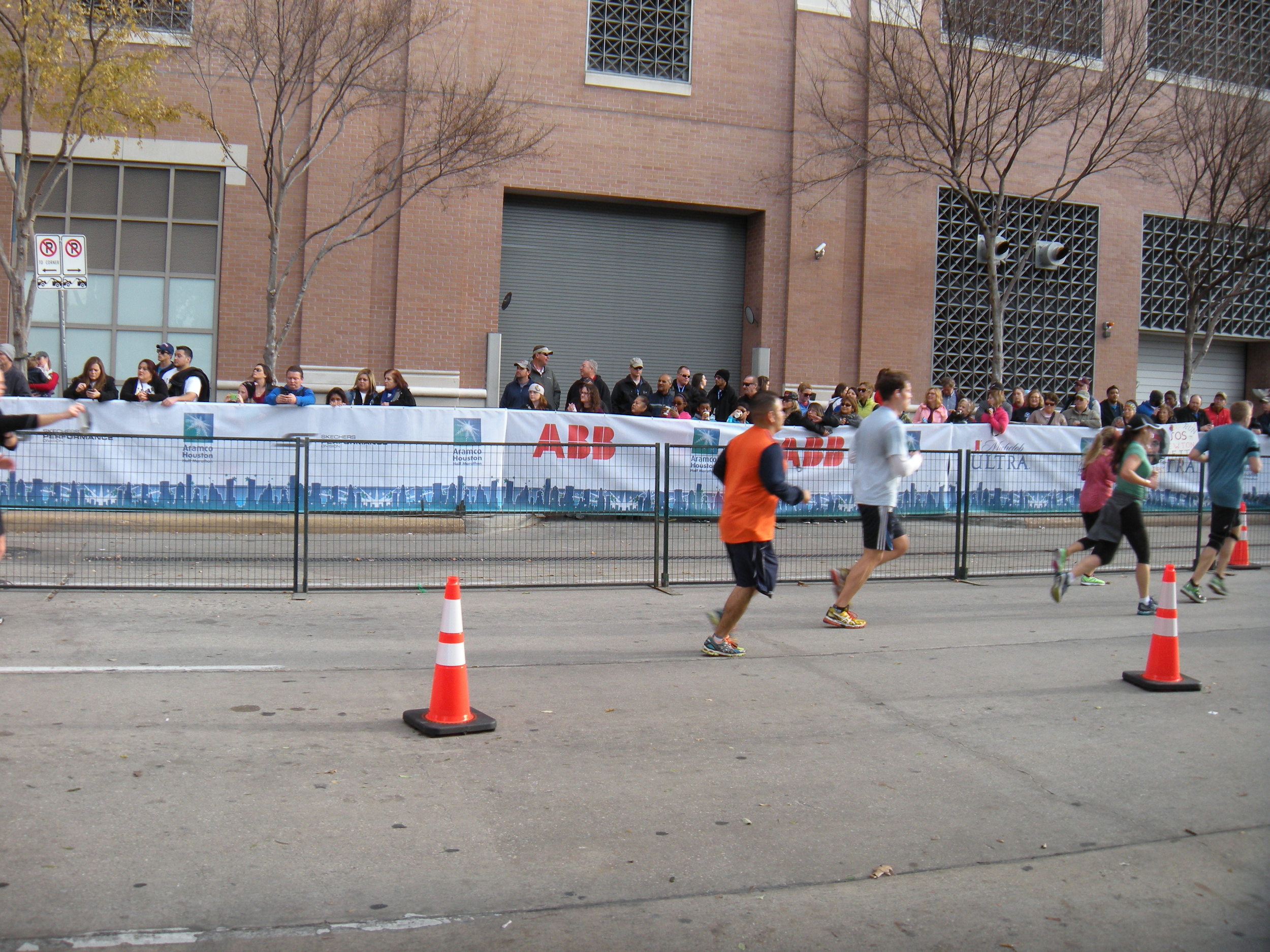
Our timing couldn’t be better.  We find a perfect position at the barrier near the finish line just as the frontrunners are entering the home stretch.  Music with a strong beat vibrates through the air and an announcer’s enthusiastic voice goes on and on and on.  Cheering people line the barrier as, in the street, the athletes pound by, or scuff by, depending on their level of stamina.  Some of them look comfortable.  Quite a few are fighting their way through obvious fatigue, struggling to put one foot in front of the other.

There’s limping, cramping, swooning, vomiting, huffing.  Some run on tip-toe, as though they have spikes in their heels.  They wish they could run without their feet touching the ground.  Running injured—is this insane or admirable?  The consequence of long distance running that most awakens my sympathy is bleeding nipples.  Several men, only one woman that I see, have twin streaks of red drawn down the fronts of their shirts.  Youch! 

A boy of about fifteen, blind, is helped along by two friends.  Imagine that. 

The street is divided, with the half-marathoners in one lane, and the full-marathoners in the other.  The announcer kicks his excitement up a notch as the long-distance runners grow closer.

“Ethiopians!” he thunders.  “It’s the Ethiopians!  Ethiopians!  Go Ethiopians!”

Curtis told us to watch for him around the two-hour mark, and so we look expectantly toward the oncoming cluster of runners.  He’s right in the middle, cruising along, feeling no pain.  We holler, “Yay, Curtis! Go, Curtis!” but he doesn’t hear us.  He’s got his earphones in.  His lips move as he sings whatever song is filling his head.  Curtis, in the zone.  He’s young and strong.  Of course he didn’t need to train.  

And now what?  Wouldn't say no to brunch and a bloody Mary.  

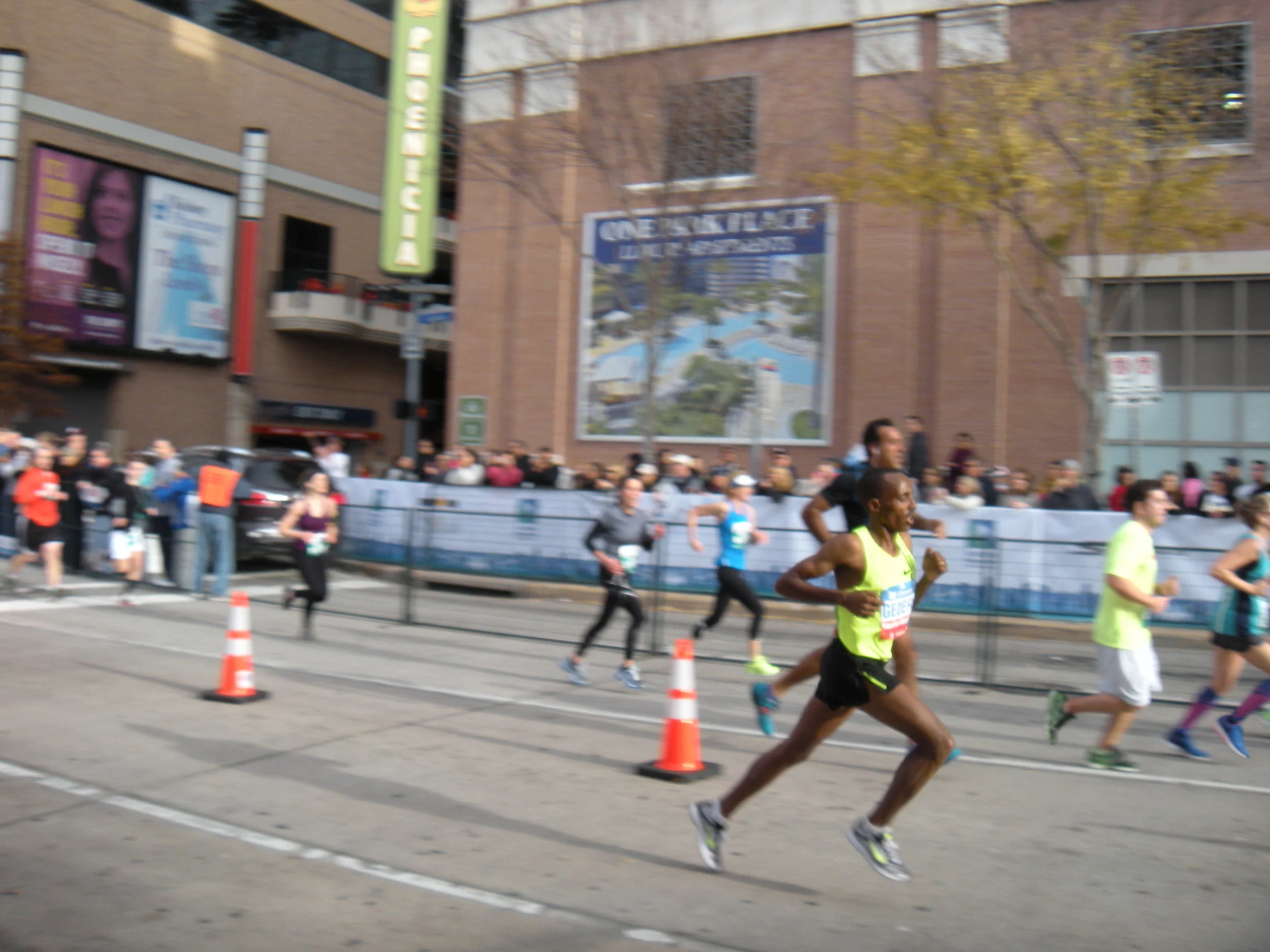
Birhanu Gidefa, winner of the Houston Marathon.  Look at that stride.  Go Ethiopia!

Birhanu Gidefa, winner of the Houston Marathon.  Look at that stride.  Go Ethiopia!

Curtis is in the while long-sleeves, dark shorts.  Go Curtis! 

Curtis is in the while long-sleeves, dark shorts.  Go Curtis! 

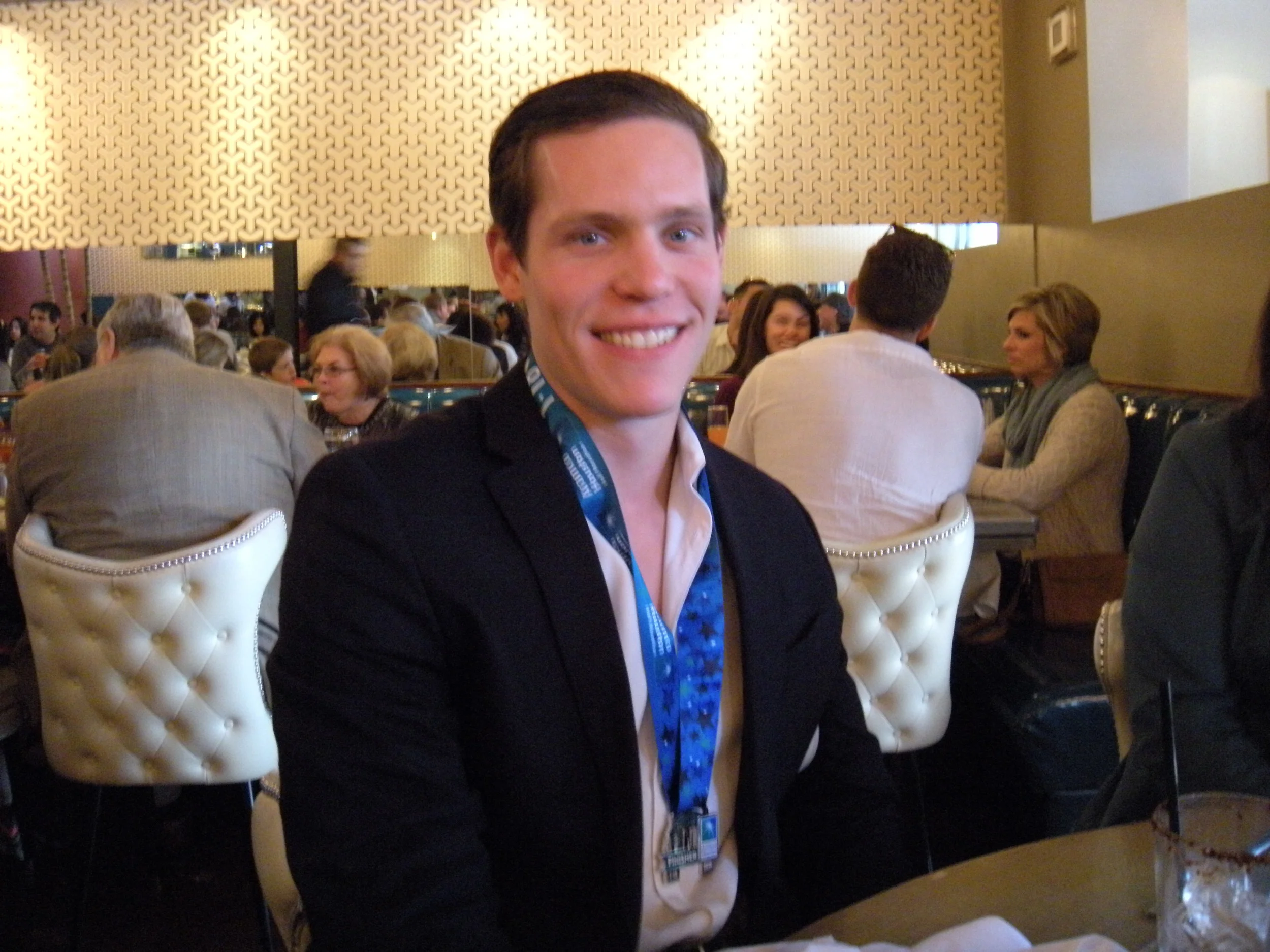
Curtis at brunch wearing his "Finisher" medal.  

Curtis at brunch wearing his "Finisher" medal.  

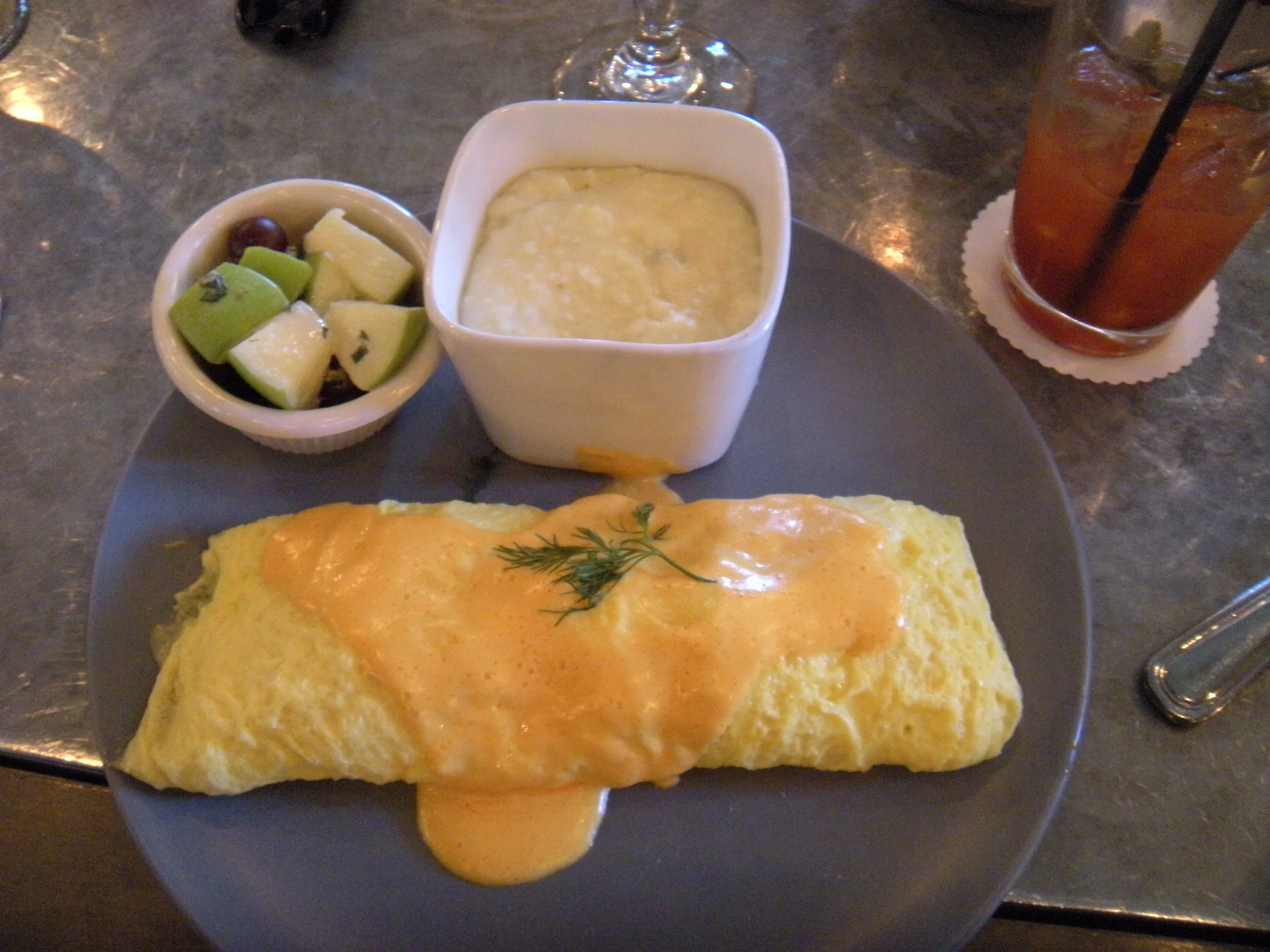
Brunch:  salmon omelette, fruit, cheesy grits--and of course, what's left of the bloody Mary.  

Brunch:  salmon omelette, fruit, cheesy grits--and of course, what's left of the bloody Mary.  

Problem Solved

My neighbor loses her keys and her glasses and her paperwork.  She stops mid-step, wondering where she’s going.  Thoughts pop into her head, then fly right out.  She’s distracted because her dog barks all the time, day and night.  She cannot think about anything else.  The dog is right there at the gate in front of her house, barking at everything that passes.  The neighbor across the street has threatened to call the police.  One evening a man stood outside her gate, yelling at the dog to SHUT UP! QUIT BARKING!—causing the dog’s vocalizations to grow more frantic, more strident.  Shouting at a barking dog.  How stupid. 

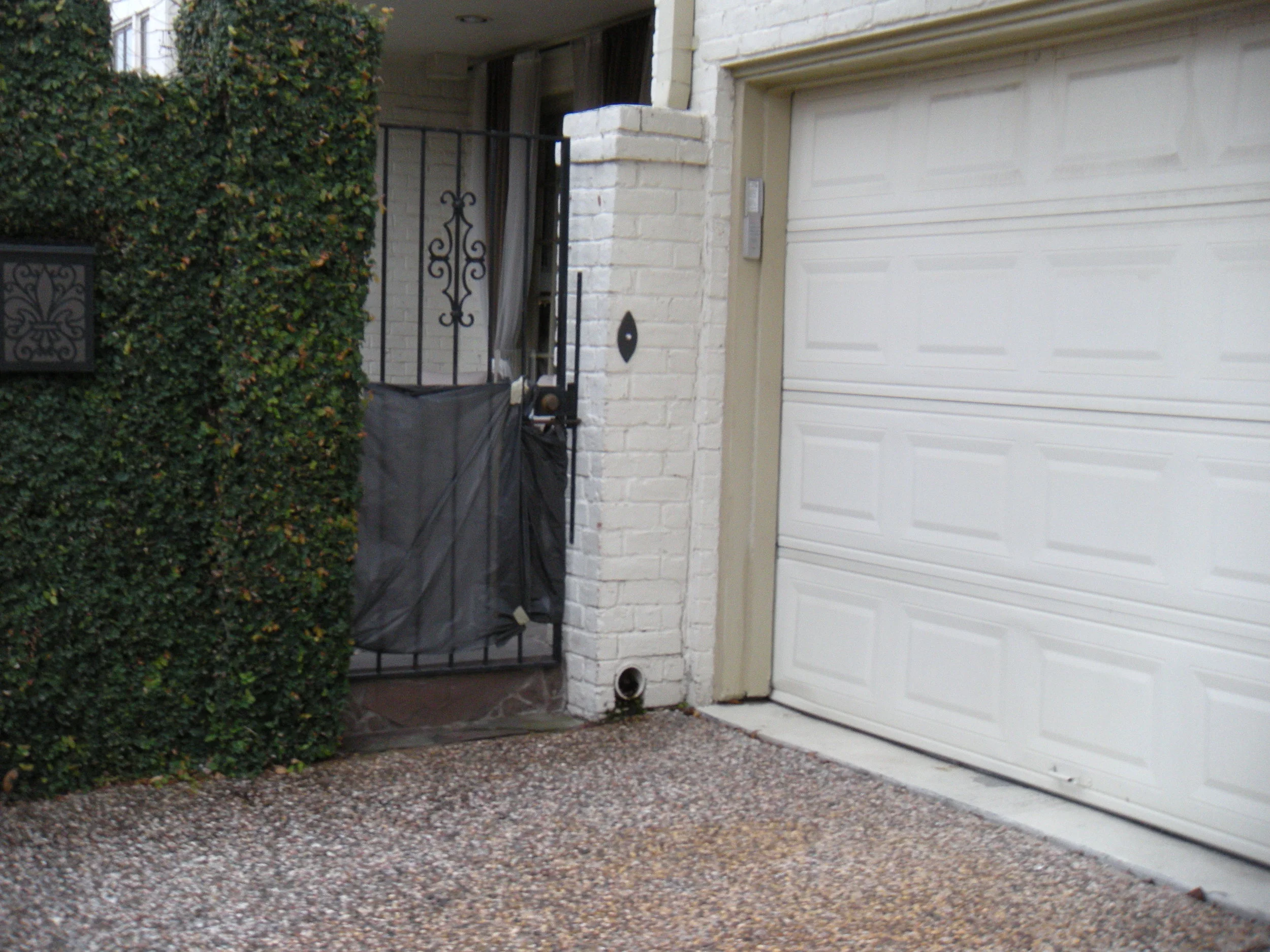
“What, oh what can I do?” my neighbor asks me, anxiety causing her to droop.  She knows the barking is obnoxious.  She talks to everyone about it.  She’s recently draped plastic sheeting across the gate so he can’t see out; she hopes this will put a stop to the barking.  It’s an ineffective and unattractive solution. 

“That taped-up tarp isn’t serving any purpose whatsoever,” I tell her.  “Maybe you should replace that iron gate with a heavy door.” 

“Oh, I don’t want to do that.”

“It’d be costly,” I say, understanding why she wouldn’t want to spend the money. 

“I just wish people weren’t so mean.” 

Yes, an annoying pet tends to make people mean.  He’s a nice dog, friendly and sleek, with long brown hair and golden eyes.  I’ve heard of grinning dogs, and this is one of them.  When I go near, his lips slide up over his teeth and he pushes his head beneath my hand.  His whole backside swings from side to side.  He’s a charmer, albeit, an earsplitting one.  

“An electronic collar?”  I hope not.  I hate those things. 

“That’s what the lady around the corner uses on her little dogs.  When they try to bark it sounds like they’re dying.”

Our houses are close.  We share a connected wall.  The place where her dog keeps watch is no more than twenty feet from our bedroom window.  Woof! Woof! Woof! Woof! Woof! Woof! Woof! Woof! Woof! Woof! Woof! Woof! Woof! Woof! Woof!

“I’m so worried that I can’t sleep at night,” she says. 

Is the dog neglected?  In the strictest sense, no.  He’s given food and water.  He has a place to relieve himself.  She lets him in at night.  But he’s alone, outside, all day, every day, even on weekends—and during that time he barks.  And sometimes she works long hours, so his raucous solitude often stretches into the evening. 

“I want to be a good neighbor,” she says.  “I don’t know what to do.”

On Tuesday afternoon a man comes to fix the refrigerator's water dispenser.  Before ringing my bell, he pops next door to exchange pleasantries with the barking dog.  When he arrives at my house, he says, “That dog’s not happy in that tiny yard.  He’s lonely and bored.” 

 “You want him?”  I stole a dog once—Gretta, an elegant red Doberman.  I’ve got no problem with someone stealing a dog, especially if they’re offering the dog a better life. 

“Really?  I’ll take him off her hands, yeah.”

“Okay,” I say.

After he’s through with the refrigerator, we go next door.  I open the gate and the dog springs out.  He’s so happy!  He dances around our legs for a few minutes, grinning and bumping our calves with his swinging backside.  The repairman bends down to the dog’s level, frames the dog’s face with his hands, and gazes into his new pet’s eyes.  The dog calms.

“Come on, big fella!”  He leads the dog to his truck and opens the passenger door.  The dog leaps into the seat, settles in, and views the street regally from his elevated perch.  The guy tells me thanks, then gets in his truck and drives away. 

My neighbor whined and whined, but did nothing. 

Jen Waldo, accessory to dog theft. 

Problem solved.

Though the dog is gone, the taped-up plastic sheeting remains.  Tacky, right?  

Though the dog is gone, the taped-up plastic sheeting remains.  Tacky, right?  

For those who haven't seen it in person, this is my new purse, which David got me for Christmas.  Isn't it beautiful?  

For those who haven't seen it in person, this is my new purse, which David got me for Christmas.  Isn't it beautiful?  

Do You Spa?

David bought me a facial at a nearby spa—Hand and Stone—for Christmas.  Facials vary and I have no idea what to expect, though I’ve heard good things about this place.  While in Singapore, I got in the habit of purchasing expensive spa treatments cheaply from Groupon.  Some were impressive; others, not so much.  I remember one facial in particular that made me look ten years younger.  I raved for weeks.  Another time—and the recollection causes me to shudder in horror—the woman repeatedly dragged my skin down my face until I expected to look like an old hound dog when she was through with me.  

I approach the front desk of Hand and Stone tentatively.  Facials can be creepy, what with the getting undressed in a strange place, and the way the esthetician (their pretentious word, not mine) hovers beside my head, making tiny scrapes and knocks and mysterious swishing noises—and with my eyes closed, how do I know what she’s doing? 

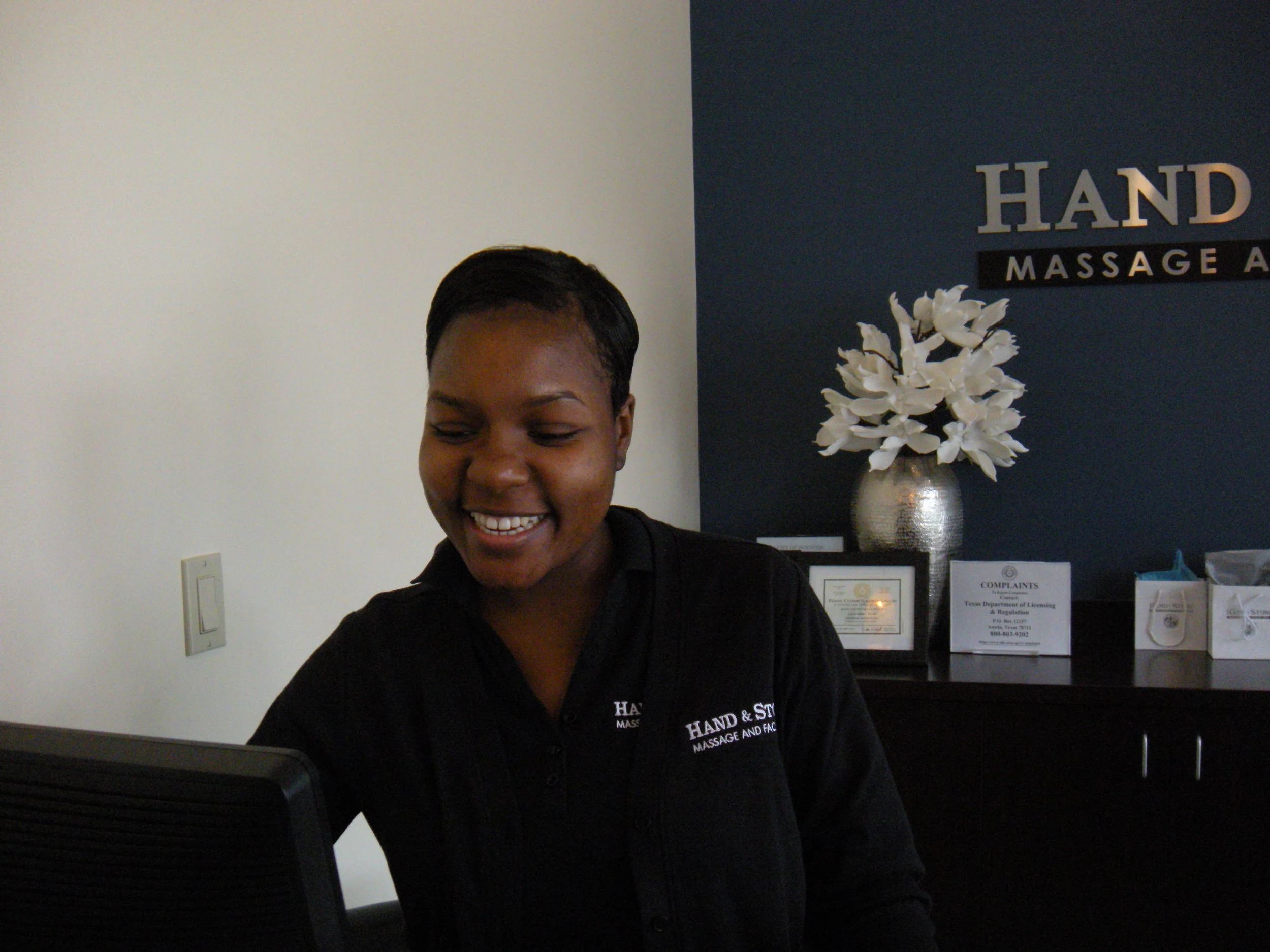
The young woman at the counter greets me.  Her name’s Briana.  She’s amused when I pull out my camera and ask if I can take her picture for my blog.  My esthetician, Anita, arrives and leads me through the door and down a dark hallway.  This contrived sense of otherworldliness—dim light, confusing corridors, wavering candles—is a trait all these places have in common.  Anita addresses me over her shoulder as we progress through the maze.  Her voice is soft and accented, eastern European would be my guess.  She talks so quickly that I’m unable to catch her words as they sweep past. 

“Could you speak louder?” I ask.  “I don’t hear well.”  This is what I always say to people who mumble, though in actuality my hearing’s fine.  She ignores my request, turns into a treatment room, and issues garbled instructions, which I don’t understand. 

I ask her if I can take her picture for my blog.  She says no, and I decide that I don’t like her.  She is the “stone” referred to in the spa title.  She leaves and I get out of my clothes and into the provided wrap, then I adjust myself beneath the blanket.  She returns, asks if I’m comfortable, and begins.

With gentle fingers, she cleanses my face—and then she attacks it!  Her forceful fast fingers work my skin up, up, up.  She hates my sagging jawline as much as I do!  She is seriously rearranging the deep composition of my face.  I suspect that, when I get out of here, I will once again have defined cheeks.  She presses the creases of my forehead, demanding that they flatten out.  She moves flesh to my temples and holds it there, disciplining it—stay here!  In my head, I’m cheering her on—pull it up, girl, pull it up!  I feel the shifting of the fatty tissue and muscles beneath my dermis.  I decide that I like her after all. 

I catch a whiff of her breath.  She’s a smoker.  I don’t care.  She can blow her nasty breath all over me as long as she keeps moving my face upward. 

The music is annoying, a mystical tuneless arrangement that’s meant to evoke thoughts of running with wolves on a windy night—but what it really does is make me wonder if the person who composes this crap is proud of his or her work.  This generic music is another characteristic common to all spas, which is too bad, because there’s an infinite amount of beautiful music in the world; yet here I am, unable to escape, with this dreck assaulting my ears and mind. 

Usually when I have a facial the esthetician slips out at some point, leaving me alone to absorb whatever nutrients or chemicals have been applied—but Anita never leaves me.  When it’s time for my face to spend twenty minutes slathered in collagen, she moves to my feet, exfoliates, massages, and moisturizes.  My face and my feet!  Oh Boy! 

Eventually this lovely event comes to an end.  Anita thanks me and leaves the room.  I arise and don my clothes.  Taking up the handheld mirror, I examine my face.  Skin smoother, cheeks elevated, forehead wrinkles less prominent.  Ordinarily I don’t buy the package, but at Hand and Stone, there is no contract, simply an agreement to pay a monthly fee, which is lower than the price of the treatment.  And Brianna waives the joiners’ fee.  So in a month, I will have the same facial again, only for less money. 

When I get home, Maria, the cleaning lady, is just finishing.  I pay her, tell her I’ll see her next week, and close the door on her departing back.  So, a good day.  I look better and my house is clean.  Go, me! 

This is what you're supposed to do at a spa, but somehow I never manage it.  

This is what you're supposed to do at a spa, but somehow I never manage it.  

Briana is happy to have her picture taken.  She was nice and helpful.  

Briana is happy to have her picture taken.  She was nice and helpful.  

Located at Voss and San Felipe.

Located at Voss and San Felipe.

Maria's very nice.  Her husband's an American citizen, as is her her daughter, who goes to college her in Houston

Maria's very nice.  Her husband's an American citizen, as is her her daughter, who goes to college her in Houston