The Podcast

At Sam’s suggestion, I began recording my novels on my website and uploading them to iTunes.  This is an unexpected undertaking for someone who’s always abhorred the sound of her own voice.  I have honestly always thought my tones were shrill, that my accent made me sound like a hick—and it kind of does. 

So why do it? 

Because this writing business has been a thirty-year slog to nowhere, during which I’ve only managed to snag two agents, both of them British, neither able to sell my work because it’s too American for their market.   This, anyway, is what I was told.  And, through research and observation, I have found it to be true.  British publishers only publish American books if they’re best-sellers or proven authors in America first.  I imagine it’s the same in reverse. 

In the US—and granted, I haven’t spent that much time here—I ’ve been unable to find an agent who would even glance at my work.  Over the years I’ve sent out at least a hundred query letters and, when appropriate, samples of my work.  In return I’ve received form letters of rejection or nothing at all.  And during the span of this stagnant career, I’ve read some books that are breathtakingly brilliant, so out of my range that I curdle inside, brought down by my own deficiency.  But I’ve also come across many books that have huge sales that are simply trash, so poorly written that the contempt of the authors and publishers for the reading public makes me nauseous.  I’m a solid writer, but a significant obstacle is that I’m stymied when it comes to identifying a genre.  The closest I can come to defining what I do is dark comedy or, in some cases, dramedy.  

I tell stories.  It’s what I do.  I’m a story-teller.  My characters are simultaneously transparent and complex, always a little on the crazy side, fathomable, if not rational, and caught up in predicaments of their own making.  The journey from front to finish is clear—I’m no Virginia Woolf, no James Joyce.   The pace is steady and the balance between dark and light is comfortable.  Some of my novels are better than others.  I’ve put the first chapters of my favorite ones on the homepage of my website. 

But for all the pleasure I take in my work, my commitment to this new entity, this podcasting, has taught me some practical, sometimes disconcerting, lessons. 

For one thing, in a state known for its slow drawl, I’ve always spoken very quickly; and I’ve been proud of my agile tongue—but not so much now.  Recordings reveal slurred words, lost consonants, imprecise vowels.  How, I wonder, has anyone understood me up to this point in my life?  My enunciation is a mess. 

Another factor—an annoyance, really—is that there’s a huge difference between reading dialogue silently and reading it orally.  In writing to be read silently, I hardly ever insert tags, but instead break up the dialogue with a bit of description or action.  But when reading aloud, it’s unclear who’s speaking without the he-said, she-said, so now I inject the cues, which renders an oral version made choppy by awkward “he replies,” and “she answers,” and “he asks.” 

Here’s a comment from a friend, Marla, who now lives in St. Louis, and was in a years-ago writers’ group with me:  Jenny, where do you see this podcast going?  I remember you hating to read your chapters out loud.   You thought your voice was too high and you read too fast.  You’re still going too fast, but I found your vocal pitch to be mellow, almost relaxing.  Best wishes in your new enterprise, Marla 

I’m interpreting mellow and relaxing as her tactful way of saying I lack inflection. 

Jerry, a fellow writer from the MFA program, made no effort to be tactful.  Here’s what he wrote:  Jen, how is this being received?  I see no comments or likes on your site or iTunes postings.  Have you considered that in order to create a following you need to publicize?  Also, in your dialogue, not only is it hard to tell who’s speaking, the first-person voice makes it hard to tell if the narrator is speaking aloud or if we’re being given the thoughts in her head.  Good luck, Jerry

Jerry.  I never cared for him.  And did he "like" me or post a comment?  No. 

Sam painted a picture of a thousand strangers searching through iTunes, catching a bit of my readings, being drawn in by my soothing accent and the nuttiness of my characters, and then enthusing to their friends about their prodigious new find.  And these friends would presumably listen, enjoy, and tell their friends.  There are a lot of people in the world.  Some of them must occasionally pull up new items on iTunes.  It could happen.  
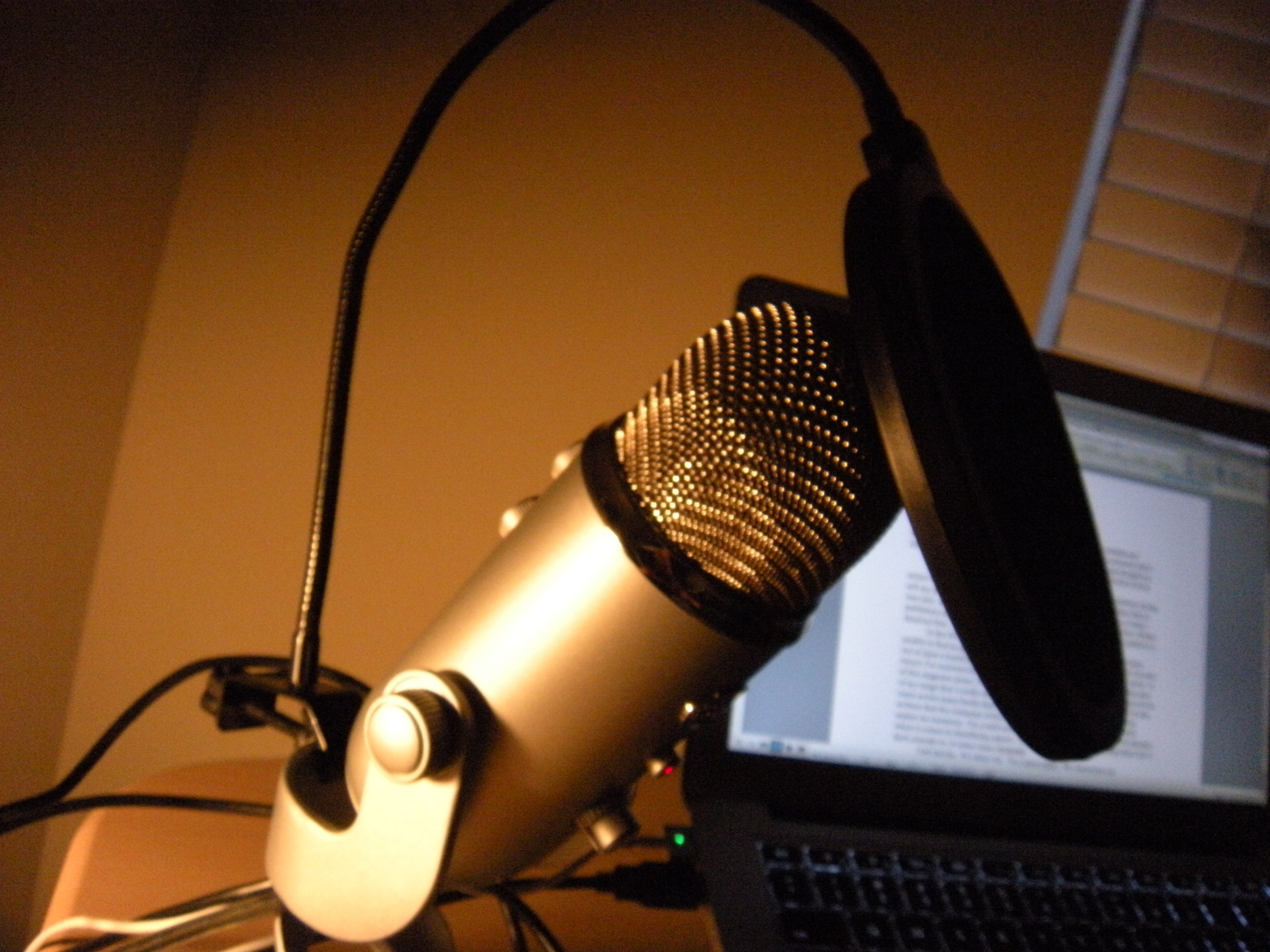
An impressive microphone, indeed.  The screen is called a popper.  It's to keep my P's from popping.  Popping P's are the least of my worries.  
An impressive microphone, indeed.  The screen is called a popper.  It's to keep my P's from popping.  Popping P's are the least of my worries.  

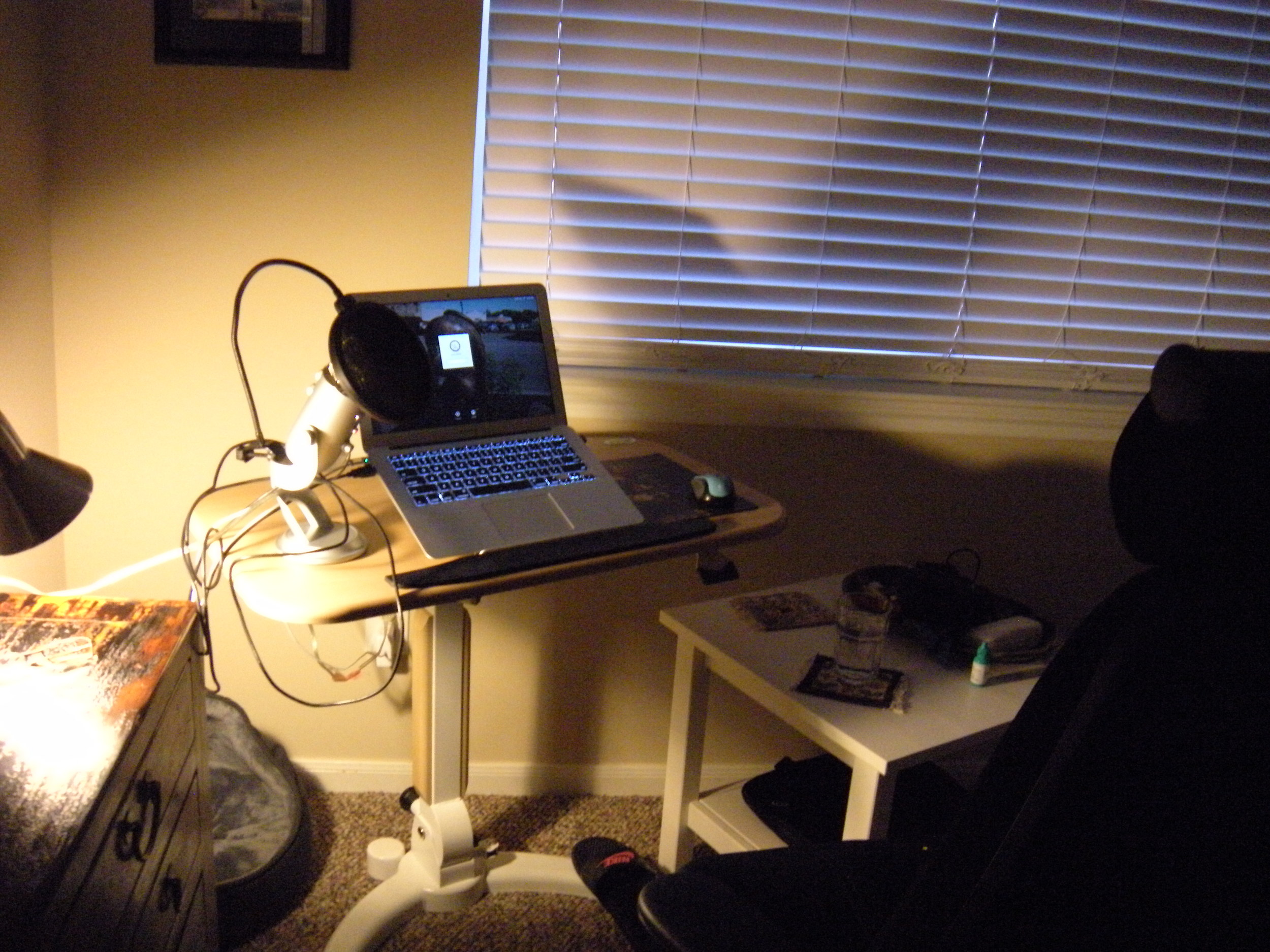
Here's my writing and recording area.  You can see Trip's bed in the corner.  He likes to doze at my feet as I work.  The eyedrops on the table are because I'm on the computer so much that my eyes get dry.  

Here's my writing and recording area.  You can see Trip's bed in the corner.  He likes to doze at my feet as I work.  The eyedrops on the table are because I'm on the computer so much that my eyes get dry.  

A horrible picture, but you can tell that I'm maniacally happy to have something to fill the time between five and eight o'clock a.m.  
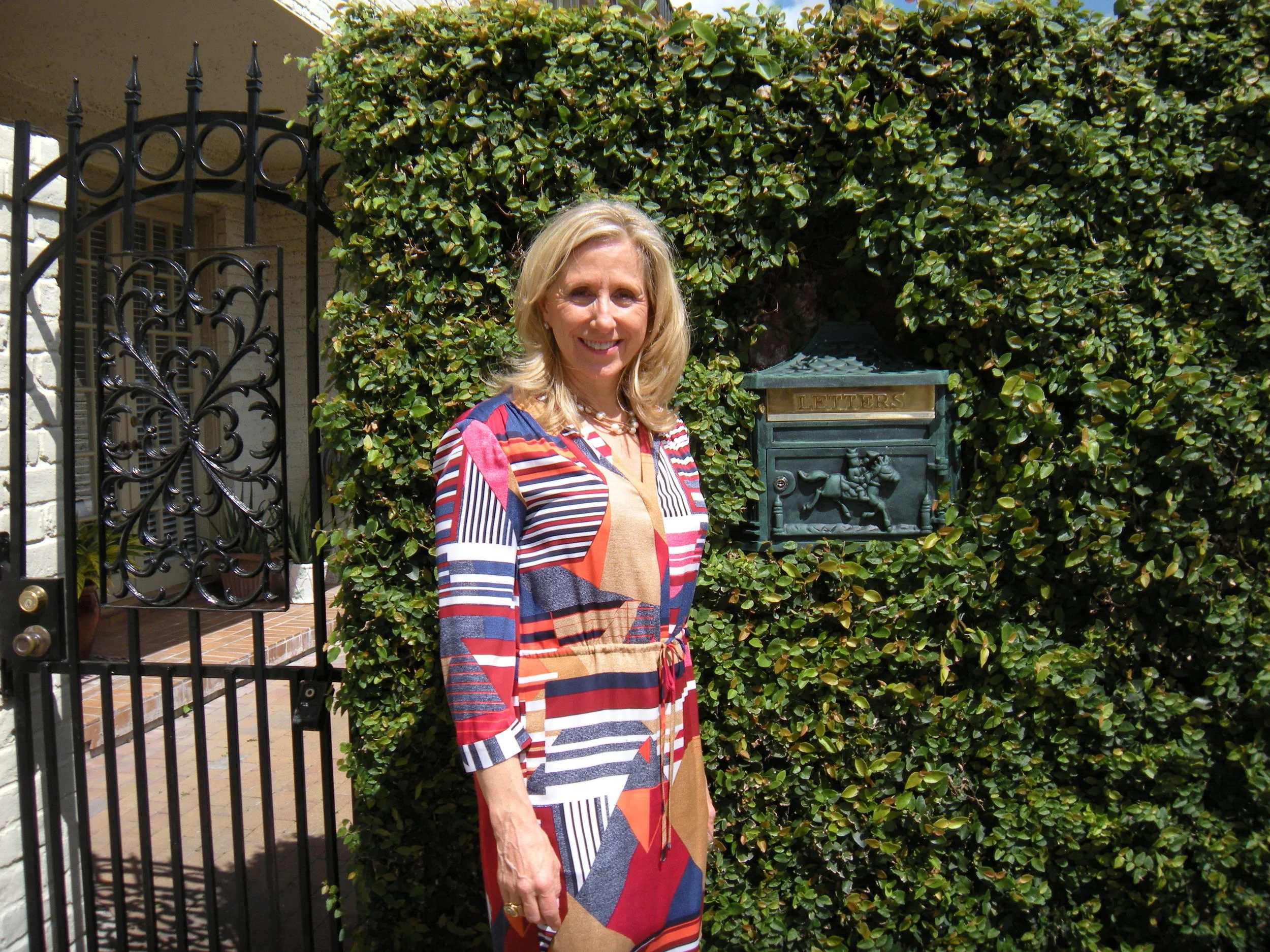
A horrible picture, but you can tell that I'm maniacally happy to have something to fill the time between five and eight o'clock a.m.  


House for Sale

David and I are usually lucky when it comes to selling and moving.  When we sold the house in Sugar Land, I took that on solo because David had already gone to Kuwait.  The sale went smoothly—on the market for less than a month and we got more than we expected.  Also, we got a good deal when we bought this one.  So we’re keeping our past good fortunes in mind as the sale of this house drags on and on and on.  Within a week of the sign going up out front, the price of oil dropped and the housing market in Houston came to an abrupt standstill.  At this point we count ourselves lucky if we get a showing a week. 

We were presented with two clear options when it came to selecting an agent—one was our neighbor, a fifty-something woman whom we liked, and the other was a go-getter whom we both felt would tell us whatever we wanted to hear in order to get the listing; an antsy guy, too jittery to sit, he spent the entire time he was talking to us pacing around our kitchen.  He overcame the circumstance of the smallness of his agency by referring to it as “boutique”, a pretension that was jarring. 

Though the sale drags on, we’re still confident that our neighbor was the best choice—she has an interest in getting a good price and she’s sincere in her niceness—yet she is proving to be feather-brained.  For instance, on Saturday, though there was no open house scheduled for Sunday afternoon, she notified us that—oops, somehow the newspaper got the idea that we were having an open house, so we had to get ourselves and our dog out of our home from noon to two. 

“I have no idea how this happened,” she said woefully. 

“You screwed up, that’s how,” was my snarling response. 

The short notice was inconvenient and annoying, but we will do whatever it takes in order to sell.

It’ll come as no surprise that this open house nonsense is an issue with me.  (I take issue with many things, why not this one as well?)  Yes, we want to sell, but we’re still living here.  As a rule we’re tidy and it’s no difficulty to wipe down the kitchen, and sweep the floor on a daily basis in the hope that a potential buyer will want to do a walk-through.  But I know all about Sunday afternoon open houses.  An open house is what the real estate agent does in order to make herself feel proactive when there’s nothing else she can do.  And it provides free entertainment for people who don’t have anything better to do.  A couple of weeks ago we returned to our home after the allotted two hours, to find that only three people had come through—strangers who strolled through our rooms commenting on our taste, poking through our cabinets and closets, and using our toilets—I know this last for a fact because they neglected to flush their brown deposit. 

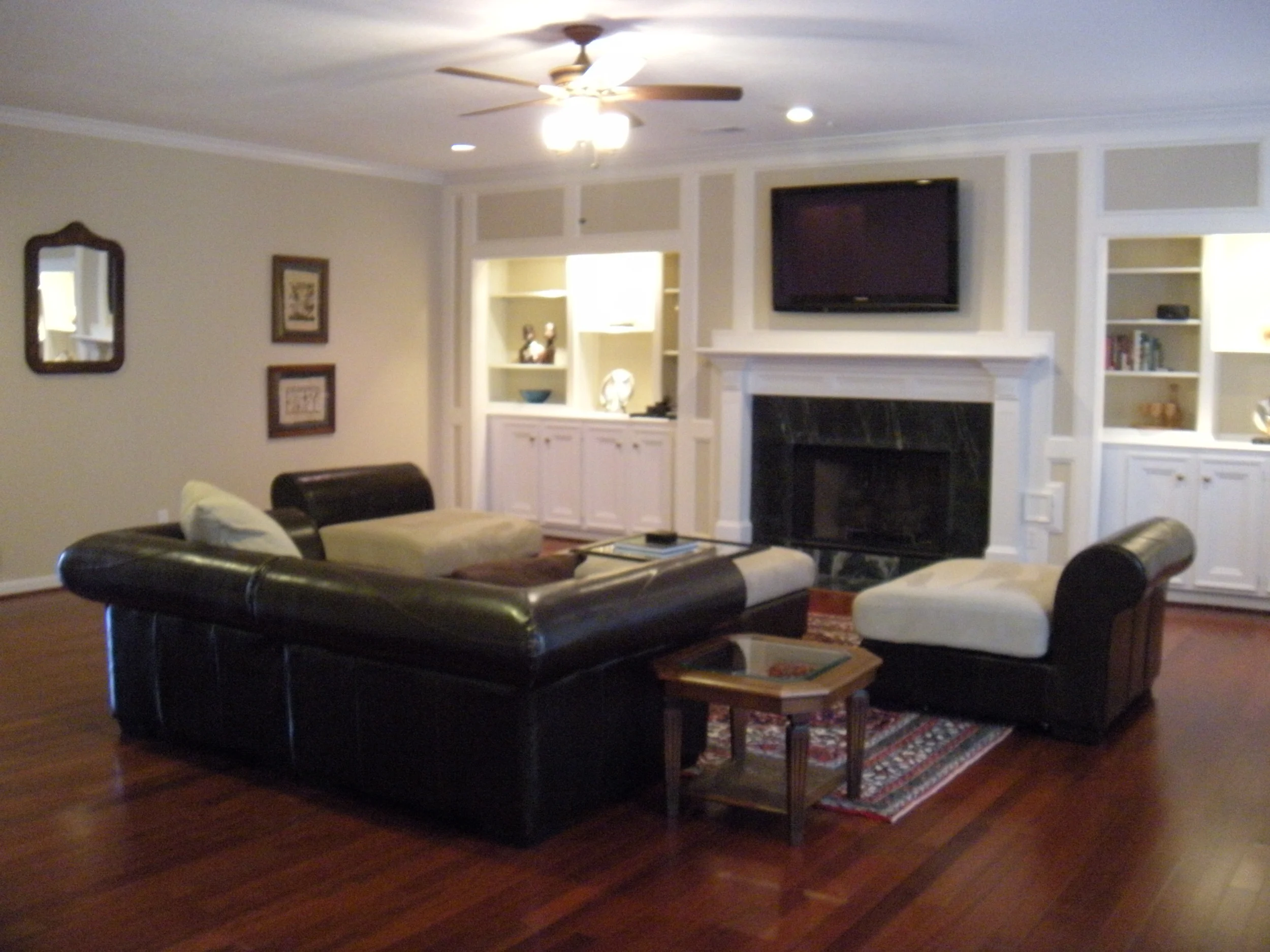
At the urging of the realtor, we paid for “staging.”  This is when two girly guys charge five hundred dollars to come in and discuss color combos and flow.  They removed the knick-knacks from the shelves, the rugs from the floor, and half the furniture.  The objective, it was explained, is for the buyer to see all the empty space and long to fill it with their own possessions.  Where did they put all the banished items?  They crammed crystal into closets, stuffed curtains into drawers, stacked Dutch oils in the garage.  Meanwhile, things are not where they should be, which is disconcerting on a fundamental level.  But I must admit, the place looks positively cavernous.   

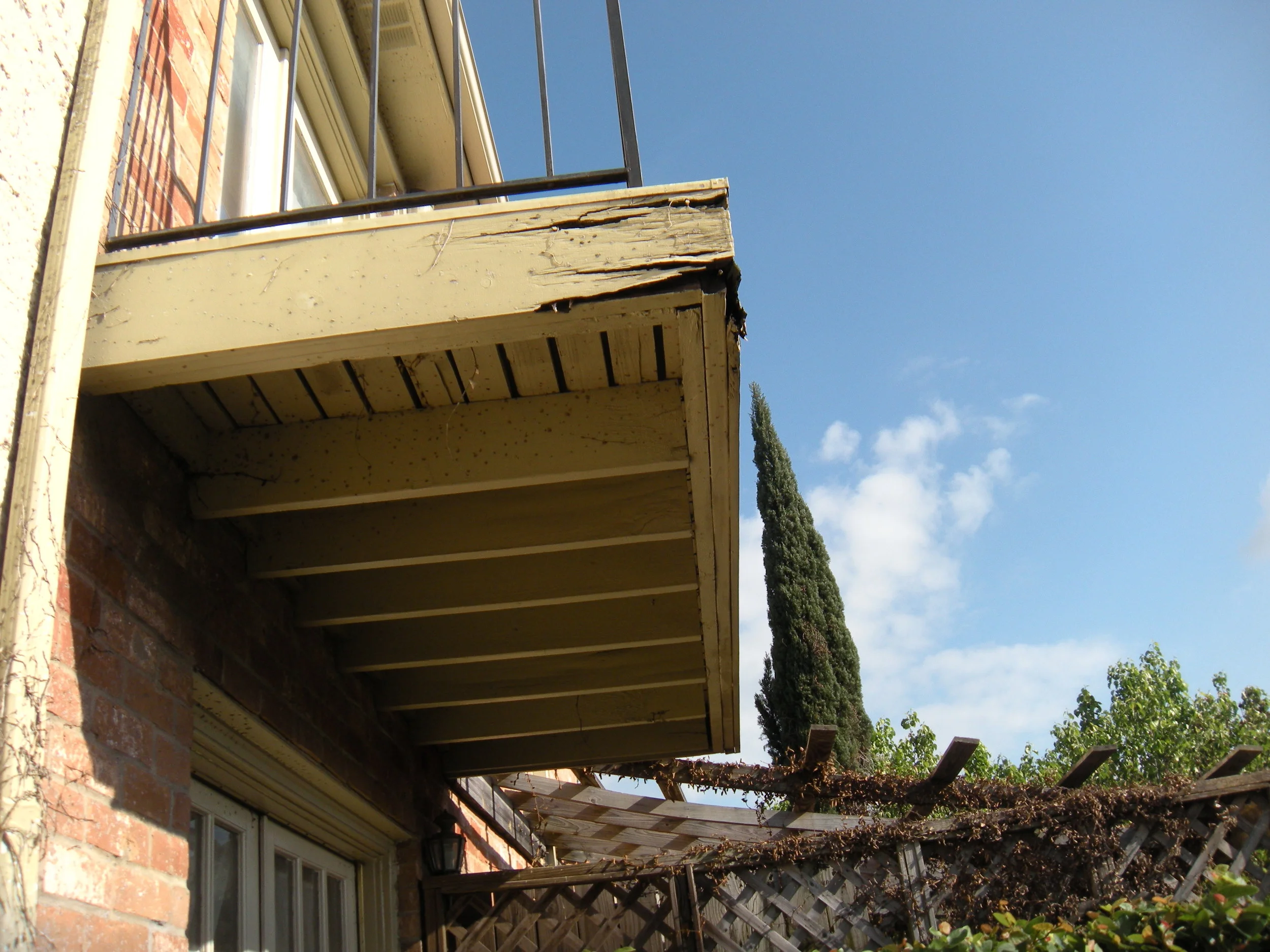
Another aspect we’re dealing with is the neighbors’ representation of the area.  Curb appeal is important.  Our home is quite lovely inside and the location in the Galleria area is sought-after, but we’re on a busy street lined with closely packed townhouses, so what the neighbors do with their properties influences the sale of ours.  Sadly, the first thing a potential buyer sees when they enter our well-groomed courtyard is the rotting deck of the next door neighbor.  And the people across the street, new to this country, don’t have a clue how to go about hiring a regular mowing service.  Their weeds are up to my knees and in a couple of days they’ll be hip-high. 

Just got a call.  Though ordinarily this is the time of day when I’d be sipping Merlot with my feet up, I must grab my little dog and bolt.  Maybe this is the one. 

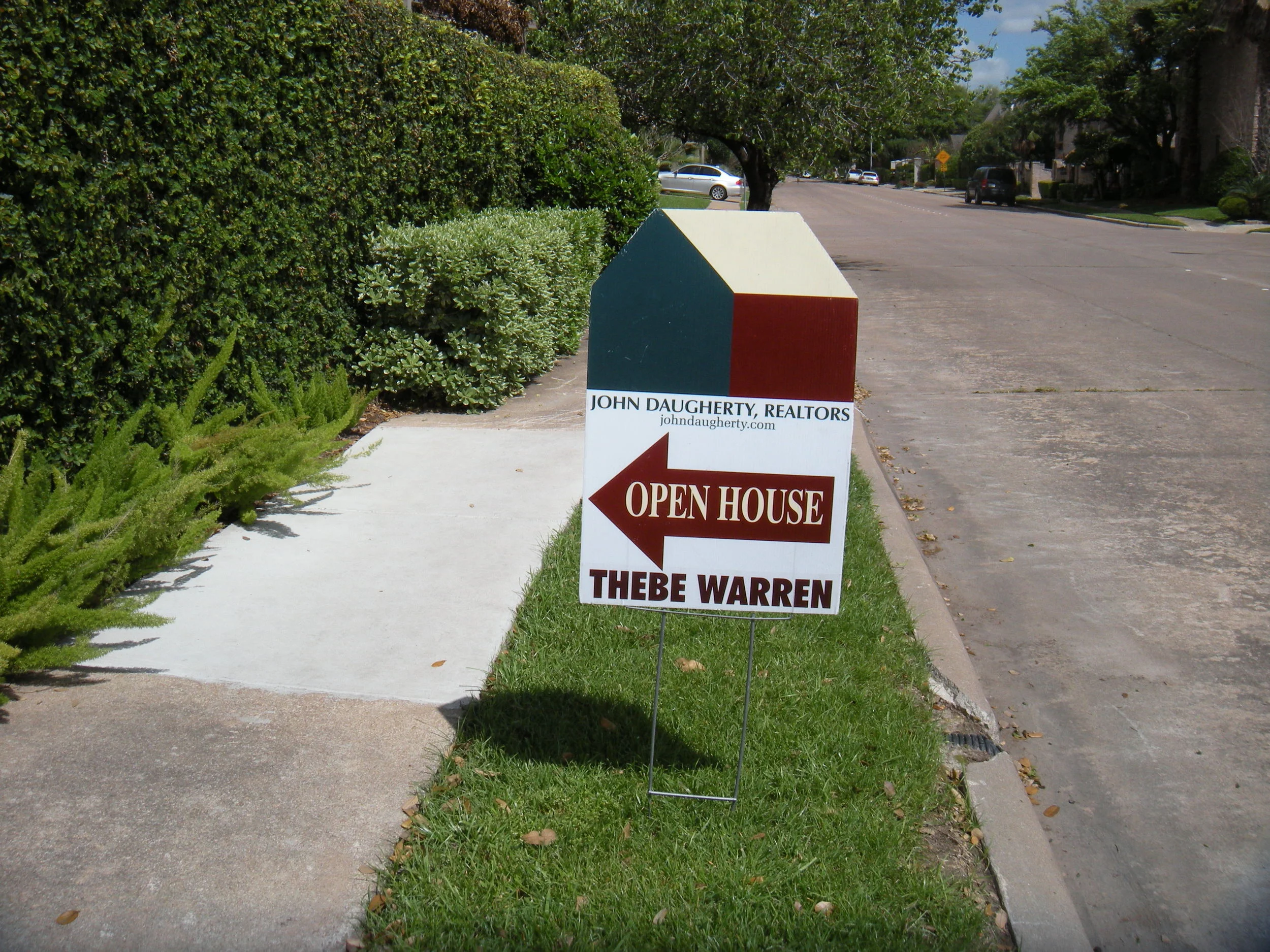
This is Thebe, our realtor and neighbor.  The recently purchased mailbox is going to make people long to receive their mail at this house.  

This is Thebe, our realtor and neighbor.  The recently purchased mailbox is going to make people long to receive their mail at this house.  

Doesn't our living room look huge with the desk and chests gone?  

Doesn't our living room look huge with the desk and chests gone?  

Our neighbor's house looks like a slum and there's not a thing we can do about it.  

Our neighbor's house looks like a slum and there's not a thing we can do about it.  

An open house is an ineffectual tool designed to make the realtor feel empowered.  

An open house is an ineffectual tool designed to make the realtor feel empowered.  

The Land of Pick-up Trucks

When Sam was here a couple of weeks ago, he and I made the trip to Marble Falls so he could see the new house.  On I-10, between Houston and Katy, traffic piled up and we skipped over into the HOV lane, which to me seems insane because, to my way of thinking, two people don’t signify high occupancy.  Sam waved his hand at the packed lanes to the right and made a comment about how inefficient it was that all those massive SUV’s and pick-up trucks were only transporting a single person.  It wasn’t a criticism of Texas, or, for that matter, the US; it was more an observation about the differences in cultures and the pull between what people say and what they do.  In Texas we don’t litter, we recycle with zealous dedication, and we’re prudent with our electricity; but no amount of conservation is worth sharing our traveling space with strangers, and we don’t think a thing about getting into an oversized SUV and driving six hours to visit a friend or shop in an outstanding store or have a night’s entertainment.  In Beijing, Sam gets around on an electric scooter, leaving the smallest footprint possible in one of the most polluted cities in the world. 

And none of this has anything to do with David and me making the drive to Marble Falls this weekend—except maybe big cars and trucks are on my mind because of the number of intimidatingly massive hauling vehicles on the highway.  Also, we came in David’s Tacoma, which, as far as trucks go, is modest, and kind of fun to drive.  And the question of efficiency and waste is also on my mind because the reason for this brief trip is that we got billed for ten thousand gallons of water during a month when we were only here for three days.  The disappearance of the massive amount of water is a mystery we’d like to solve.  Unfortunately, our only idea is that maybe the watering system was left on, which, we ascertain within minutes of our arrival, simply was not the case. 

So far, our biggest issue in the Marble Falls house is water.  It’s been raining heavily in the area and the water’s flowing right at us.  We didn’t think about it when we bought the house, but we occupy the lowest lot in the estate.  We’re not flooded, but we realize it could happen.  David’s first landscaping project will be to shore up the drainage gully on the right side of the property.  Waste and water disposal is also a question mark with us.  As city dwellers, we’ve always depended on the municipal system to carry off our poop, but here it apparently hangs in a tank that’s buried somewhere in the back, and we’re kind of freaked out about that.  Also, the well water we’re using leaves spots on our drinking glasses and the shower glass—and to that end, there’s a mysterious contraption in the garage that doesn’t seem to be working—a water-softener that we have no idea how to maintain.  And the kitchen sink has a leak.  So.  A lot to be seen to, which means many trips to Home Depot and David’s favorite new store, The Tractor Supply. 

On one of our jaunts to Home Depot (four in a twenty-four hour period) we stop by the Whataburger for a quick lunch.  The lady at the next table is telling two friends about her recent visit to her new grandchild.

“He don’t look like no one in the family,” she says, befuddled, waving her phone in front of their eyes so they can see for themselves. 

I gasp in horror. 

“What?” David asks mildly, looking around to see what’s got me appalled this time.  I’m always gasping in horror at something. 

“Did you hear what that woman said?  Did she not go to school?”

“You’re going to be busy if you’re going to be the grammar police around here.”

“Somebody has to do it.  Southern doesn’t mean ignorant.”

Maybe it’s a trade-off.  Though the vernacular may jar, the manners are charming.  People who aren’t even waiting on us or trying to sell us something address us, and each other, as ma’am and sir.  They hold doors open when they see someone approaching.  Drivers let other drivers in rather than cut them off. 

We work around the house for a couple of days, poisoning fire ants, putting coasters on the bottom of the bar stools, and making lists of future projects.  On Saturday we visit various businesses, researching internet access and cable v satellite.  On Sunday we pack up and head back to Houston.  We’re dismayed that we still have no idea why we were billed for all that water. 

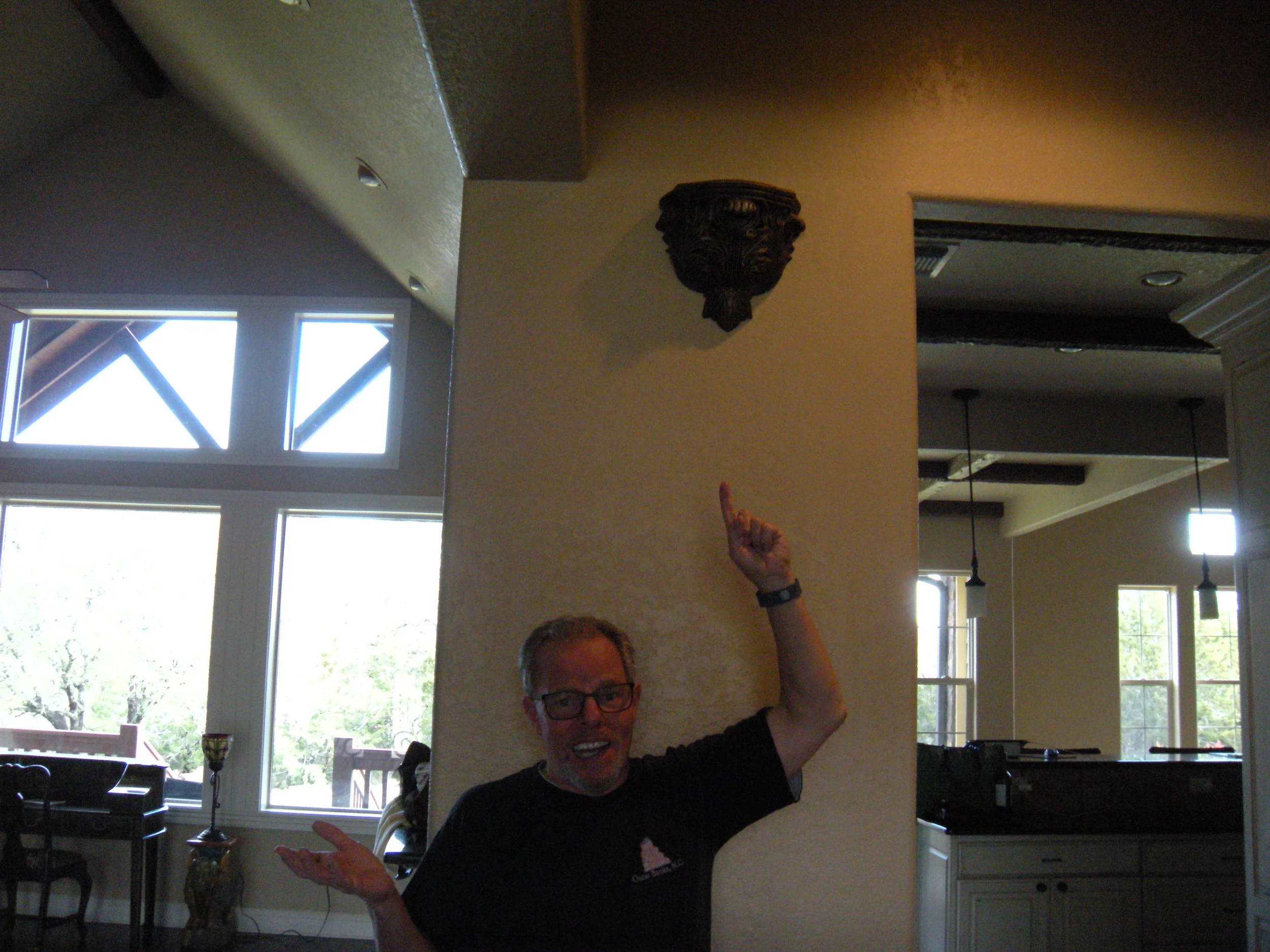
What's the point of this fixture?  Do we set a candle or plant on it?  It's set really high on the wall.  

What's the point of this fixture?  Do we set a candle or plant on it?  It's set really high on the wall.  

Here's David underneath it to give it scale.  

Here's David underneath it to give it scale.  

They'll soon know David by name.  

They'll soon know David by name.  

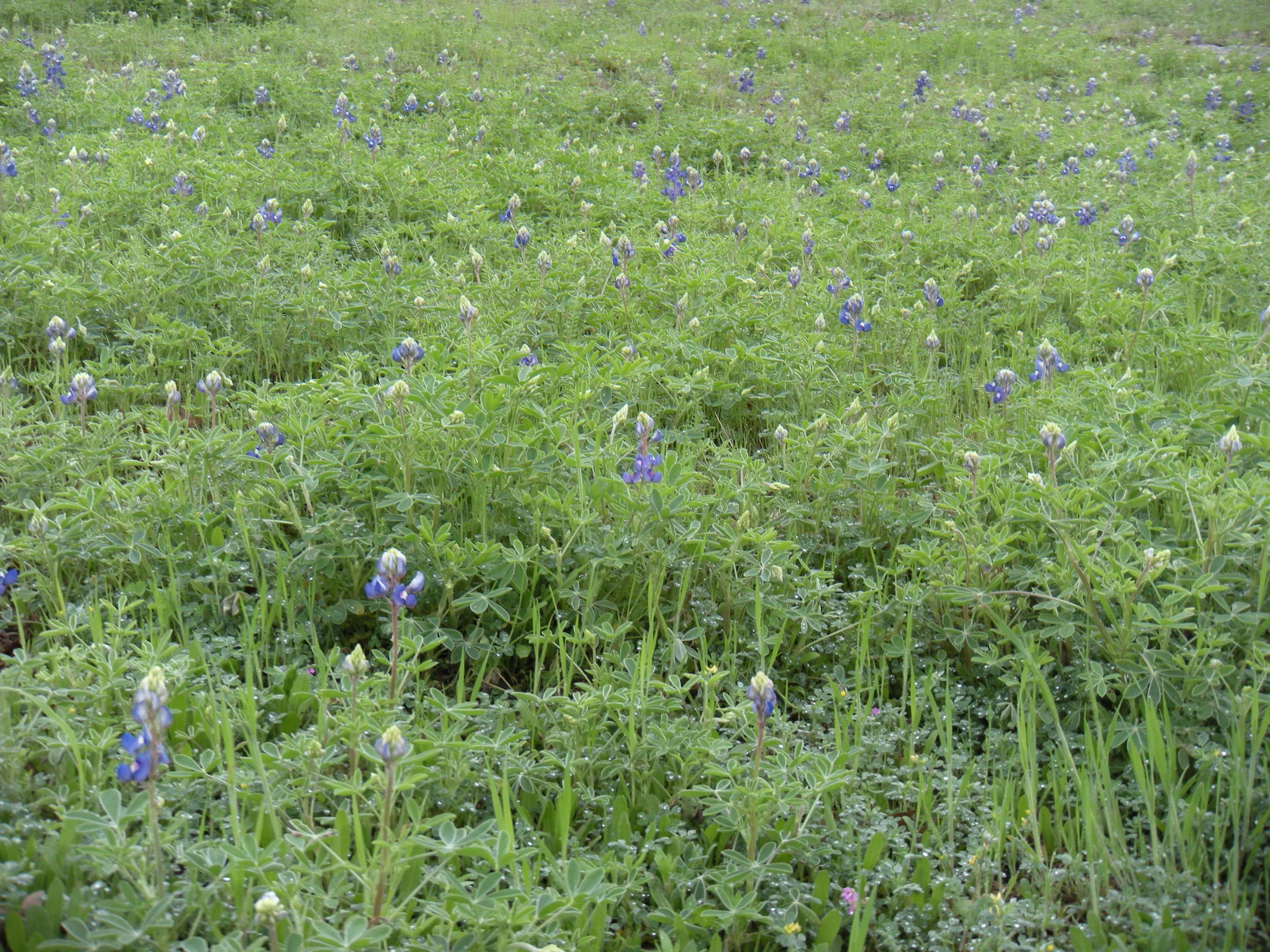
Bluebonnets and Indian paintbrush blanket the land adjacent to the highway between Columbus and Lake LBJ.  It's a colorful show.   

Bluebonnets and Indian paintbrush blanket the land adjacent to the highway between Columbus and Lake LBJ.  It's a colorful show.   

Voss and Westheimer

In the driver’s seat in the first car at the traffic light a man grows uncomfortable.  Because he thought it was cooler than it is, he put on too many layers—a T-shirt, sweater, and wool jacket.  And though the air conditioning’s on, the sun beams harshly on the dashboard, causing waves of heat to rise and dry the air.  The man’s forehead begins to sweat.  His face is getting hot; and he’s on his way to meet a client, who will surely be put off by the red cheeks and clammy hands.

The driver unfastens his seatbelt, intending to remove the heavy jacket, which he stupidly zipped himself into earlier, swaddling his torso as though scared of freezing to death between his front door and his car.  He unzips, but the back of the jacket is stuck beneath his hip so that the fabric has no give when he tries to work his shoulder out. 

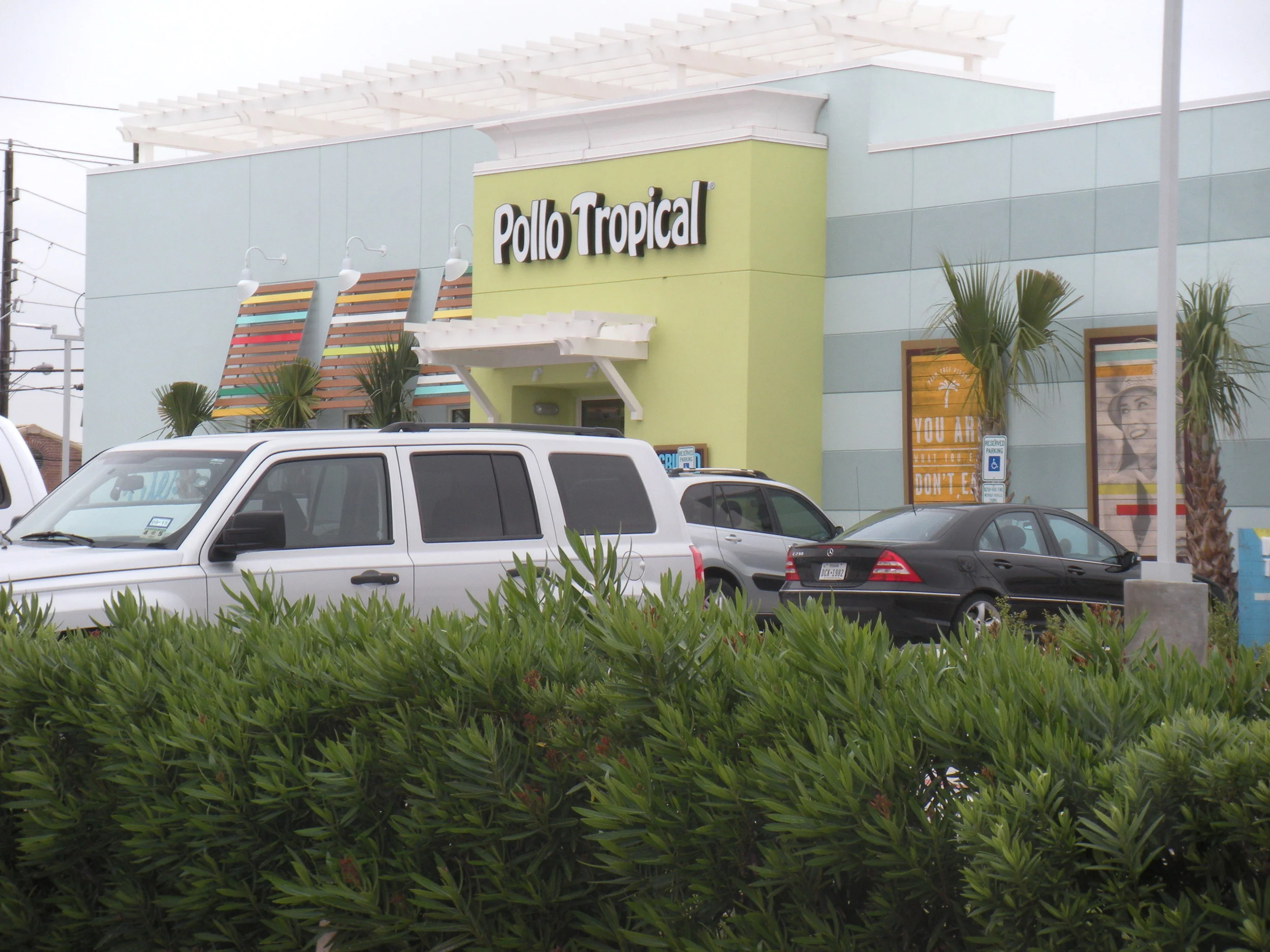
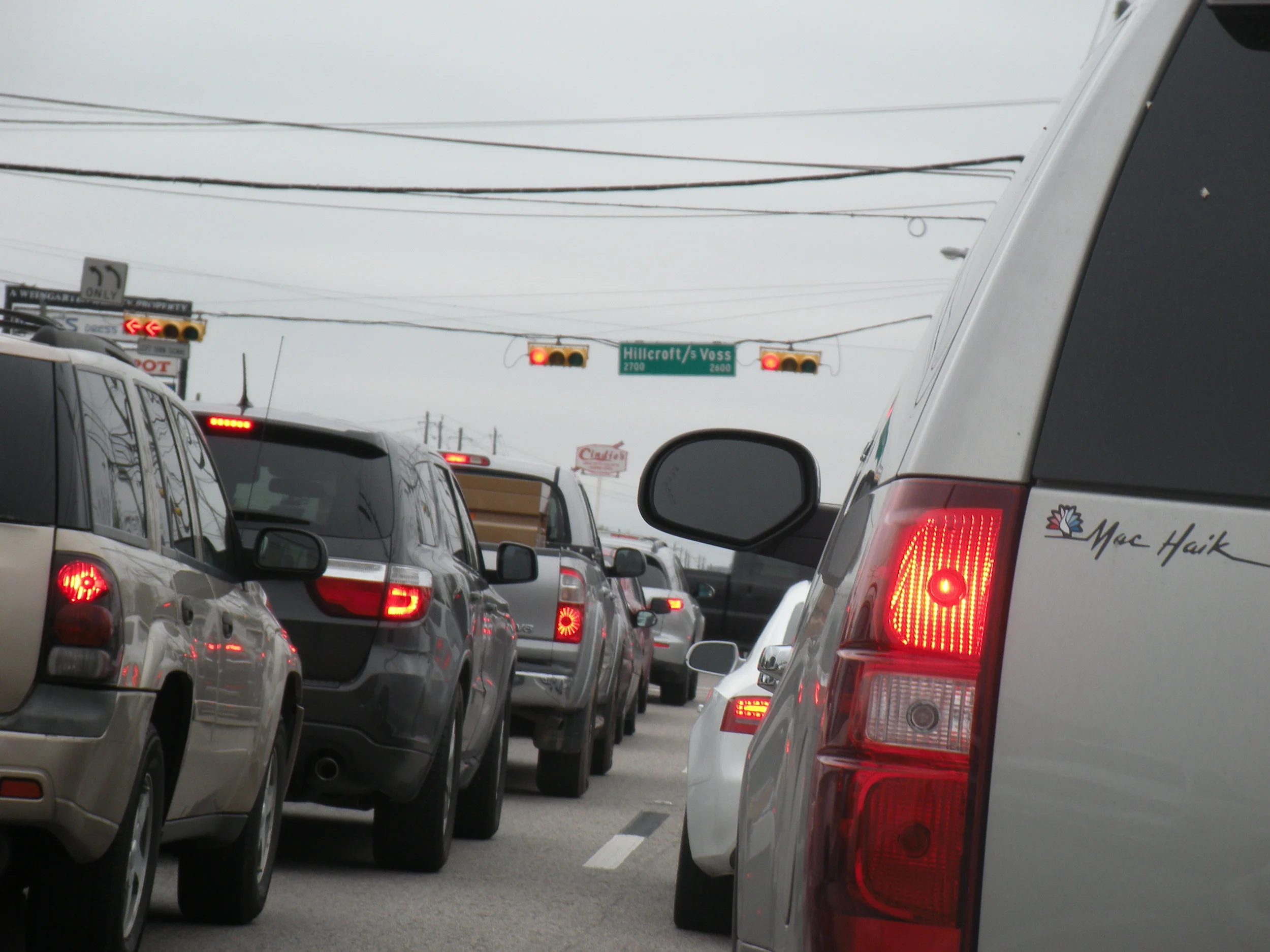
The light’s a long one.  It’s been red forever.  Voss and Westheimer.  It’s always been a busy intersection, made busier by the opening of the new chicken place on the corner, Pollo Tropical.  Also, the population of Houston has risen drastically in the last few years, which means more cars on the streets.  Where once there would have been seven or eight cars in the lane behind him, now there are fifteen or more. 

He struggles with the sleeve; and the wiggling and pulling makes him hotter.  Unable to stand it a second longer, desperate to shed the impermeable wool, he opens the door and leaps out.  It’ll only take a second.

Jenny is in the car behind him.  Relaxed and enjoying a podcast—Stories of Caprock, a humorous and quirky tale about an urbexing addict—she’s shocked to see the man in front of her emerge from his car.  This is something that, in her experience, simply is not allowed.  As a rule, she is sensible and tolerant, though admittedly impatient when it comes to people acting like idiots. 

The light turns green.  The man who’s out of his car doesn’t realize this because he’s focused on getting the weight off his back, the heat off his shoulders. 

The cuff at his wrist is snagged on his watch.   

The sound of a car horn fills the air, startling him.  He looks up from his fight with the jacket.  The woman behind him is honking.  Her face is a mask of rage as she screams and alternates between gesturing wildly and pounding on her horn. 

And then the person in the car behind her begins to honk, also.  There is a tap on his shoulder.  He turns to see a raggedly clad man holding a cardboard sign.  The sign reads, “Jobless.  Hungry.  Sick.  No Money.  Help me.”  

“Green light,” the scruffy man says.  “Back in car.  Drive.”  Only the man has a speech impediment of some sort, or maybe some kind of brain damage, and his words come out more like,  “Rite, dak in car.  Ire,” which confuses the jacket-removing man even more. 

“I have no money for you today,” the discombobulated driver says.  Shaking his head, distracted by all the inexplicable racket (and then this homeless guy coming so close—actually touching him!) he finally works the jacket off, tosses it toward the passenger seat—but his sunglasses, tucked into the breast pocket, go flying.  They land on the other side of the door, just out of reach, so that he must circle the door in order to retrieve them.  He grabs them up, circles, and folds himself into the driver’s seat.  And all the while, horns split the air. 

Only then does he notice that the light has turned green.  He accelerates through the intersection; and trailing him, riding his bumper, Jenny pushes through on the last few seconds of the yellow light.  Behind her, though by this time the light is clearly red, five other cars go through. 

Jamaican chicken--haven't tried it yet, but am mildly curious.  

Jamaican chicken--haven't tried it yet, but am mildly curious.  

Too many cars.

Too many cars.