Adventures with Sam

Sam and his girlfriend, Julia, are on vacation in China when the concierge at their hotel points out that Sam’s visa has expired.  Sam’s been focused on his fledgling business lately, so his lack of awareness is understandable.  But the bare fact is, when your Chinese visa runs out, you have to get out of the country quickly—no returning to the apartment in Beijing to gather your things, no time to scramble around for the best price on flights—and the new visa must come from your home country. 

So, Sam’s in Houston with us for a couple of weeks.  What does he do, as he waits for the bureaucrats to process his application?  He catches up with old friends.  He spends hours we-chatting with his business partner in Beijing about branding, marketing, and financing.  And when he’s not talking to his partner, he’s talking to Julia.  He is vexed that he must spend time away from his life. 

This imposed visit is beneficial to me because it gives him a chance to go through his stuff.  His possessions left from childhood have been in our care for nine years—books, souvenirs, collections, clothes, outdated gaming systems, old computers—and I’ve been obsessing over how much longer we’re expected to store it or haul it from place to place.  So while he’s here, he sorts and chooses, saving or discarding.  He enjoys the process and will take a few of his favorite items with him.  When he leaves I’ll have an impressive load to haul to Goodwill.  Yay! 

Another consideration, not so wonderful for Sam, is that David and I moved the day bed and trundle to the Marble Falls house a month ago so we’d have beds up there, so Sam’s only slumber option is a sleeping bag on the floor of what was once, for the couple of months between when we moved from Kuwait to the time he went off to Columbia, his bedroom. 

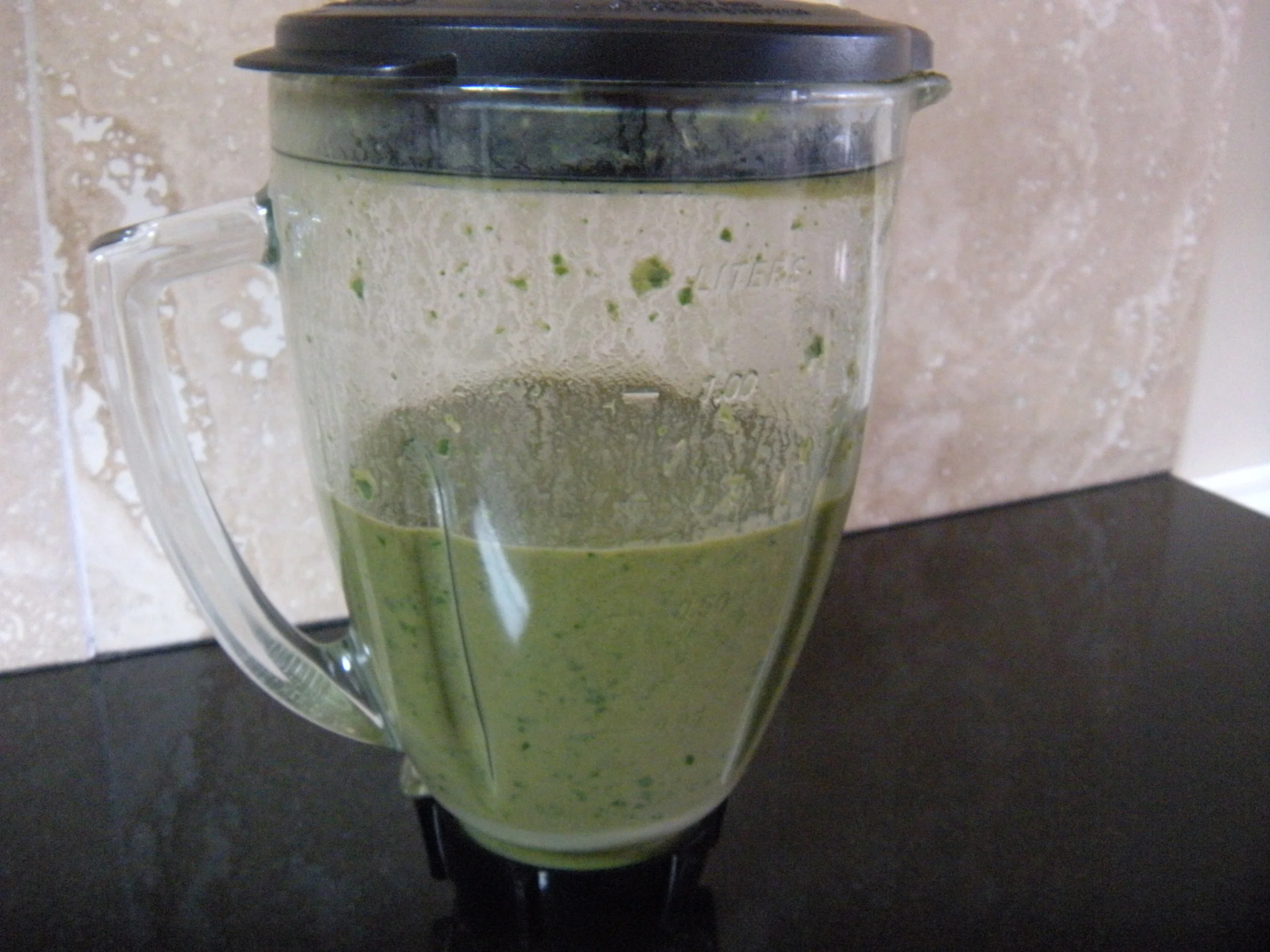
It’s funny how, when grown kids return for a visit, they bring new and surprising notions with them.  Sam crams kale, an avocado, and chocolate protein powder into a blender, and calls it a breakfast smoothie.  I’m somewhat repelled, but he happily slurps it down, expounding on the health benefits.  He’s done research. 

Also, he’s appalled when I set my shoes on the kitchen counter. 

“The counter where you cook and eat,” he points out.

“Yes,” I say.  “The counter that I clean with sterilizing wipes several times a day.”

“You walk through human mucous spit and dog pee and bird droppings in those shoes.”  He has a point.

“I guess you wouldn’t want to set your shoes on the counter in Beijing, where it’s human pee on the sidewalks and no one cleans their counters,” I tell him.  “But everybody knows that the sidewalks of Houston are the most pristine in the world.”

He looks around our house and decides that there are many items that we need, but do not have.  At Costco he talks me into buying an Apple TV, which, some may know, but I don't, is not a TV, but a device.  (Why call something a TV when it’s actually a box that hooks up to your TV?  That’s just misleading.)  I also have a new microphone, which I’ll soon be using (as advised by Sam) in the podcasts of some of my novels.  (Thanks for helping me set this up, Sam.)  Also at Costco, he fills the cart with coffee and toothbrush heads, vitamins, allergy medication, and an external hard drive, raving about how much these items would cost in China, if they were even available.  He accompanies me to the new HEB, which has just opened around the corner from our house.  The abundance thrills him and he says he plans to come back and just wander the aisles, a rapacious tourist in a copious world.

On Tuesday morning after he’s been here two weeks, I drive him to the airport and hug him good-bye.  Enforced and spontaneous as it was, it was great seeing him.  Good-bye, Sam.  Safe travels. 
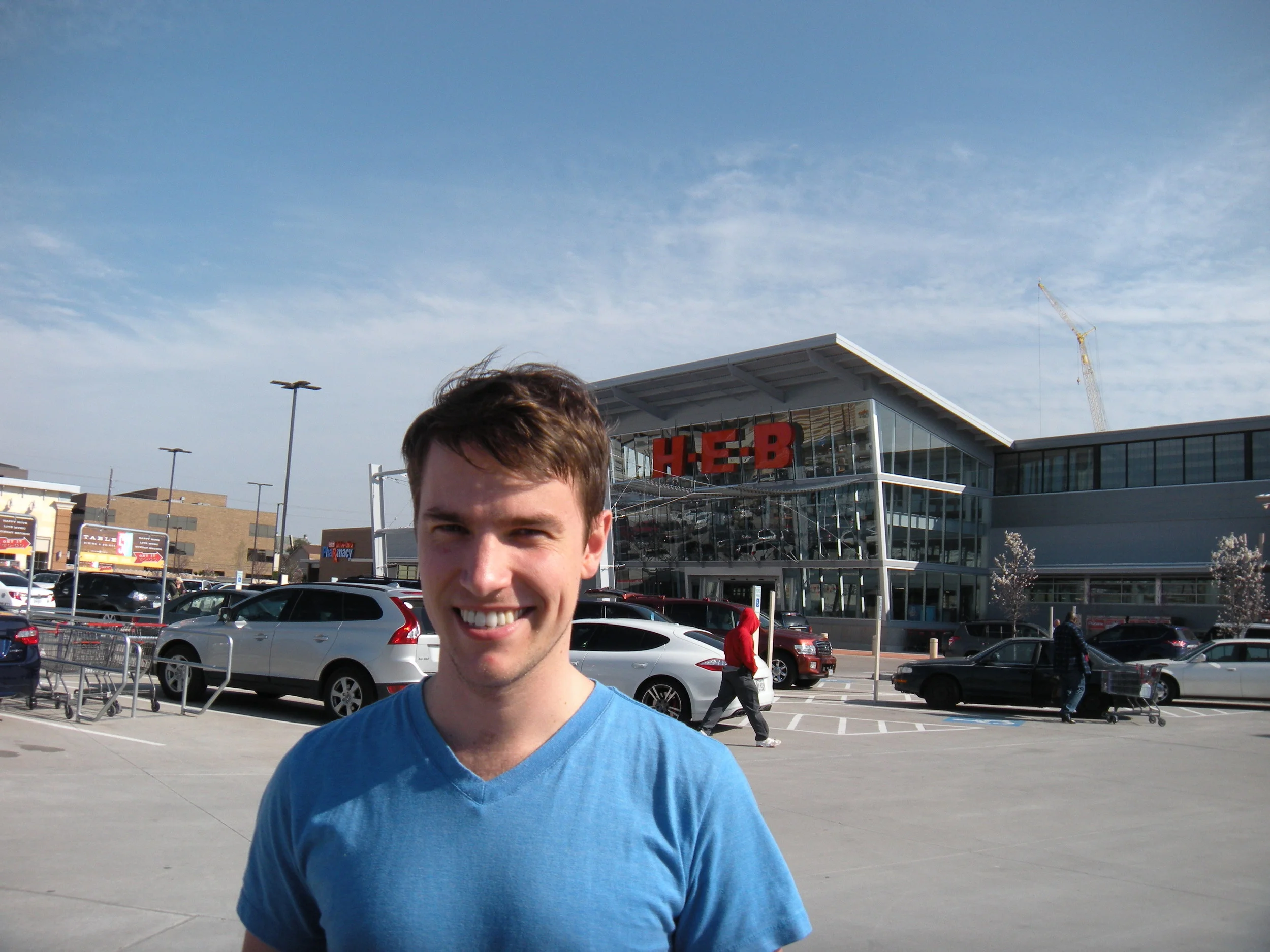
Sam at the new HEB.
Sam at the new HEB.

Sam's goopy breakfast.
Sam's goopy breakfast.

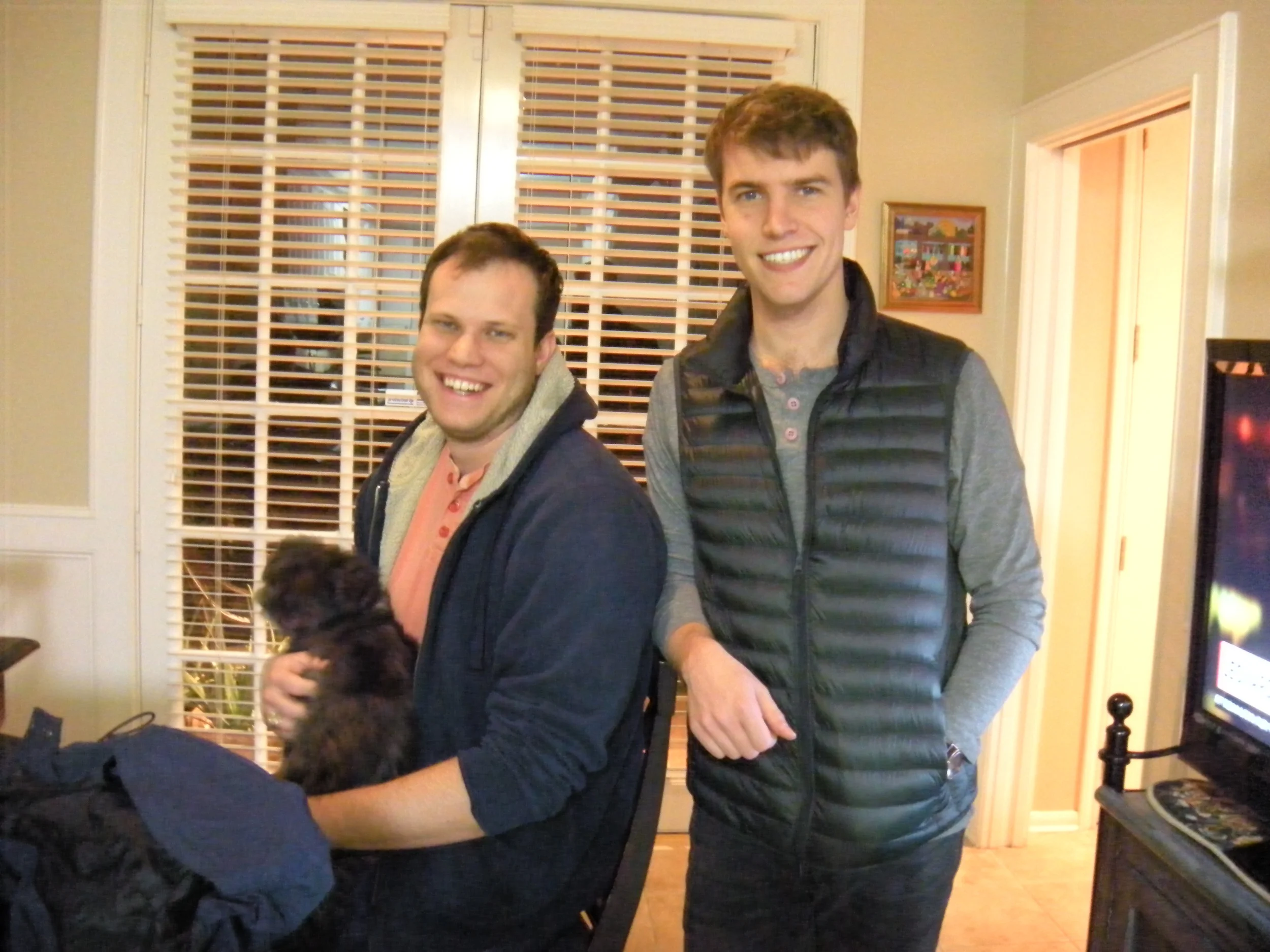
Sam and his friend, Jimmy.  
Sam and his friend, Jimmy.  

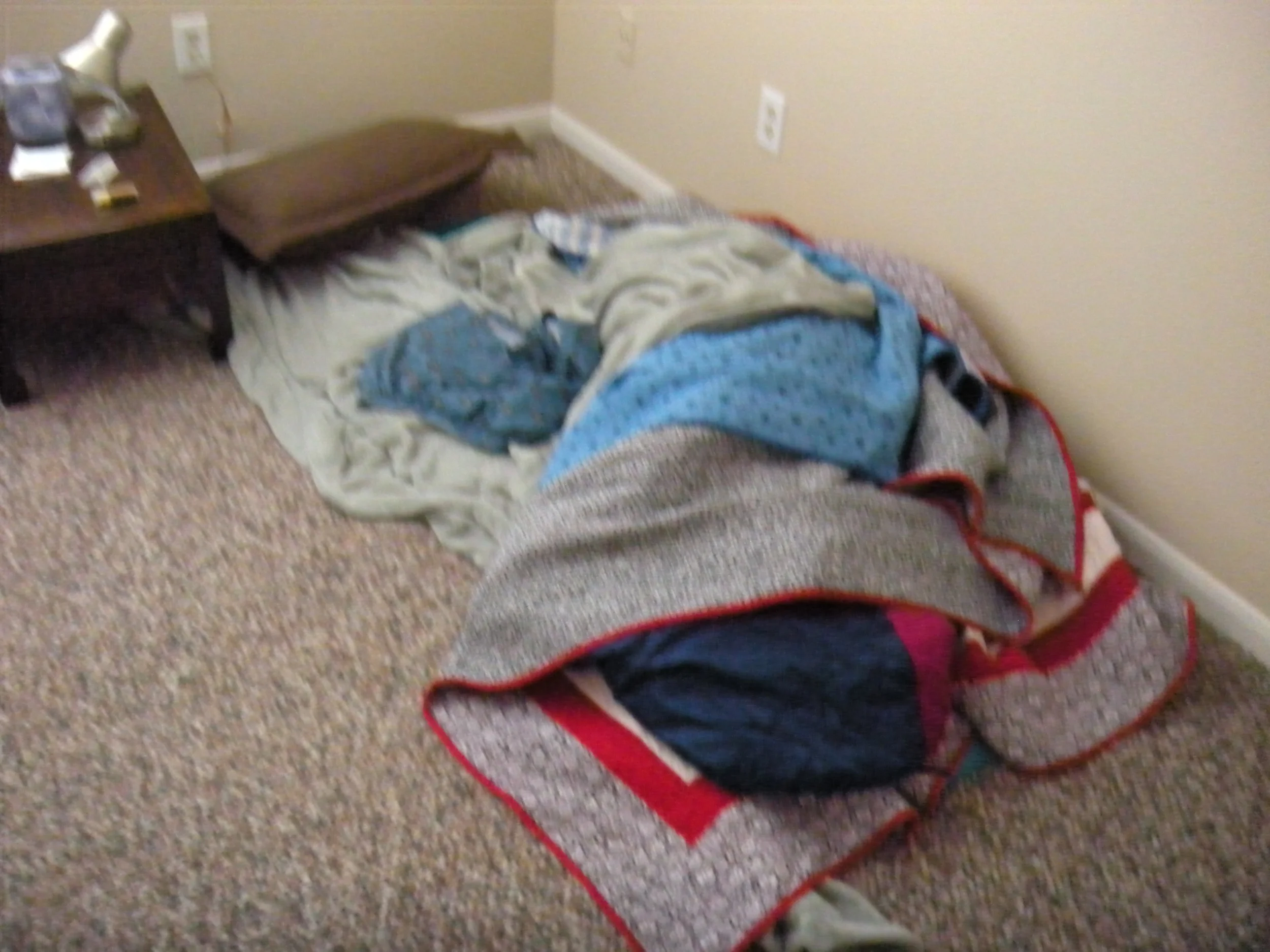
I felt bad that this is where Sam had to sleep for two weeks--but probably not as bad as Sam.  

I felt bad that this is where Sam had to sleep for two weeks--but probably not as bad as Sam.  
Bonding with the House

Armed with five rolls of shelf paper, I travel to the house we recently purchased just outside Marble Falls.  In addition to tasking myself with lining shelves and drawers, I will take delivery of the new dishwasher, an LG with the most wondrous drawer near the top, intended for those hard-to-place oversized spatulas and spoons.  See, this is the good thing about moving so often—every time I come back to the states I get all new appliances.

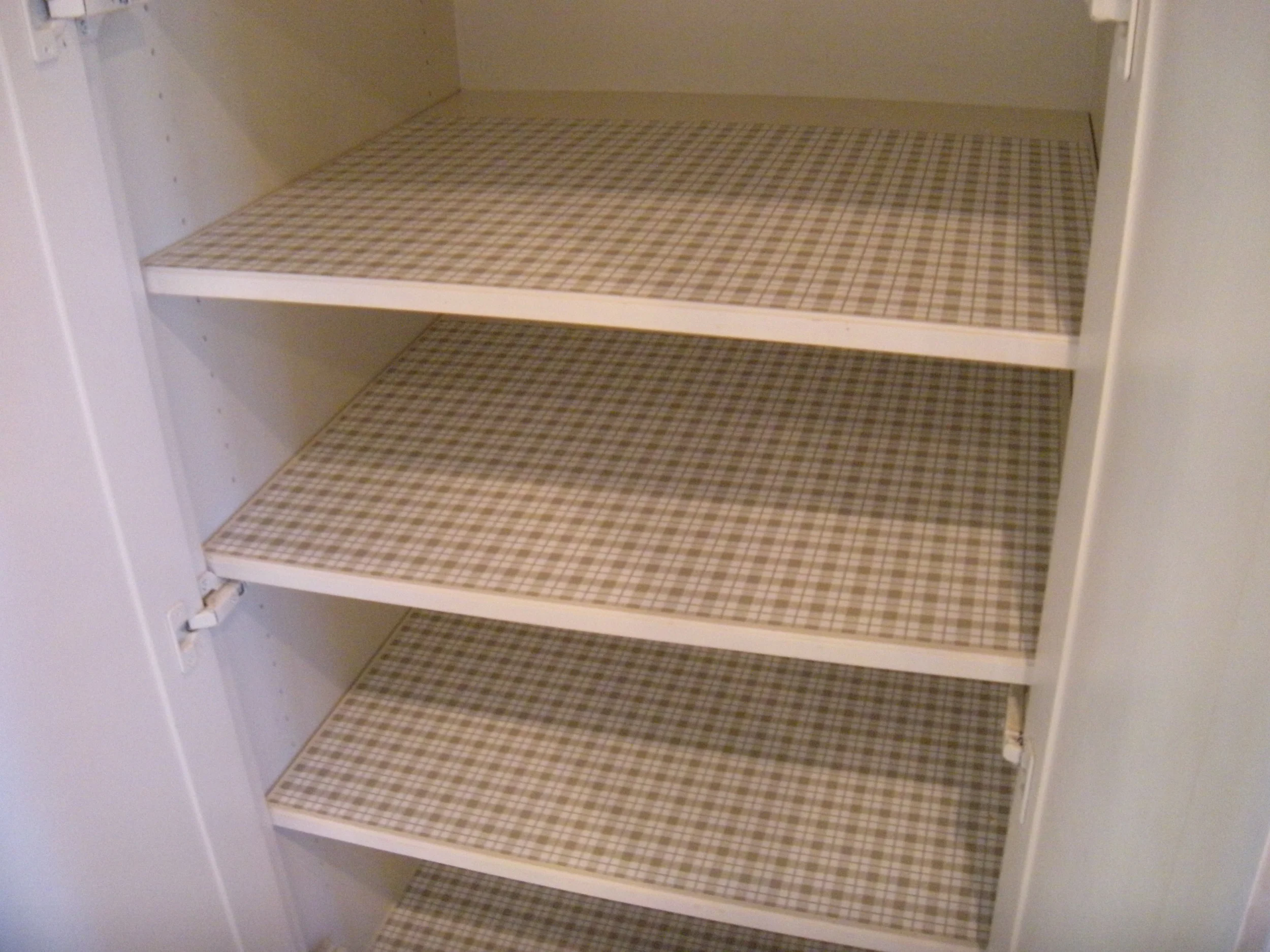
Lining shelves is an important bonding ritual.  In the kitchen, I turn on the radio and spend hours measuring, cutting, removing the backing, and pressing the contact paper into drawers and shelves.  Five rolls line eighteen drawers and forty-two shelves, and the whole time I’m working, I’m thinking about what I will put in this drawer and what will be most convenient on that shelf.  By the time I finish the kitchen, I’ll know where the potholders will go, the spices, the silverware, the glassware. 

After a while the radio becomes annoying.  Every station is an oldie station.  Every other song is an Eagles song.  Every advertisement has something to do with health and personal maintenance.  It makes me feel like everybody from Llano to Burnet is the same age with the same issues.  An incongruous and disconcerting advertisement from the local Baptist church—“Guns are a part of life here in Texas,” a woman says.  “So we need to make sure our children understand how to handle them properly.”  She continues, giving the time and place where parents can take their children for gun lessons. 

How will I, an emphatic proponent of gun control, fit into this part of the world?  I shouldn’t be so naïve.  People hunt.  There are all kinds of creatures that need killing—deer and wild hogs for instance.  I need to adjust to the notion that there’s a difference between country guns and city guns. 

I turn the radio off and work in silence.  When I want a break I sit on the back porch.  Several vultures perch on the T-shaped pole just beyond our property line.  Their gazes are menacing, their posture hunched.  Thugs. 

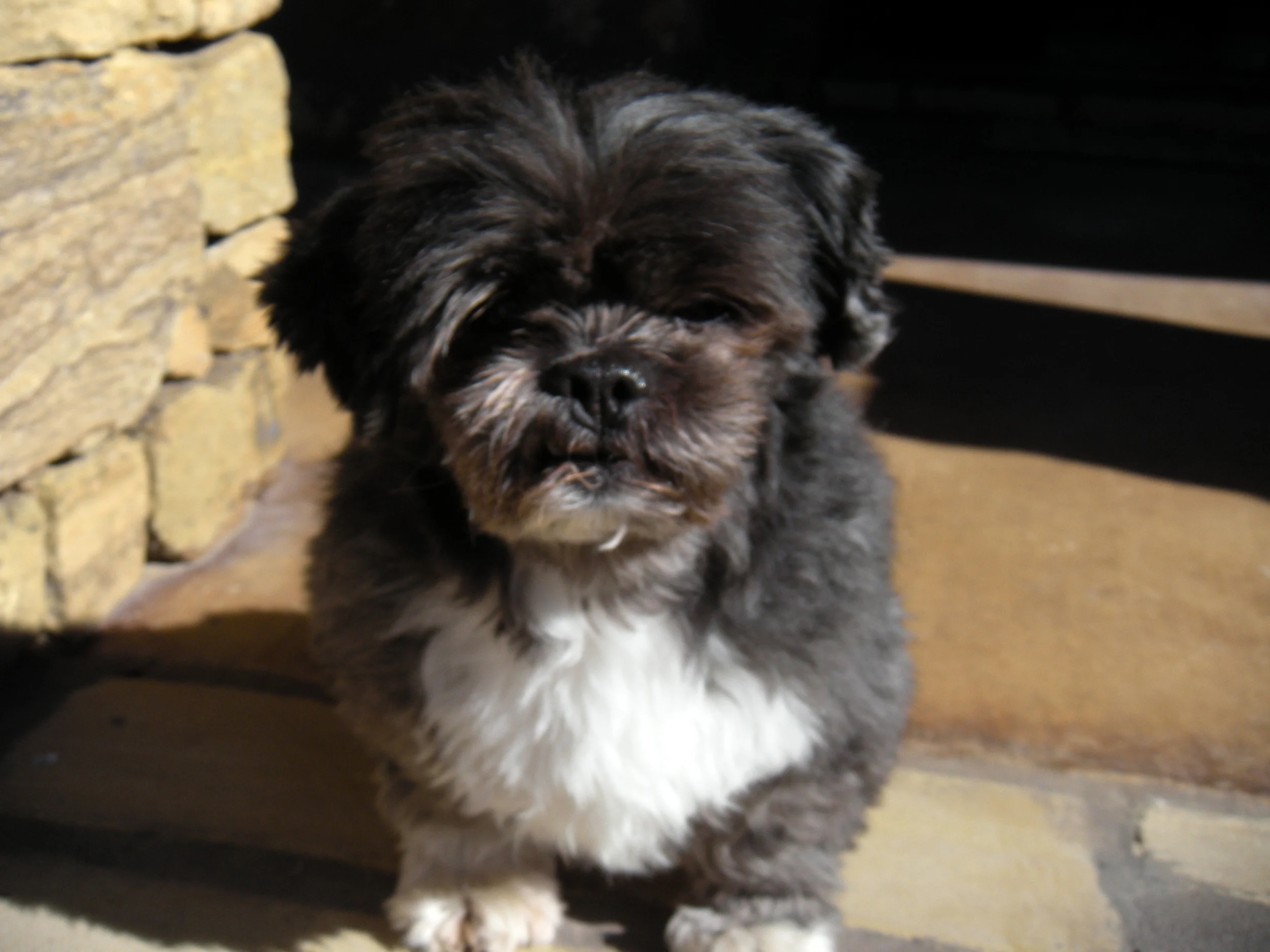
The first time I brought my little dog, Trip, up here, he was confused and timid.  This time he’s curious about the exotic poop instead of frightened by it.  Judging from the number of dead skunks on the shoulder of the highway between Austin and here, and the way the stink wafts around the area, I decide it’s wise to be on my guard as far as Trip is concerned. 

“It’s skunk season, is why,” the dishwasher installer tells me.  “After skunk season you won’t see nearly as many of them.”

Skunks have a season.  I never knew.

The two men who deliver the dishwasher are delightful rednecks with full beards, shaved heads, and colorful arms.  In nasal drawls, they call me ma’am, compliment the house, and offer all kinds of information about living in the hill country.  For instance, we shouldn’t kill or get rid of rat snakes because they keep the area clear of mice and rattlers.  And we should switch leach fields for the septic tank every few months; and the current leach field will always have the greenest grass, a tidbit that makes me uncomfortable. 

After they’re gone, and after I’ve gone through my five rolls—all of the kitchen and half the laundry room—I pack up my toothbrush and clothes, the dog’s bed and his food bowls, and we head back to Houston. 

Just south of Bastrop, Leo Kottke is interrupted by a call from—this is a surprise—my mail delivery person in Marble Falls.  Introducing herself as Wanda, she asks if I want her to drop the mail key by my house.  I tell her that I’m no longer in town and might not be back for a month or so, at which point she offers to hold the mail and the key at the post office.  Calling to offer a favor—what a nice thing to do.  How astonishingly accommodating.  I thank her and say good-bye.

I have no idea who delivers my mail in Houston, but I know who delivers it in Marble Falls.  I know her by name.  Wanda. 

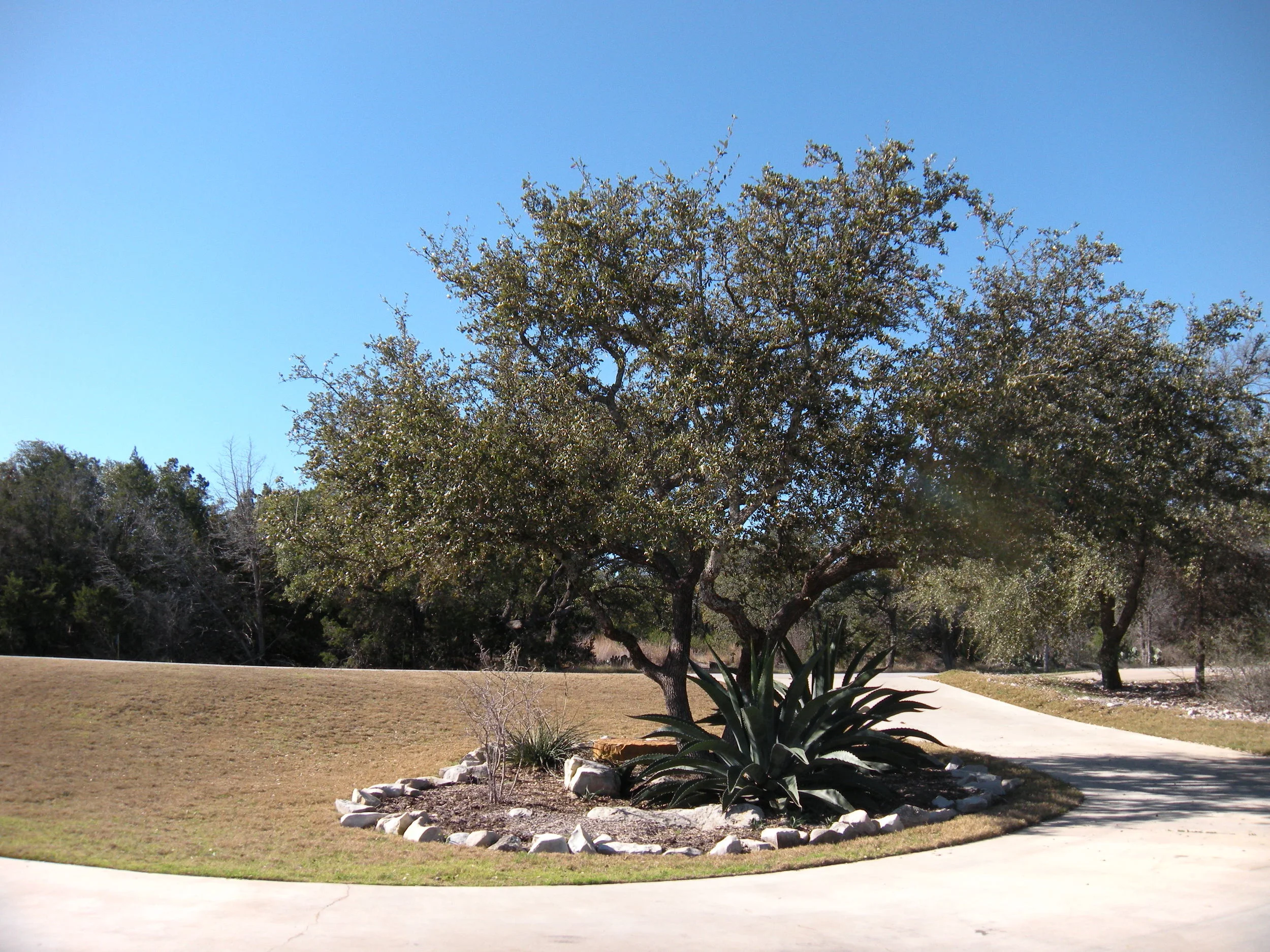
Our new house.  

Our new house.  

View from our front porch.  

View from our front porch.  

Shelf paper makes the shelves look clean and ready to receive stuff.  

Shelf paper makes the shelves look clean and ready to receive stuff.  

Trip wanted to have his picture taken on the front porch.  

Trip wanted to have his picture taken on the front porch.  

The Houston Boat Show

“Someday we’ll buy a boat,” Wayne tells his wife, Lulu.  “So we should go to the Houston Boat Show and see what’s what.”

“Is this the same someday when we’re going to visit Alaska?  The same one where we buy an RV?”  If so, it may never happen.  Lulu’s feelings are mixed.  She enjoys adventures, but Alaska is cold and has bears.  And the thought of being the slowest fattest vehicle on the road isn’t pleasant.

It’s Saturday afternoon, the second day of the boat show.  The parking at Reliant Center costs ten dollars, and they park a half-mile away. 

“The further away, the better,” she tells him.  She wants to put more numbers on her Fitbit.   She loves living in a world where she gets credit for every step. 

In Houston there are exhibitions for everything—home and garden, cars, brides, quilts, weight loss, guns, scrapbooks, taxidermy, photography, starving artists, agriculture, technology.  

Admission is ten dollars apiece.  Wayne and Lulu know nothing about boats, except that there sure are a lot of them in this massive hall, everything from yachts to skiffs. 

“We want something that’ll pull skiers,” Wayne says as he wanders between the mid-sized boats. 

“We know no one who skis,” she tells him. 

“It should also accommodate fishing.”

“Do you want to sleep on this nonexistent boat, or is it just for use during the day?”

“Hmm.  A good question.  We really don’t know what we want.  This’ll take a lot of thought.”  Years and years of thought.

“If we lived near water of any kind, I could take this seriously.”  She’s heard there’s a lake about an hour away, near Fayetteville, but she’s never been there.  Where would they keep a boat?  They can’t even fit both their cars into the garage. 

Ramps give access to the biggest boats.  People are lined up outside a massive yacht.  Lulu and Wayne fall in at the end of the queue.  Behind them, more join.  A crowd in front, a crowd pressing at their backs.  The air is hot and stagnant as they shuffle up the ramp, across the deck, and inside.  On a boat the kitchen’s called a galley.  The toilet’s a head.  The left side is port, and the right is starboard.  If someday ever comes, a whole new vocabulary will be involved.  Shiny chrome, white with blue trim, this boat’s so big it's even got an area on the main deck for car storage.  It also has two interior lounge areas, a media room, several cabins, and a sauna, not to mention the galley, smaller than expected, engineered for efficiency.   

They leave the yacht and tromp up and down the aisles.  Lulu glances at her Fitbit at the end of every aisle.  There are hundreds of booths dedicated to boat paraphernalia—fishing equipment, navigation systems, ropes for every occasion, nets, dive suits, buckets.  Wayne stops at every table to sign up for whatever give-away’s on offer.

Lulu’s not happy when she discovers that he’s been putting her email address on all the forms. 

“What’s the big deal?” he asks.  “Just delete them.”

“If it’s not a big deal, why didn’t you use your own address?”

They stop and watch a demonstration of cookware that’s made specifically with boat safety in mind.  Wayne fills out the form to win a free set of the cookware, which concerns Lulu because Wayne’s lucky when it comes to this kind of thing.  He often wins random drawings.  Where will they keep the cookware they don’t need for the boat they don’t have? 

“What’re you trying to win now?”  She’s getting cranky from all this stopping to fill out forms for free stuff.

“The door prize.”  She can tell by the way he says it that he has no idea what the door prize is.  He stuffs the slip of paper into the big box on the table. 

And that's how Lulu and Wayne, who know nothing about boating or fishing, come to possess a thousand dollar gift card for fishing tackle, a complete set of cookware that is meant to be used on a boat, several buckets, a big container of tie-downs, and a pair of water skis. 

Finishers

Many of the people who run in the Houston Marathon do so in support of charities.  Curtis’s company, Reed Smith, is encouraging their people to run on behalf of Dress for Success, which is puzzling for Curtis.  He knows no women who do not know how to dress themselves.  He’s literal, this son of ours. 

“It’s about empowering women,” I tell him. 

“Women should do what we men do,” he says.  “When men want power, we take it.”

He’s not really a jerk.  He says this to get a rise out of me.  But in reality, what does he know about under-privileged women and their clothing issues?  For his whole life he’s seen me emerge from my bedroom appropriately clothed.  As far as I know, he’s never even had a conversation with a single mother who receives no child-support, and has little education and no skills.  A lecture takes shape in my head, but I shrink it down, fold it, and put it in a box. 

Usually on Sunday mornings we go to church.  This is a big Sunday for David because his usher nametag is going to be in.  He’ll pin it on and the people he hands programs to will know he’s legitimate, and not just some guy who likes to stand at the door and say hello to fellow Methodists.  But Curtis is running in the Houston Marathon; well, he’s running the half-marathon portion, and we decide that, instead of going to church, we’ll make our way downtown and cheer for him and the other finishers.

Curtis hasn’t trained for this long  run.  To his way of thinking, it’s just a couple of regular runs back-to-back.  This lack of concern is worrying, but not overwhelmingly so.  It’s nice that he’s an adult now, and responsible for his own unpreparedness. 

David and I drive north on 59, and take the Louisiana exit into downtown, parking several blocks away from the finish line in order to get some steps on our Fitbits.  In the last twelve years or so downtown Houston has been transformed from a depressed and creepy quarter populated by spooks, into a thriving square mile buzzing with trendy restaurants, coffee houses, blues bars, theaters, and professional sports arenas.  The odd thing, though, is that, in the midst of all this prosperous bustle, the homeless still sit raggedly on curbs and at bus stops.  They lurk in corners and doorways, gazing blankly.  They stumble drunkenly in and out of the fast-paced crowd.  They, too, are part of Houston. 

Our timing couldn’t be better.  We find a perfect position at the barrier near the finish line just as the frontrunners are entering the home stretch.  Music with a strong beat vibrates through the air and an announcer’s enthusiastic voice goes on and on and on.  Cheering people line the barrier as, in the street, the athletes pound by, or scuff by, depending on their level of stamina.  Some of them look comfortable.  Quite a few are fighting their way through obvious fatigue, struggling to put one foot in front of the other.

There’s limping, cramping, swooning, vomiting, huffing.  Some run on tip-toe, as though they have spikes in their heels.  They wish they could run without their feet touching the ground.  Running injured—is this insane or admirable?  The consequence of long distance running that most awakens my sympathy is bleeding nipples.  Several men, only one woman that I see, have twin streaks of red drawn down the fronts of their shirts.  Youch! 

A boy of about fifteen, blind, is helped along by two friends.  Imagine that. 

The street is divided, with the half-marathoners in one lane, and the full-marathoners in the other.  The announcer kicks his excitement up a notch as the long-distance runners grow closer.

“Ethiopians!” he thunders.  “It’s the Ethiopians!  Ethiopians!  Go Ethiopians!”

Curtis told us to watch for him around the two-hour mark, and so we look expectantly toward the oncoming cluster of runners.  He’s right in the middle, cruising along, feeling no pain.  We holler, “Yay, Curtis! Go, Curtis!” but he doesn’t hear us.  He’s got his earphones in.  His lips move as he sings whatever song is filling his head.  Curtis, in the zone.  He’s young and strong.  Of course he didn’t need to train.  

And now what?  Wouldn't say no to brunch and a bloody Mary.  

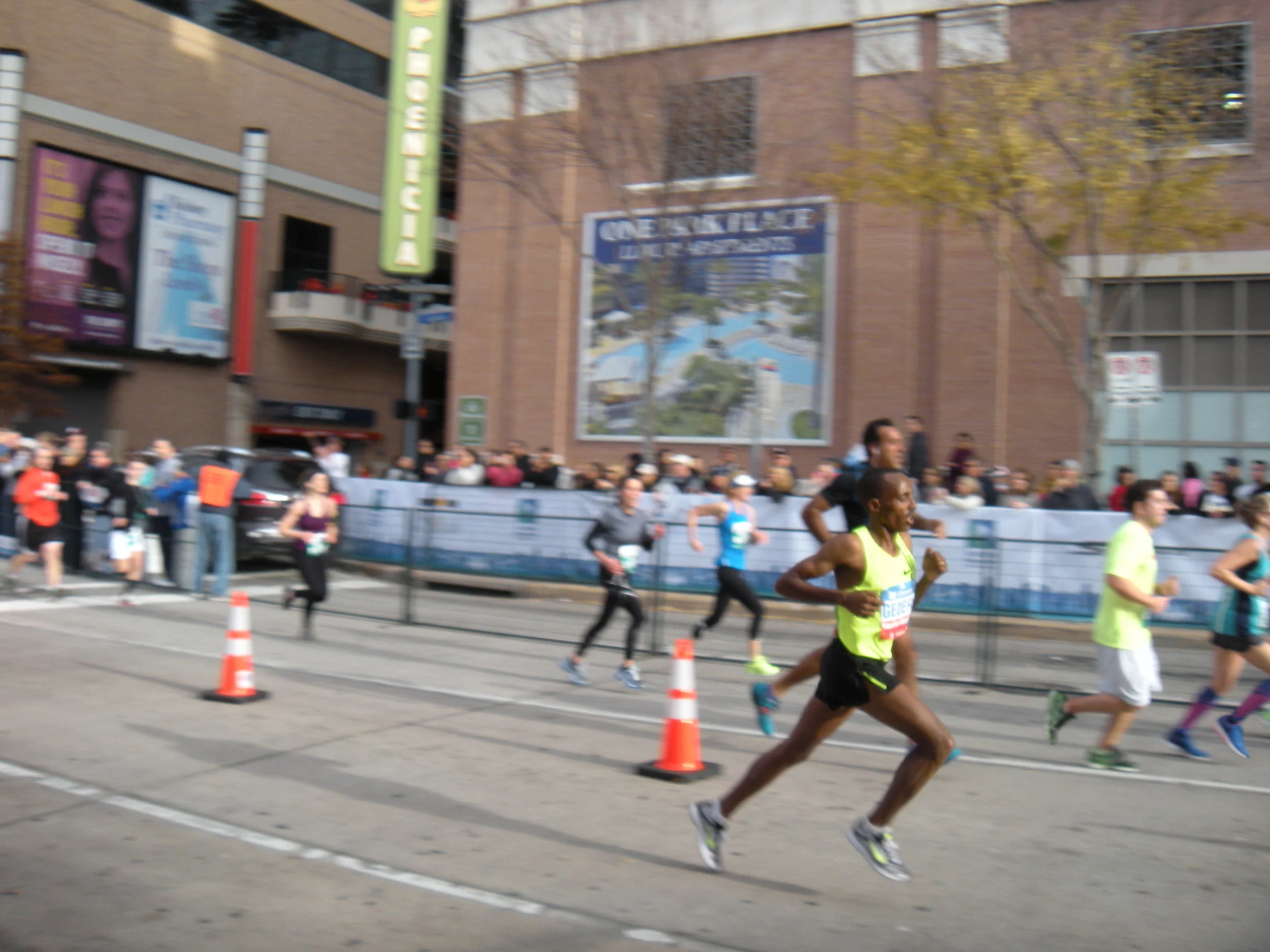
Birhanu Gidefa, winner of the Houston Marathon.  Look at that stride.  Go Ethiopia!

Birhanu Gidefa, winner of the Houston Marathon.  Look at that stride.  Go Ethiopia!

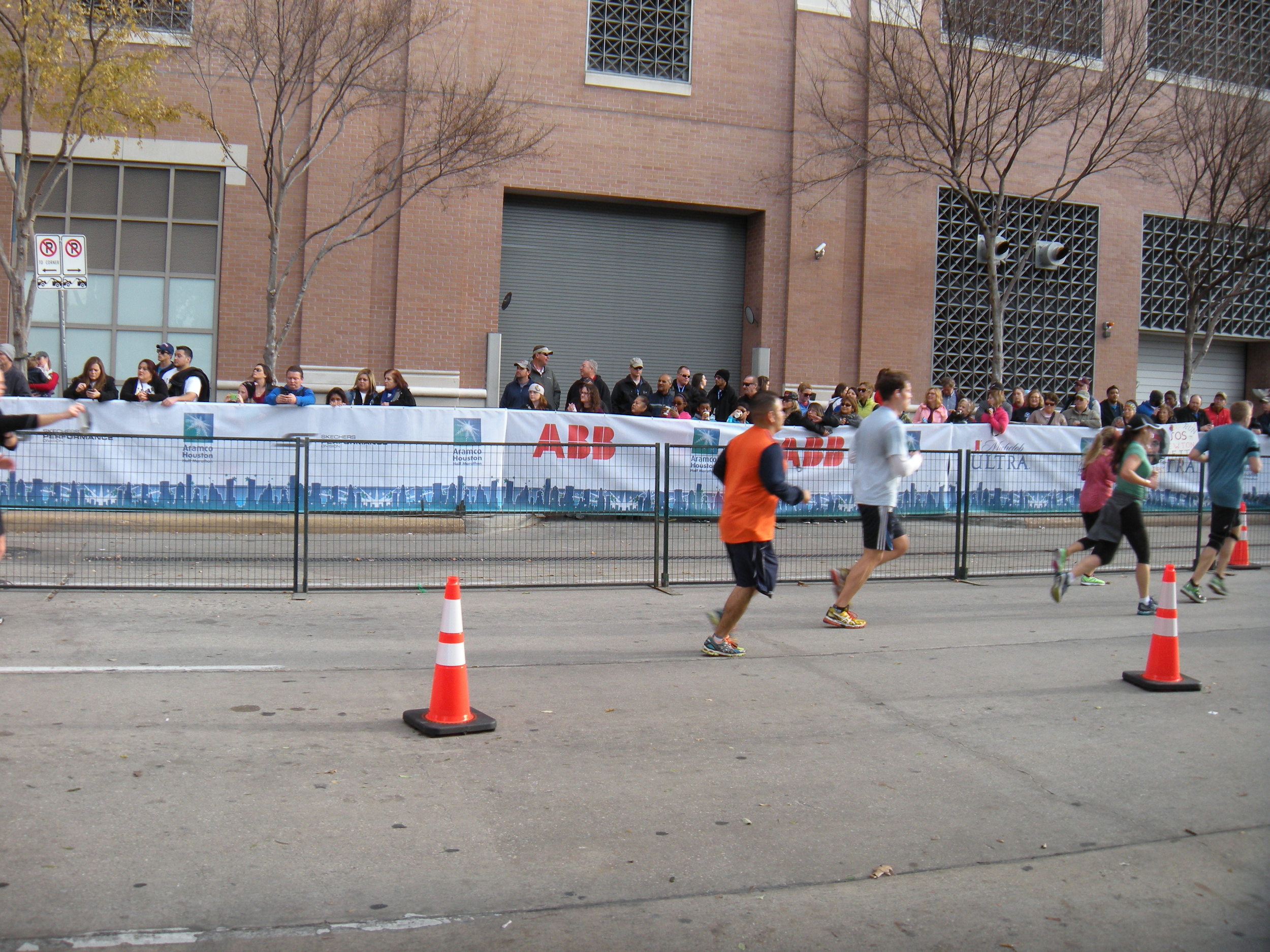
Curtis is in the while long-sleeves, dark shorts.  Go Curtis! 

Curtis is in the while long-sleeves, dark shorts.  Go Curtis! 

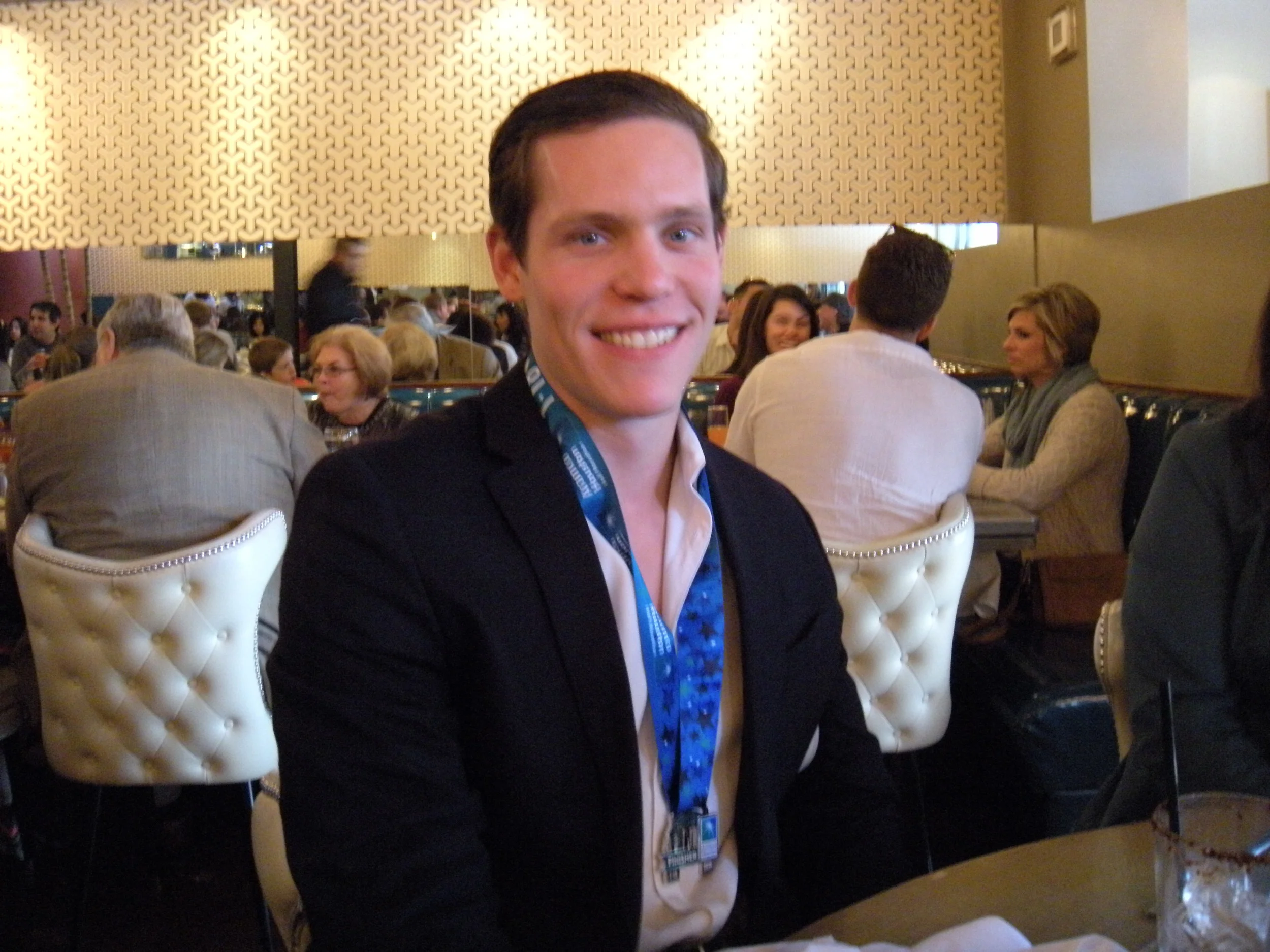
Curtis at brunch wearing his "Finisher" medal.  

Curtis at brunch wearing his "Finisher" medal.  

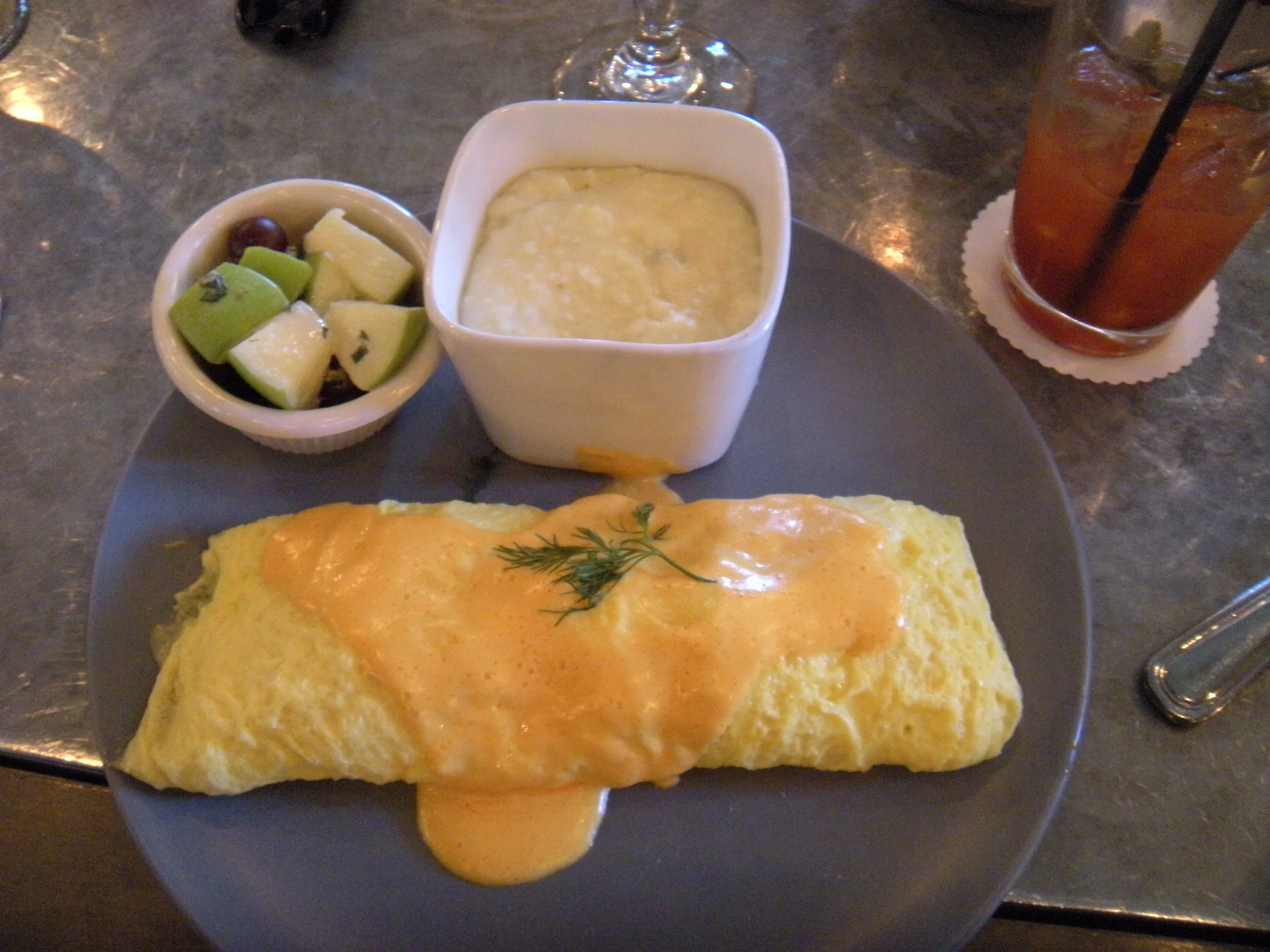
Brunch:  salmon omelette, fruit, cheesy grits--and of course, what's left of the bloody Mary.  

Brunch:  salmon omelette, fruit, cheesy grits--and of course, what's left of the bloody Mary.