Problem Solved

My neighbor loses her keys and her glasses and her paperwork.  She stops mid-step, wondering where she’s going.  Thoughts pop into her head, then fly right out.  She’s distracted because her dog barks all the time, day and night.  She cannot think about anything else.  The dog is right there at the gate in front of her house, barking at everything that passes.  The neighbor across the street has threatened to call the police.  One evening a man stood outside her gate, yelling at the dog to SHUT UP! QUIT BARKING!—causing the dog’s vocalizations to grow more frantic, more strident.  Shouting at a barking dog.  How stupid. 

“What, oh what can I do?” my neighbor asks me, anxiety causing her to droop.  She knows the barking is obnoxious.  She talks to everyone about it.  She’s recently draped plastic sheeting across the gate so he can’t see out; she hopes this will put a stop to the barking.  It’s an ineffective and unattractive solution. 

“That taped-up tarp isn’t serving any purpose whatsoever,” I tell her.  “Maybe you should replace that iron gate with a heavy door.” 

“Oh, I don’t want to do that.”

“It’d be costly,” I say, understanding why she wouldn’t want to spend the money. 

“I just wish people weren’t so mean.” 

Yes, an annoying pet tends to make people mean.  He’s a nice dog, friendly and sleek, with long brown hair and golden eyes.  I’ve heard of grinning dogs, and this is one of them.  When I go near, his lips slide up over his teeth and he pushes his head beneath my hand.  His whole backside swings from side to side.  He’s a charmer, albeit, an earsplitting one.  

“An electronic collar?”  I hope not.  I hate those things. 

“That’s what the lady around the corner uses on her little dogs.  When they try to bark it sounds like they’re dying.”

Our houses are close.  We share a connected wall.  The place where her dog keeps watch is no more than twenty feet from our bedroom window.  Woof! Woof! Woof! Woof! Woof! Woof! Woof! Woof! Woof! Woof! Woof! Woof! Woof! Woof! Woof!

“I’m so worried that I can’t sleep at night,” she says. 

Is the dog neglected?  In the strictest sense, no.  He’s given food and water.  He has a place to relieve himself.  She lets him in at night.  But he’s alone, outside, all day, every day, even on weekends—and during that time he barks.  And sometimes she works long hours, so his raucous solitude often stretches into the evening. 

“I want to be a good neighbor,” she says.  “I don’t know what to do.”

On Tuesday afternoon a man comes to fix the refrigerator's water dispenser.  Before ringing my bell, he pops next door to exchange pleasantries with the barking dog.  When he arrives at my house, he says, “That dog’s not happy in that tiny yard.  He’s lonely and bored.” 

 “You want him?”  I stole a dog once—Gretta, an elegant red Doberman.  I’ve got no problem with someone stealing a dog, especially if they’re offering the dog a better life. 

“Really?  I’ll take him off her hands, yeah.”

“Okay,” I say.

After he’s through with the refrigerator, we go next door.  I open the gate and the dog springs out.  He’s so happy!  He dances around our legs for a few minutes, grinning and bumping our calves with his swinging backside.  The repairman bends down to the dog’s level, frames the dog’s face with his hands, and gazes into his new pet’s eyes.  The dog calms.

“Come on, big fella!”  He leads the dog to his truck and opens the passenger door.  The dog leaps into the seat, settles in, and views the street regally from his elevated perch.  The guy tells me thanks, then gets in his truck and drives away. 

My neighbor whined and whined, but did nothing. 

Jen Waldo, accessory to dog theft. 

Problem solved.
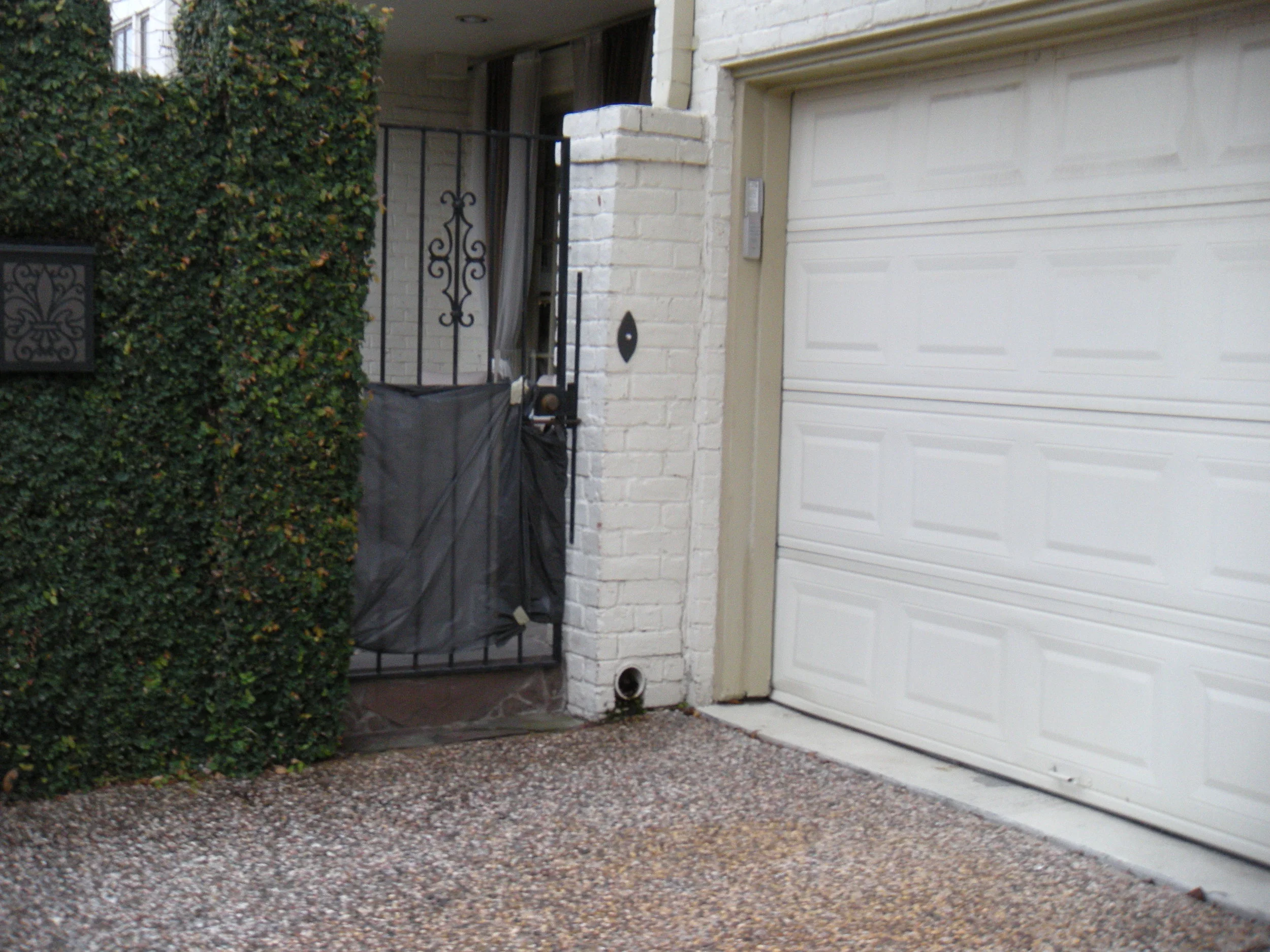
Though the dog is gone, the taped-up plastic sheeting remains.  Tacky, right?  

Though the dog is gone, the taped-up plastic sheeting remains.  Tacky, right?  

For those who haven't seen it in person, this is my new purse, which David got me for Christmas.  Isn't it beautiful?  
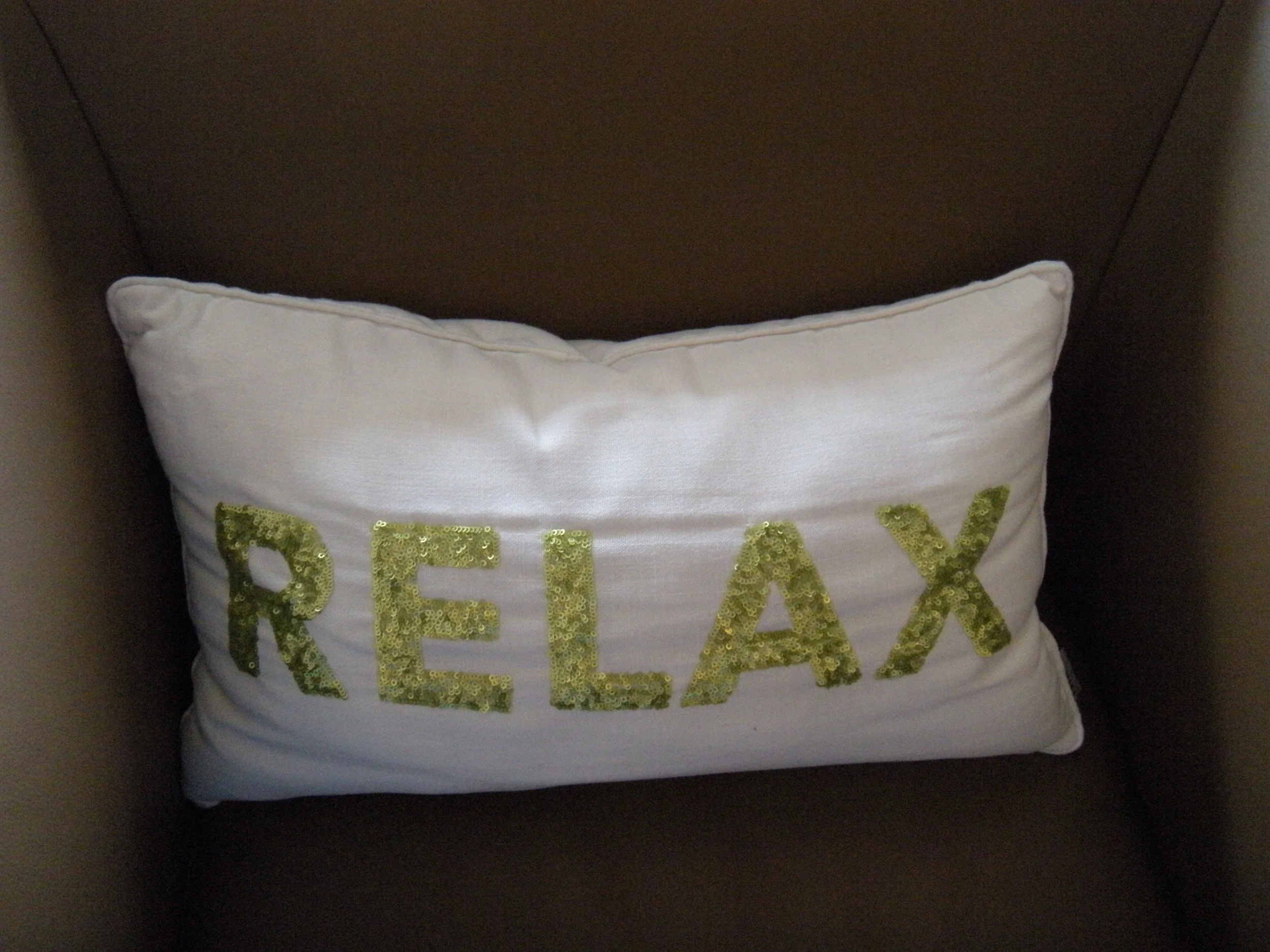
For those who haven't seen it in person, this is my new purse, which David got me for Christmas.  Isn't it beautiful?  

Do You Spa?

David bought me a facial at a nearby spa—Hand and Stone—for Christmas.  Facials vary and I have no idea what to expect, though I’ve heard good things about this place.  While in Singapore, I got in the habit of purchasing expensive spa treatments cheaply from Groupon.  Some were impressive; others, not so much.  I remember one facial in particular that made me look ten years younger.  I raved for weeks.  Another time—and the recollection causes me to shudder in horror—the woman repeatedly dragged my skin down my face until I expected to look like an old hound dog when she was through with me.  

I approach the front desk of Hand and Stone tentatively.  Facials can be creepy, what with the getting undressed in a strange place, and the way the esthetician (their pretentious word, not mine) hovers beside my head, making tiny scrapes and knocks and mysterious swishing noises—and with my eyes closed, how do I know what she’s doing? 

The young woman at the counter greets me.  Her name’s Briana.  She’s amused when I pull out my camera and ask if I can take her picture for my blog.  My esthetician, Anita, arrives and leads me through the door and down a dark hallway.  This contrived sense of otherworldliness—dim light, confusing corridors, wavering candles—is a trait all these places have in common.  Anita addresses me over her shoulder as we progress through the maze.  Her voice is soft and accented, eastern European would be my guess.  She talks so quickly that I’m unable to catch her words as they sweep past. 

“Could you speak louder?” I ask.  “I don’t hear well.”  This is what I always say to people who mumble, though in actuality my hearing’s fine.  She ignores my request, turns into a treatment room, and issues garbled instructions, which I don’t understand. 

I ask her if I can take her picture for my blog.  She says no, and I decide that I don’t like her.  She is the “stone” referred to in the spa title.  She leaves and I get out of my clothes and into the provided wrap, then I adjust myself beneath the blanket.  She returns, asks if I’m comfortable, and begins.

With gentle fingers, she cleanses my face—and then she attacks it!  Her forceful fast fingers work my skin up, up, up.  She hates my sagging jawline as much as I do!  She is seriously rearranging the deep composition of my face.  I suspect that, when I get out of here, I will once again have defined cheeks.  She presses the creases of my forehead, demanding that they flatten out.  She moves flesh to my temples and holds it there, disciplining it—stay here!  In my head, I’m cheering her on—pull it up, girl, pull it up!  I feel the shifting of the fatty tissue and muscles beneath my dermis.  I decide that I like her after all. 

I catch a whiff of her breath.  She’s a smoker.  I don’t care.  She can blow her nasty breath all over me as long as she keeps moving my face upward. 

The music is annoying, a mystical tuneless arrangement that’s meant to evoke thoughts of running with wolves on a windy night—but what it really does is make me wonder if the person who composes this crap is proud of his or her work.  This generic music is another characteristic common to all spas, which is too bad, because there’s an infinite amount of beautiful music in the world; yet here I am, unable to escape, with this dreck assaulting my ears and mind. 

Usually when I have a facial the esthetician slips out at some point, leaving me alone to absorb whatever nutrients or chemicals have been applied—but Anita never leaves me.  When it’s time for my face to spend twenty minutes slathered in collagen, she moves to my feet, exfoliates, massages, and moisturizes.  My face and my feet!  Oh Boy! 

Eventually this lovely event comes to an end.  Anita thanks me and leaves the room.  I arise and don my clothes.  Taking up the handheld mirror, I examine my face.  Skin smoother, cheeks elevated, forehead wrinkles less prominent.  Ordinarily I don’t buy the package, but at Hand and Stone, there is no contract, simply an agreement to pay a monthly fee, which is lower than the price of the treatment.  And Brianna waives the joiners’ fee.  So in a month, I will have the same facial again, only for less money. 

When I get home, Maria, the cleaning lady, is just finishing.  I pay her, tell her I’ll see her next week, and close the door on her departing back.  So, a good day.  I look better and my house is clean.  Go, me! 

This is what you're supposed to do at a spa, but somehow I never manage it.  

This is what you're supposed to do at a spa, but somehow I never manage it.  

Briana is happy to have her picture taken.  She was nice and helpful.  

Briana is happy to have her picture taken.  She was nice and helpful.  

Located at Voss and San Felipe.

Located at Voss and San Felipe.

Maria's very nice.  Her husband's an American citizen, as is her her daughter, who goes to college her in Houston

Maria's very nice.  Her husband's an American citizen, as is her her daughter, who goes to college her in Houston


Hometown

Amarillo, Texas.  I had to fight the wind for my breath from the time I was born.  The wind deposited grit in my eyes and lip corners and hair.  It swept encouragement and elegance, inspiration and creativity eastward, not even giving them time to touch down.  Bouncing tumbleweeds, bent trees, leaning fences.  Wind.  Always. 

“I don’t think they have mirrors up there,” says a friend, also from Amarillo, recently returned from a visit to her mother.  “If they did, nobody would ever leave their houses.” 

“The people in Amarillo make me feel skinny.”  This from an ample-waisted woman who was in the panhandle last year.  In Amarillo every four-cornered intersection has three fast-food restaurants.

Here’s a story that gives an idea of the Amarillo mindset:

After I graduated from Tech and returned to Amarillo, I taught private flute lessons for a while.  Private lessons are expensive, and I quickly learned that most kids, considering the cost to their parents, took the outlay lightly.  The majority of them seldom practiced.  Many times they simply didn’t show. 

I had a student, Sarah—not charming, not attractive, not outgoing, not bright.  She struggled to pass her classes.  English, science, math—all the core subjects overwhelmed her.  But, because of her dedication to her flute, she had a place in my heart.  Her lessons were a pleasure for both of us.  Playing the flute was the only thing she did well, and band gave her a place to shine.  Every other avenue offered by the school caused her anxiety, but sitting first chair in the flute section gave her confidence. 

Unfortunately, her parents’ response to her subpar classroom performance was to take her flute away.  Failed an algebra test?  No flute for a week.  Doing poorly in English?  Three days without the flute.  They handled her other infractions—a fight with her sister, slacking in her chores, smarting off to her dad—in the same way. 

I was young and inexperienced.  I had yet to learn that Amarillo minds are firmly fixed and impenetrable, impervious to any ideas other than their own.  I’d had friendly conversations with Sarah’s mother in the past, and naively thought our shallow relationship gave me the right to voice an opinion. 

“Sarah’s a good flute player,” I told Sarah’s mom.  “Is there a way to improve her grades and discipline her without taking away the thing she loves most?”

“First of all, Jenny, this is none of your business.  Secondly, she practices instead of doing her homework.”

“Maybe what she needs is tutoring in the subjects where she’s weak, instead of punishment.  Also, don’t you think she should be encouraged in the area where she excels?”

“I’m teaching her accountability.  It’s called good parenting.”

To me it seemed like her parenting technique was more about power and control than guiding and nurturing, but as she pointed out, it was none of my business. 

 The next year, Sarah’s brother became jealous because Sarah was the best in school at something.  So he put her flute in the street and it got run over.  Sarah’s mother assured me that the brother would be punished.  And, yes, I was told, they’d probably buy Sarah a new flute, as soon as she got her grades up.  Lessons suspended, obviously.  I moved to Cairo soon after.   

A few years later, when I was in Amarillo visiting my family, I ran into Sarah’s mom at the mall.

“How’s Sarah’s music going?” I asked.  Sarah would be a junior.  I had happy visions of her comfortably ensconced in her high school band, sitting at the top of the flute section, giggling through football games, surrounded by friends in uniforms with instruments in their hands. 

“Oh, she quit band years ago.”  The way she said it, I knew they'd never replaced the one that had been run over.  “She dropped out of school and is working the drive-through window at the Burger King on Western.”

“And you’re okay with that?”  I was horrified.  Sarah might not have been a genius, but she’d had some talent.  She’d had heart.     

“She’s got a job.  She’s not on drugs.  She’s not pregnant.  What more could a mother ask?”

Low expectations result in low achievement.  Was it right that working at a BK was all this mother wanted for her child?  Was it even moral?  Where did this bovine acceptance of mediocrity come from?  I blame Amarillo, where imagination and a sense of possibility are carried away by the relentless wind, only to be replaced by insular inertia.  

Amarillo in my rearview mirror.  Thank God. 


My History With Candles

Candles.  This time of year, their holy symbolism comes to mind.  A candle is light in the darkness.  It’s God on earth.  It’s the breath of the Holy Spirit.  Catholics light candles to the dead to show solidarity with the person who has died, a way of proclaiming that, in heaven or on earth, we're all in this together.    

When Resi and I were kids—I was maybe five years old—one of our parents lit a candle in the center of the kitchen table, and we all circled around and watched the dancing of the tiny flame.  This was an uncharacteristic activity, and to this day I can think of no reason for it.  Maybe the parents were trying to teach us about fire.  Resi and I were big-eyed for a few seconds, then we were just bored.  Then all of us became distracted by chores and projects, and we went our separate ways.  After a while, when someone walked back through the kitchen, the table was on fire.

Later, as a music major, I was expected to join the band sorority.  I was pulled in many directions at the time—I didn’t live on campus, had a commute to get there, and held a part-time job in another town—so I really didn’t have time to join a club.  My attitude toward the whole endeavor was pretty snarky.  And when the sorority sisters (oh, they took themselves so seriously) herded us pledges into a dark room, handed us candles, and had us swear our eternal loyalty and dedication to all things band, I got tickled.  I hadn’t participated in anything so silly since I joined Rainbow Girls.  My eyes snagged the eyes of the girl on the other side of the candle circle, and she, too, was fighting laughter.  I tried to stop, but couldn’t.  Running tears, stifled snorts, shaking shoulders.  I’d control it for a few seconds, and then it would bubble up again.  And the girl across—she was having the same issues, so we dared not let our gazes meet.  I’m sure there was an explanation in the ceremony about what the candle symbolized, but I was preoccupied. 

Years later, same kind of thing, only this time I wasn’t the one being herded into a dark arena—it was Sam and his fellow students, being told to form a half-circle on the unlit high school stage.  They were being inducted into the Spanish Honor Society.  David and I were in the audience, looking around, checking out the number of parents who turned out for this rather boring gig.  A teacher came on stage and started handing something to the kids. 

 “What is it they’re doing up there?” I asked David.

“Passing out candles.  Some kind of ceremony,” he said.

“They’re taking an oath over candles?”  Of course the whole sorority debacle popped into my mind. 

“Look at the program.”

Sure enough, right there as the main event, Oath to the Mother Candle.  

The teacher lit the candle of the kid on the end, who shared the light with the next kid, who shared it with the next, and so on.  Then a large candle, the Mother Candle, was placed on a table in the middle, and it, too, was set alight.  Then the kids all made some kind of promise in Spanish.  To this day, we laugh about Sam and his classmates swearing allegiance to the Mother Candle.  At least, in this case, I understood that the candles represented education and knowledge.   

David called from India this morning, where he gave a lecture to petroleum engineers from the ONGC, the national oil company of India.  And he knew I’d get a kick out of this—the opening ceremony involved lighting a candle. 

“Was it a Mother Candle?” I asked.

What does the candle in this Indian setting stand for?  Education, like with the Spanish Honor Society?  Or, considering the group, fossil fuel? 

I ponder it:  The professional gathering of successful well-educated Indians, coming together to hear what my husband has to tell them about shale gas, but before he can get started he must participate in an obscure candle-lighting rite.  I just find that funny.   

Sam's Spanish Honor Society certificate.  It really did happen!  

Sam's Spanish Honor Society certificate.  It really did happen!  

David lighting the Indian Mother Candle

David lighting the Indian Mother Candle

A poster about David's lecture.

A poster about David's lecture.

This has nothing to do with candles.  It's Trip in his Thundershirt, which is what he wears when it's storming outside.  Be brave, little Trip!  

This has nothing to do with candles.  It's Trip in his Thundershirt, which is what he wears when it's storming outside.  Be brave, little Trip!