Hard-bodied

I fitness-march through the gates of the Botanic Gardens.  It’s early in the day, not crowded yet.  Usually David walks with me, but his back is giving him fits, so this morning I stride alone, which is fine with me because tomorrow the movers are coming to pack up our possessions, and the next day we’ll fly back to Houston, leaving this beautiful and vibrant city, Singapore, which I have loved; and with this change looming, I need time inside my head. 

I hear flapping footsteps behind me and feel a whoosh as a hard-bodied woman races past.  A cloud of Chanel wafts in her wake.   Mademoiselle.  I know this because it’s the scent I wear, though I tend not to waste a spritz before I go sweat-walking in the park. 

The woman has a small child at home, a three-year-old girl, who right now is having her breakfast mess cleared away by the helper, who plays with the child and talks to her and wheels her to and from play school.  The live-in nanny is from the Philippines, a jolly dutiful woman, though uneducated; and this morning, right before pounding toward the Gardens, the runner heard her daughter say words using the idiom and inflection of the Filipina, who learned to speak English in one of her country’s rural schools; and she misuses pronouns and doesn’t understand tenses. 

The hard-body has had a disturbing realization.  She is going to have to become more active in the raising of her child, who is picking up questionable habits and lackadaisical attitudes and dietary preferences and improper word-pairings from a foreigner with dark hair.  This knowledge makes the mother so sad and frustrated that she is near tears as she brushes between a picture-taking tourist and the sprawl of newly blossomed bunga (boon-gah) lilies.  She has so little time for herself, and now she will have even less. 

Her husband travels for his work.  KL, Jakarta, Beijing, Chengdu, Taipei.  He’s all over the damn place.  He’s even been sent by his company to advise people in Pakistan, a dangerous country where he might be killed!  And does he think about her and their daughter, how devastated they will be if he’s yanked violently from their lives?  No, he does not!  And she’s here, in this faraway city, taking care of absolutely everything without his encouragement or advice.  When he’s home she loses her temper over his absences.  She rages and accuses, shrieks even.  Why is she here if he is not?  She might as well have stayed in London. 

Three mornings a week she runs here in the Botanic Gardens; three mornings she plays tennis with the women at the club; and on Wednesdays she golfs, which takes up the major portion of the day.  At least twice weekly tennis extends into lunch, which means a glass of white wine, and then another.  The cost is sixty dollars and she’s exhausted when she gets home.  But these lunches are her pleasant time, when her friends listen as she bemoans the unsynchronized lights at the crosswalks and the dark-eyed construction workers who stare as they take their breaks on the curb across the street from her building.  If she doesn’t spend time with the other ex-pat wives, what will she do?  Who will she see?  What will be her outlet?  She will become a woman who speaks to strangers in the shops.  She will become a frump who cooks and makes quilts and is too apathetic to accessorize. 

Fifty yards ahead of me now, her firm butt barely jiggles as she bounds forth.  She takes the curve and is gone from my line of vision.  Good-bye thirty-something, hard-bodied, self-absorbed, and unreasonable. 

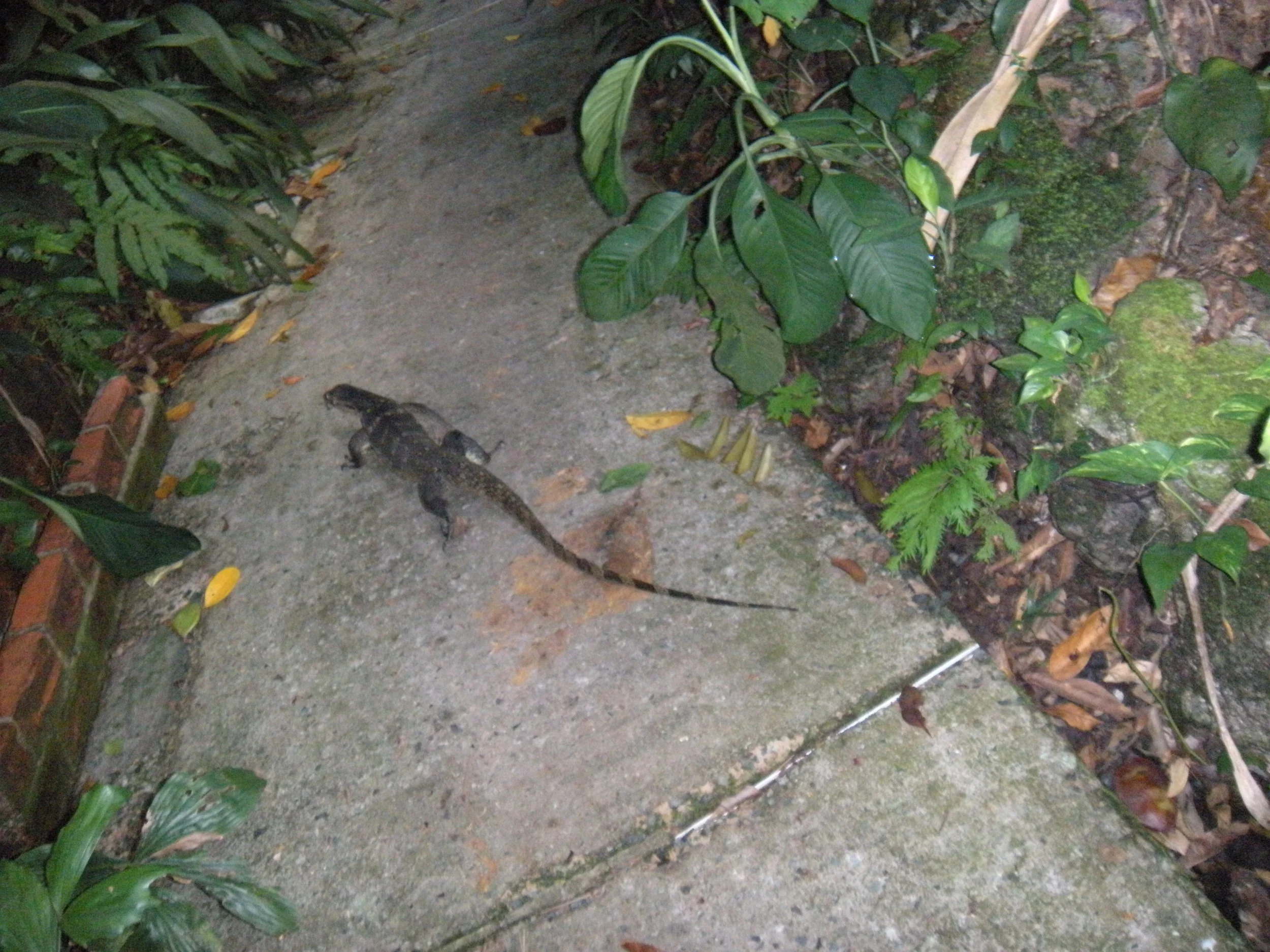
Look.  A huge monitor lizard crossing the path right in front of me.  Cool.  
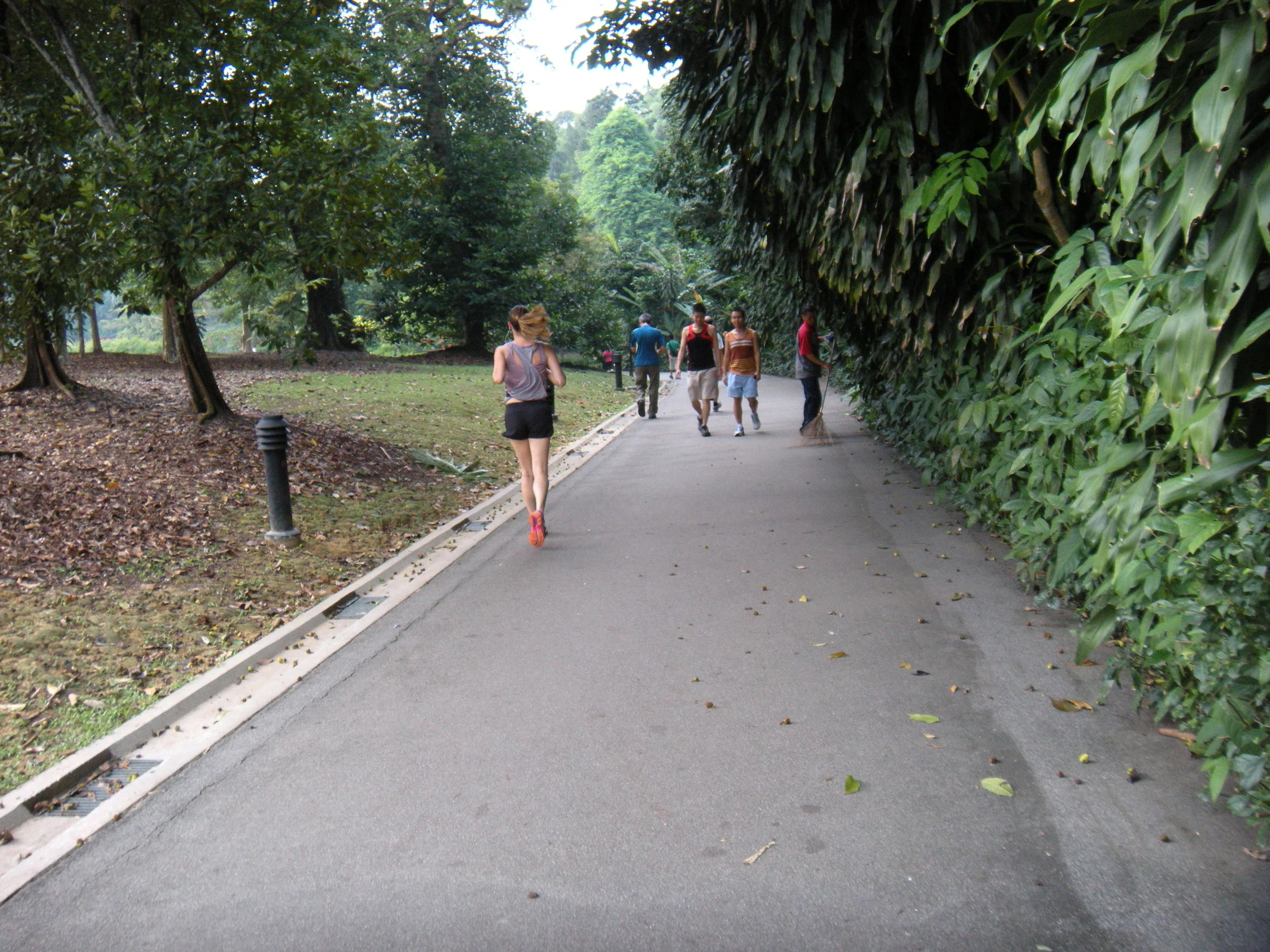
The woman running in the park.
The woman running in the park.

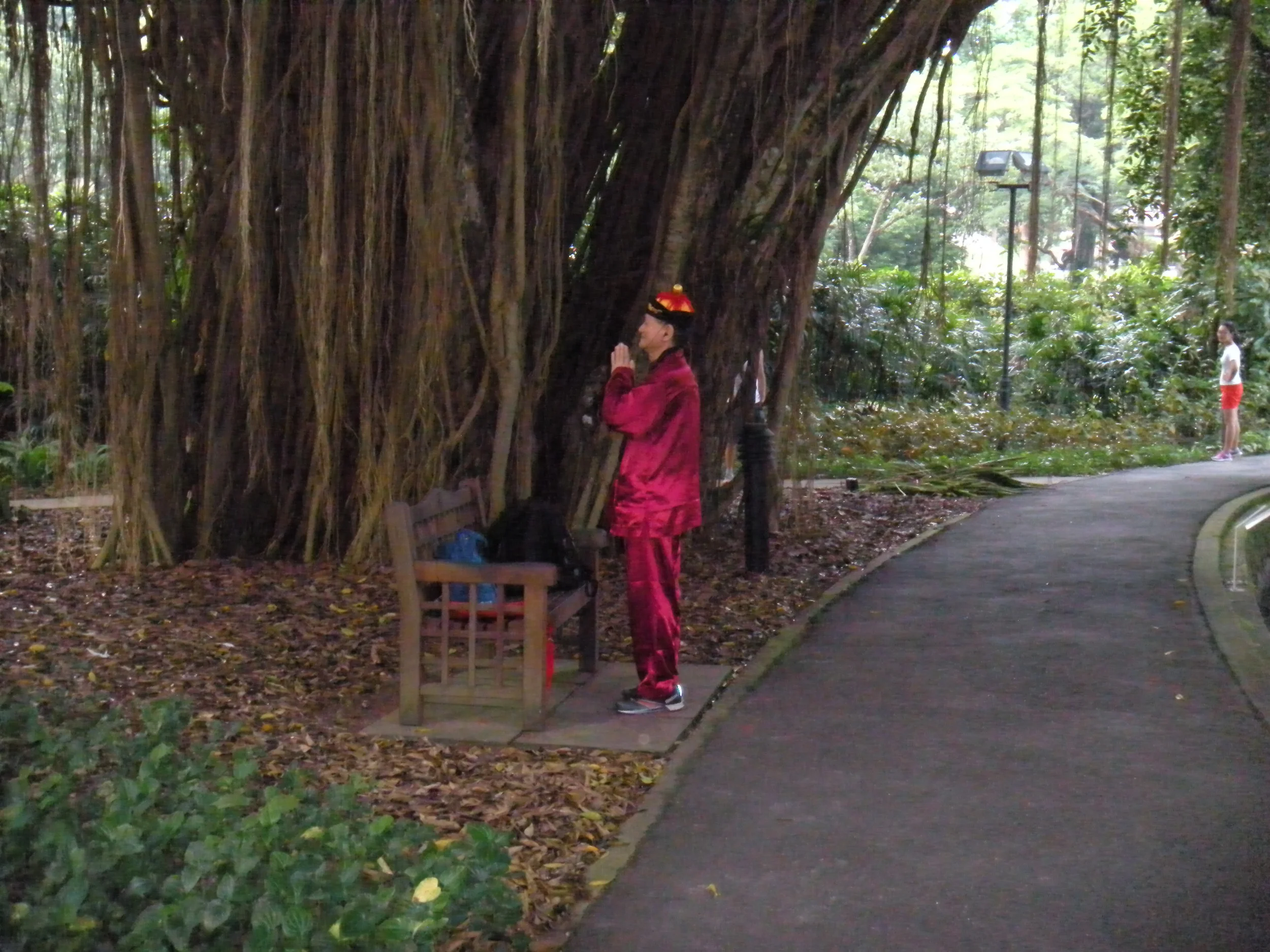
This man exercises and prays by the lake most mornings.
This man exercises and prays by the lake most mornings.

I almost stepped on this big guy.  Usually I only spot a monitor once a month or so, but on this walk I saw two.  
I almost stepped on this big guy.  Usually I only spot a monitor once a month or so, but on this walk I saw two.  

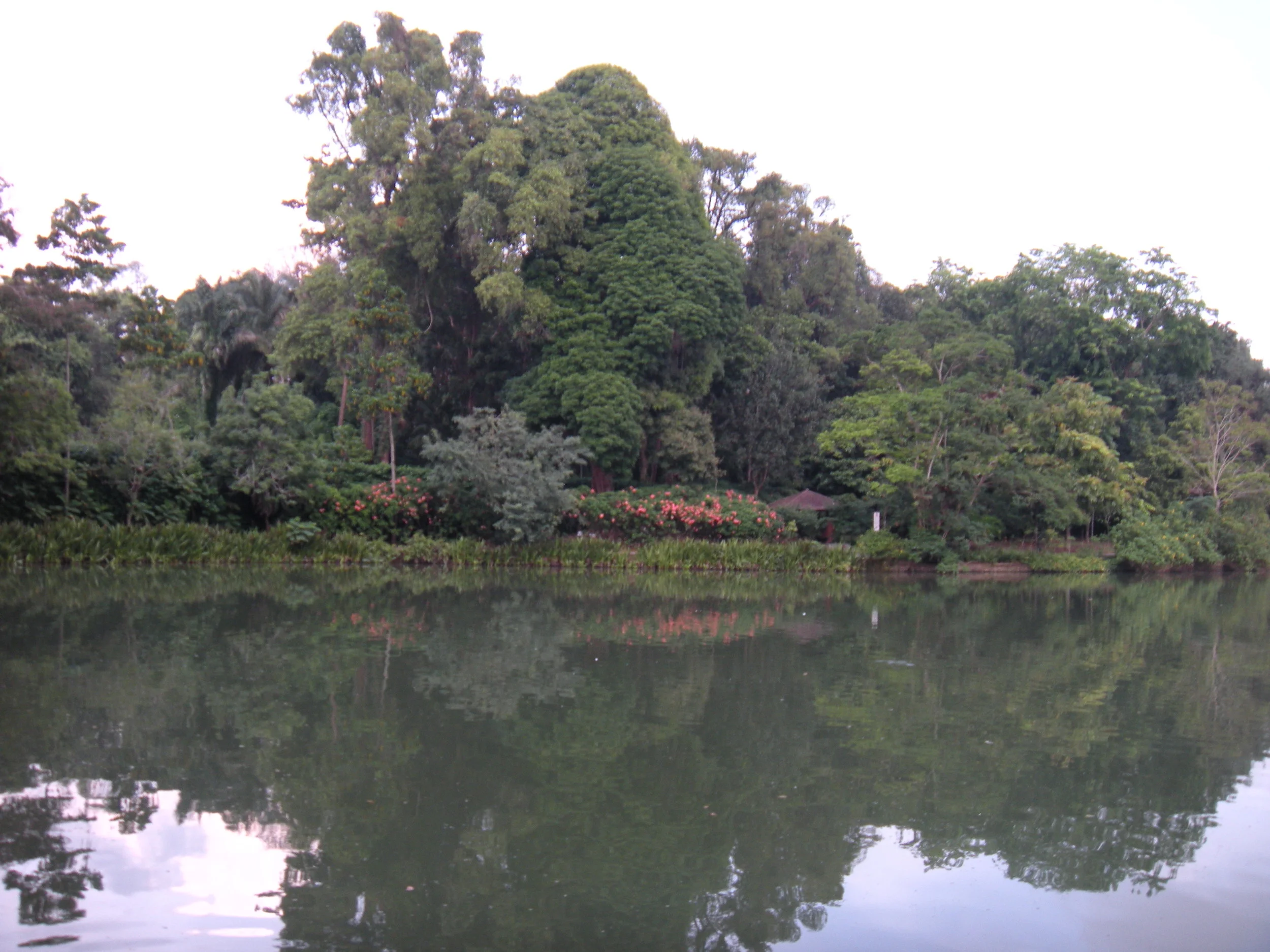
A view of the lake

A view of the lake

Last Hurrah

An international move on the horizon.  Priorities compete and time is short.   Some would hunker down and get after it. 

David and I decide to take a little holiday.  We return to Patong Beach, on Phuket, a seedy area where beefy men drink too much, wear muscle shirts, and flirt with the massage girls.  Glamorous lady-boys parade up and down the humid streets in fancy clothes, enticing people to come to their show.  Lumpish vendors push flowers and crappy toys at passing faces, saying “Buy, buy, buy.”  A bar has a show where women shoot ping-pong balls out their vaginas.  Outside the ping-pong girl bar, a middle-easterner attempts to talk his four friends into entering.  Crudely, he mimes the act.  They all laugh and rush toward the door.  They can’t wait to see.  Now the question arises—why would David and I choose to vacation in this vulgar setting?  (A better question would be—and I don’t have an answer—why would parents bring their children here?  Families are all over the place.  Children swarm.)  We’re here because the food is good, the alcohol is cheap, exceptional spa treatments are priced reasonably, the people are considerate and helpful, the beach is lovely, and there’s something interesting going on everywhere you look. 

In the morning, a nine o’clock tee time for David.  He chases a ball around a course and curses while I drive the cart and play the role of supporting spouse.  I laugh as, again and again, his ball splashes into the water.  I wonder how anyone can take this game seriously.  But people do. 

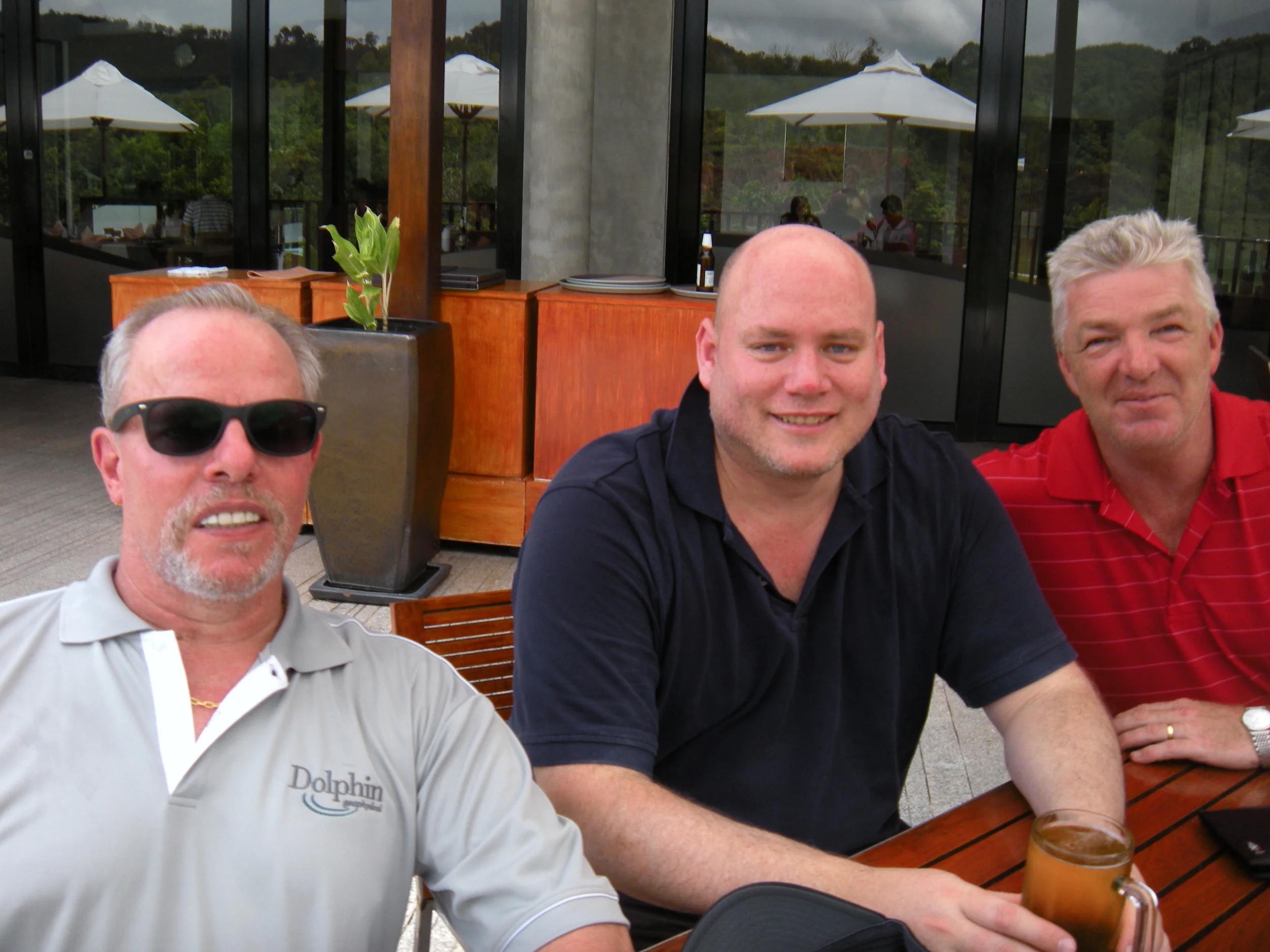
Today we form a three-ball with Derrick, from Australia, and Mark, from South Africa, two congenial men whose play is similar to David’s—in other words, inconsistent and uncontrolled, but marked by the occasional brilliant shot.  After the round the four of us meet in the club bar for a beer.  I ask Mark what he does for a living and he tells me that he buys restaurants in financial difficulties, turns them around, and sells them.  I question the profitability of the enterprise, but he claims that it makes money and he enjoys the work.  Derrick sells energy drinks.  He says it’s a competitive and stressful business, which I find surprising. 

Another thing that takes me by surprise is the attitudes of both men toward the US.  I admit to suffering paranoia on the public relations front as far as being American goes.  Out in the world, a single American is often taken to represent all of America.  So I keep my head down in the hope that people won’t notice I’m American and start ranting at me about what we’re doing wrong.  This assumption is not unfounded.  I’ve had servers walk away from me when they hear my accent.  During my years as an American abroad, I’ve been accused of being insular and invasive, arrogant and inert.  I’ve been held accountable for international monetary crises, broken treaties, slow disaster relief, supporting corrupt governments, and toppling stable ones. 

But Derrick and Mark say they’re waiting for America to act.  They seem to think we’re a nation of super heroes.  They expect Americans to go into the Ukraine and find out who shot down that Malaysian flight.  They expect the US to blow ISIS off the planet.  They expect the American scientists to conquer Ebola, the American diplomats to solve the Israeli/Palestinian issues, the American dollar to bolster the European and African economies, and the American State Department to make China play nice.  In short, they expect us to lead.  There’s been so much negativity aimed at America over the last several years that I honestly didn’t think anybody expected anything of us anymore, much less leadership. 

When we get back to the room and the internet, we’re sad to discover that Robin Williams has died. 

RIP, Troubled Man. 

David and the Lady-boys

David and the Lady-boys

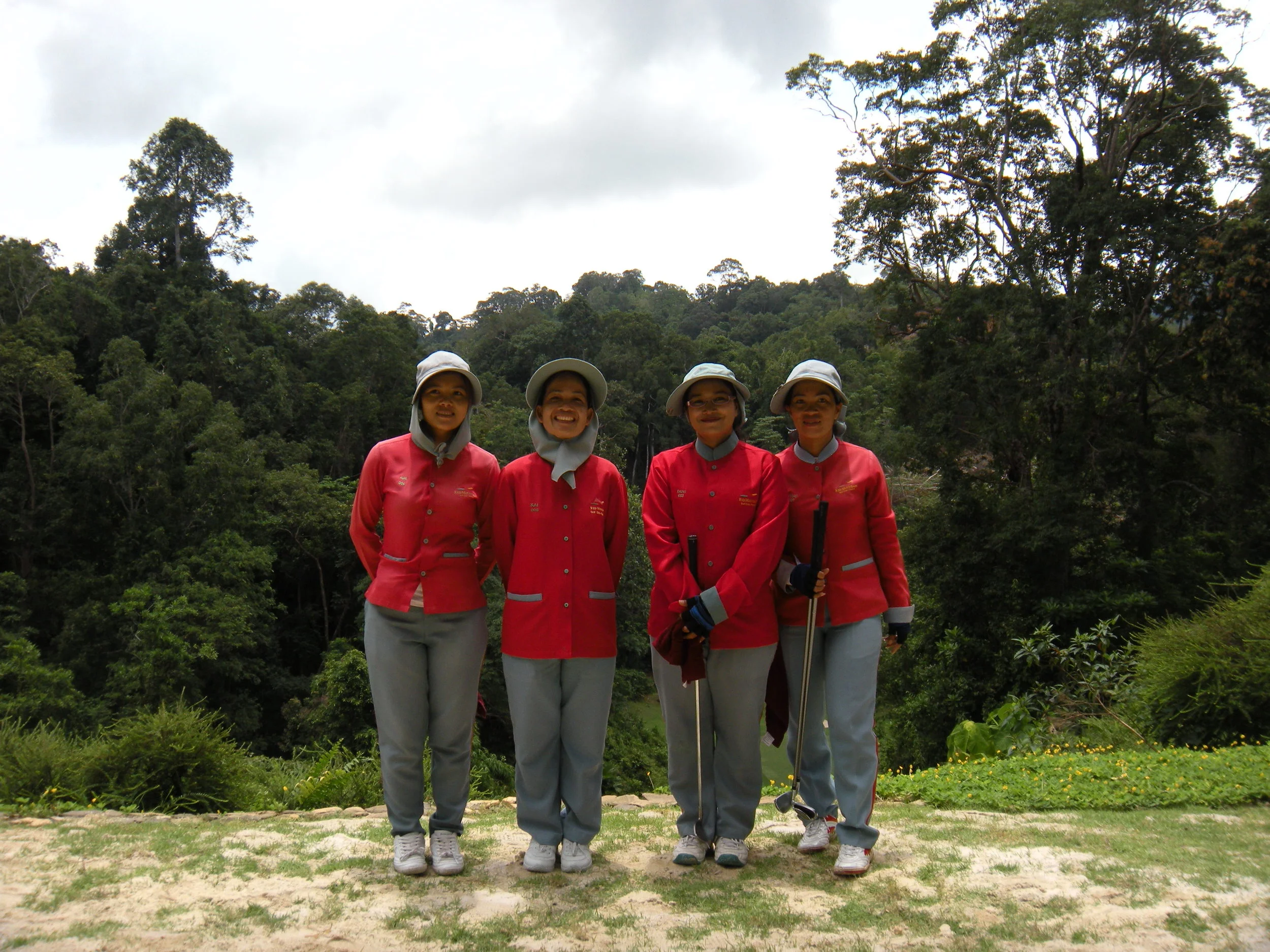
The caddies, covered to protect themselves from the hot, hot sun.  

The caddies, covered to protect themselves from the hot, hot sun.  

I lost track of how many balls went into the water on this hole that circled around the lake.  

I lost track of how many balls went into the water on this hole that circled around the lake.  

David, Derrick, and Mark

David, Derrick, and Mark

Thai Cooking School


I know Georgia will like the Thai cooking class.  She’s a gifted cook, intuitive about flavor combinations, enthusiastic about putting food before family and friends.  She’s also able to taste a dish and identify the separate ingredients, which is practically a superpower.  Personally, I’m an uninspired cook.  I’ve got a few recipes I pull out when something special is required, but for the most part, dinner’s fifteen minutes from stove to table; and in another fifteen minutes it’s gone. 

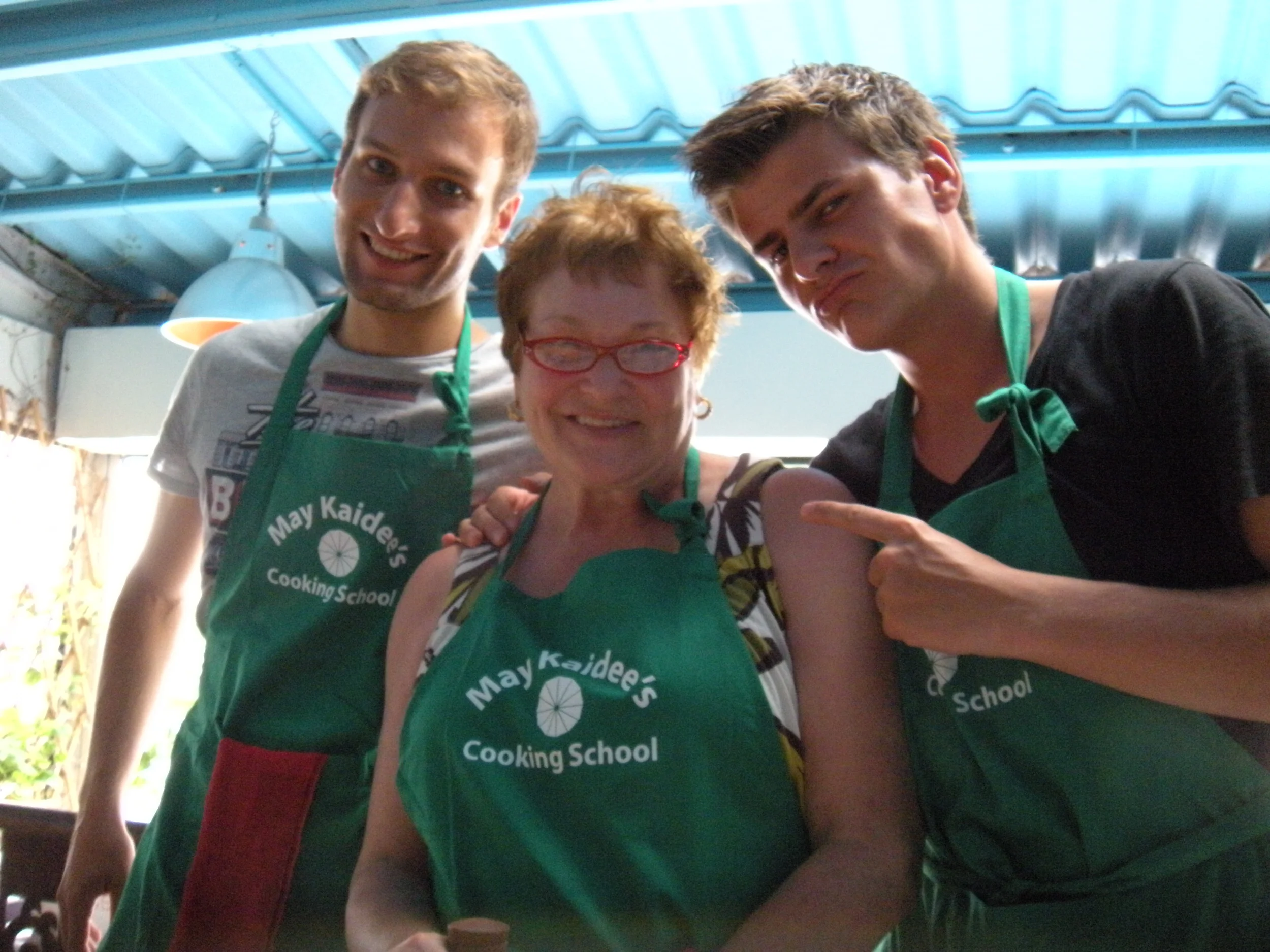
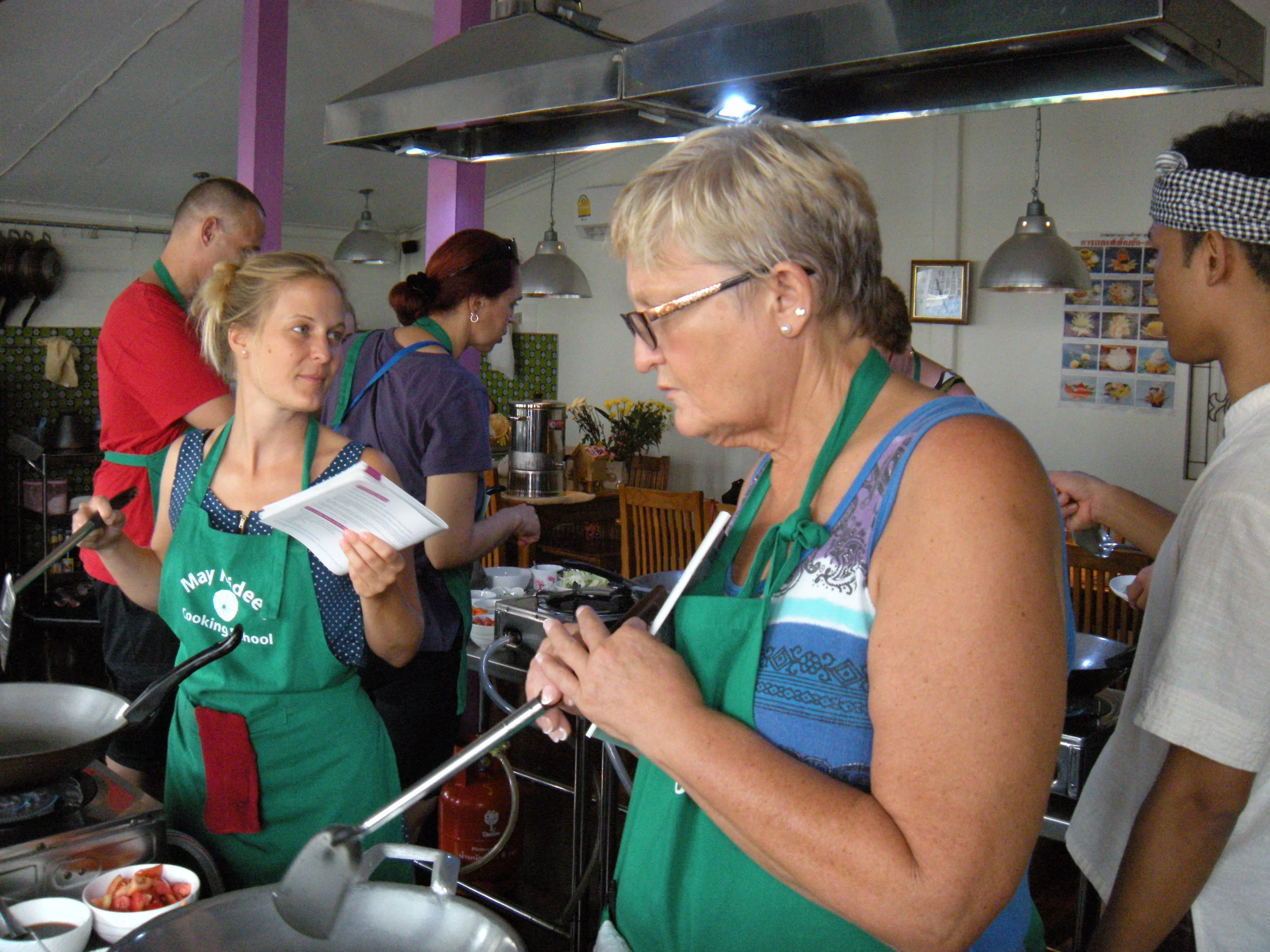
A young man meets Resi, Georgia, and me in front of our hotel on Khaosan Road.  His name is Tuk (rhymes with book).  He leads us across the street, around the corner, and into the cooking school, where he introduces us to our classmates, who are seated around a table, waiting to get started.  Much is made of where everyone is from:  Martin is Hungarian; Evie, his girlfriend, is German and, as it turns out, is suffering a foul reaction to something she’s eaten and must race to the restroom every five minutes.  Poor Girl.  Two from Switzerland; he’s named Fabio, and she’s named Fabien.  Georgia asks if they’re twins and they laugh and share a look.  Apparently not.  An Israeli couple and their daughter arrive last. Their names are given—foreign-sounding, difficult to pronounce, pointless to remember. 

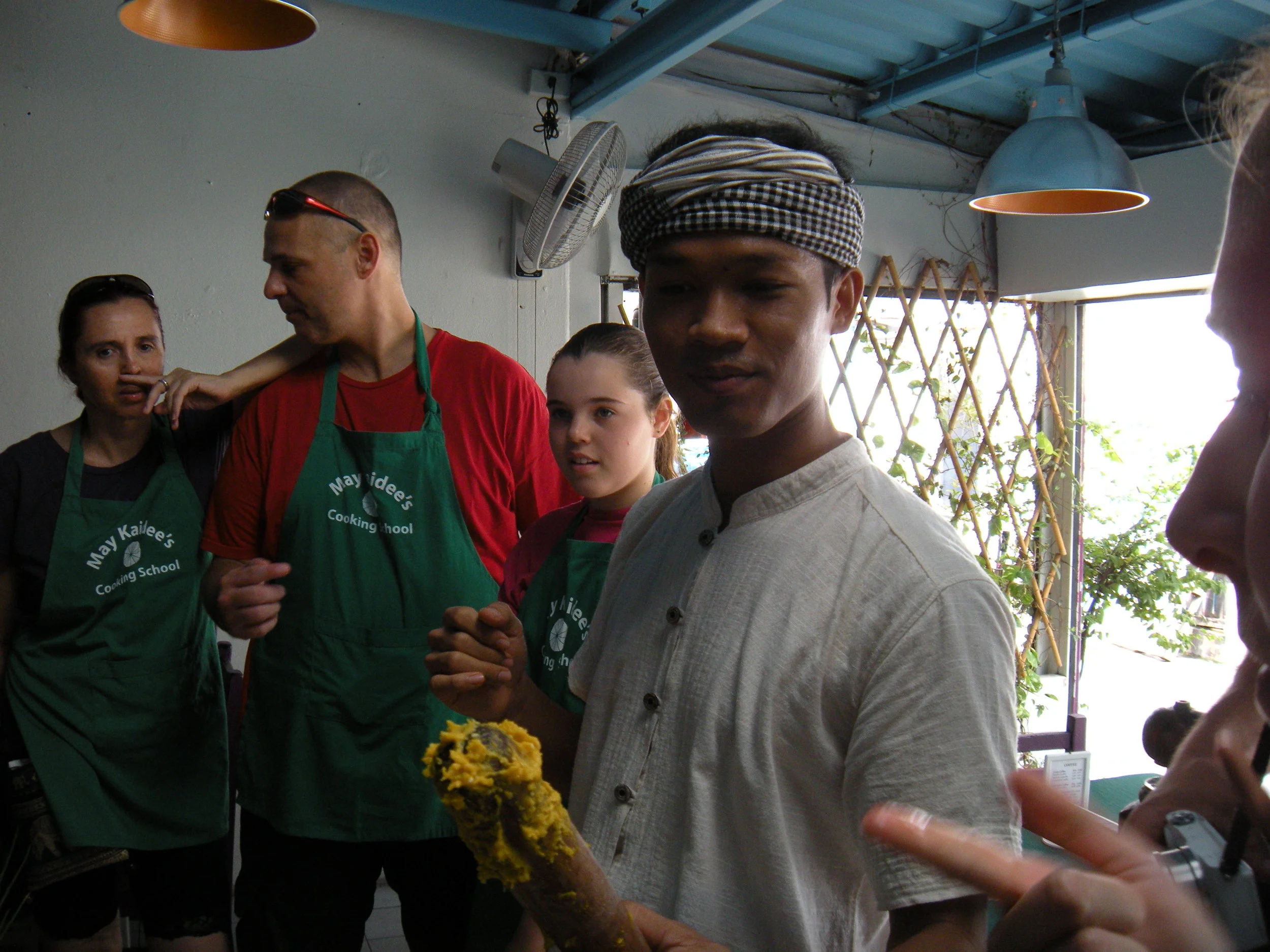
Tuk, it turns out, is the chef who will be explaining the foods and guiding us through the recipes.  He pays special tribute to his assistants, two quiet women who smile and duck their heads.  I’m relieved that he’s considerate toward them.  In the last cooking demonstration I attended, the chef berated her assistant until she made him cry.  I’ve never seen anyone so brazenly, proudly sadistic.  So Tuk’s kindness is a relief. 

We’re assigned partners. Resi and I are together.  Georgia is paired with the Israeli woman who speaks no English, which makes her no use at all.  She can’t read the recipes, she doesn’t understand the instructions, she can’t communicate with her fellow chef-in-training.  Georgia’s happy to do it all.  She adds and stirs, asks Tuk questions, and hands the woman her share of the food at the completion of each dish.  Resi and I, both of us pragmatic cooks, hum happily along, taking turns adding ingredients and stirring.  The ingredients aren’t things that are found in either of our pantries—kaffir lime leaves, galangal, lemon grass, coconut milk, roasted rice powder. 

Here’s a list of what we make and eat:  pumpkin hummus, chili paste (this is a spicy staple used in many dishes), tom yam soup, pad Thai, fried vegetables with ginger and cashew nuts, green papaya salad, peanut sauce, spring rolls, Massaman curry, mango with sticky rice. 

In addition to doing all the work at her wok, Georgia runs around with her camera.  She gets pictures of Resi and me, our teacher and his assistants, the two couples, and the food.  She takes a picture of the Israeli daughter and offers to send it to the girl’s father if he wants to give her his email address, to which he replies, I’m assuming more loudly than he intended, that he prefers never to give out that information, an odd and almost belligerent reaction that draws notice from the whole group, making things weird for several minutes. 

This is a lot of food.  Too much.  We’ve consumed to the point of pain.  And there’s still the desert to get through.  Realizing that we’re all stuffed, Tuk’s solution is for us to get up and dance to make room for more.  Forming us into a circle around the room, he shows us the hand and arm motions to a Thai folk dance, then gets us moving around and clapping.  Surprisingly, five minutes of this renders us more comfortable, able to stuff in a few more bites.  I’m fond of neither rice nor mango.  While others proclaim it the best concoction ever, I take my polite two bites, and move it to the side. 

At the end of our cooking day Georgia’s still enthusiastic.  She’s got plans for the new recipes.  She buys the shredders and slicers that’re available for purchase at the front counter.  She’ll cook for her friends back in Utah.  When I ask Resi if she’s ever going to actually go to the trouble to follow the involved recipes and set a Thai meal in front of her family, she tells me that she’ll probably use some of the spices and implement some of the methods she’s learned—which I take to mean probably not.  Will David ever get to taste pad Thai in his own home prepared for him by his wife?  Wouldn’t hold my breath.  

Georgia made friends with Martin and Fabio.

Georgia made friends with Martin and Fabio.

Tuk with the Israeli family

Tuk with the Israeli family

Resi was good at stirring!

Resi was good at stirring!

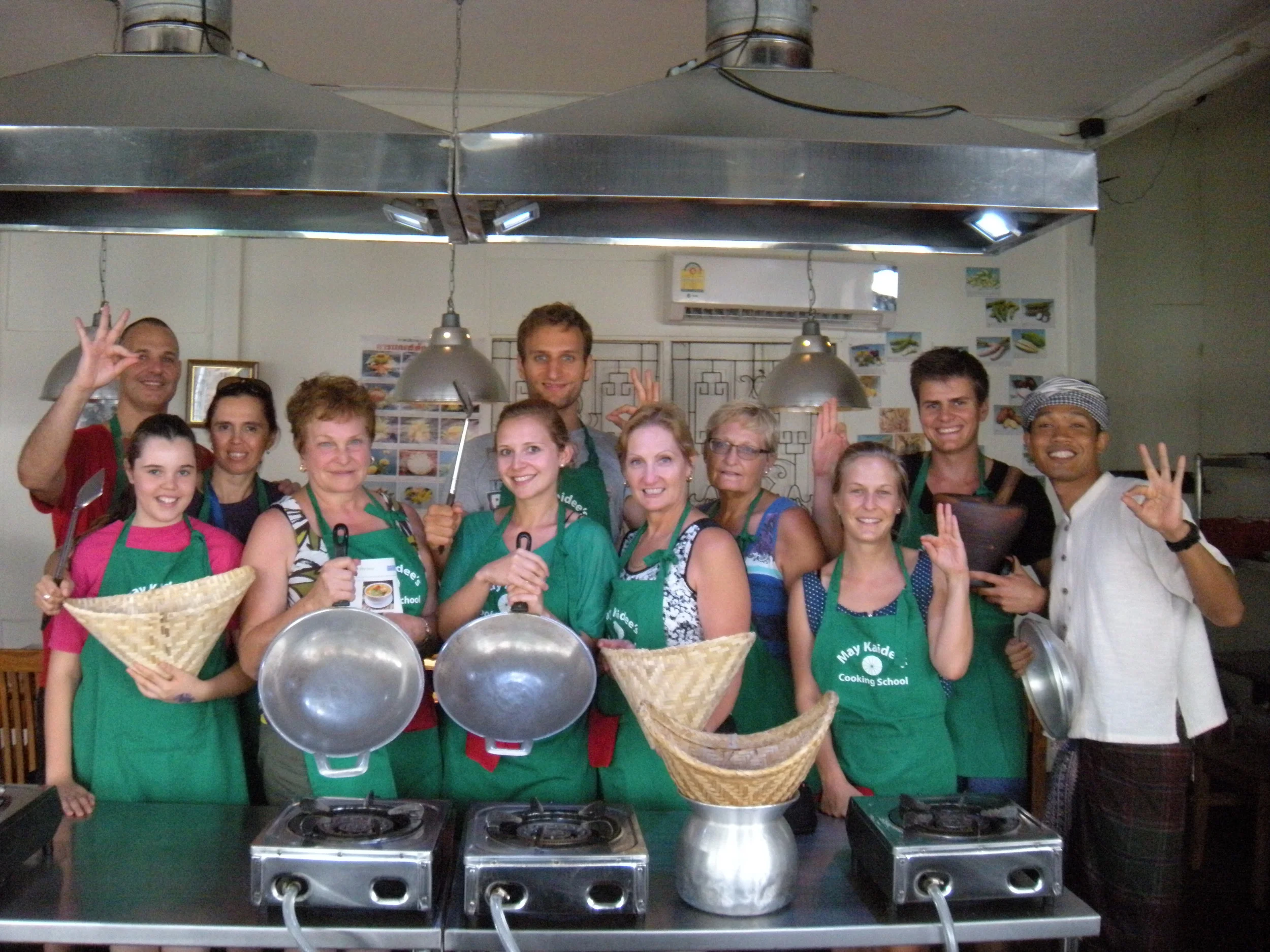
The whole class--our graduation picture!  

The whole class--our graduation picture!  

The Grand Palace, Bangkok

Last time I was at the Grand Palace, acceptable attire for women was cropped jeans and a wrap to cover bare shoulders.  I looked it up before I dragged Resi and Georgia here, just to be sure—and the website I found indicated that nothing has changed.  But when we get here a little man judges Georgia and I to be not quite decent enough.  Georgia’s pants show two inches too much calf, and our thin shawls simply won’t conceal our exquisite pearly shoulders.  He waves us over to the side, to the line where, for only a two hundred Baht deposit, we’re able to borrow shirts for both of us and a wrap-around skirt for Georgia.

We accept the articles and are shown to a changing room, where an electric fan is aimed into a low corner, where its breeze is not needed.  The place where it should be aimed is at me.  I reach out to adjust the fan, but the spaces between the wires of the guard are wider than I expect, and my thumb goes right through, catching the plastic blade of the fan and breaking it, causing an awful racket as the busted blade clatters round and round inside its cage.  I inspect my thumb—no damage.  The fan dies and silence prevails.  I’ve caused great consternation for the attendant, who calls her boss, who must call her boss.  I stand, pointing foolishly at the fan, telling them I’m sorry, but really, what good was it if it wasn’t pointed where it was needed?  The woman in charge is reluctant to let me leave, but I remind her that I’ll be back through to get my deposit, and we can settle it then.  I’m certain they’ll make me pay to replace it, which is fair.  I’m just glad I still have my thumb.

The heat hits Georgia hard.  Wearing two layers of cotton, the top layer heavy and impermeable, she’s red-faced and dripping before we even enter the temple area, too miserable to appreciate the history and magnificence of the colorful temples.  (Inserting my opinion—burdened by an overwhelmed infrastructure, Bangkok does an extraordinary job of caring for its main attraction.  The pavements of the Grand Palace are spotless, the reflective surfaces of the elaborate spires twinkle, brightly clean; and the renovation work, which is ongoing, is unobtrusive and reveals dedication and generous funding.)  Resi, too, is suffering.  Hot and exhausted, her knees are hurting, and every other step involves an up or down stair. 

I persevere.  I don’t make them walk the whole thing, but they must halt their wretched huffing and whimpering for a minute and recognize where they are, the grandeur that’s before them.  I think, by the time I allow them to leave the Grand Palace, they hate me a little for subjecting them to this hell, blaming me for the scorching sun, the sapping humidity, the pressing crowds, and even the long trains of puzzled children with matching shirts who must all hold hands so they won’t be separated—and so we must wait for the kids to pass, the hot sun beating on our vulnerable pale heads as their headcount shuffles on and on and through.

At the exit we return our covering-clothes.  My strategy of going unnoticed by keeping my head down works.  No one realizes I am the miscreant who destroyed their fan.  Should I alert them?  Absolutely.  But I’d rather not mess with it.  I do get pretty tickled, though, when Georgia tries to reclaim our deposit.  As she’s the one who paid and signed the form, she’s the one who must retrieve it.  But her check-out signature doesn’t match her check-in signature.  The man is confounded by her jagged scrawl.  He compares.  He dons glasses.  He points to the first signature, points to the second, shakes his head.  Overheated tourists form a line behind us.  Georgia and I exchange looks.  We are amazed that he is amazed.  What does he see?  It looks hunky-dory to us.  He makes her sign again, compares signatures once more, then reluctantly returns her money, still shaking his head.  On the way out I tell her I’m mortified to be associated with someone with an inconsistent signature. 

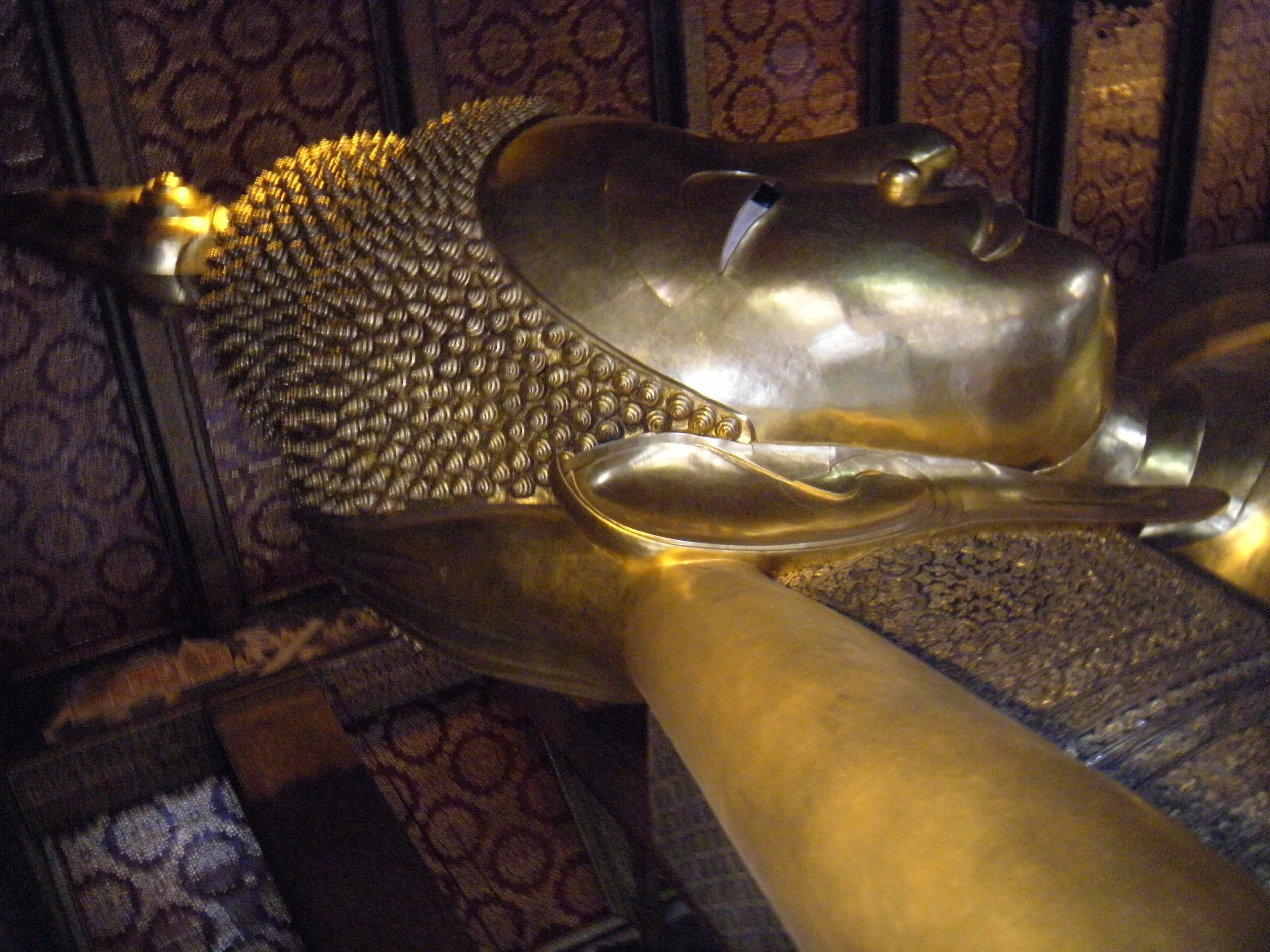
Next up, a treat.  We will not walk to the Reclining Buddha, we will grab a tuk-tuk, which Resi and Georgia haven’t ridden yet, and which I know they will enjoy.  We fly, the breeze refreshing, the bumpy speed making us all laugh.  We’re delivered to the gate.  I promise them we won’t spend much time here.  I’ve heard many people say that the Reclining Buddha is their favorite and I want to know why.  For a hundred Baht we make our way to the door of the temple, take off our shoes, and enter.  I’m not disappointed.  There he is, mighty and huge in his golden splendor, a joyful relaxed giant, offering a contagious serenity which I appreciate after our tense time at the Grand Palace.  Now I understand why so many like this guy who’s abandoned his chores and stress in order to indulge in a midday rest.  The Reclining Buddha is now my favorite, too.   

We take a tuk-tuk back to Khaosan Road, to the hotel, where we shower and put on fresh clothes.  Georgia, who claims she’s never sweated this much in her life, is so impressed that she takes a picture of her sopping clothes.  

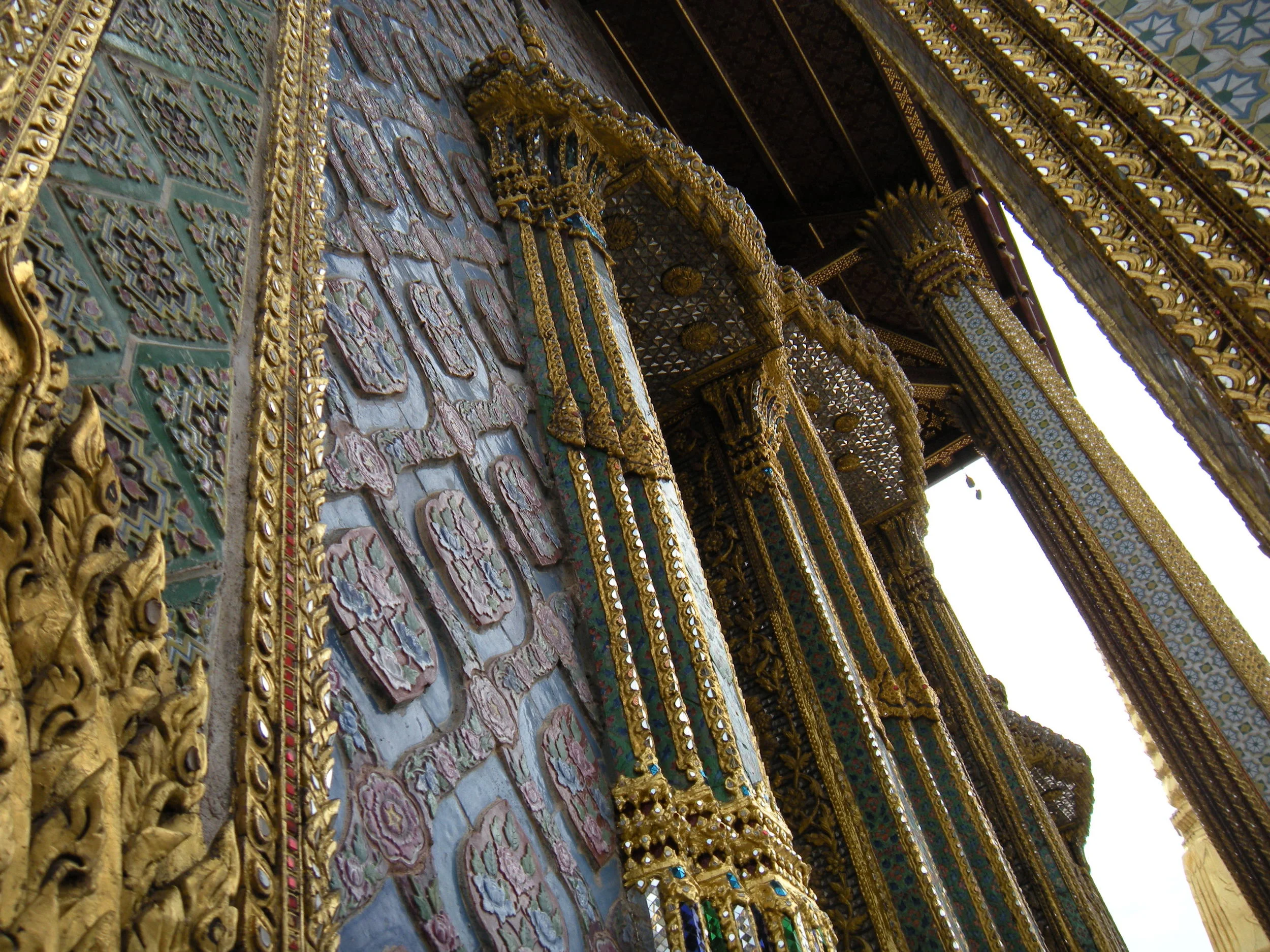
Grace and beauty everywhere you look in the Grand Palace

Grace and beauty everywhere you look in the Grand Palace

There are several of these guys, keeping watch.  Isn't he gorgeous?

There are several of these guys, keeping watch.  Isn't he gorgeous?

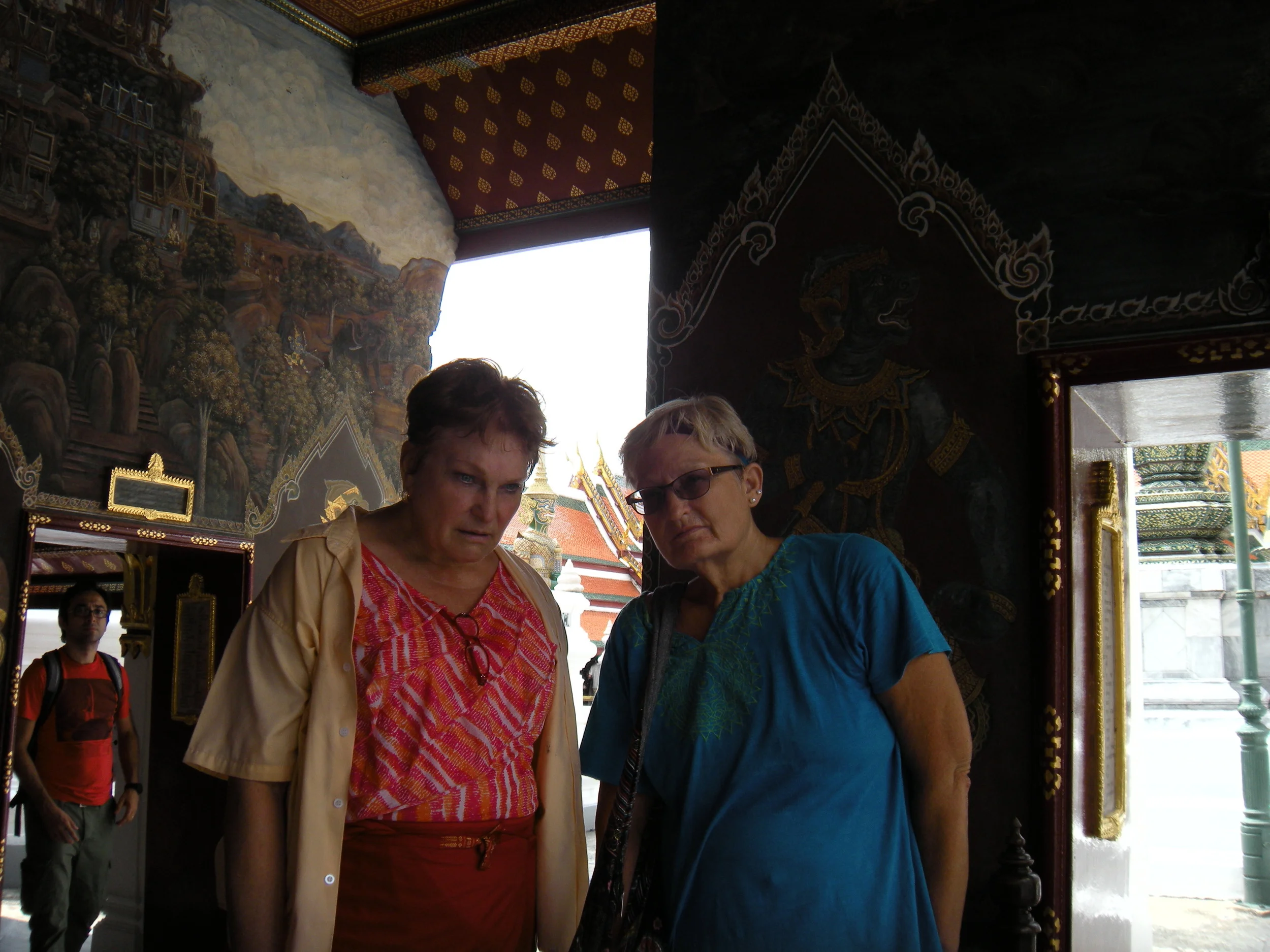
Georgia and Resi.  Can you tell how miserable they are?  

Georgia and Resi.  Can you tell how miserable they are?  

This doesn't do justice to the Reclining Buddha.  He's magnificent.  

This doesn't do justice to the Reclining Buddha.  He's magnificent.  

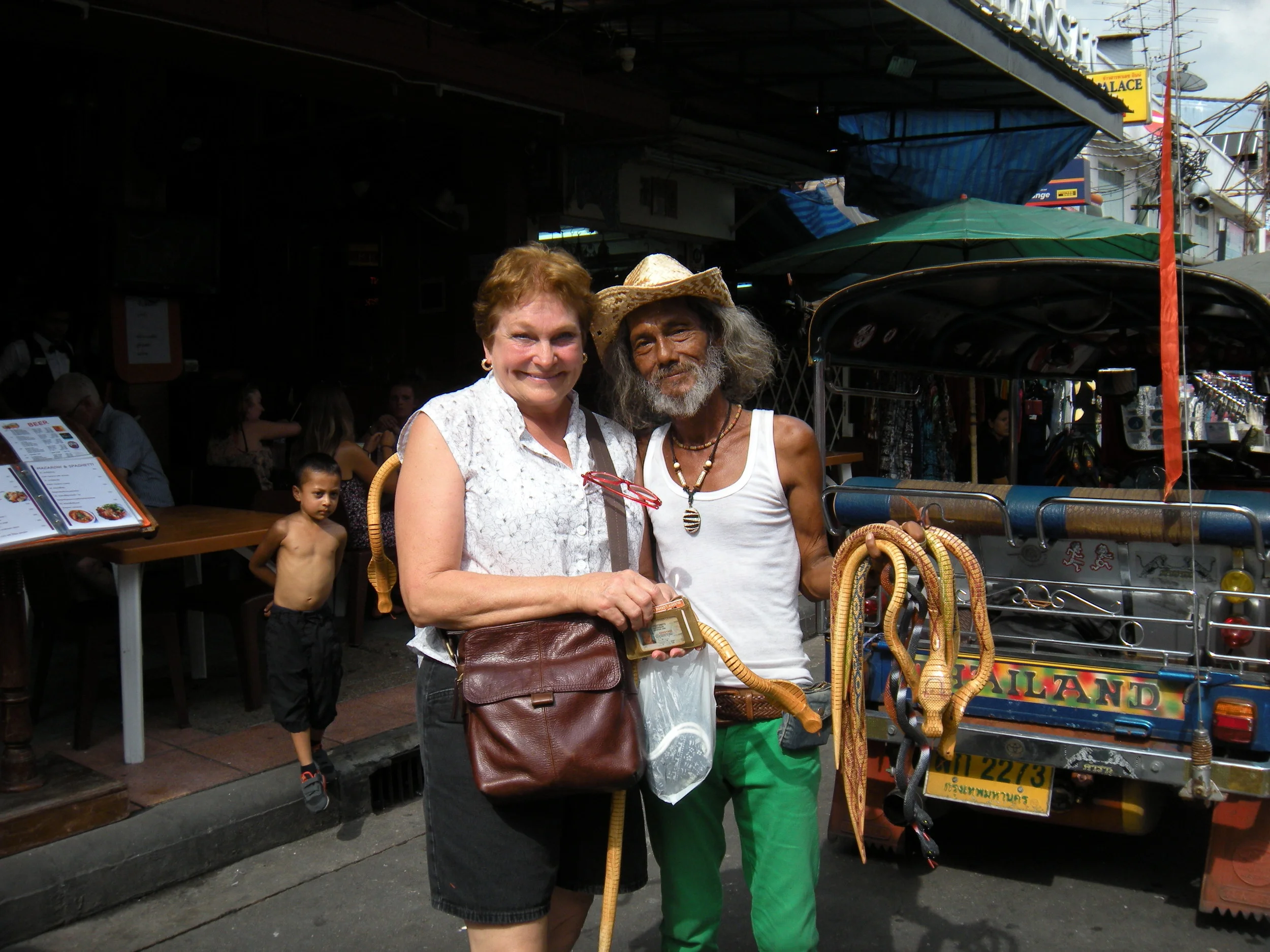
Georgia's happiest when she's making a new friend.  

Georgia's happiest when she's making a new friend.  

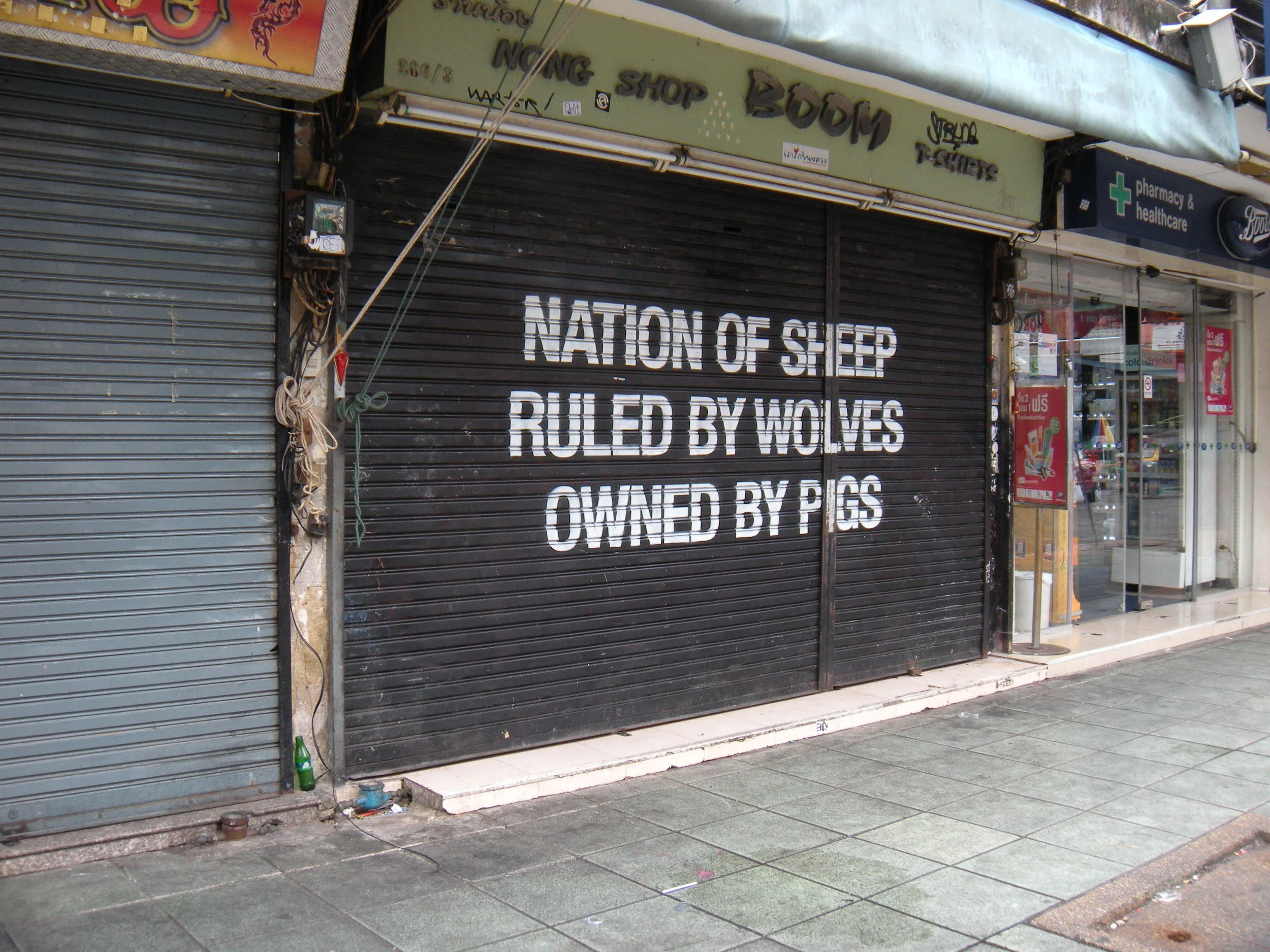
Though there's been recent unrest in Thailand, this sign on  Khaosan Road was the only evidence of discontent that we saw.  

Though there's been recent unrest in Thailand, this sign on  Khaosan Road was the only evidence of discontent that we saw.