Pulau Ubin and Hair Color

Off the east coast of Singapore is a small island, Pulau Ubin, which means Granite Island.  People take a ferry—called a bumboat—out to the island, rent bicycles, pedal to a nature reserve, and get an idea of how wild and unkempt Singapore was before modern vision conquered the landscape. 

I asked someone who’d recently made the trip if a couple of women with hip and knee replacements could manage the ride from the jetty to the reserve—“Oh yes,” she said.  “Easy-peasy, nothing to it.”  My sister, Resi, and my cousin, Georgia, are from northern elevated climates, unused to the hot oxygen-laden humidity in this part of the world.  And their lower limbs are more machine than human. 

After five minutes of pedaling up a mild slope, they’re a frightening shade of puce, huffing and dripping.  Sweat mats Georgia’s curls to her head.  I’m not used to seeing Georgia with an auburn cast to her hair.  Except for one mad week when she was sixteen and rebellious, she’s been determinedly blond all her life, as have my sister and I.  The same summer that Georgia dyed her hair—a much more flamboyant red than it is now—I told her, in front of the entire extended family, that my mother thought she (Georgia) suffered from low self-esteem, an embarrassing blurt that compelled my mother to give me daily lectures about the benefits of being tactful.  The lectures did little good.  To this day, I manage to offend someone pretty much every time I open my mouth. 

David’s having a good time riding the bike.  He wheels back and forth, makes circles around us.  He’s wearing his adventure hat, the Australian chapeau he ordered from Canada.  About a quarter of the way to the reserve the smooth pavement becomes a rough pitted trail scattered with loose rocks and composed of extreme ups and downs.  We women are forced to get off and push the bikes up the hills.  Then new signs pop up beside the trail, instructing us to get off and walk the downhills, too, causing us to wonder—then why rent the damn bikes?  At first we comply.  But then we realize that this is just to preserve the brakes, which we don’t really care about.  So we push upward and coast down.  

As hostess to this small group, I’m concerned with whether Resi and Georgia are having a good time.  I hope they’re not so miserably hot and fatigued that they’re unable to enjoy themselves.  But when we arrive at the nature reserve, and it’s time to get off and walk awhile, I look back to find that Resi has discovered a family of wild boar snuffling through the undergrowth, and that she’s busy taking pictures—so I can relax; if she’s taking pictures that means she’s interested instead of about to die.  It’s a crowded juncture, with people and bicycles milling.  Nearby a man holds out a fallen rambutan to a boar, almost getting his hand bit off.  Resi’s light hair stands out among the dark heads.  When she first arrived, I commented on her white/gold hair, a color I’ve not seen on her before.  “This is my gray,” she tells me.  “If you let your hair go natural, it’ll probably be this color.”  I have my doubts.  I think if I allowed myself to go gray my hair would be rat-colored, like Daddy’s was. 

In the nature reserve we see more wild boar and a cute little bird.  We follow the trail to the sign that reads “Mangrove Boardwalk,” an inviting designation that evokes notions of sweet aromas and gentle breezes.  If they named the elevated walkway realistically—Smelly Swamp Walk—no one would come.   Rotten roots jut from the oozy black marsh on both sides of the raised path.  The jagged hills of the mud lobsters rise up, dotted with round apertures through which, presumably, the lobsters come and go.  They only come out at night, and it’s eerie to view the results of their labor without actually seeing them; it’s as if we’re seeing the dwellings of a society long dead.  They’re more like ghost lobsters than mud lobsters.  

After we’ve traversed the walkway and seen all the available nature, we take an alternate, much easier, route back to the tiny village, where we stop for lunch.  Georgia insists she’s too exhausted to eat, but I bully her into ordering something.  She just rode a bike from one side of the island to the other, from sea-level to the top, and back—the woman needs sustenance.  We order a table-full of food and dig in.  David and I split a big bottle of cold Tiger, the perfect top-off to a hot day spent on a muggy boggy island.
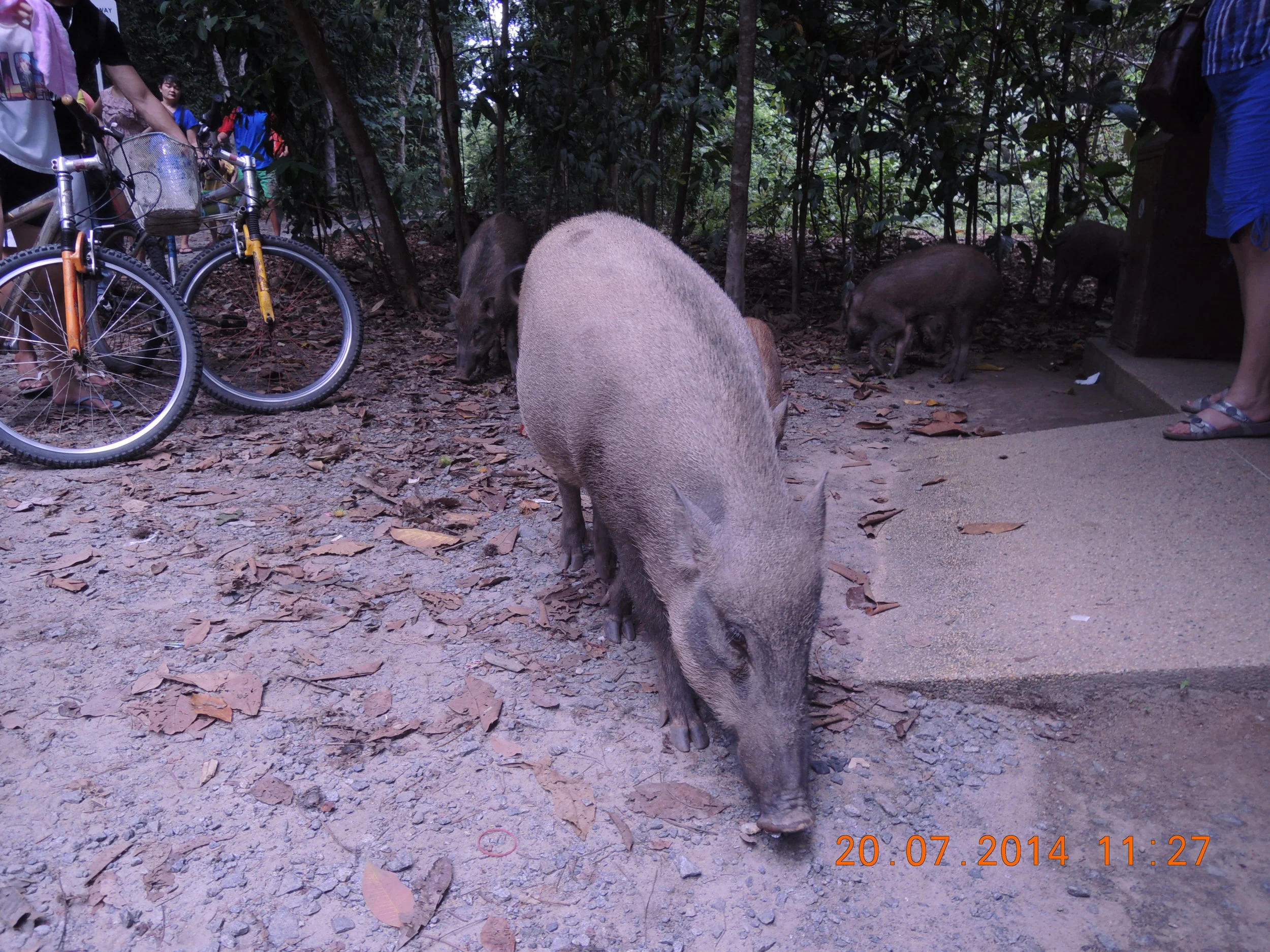
This boar nearly bit a guy's hand off.  Don't feed the boar.  
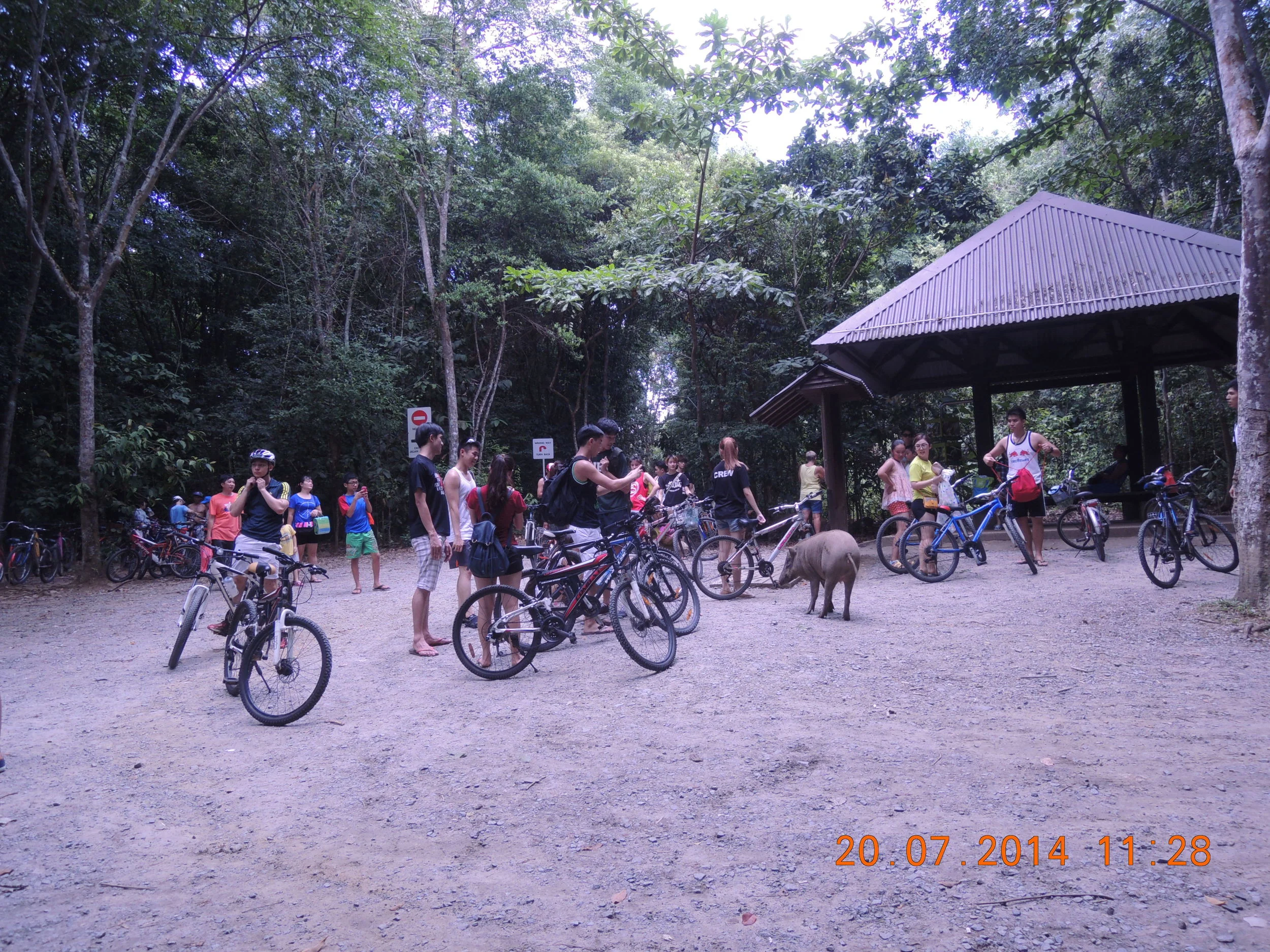
This boar nearly bit a guy's hand off.  Don't feed the boar.  

Park the bikes here and walk into the nature reserve.
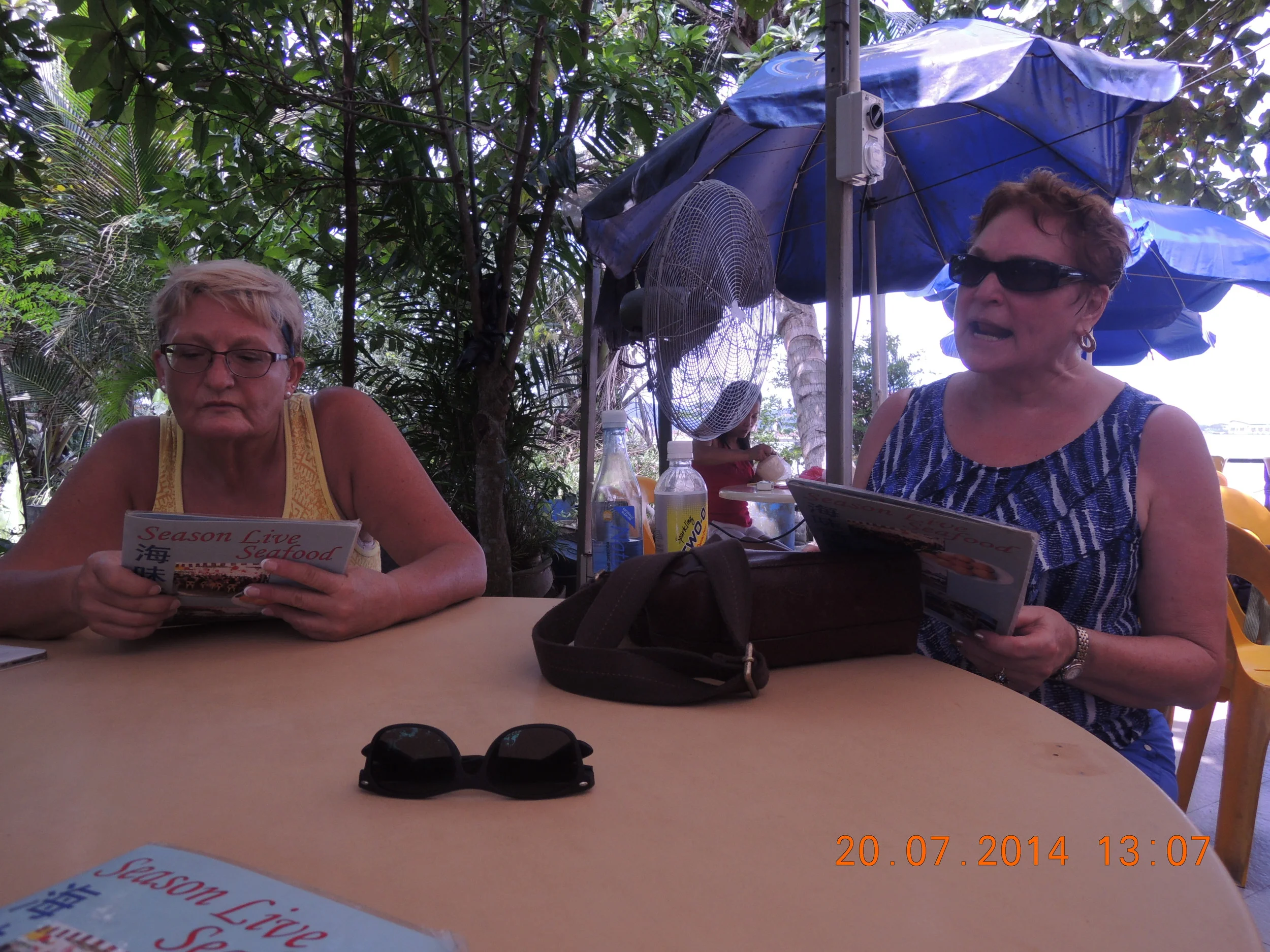
Park the bikes here and walk into the nature reserve.

Resi and Georgia relaxing after the ride.
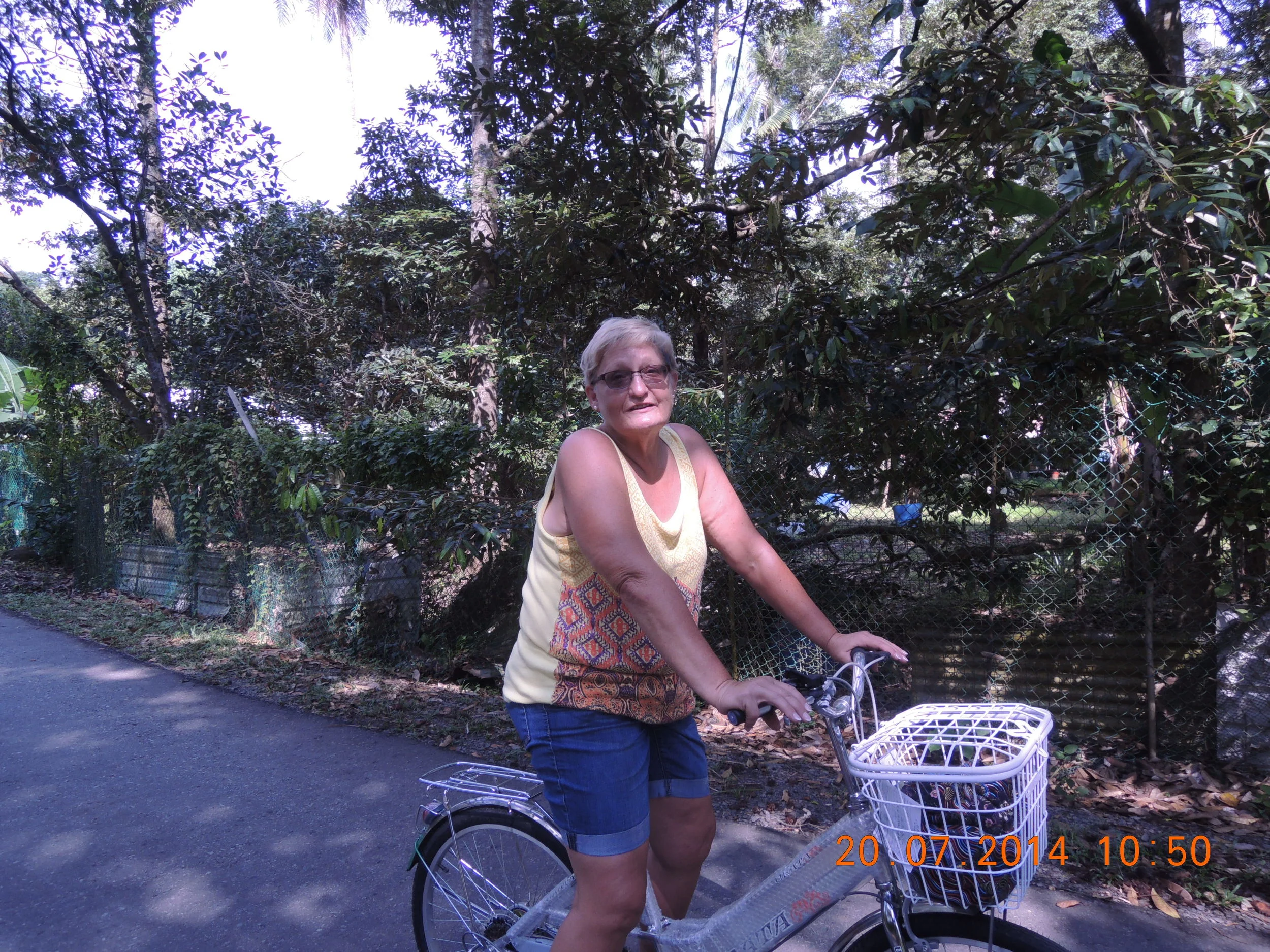
Resi and Georgia relaxing after the ride.

Resi's comfortable on her bike.  
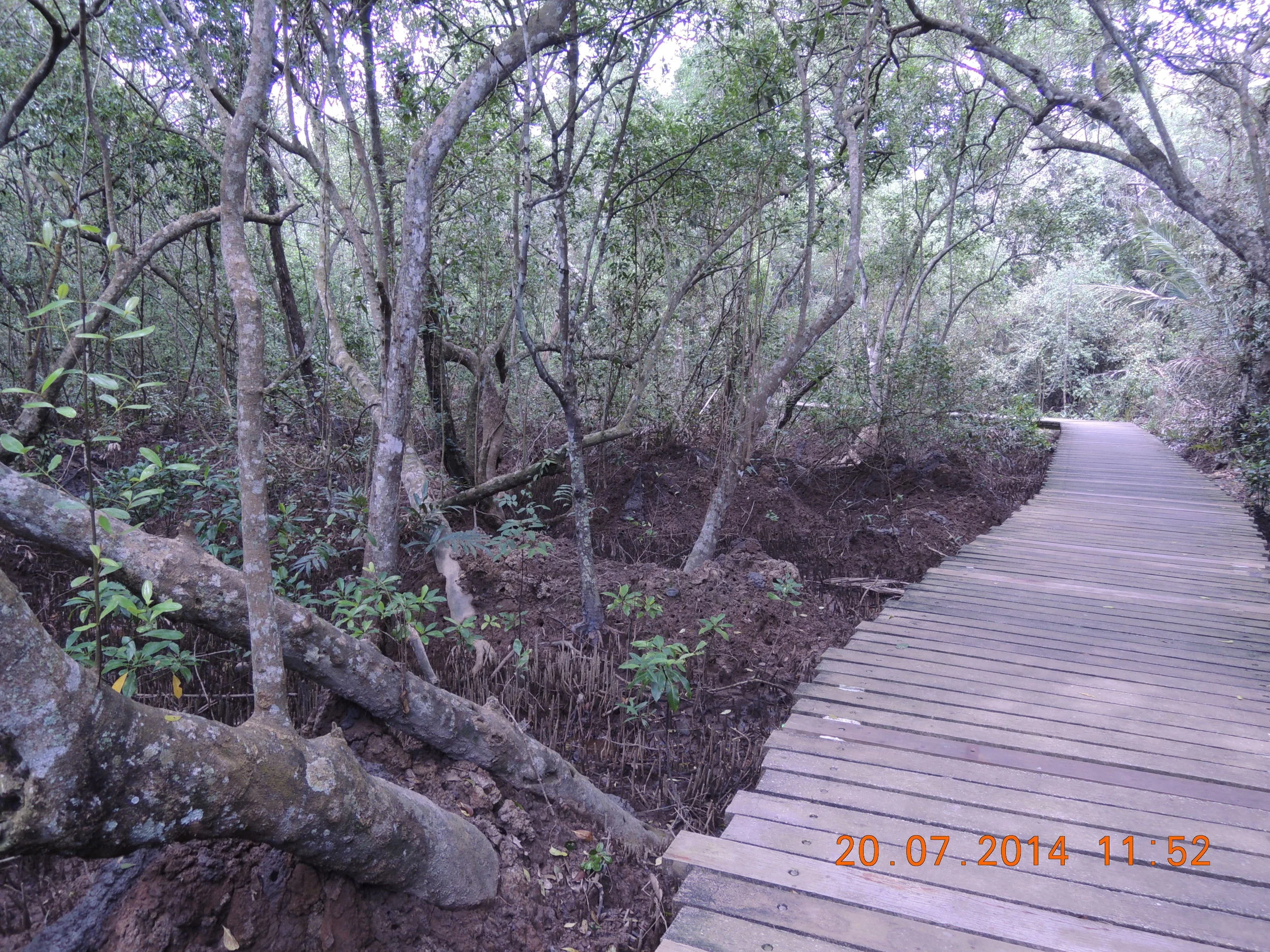
Resi's comfortable on her bike.  

Mangrove Boardwalk with the mud lobster structures between the trunks and roots
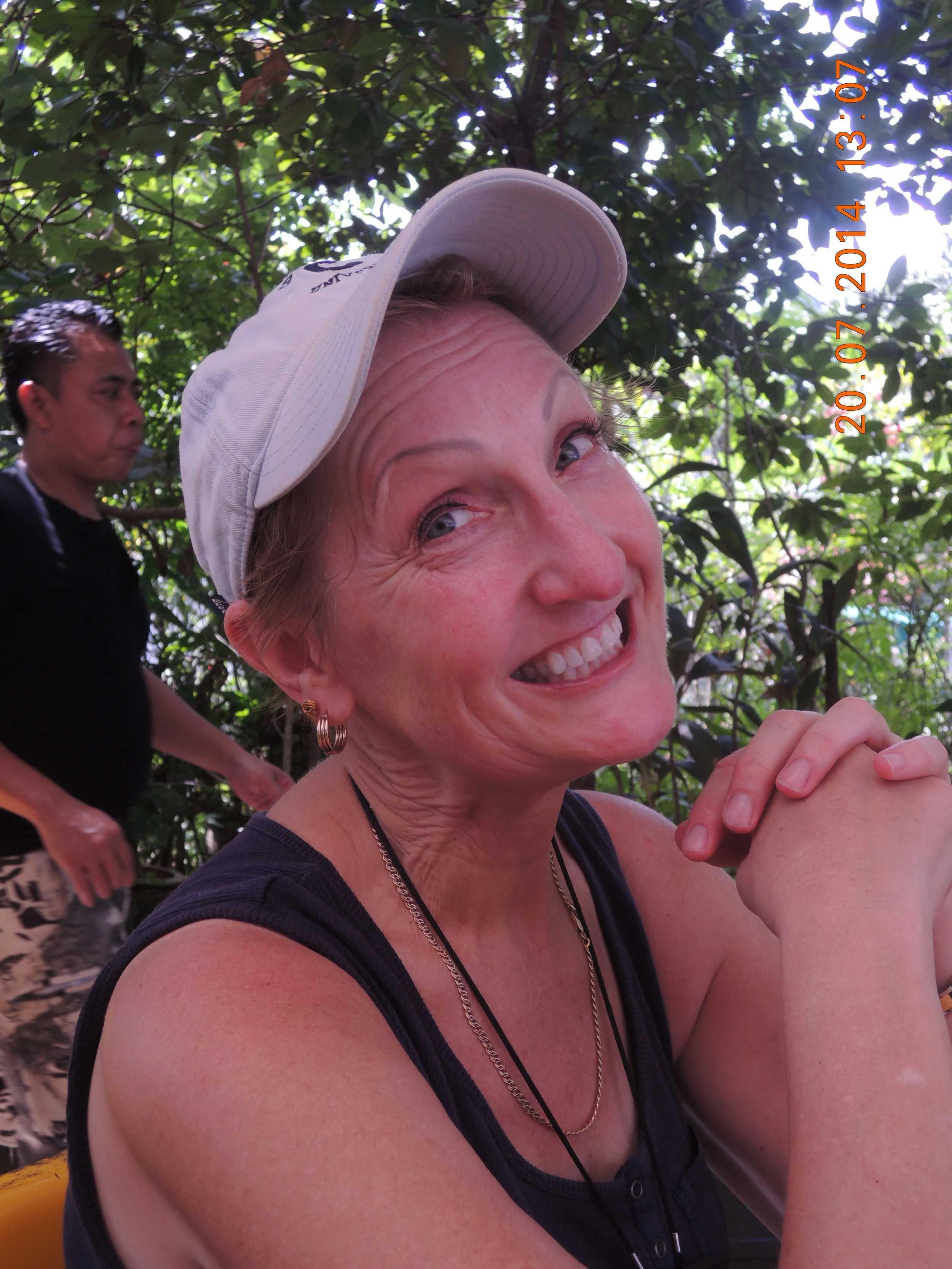
Mangrove Boardwalk with the mud lobster structures between the trunks and roots

Me, big smile when the cold beer arrives.  

Me, big smile when the cold beer arrives.  
Out of Here

We’re leaving Singapore, moving back to Houston, at the end of August.  After three years, it’s time.  As always, the reality of moving comes down to lists—what to sell, who to notify, what we want to do or see one last time before we leave, what steps need to be taken to transport the dog, reservations for airline tickets, and reservations for cars and accommodation on the other side.  (Once again, the interminable overseas flight—and I merrily remind myself that this is absolutely the last time.)  Lists give David a sense of control, while they make me feel trapped.  On Saturday David’s list looked like this: 

Buy Shoe Laces

Change Money

Reservations at Shangri-la (where we’re staying as we’re packed out)

Reservations for Phuket (one last quick trip; we love Patong Beach)

Transfer work e-mail

Talk to hardware guy about solvent (David persists in his belief that clerks have knowledge) 

Update items for sale

Update inventory

Contact HR—storage and shippers

Fix Cabinet

My list looked like this:

Run errands, get things done

The core of any move is Stuff—packing it, distributing it, and, sometimes, cramming it in the garbage chute.  The tradition I embrace is that the maid always gets first dibs.  This time around, all I have to discard are clothes, but Jean’s the size of a ten-year-old girl.   I can’t see her wanting my faded shirts and jeans.  Once, years ago in Cairo, all I had to leave Nadia was a gigantic box of Tide, a rare and precious item at the time.  I had visions of her proudly washing her sons’ clothes, boasting to her busybody neighbors that she had the best detergent.  My feelings were hurt when I heard she sold it, which is just silly.  I gave it to her—what she did with it was her business.  And of course she needed money more than smell-good clothes. 

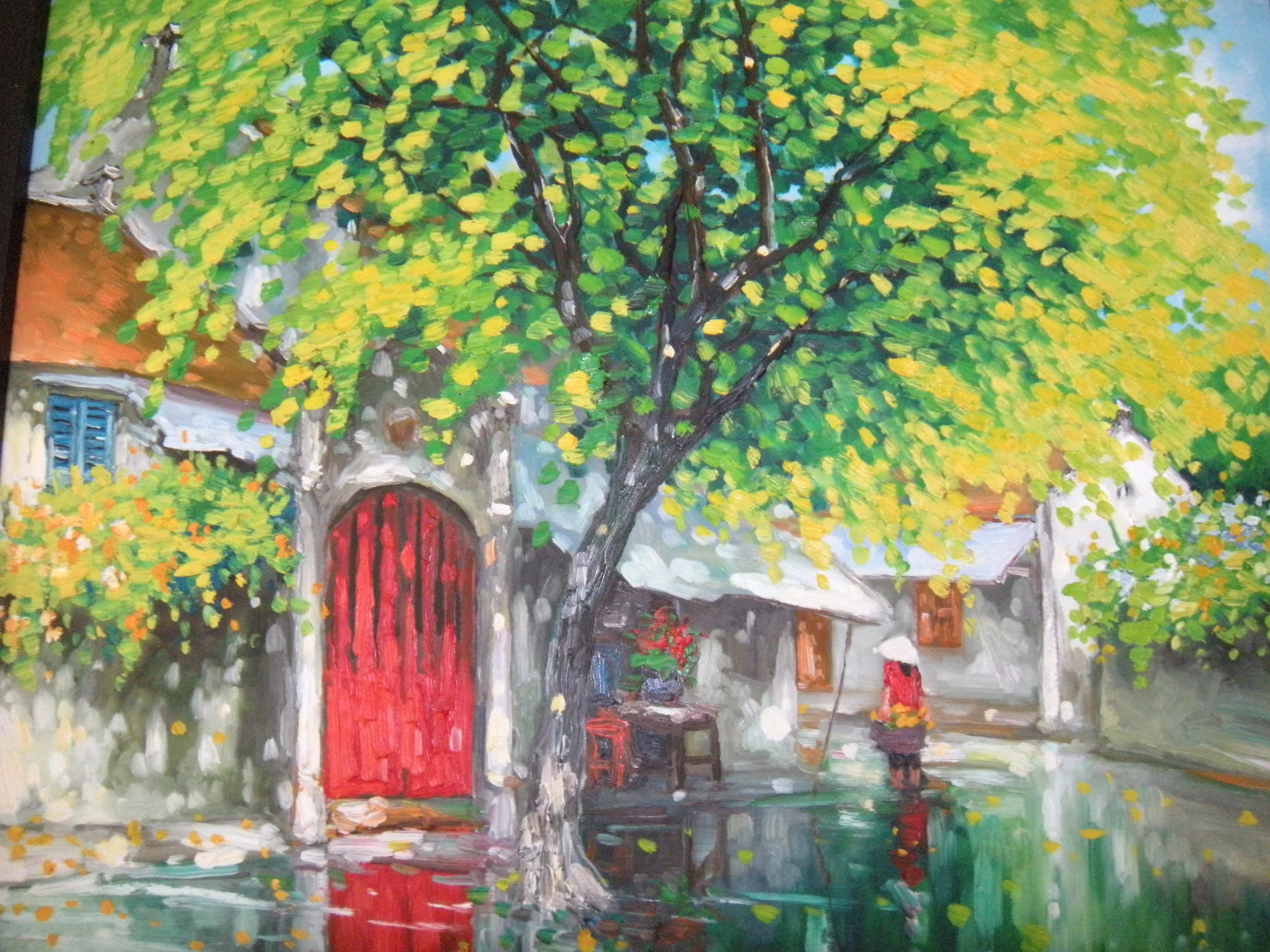
Over the years we’ve collected items from our overseas locations—things that will remind us of where we’ve traveled, the interesting things we’ve seen, the culture we were immersed in for a while.  Mostly it’s been art:  the Cahill watercolor of Aberystwyth, the Mansour from Egypt, and the two Dutch oils, one to suit each of our tastes.  Here in Singapore we’ve mainly stuck to smaller items—a green wooden jewelry box, a shuddered mirror, a piece of pottery from the Dragon Kiln. In Vietnam we purchased a hand-painted chest, with which we quickly developed a love/hate relationship—duty to get it into Singapore cost almost as much as the chest.  Oh, impulsive Waldos! 

Also, for every move, a list of possessions to be shipped must be compiled, and every item must be described and its value estimated.  That’s my job today.  What a pain.  But my sister, Resi, and my cousin, Georgia, will be here at the end of the week and at that point I’m putting aside the demands of the move in order to shop, drink wine, and play Mahjong for three weeks.  Yay! 

This is Jean.  Can you tell how tiny she is?  That chest comes to mid-thigh on me, and I'm not a tall person.  See the Dutch oils and the green box?  

This is Jean.  Can you tell how tiny she is?  That chest comes to mid-thigh on me, and I'm not a tall person.  See the Dutch oils and the green box?  

Here's a painting we bought in a shop on Tanglin Road.

Here's a painting we bought in a shop on Tanglin Road.

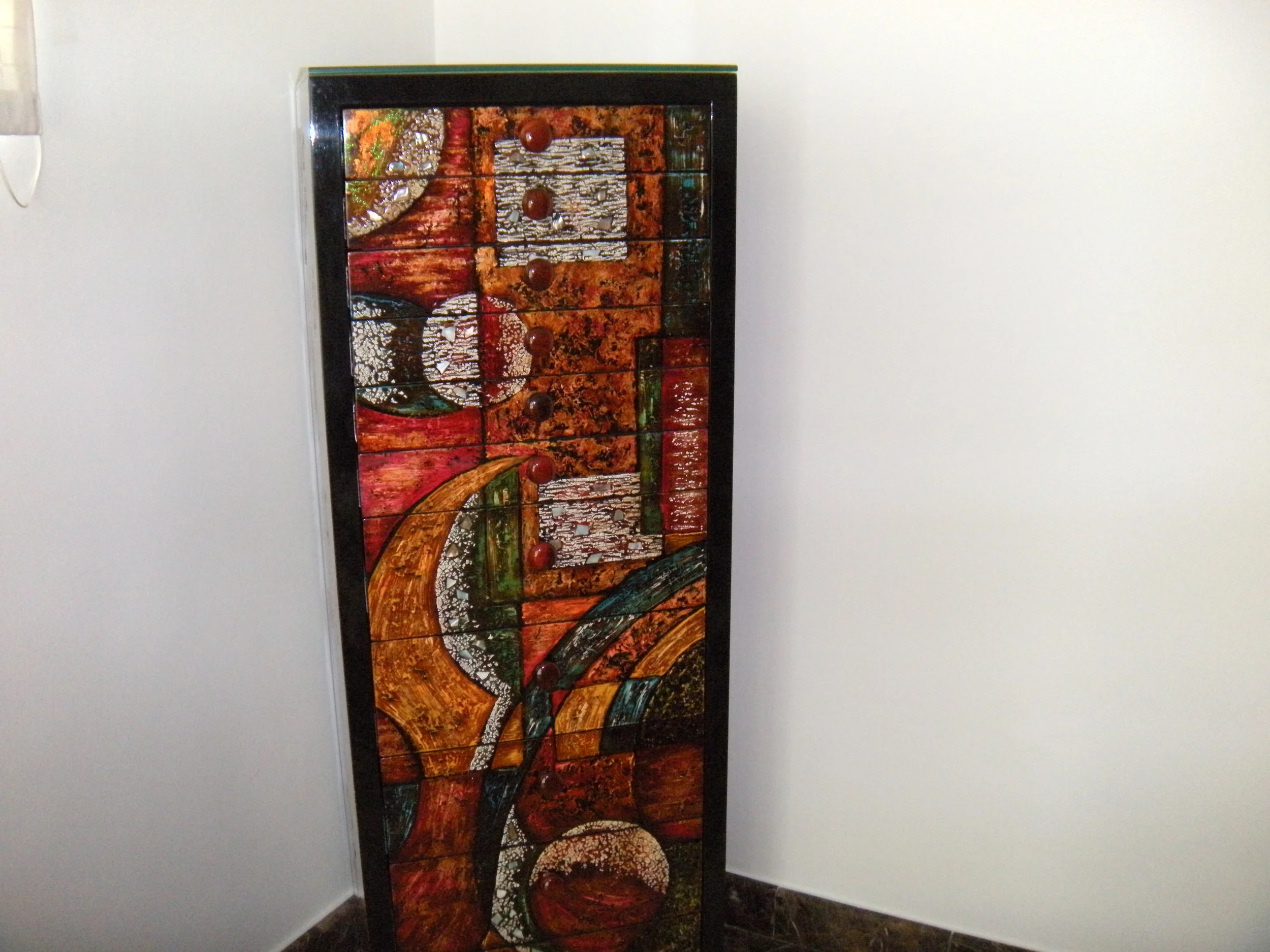
The chest from Vietnam.  Lovely, right?  

The chest from Vietnam.  Lovely, right?  

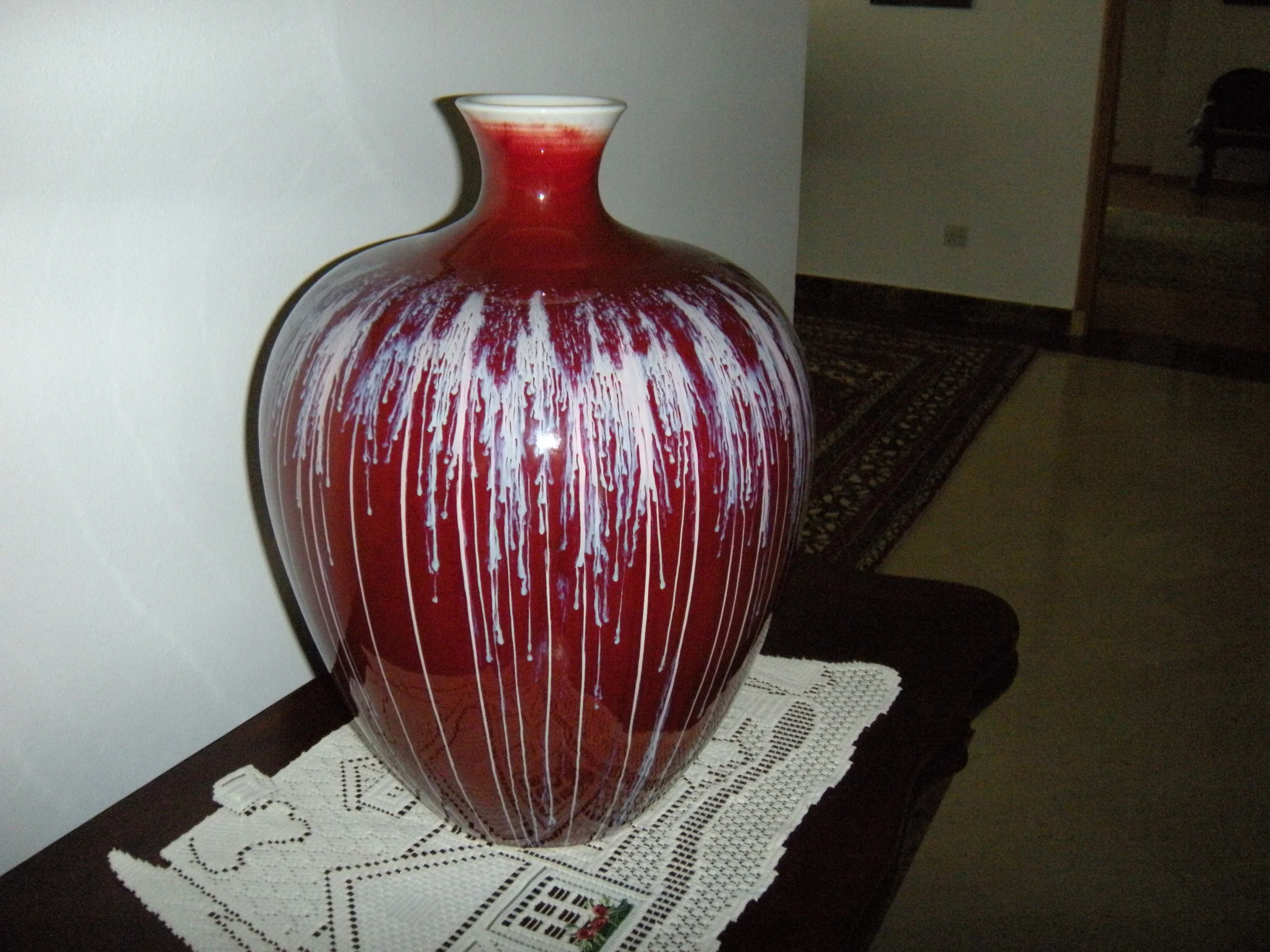
For the inventory--would you describe this as a vase or a jar?  

For the inventory--would you describe this as a vase or a jar?  

Houston to Singapore via Moscow

It’s a long trip, almost twenty-four hours.  The only time I’m envious of anybody is when I’m heading to coach, passing the people who are settling into first class.  I’d love to spread out in a cushioned chair that opens into a bed; to have, all to myself, what amounts to a small cabin.  It would be heavenly not to have to scramble over people to go to the restroom.  I wonder—does the front of the plane smell like recycled farts, too?  Or do they have a filtration system modified to suit the sensibilities of people who spend thousands of extra dollars on something as fleeting as an air flight? 

I take my seat, hoping the flight’s not crowded.  I’ve been on flights before that were almost empty, which allows for sprawling over whole rows.  But it doesn’t happen often.  It’s the second of July, though, which means landing in Singapore on the Fourth, and why would anybody want to celebrate the Fourth of July in Singapore?  So there’s a chance that maybe . . . but even as I hope I recognize the futility.  I saw how many people were milling out there, waiting to board. 

From my window seat, I eye the arriving passengers with mean suspicion.  The neighbor least desirable is a smelly fat man.  I’ve had those before.  Unapologetically, they spill over.  When they shift all three seats shift with them.  In this corpulent age, I estimate I have a twenty-five percent chance of a thin person settling into the seat next to me.  I’m disappointed, but not surprised, when a heavy woman and her child claim the two seats.  This’ll go two ways, neither of them pleasant:  If the kid’s in the middle seat, he’ll wiggle and whine.  If she’s in the middle seat, her flesh will invade my area.  It’s her.  Resigned, I huddle toward the wall of the plane, giving her the space she’ll require. 

I don’t sleep on planes, but I have a system that involves a couple of glasses of sour in-flight wine and a valium, so at least I’m numb during the whole miserable experience.  The movies are uninspiring, but there was a time when only two movies were on offer, so with dozens of options, I easily find something to pass the time.  Also, I’m reading the latest in the Gabaldon series which, in this installment, has the time-travelers trick-stepping their way through the American Revolution.  It’s a fun read.  And the woman next to me is politely containing herself, so that’s nice.  Every time the stewardess passes me wine, it comes within inches of my neighbor’s nose, who drinks only water, which makes me feel like she’s judging me.  But throughout the main portion of the flight she sleeps deeply and, during one of her wakeful moments, when I comment on her ability to sleep on a plane, she tells me she took an Ambien.  So, no judgment there.  We all do what we have to do to get through. 

There’s a stopover in Moscow.  We all get out, hike a dismal hallway, line up for a security check, and are herded through to the transit corridor.  If there’s anything in the world that attests to how economically backward the Russians are, it’s the international boarding area at Sheremetyevo.  There’s a fortune to be made selling comfort to weary travelers, but the Russians want us gone quickly and wretched while we’re here.  It’s a big holding cell—stingy, austere, stuffy.  Touch anything and your fingertips come away smudged with gray.  This is where Edward Snowden took refuge for so long.  Where did he stay?  In the janitor’s closet at the end of the restroom hall?  There are a thousand people and fifty chairs, two restrooms with eight booths each, a few shallow shops stocked with nesting dolls and t-shirts.  In the restroom I take my time at the sink, refusing to be intimidated by the fifteen women who wait, glaring, while I brush my teeth, wash my face, apply moisturizer, comb my hair.  Then it’s back on the plane for another nine-plus hours. 

Singapore welcomes me with humid arms.  What have I missed?  David and Trip, of course.  Also Modesto’s, where David and I split calamari, eggplant, and a carafe of the house red.  The dynamism of Orchard Road, where the leisurely pedestrians entertain without meaning to.  Writers’ Group, where Donna shares her clever poetry, Kelly creates rebellious characters, and Vanessa reads the latest installment of the saga she’s working on.  And Mahjong—the way Susan likes to try new hands, often with impressive results, and Judith hums merrily while she plays, whether she’s winning or losing. 

It’s good to be back.  

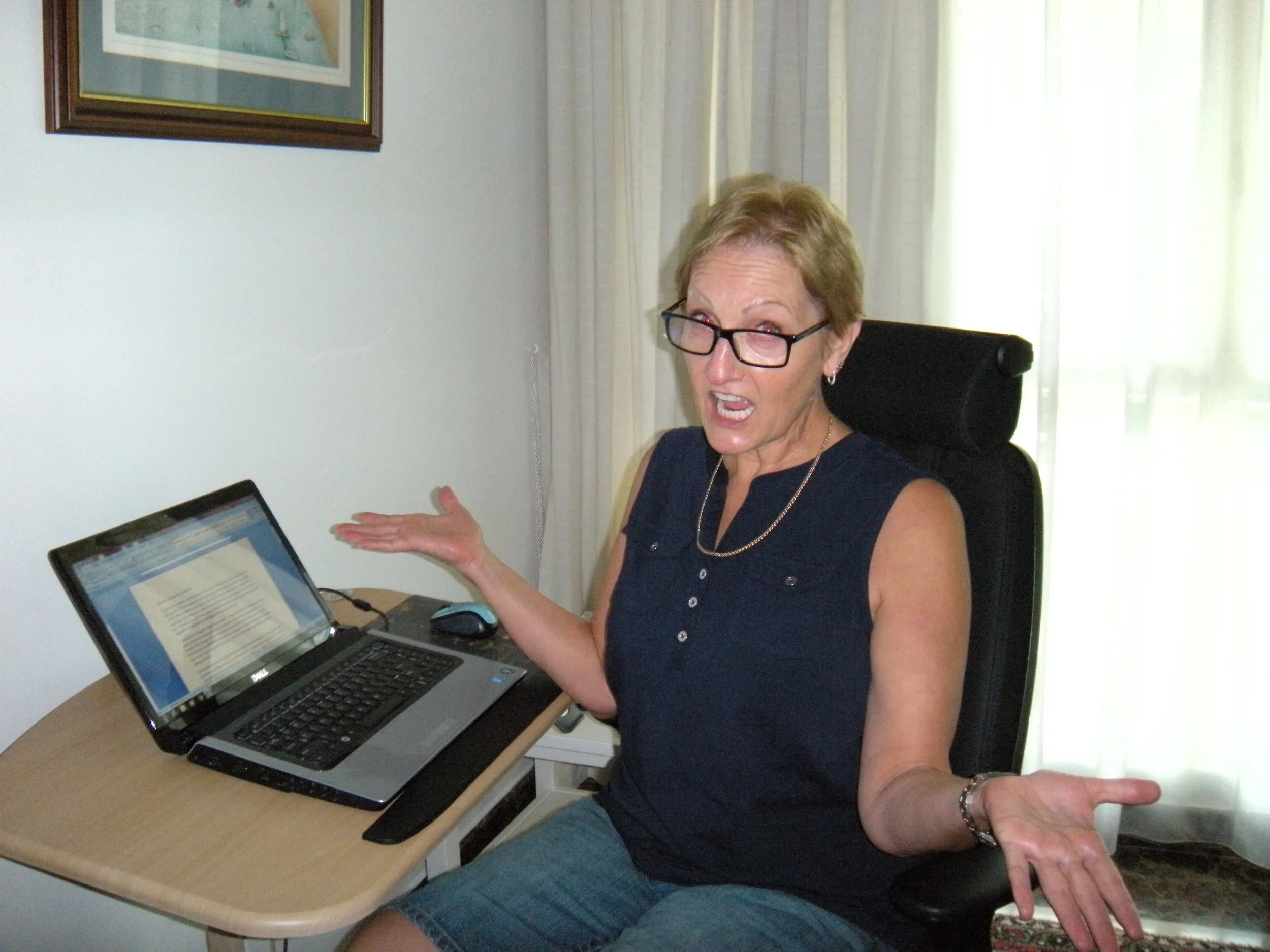
Me at my writing table, looking exaggeratedly apologetic because I forgot to take the camera in my carry-on, so no pictures

Me at my writing table, looking exaggeratedly apologetic because I forgot to take the camera in my carry-on, so no pictures

The Houston Brunch Experience

We’re meeting at Canopy, on Montrose, between Richmond and Westheimer.  Curtis is there when I get there.  As soon as I take my seat, someone pops over to take our drink order.  At a glance, I’d say waiters outnumber patrons two-to-one.  We both order Bloody Marys, which come quickly.  This is the most delicious Bloody Mary I’ve ever had.  Everything about it is excellent—spicy, but not too, the perfect dash of Tabasco, the right amount of salt.  The vodka’s a presence, but not an overpowering one.  And the tomato juice is so good it makes me wonder if they make it fresh back in the kitchen.  

Jimmy arrives.  I rise to greet him with a hug.  It’s been years.  He’s an adult now, and taller than I ever thought he’d be.  There’re loads of ways to prepare eggs and Canopy knows them all.  Curtis and Jimmy orders eggs cooked some way or another.  When I ask what the soup of the day is, I don’t actually listen to the answer because this get-together isn’t about food.  I order the soup, which turns out to be edamame.  When it arrives at the table cold and green, well, I have no one but myself to blame. 

Jimmy and Sam became friends in third grade.  Jimmy was a high-maintenance child, a kid who needed an audience for everything he did.  I distinctly remember, at one point, telling him that I invited him over so he could entertain Sam, not so I could entertain him.  But he wasn’t a brat.  In fact, any mother would want him as a friend for her kid—he was honest, funny, kind, imaginative, and enthusiastic.  What I really admired about him, and took as a sign of rare intelligence, was the way he used items for things other than their intended purpose.  In his hands, a window shade became a hat, a house key a mighty sword, and a coke bottle a magnifying glass. 

And now he sits beside me and talks like an adult, telling me about his job and his plans and the football program at A & M.  This is the first time since he was a sophomore in high school that he doesn’t have a girlfriend, and I tease him about that.  His mother raised him to be considerate, and girls like that in a guy.  He catches me up on a few of his and Sam’s other friends—how Michael’s going to med school and has a nice girlfriend, and Bradley’s doing fine, sociable, just like his mother, Mitzi, who always had plans with friends. 

It’s been a fine visit.  We say good-bye.  I’m kind of sad.  He’s made me miss Sam, who’s in Beijing building a life far from David and me. 

Curtis and I head for the fun shops on Westheimer.  Walking through musky old stuff is one of my favorite things to do.  Some of the pieces are quality antiques; others are whimsical, and not worth much.  Often trendy shops will overcharge, so I’m surprised to see some good deals—furniture in good condition that costs a fifth of what you’d pay for new, though I’d never consider buying upholstered couches and chairs.  Who knows who’s sat there and what they were wearing, or if they were wearing anything at all.  What I enjoy most are the set-arounds—decanters, crystal, cream pitchers, vases.  I like to look at the pretty things and think about where they’ve been and who owned them.  I always find surprises, too.  There are little mugs in the shape of men’s faces, most of them bearded with lumpy noses and heavy brows.  Some of them sinister, some bumpkinish.  Apparently there’s a whole line of the things; people collect them.  Who are these people?  Why? 

As we stroll through the shops Curtis tells me about what’s going on at work, what the partners are up to, how a co-worker is floundering, what cases they’re handling.  He chuckles when he describes how people in the office tease him about his car and the clothes he wears on casual Fridays.  I’m glad he likes his job.  Next Sunday we’re going to do brunch again—and afterwards we’re going to the estate sale of a wealthy suicidal hand surgeon.  Good times.  

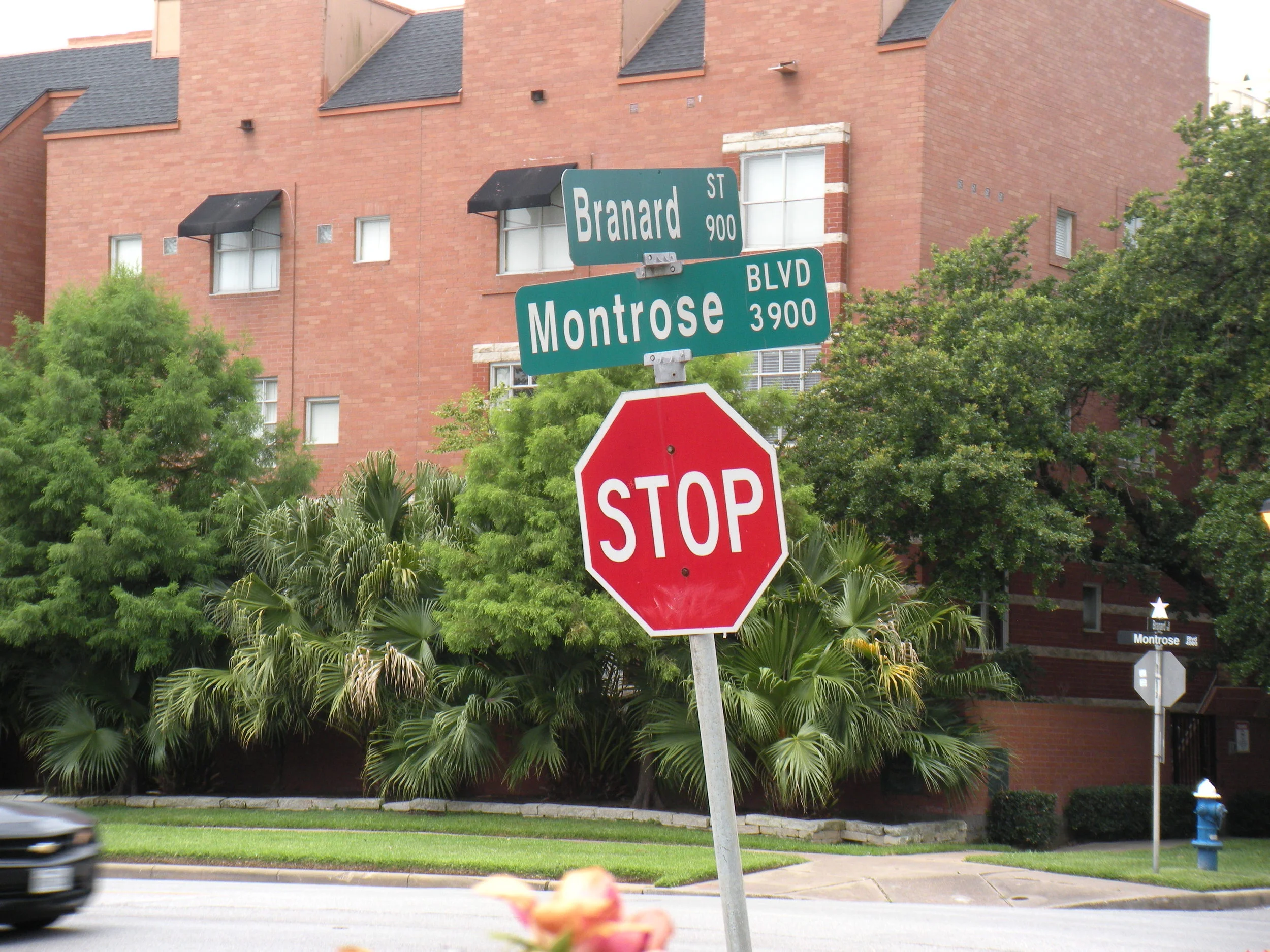
The place to be

The place to be

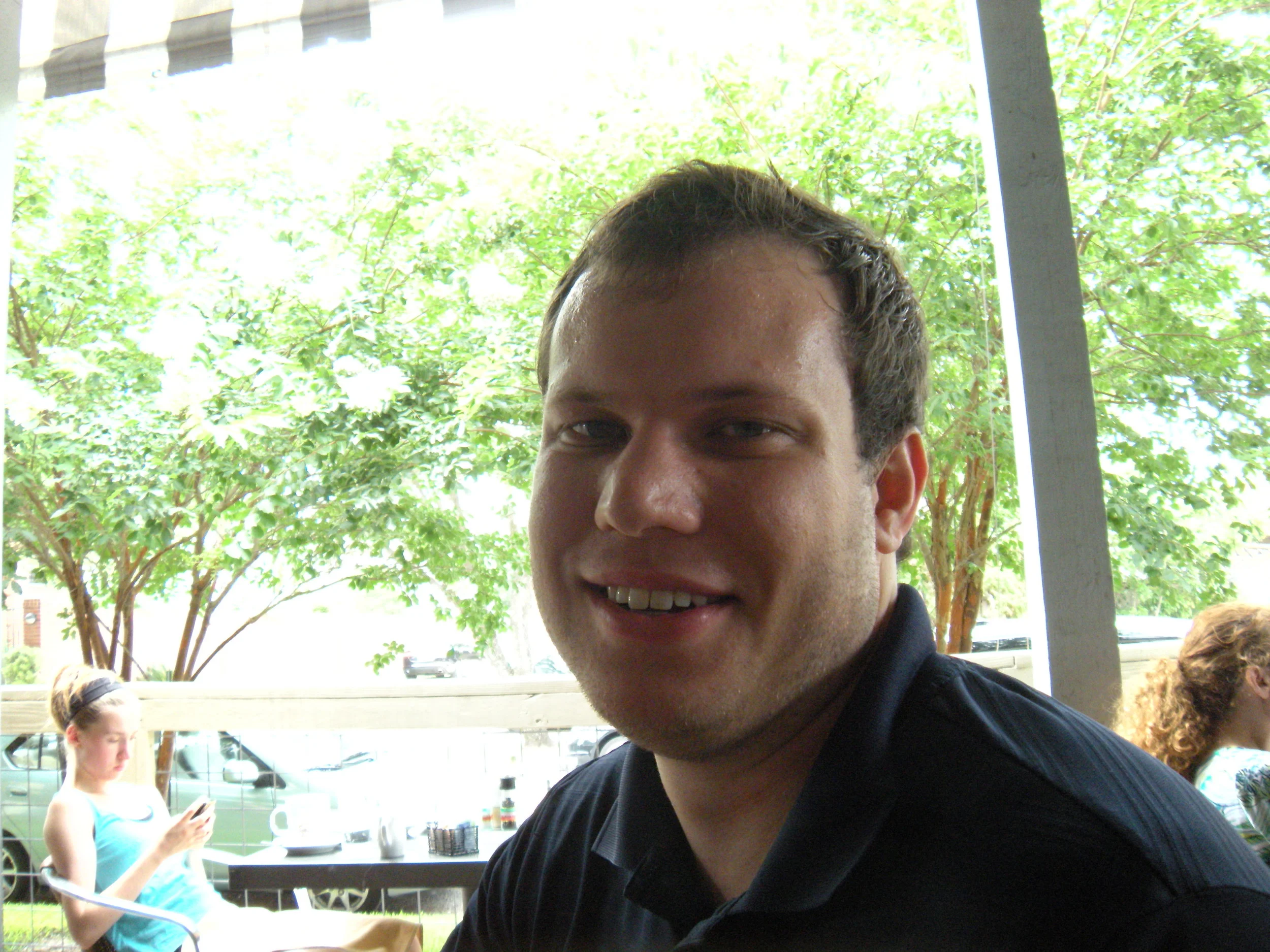
Here's Jimmy.

Here's Jimmy.

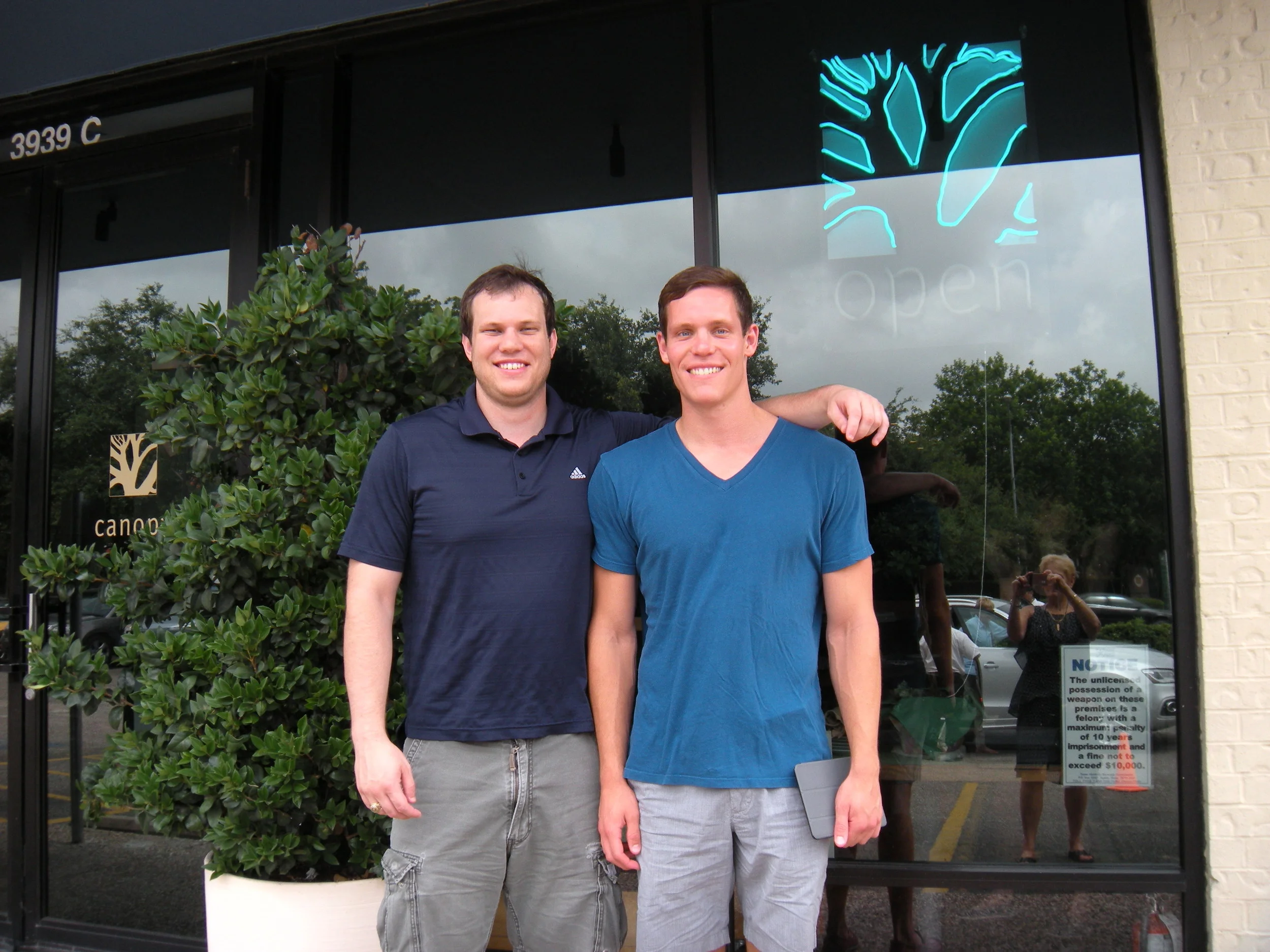
Jimmy and Curtis outside Canopy.  See me taking the picture?  

Jimmy and Curtis outside Canopy.  See me taking the picture?