Rock. Literally.

Jagged edges, it rests on its side, rising from the table like a hill—or, if you allow, a jebel, which is a hill in Northern Africa; and, like an actual jebel, is the color of sand, just like the jebels we saw when we lived in Egypt and we left the city, smoky from burning garbage.  And in the desert, hills of sand as far as sight permits.  Jebels. 

Just this morning the rock was on the Terry Hershey Bike and Walking Trail.  Now it’s here, on the table.  Plucked up by me, and me looking at it, telling myself that a good writer can make any ole thing interesting, and accepting the challenge. 

Almost a triangle, this rock.  Asymmetrical, rough, representing rocks throughout the world.  Wind abraded; water cut, left scars; grinding and knocking against its brothers, becoming smaller and smaller until it’s the perfect size and the perfect shape to become wedged deep between the tender pads of a collie’s foot.  The dog limps, stops to dig with teeth at the sharp pain.  “Here, let me,” says his best friend, a man whose belly is big.  Out here walking because he’s been told to exercise, to lose weight if he wants to live!  Bending, he frees the rock, tosses it, and it comes to a stop in a fissure, insignificant to the man’s foot, but to the rock, a major split in the surface of the earth, a crevice created by flowing water, flowing from high to low, from jebel to wadi, like all water at one time or another, and now the rock is part of its topography, a boulder in this mini-canyon. 

Until a woman trips and sends it flying.  The woman bald on account of chemo.  Scarf wrapped, colorful head, and when she falls she hurts, more than a healthy person would hurt.  She’s weak and sits there, blood running from the gash on her knee, down her shin.  “Oh, ow,” she says.  “Poor leg.  Poor me.”  But, tenacious like an action hero, she gets feet under and rises, skinny and gray like a worm.  Did the rock trip her?  No.  Her toes don’t grip.  Feet without flex.  Ankles stiff.  She hobbles away, looking for morning joy. 

Flung from its gully-bed by cancer woman.  Then nanny with stroller.  Rolled-along toddler, golden hair, sings La-la-la.  Illegal, the nanny, paid way less than a legal one, which would be very expensive indeed for the toddler’s family, sales couple at Toyota, but low on the chain.  Heavy-footed, she pushes, wheels crunching.  Also chews gum.  Her mother not well in Chihuahua.  Brother disappeared last year.  Gone where?  Cousin’s husband hits with fists.  Nanny prays for these.  Toddler sings La-la-la.  Nanny doesn’t pray for toddler, who will do well without alien prayers. 

Stroller wheel catches rock at angle, skips it off path, into grass.  Two years before city mower shoots it back to path with RRRR—whoop whoop whoop!  And woman who misses husband and dog in Singapore, bends, plucks it up with stubby fingers, and shows an unexpected interest.  

The rock in the grass

The rock in the grass

DSCN1854.JPG

Walking and Writing in Houston

On Monday, Wednesday, and Friday mornings the caregiver arrives at eight.  By eight-fifteen I’m out the door for my walk.  There’s a trail about five minutes from Trina’s house.  The path runs adjacent to a canal, which leads to Buffalo Bayou, very naturey.  I walk out for half an hour, then turn around and come back.  This time of day the shadows are long and the breeze is fresh, though humid; in Houston summer, always humid.  The tat-at-at-at of woodpeckers and the songs of mockingbirds drift from the trees and bounce off the back fences of the homes that border the open area. 

As my feet crunch along on the path, my thoughts turn to the novel I’m currently working on.  My main character is a blend of damaged child and bully.  She claims to be helpful when she’s really manipulative.  She doesn’t recognize the line between concern and intrusion.  She’s intriguing to write and I enjoy having her in my head.  But I worry that her dark complexity is too heavy for the plot, which is lightweight, meant to entertain.  Is this a bold contrast or a foolish one?  I’m at the point where I usually panic—I need to see the ending, and I don’t.  This happens every time, and I know what’s coming.  In the next week or two a full picture will pop into my mind, either during that coming-awake period at the end of a night’s sleep, or when I’m out walking—and then I’ll know where I’m going, how my characters will grow, or not grow, and how I’m going to weave it all together.  But until that happens, I press on doggedly, faithfully.

A frog, no larger than the nail of my thumb, hops across the path.  Tiny frogs are cute.  A couple and their dog ambles toward me.  We exchange good mornings.  A heron flaps and rises from the narrow muddy stream to my left.  Considering the number of dogs out here, the place is pretty clean.  Houston dog owners are polite.  Oh, and look, some kind master has cut a square hole in his fence so his dog can observe the comings and goings on the trail.  Hello dog. 

Several days ago my sister, Resi, asked me to send her a copy of Urban Legend: Cats (the title says it all).  The plot is a simple one—a paranoid hypochondriac sneaks into her neighbor’s cat-infested house, snatches cats, and distributes them among her friends.  I wrote it ten years ago and it needs some updating and editing, which I’ve been meaning to get to.  So I asked Resi to give me a month or so to clean it up.  But the manuscript’s an unwieldy beast, so many extra words that I’m horrified I ever allowed anybody to look at it.  Unnecessary phrases, long explanatory passages, redundancies—oh my.  At the beginning of this process it weighed in at a hundred and fifteen thousand words.  I’m a sixth of the way through it and I’ve already cut ten thousand.  After this run-through, I’ll do it again, and then probably once more.  By the time I’m finished, it’ll be sharp and lean.  It's a very funny book.  

I’m on the home stretch—past a school, past a street-repair site.  This is typical—they’ve dug a large maw in the dark earth; the large pipes are stacked to the side, ready to go in; and adjacent to this mess sits the replacement grass, which they won’t be ready to put in for at least two weeks.  Sitting in the hot sun for at least a week, the pallets have already turned brown.  A man stops his leaf-blower when I go by, and I wave thanks to him.  I rush in from my walk, take a shower, throw on my clothes.  The mall is twenty minutes away.  If I’m at the mall when the stores open, I’ll have forty minutes to do some damage to the credit card, and I’ll still be home by eleven, when the caregiver’s shift is over and mine begins.  

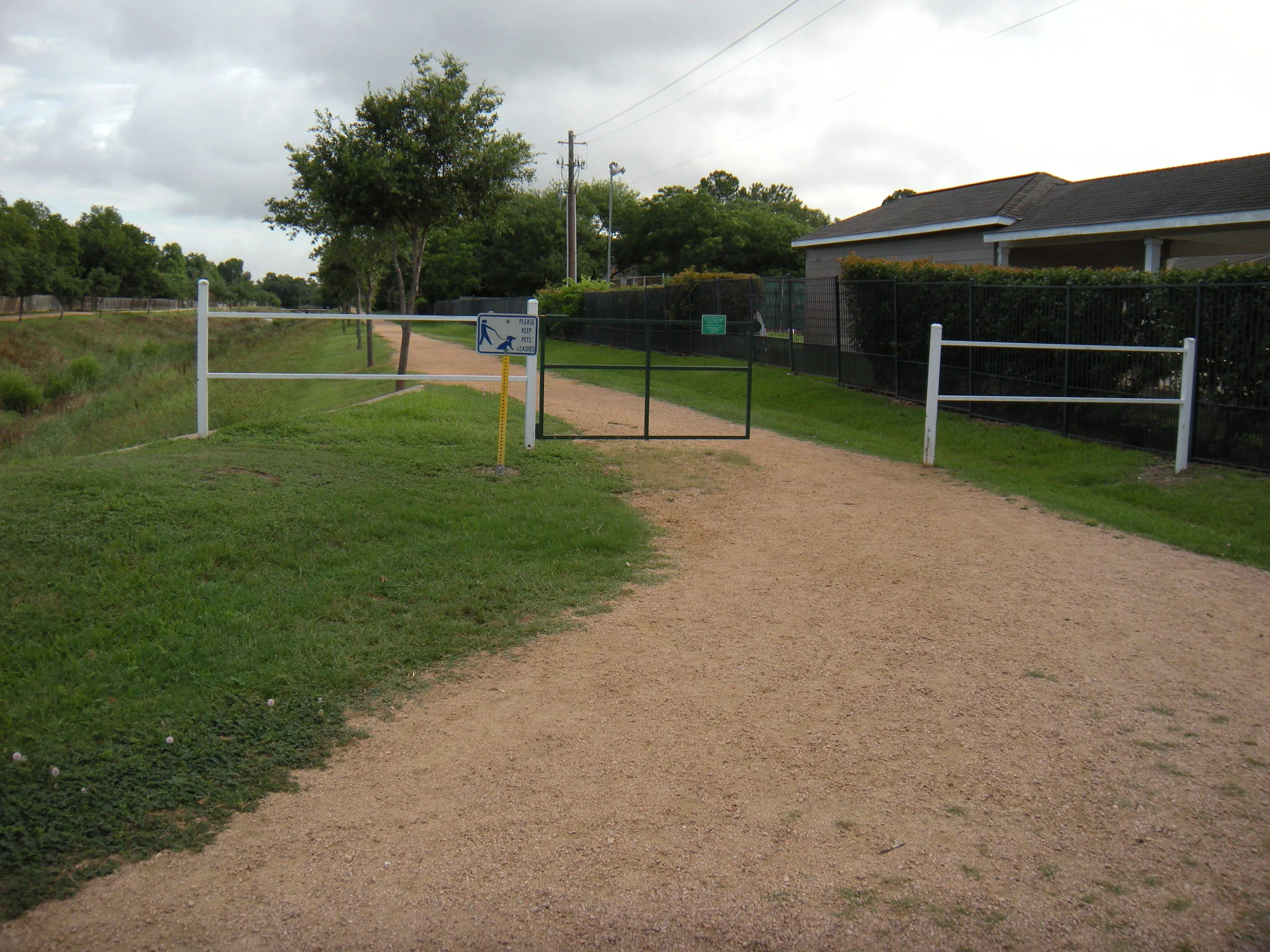
Here's a nice walk, just a couple of blocks from Trina's house.  

Here's a nice walk, just a couple of blocks from Trina's house.  

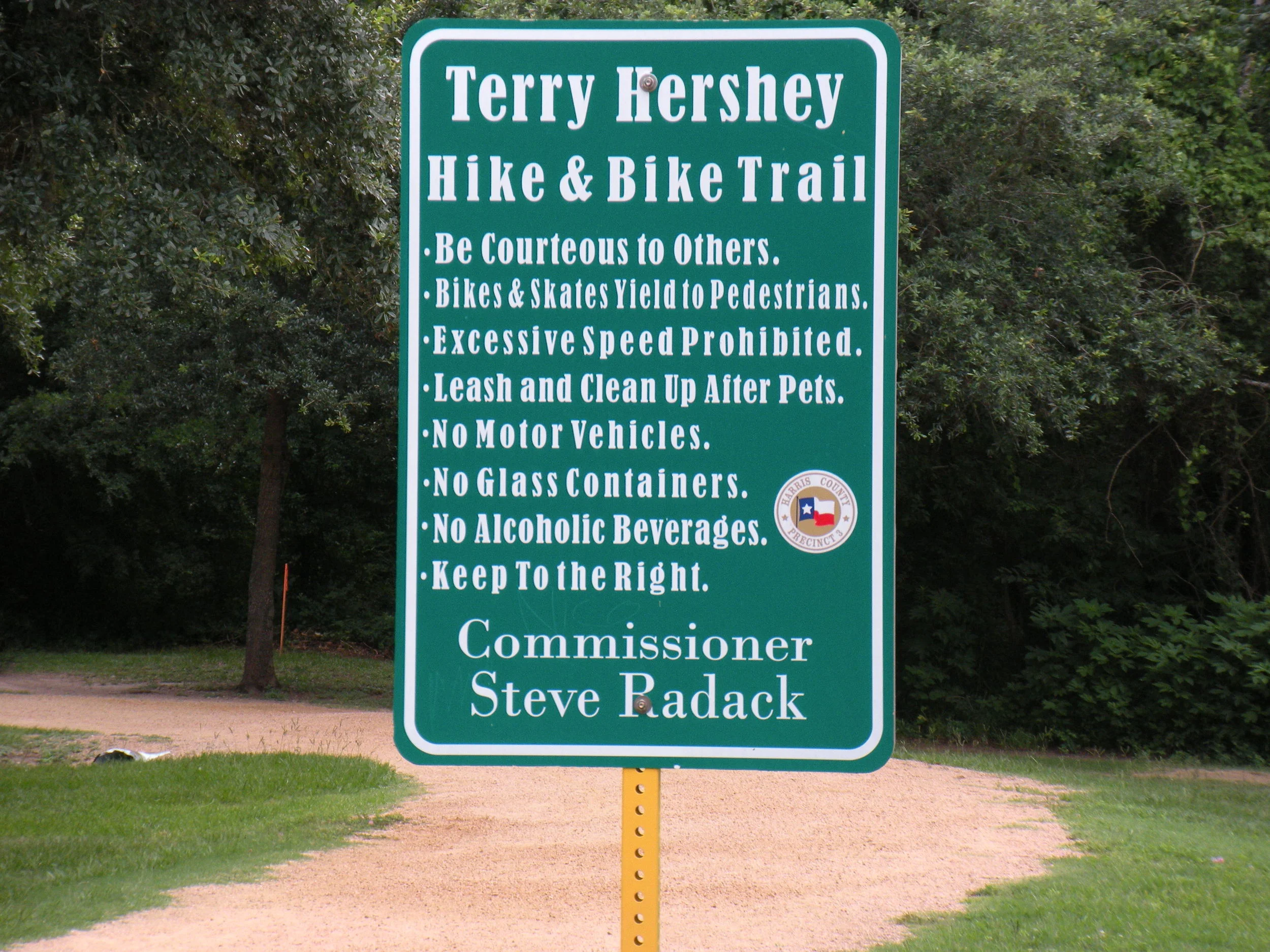
People need to be told how to use the trail, or else they'll misbehave for sure.  

People need to be told how to use the trail, or else they'll misbehave for sure.  

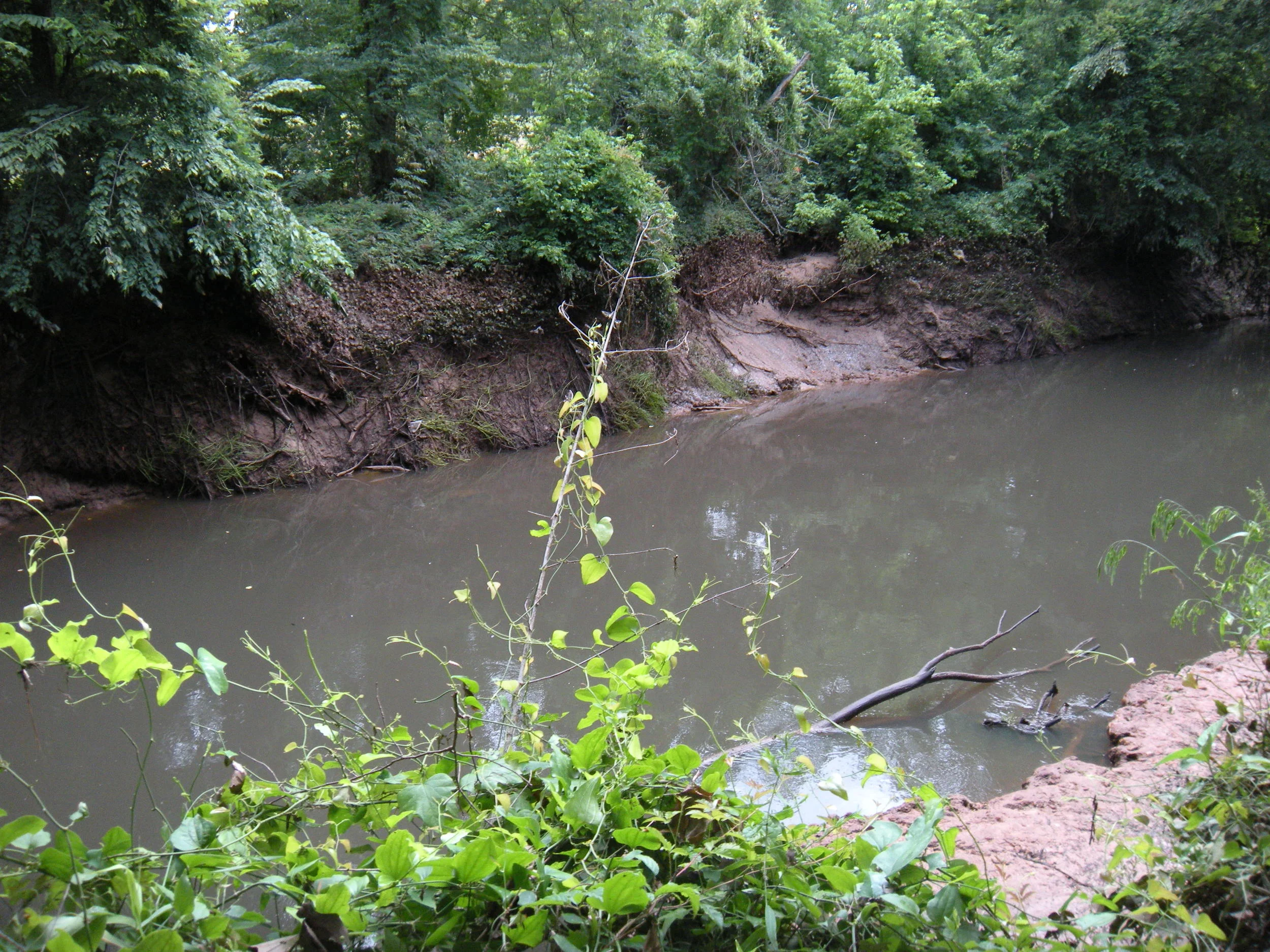
Buffalo Bayou

Buffalo Bayou

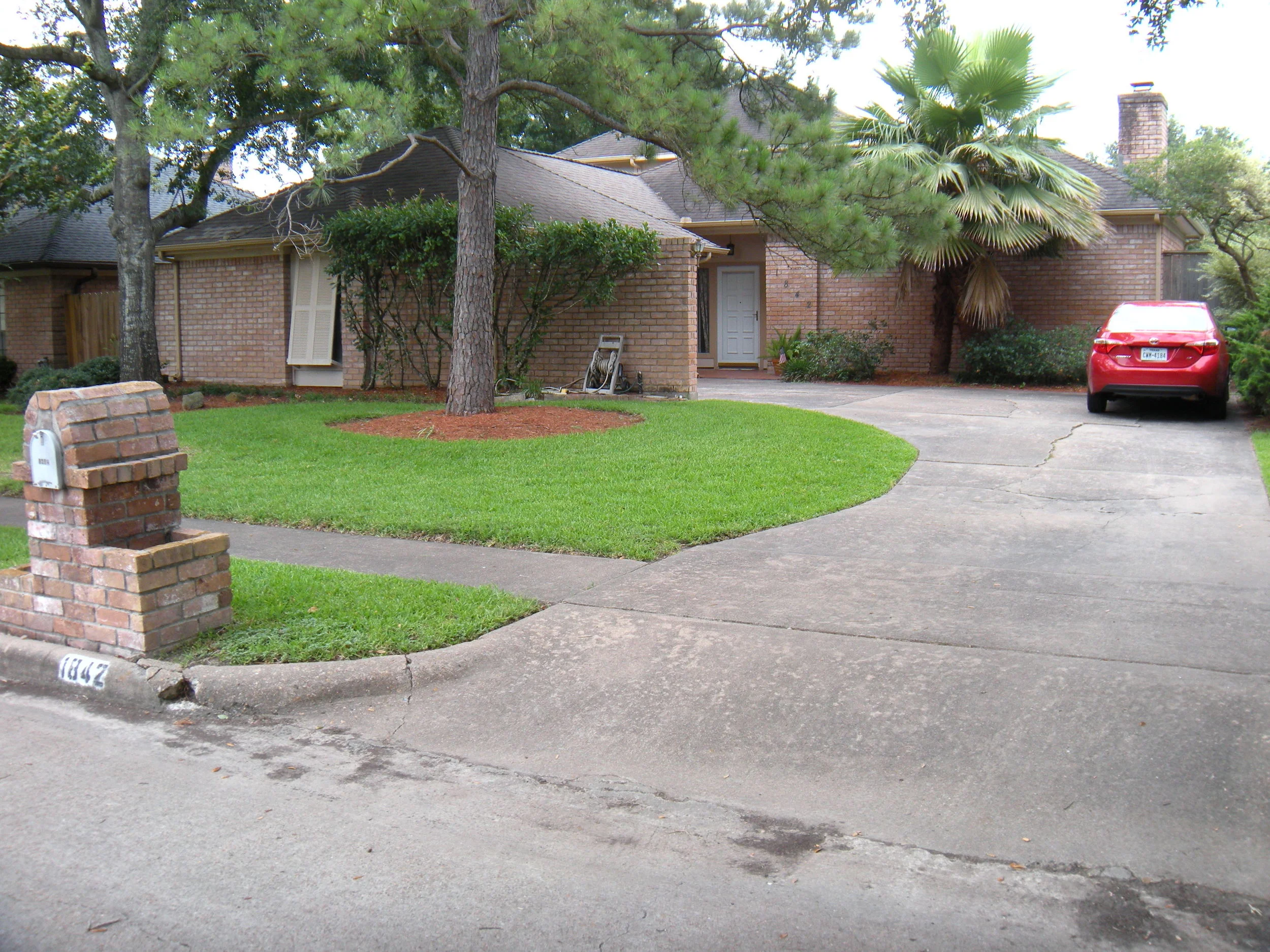
Trina's house.  The corolla in the driveway is my rental car.  The curb doesn't look like it's at prohibitive, but it obviously is.  I've clunked over it every time I've reversed out of there.  

Trina's house.  The corolla in the driveway is my rental car.  The curb doesn't look like it's at prohibitive, but it obviously is.  I've clunked over it every time I've reversed out of there.  

God Between Life and Death

Beatrice Crawford Haenisch Peery.

A humble woman.  Sang in the church choir.  Believed in the words she was singing.  Songs about God’s mercy, salvation, provision, omnipotence, perfection.  Where does all that faith go, what does it mean, now that her brain is mush and her ability to praise God or even conceive of His existence simply isn’t there?

I’m here for a month.  I make the journey from Singapore to Houston every year to give my sister, Trina, a break from caring for Momma.  During this time I change diapers, spoon in food, hand Momma pills and the water to wash them down with.  I do these things with a stingy heart, duties I execute and escape from quickly.  A caregiver comes three mornings a week and as soon as she’s in the door, I’m out.  I’ve come all this way, to my home country, and there are things I want to do here—friends to see, stores full of clothes and gadgets, a property to check on. 

Momma’s daily journey is a long one.  She has few words left.  The phrase she mutters every minute is, “I’m tired.”  And when I say every minute, I’m not exaggerating.  She says it nonstop, all day long, from six in the morning until seven in the evening.  Her drooping eyes speak, and they say the same thing.

She gets out of bed.  Her diaper’s changed—either by me or Trina, usually Trina.  She drinks a cup of coffee.  She manages this on her own, but the cereal is beyond her.  She sits bent over, too weak to sit up straight, as one of us daughters spoons it in.  Both of us talk baby-talk to her, as though our high-pitched nasally nonsense will somehow relieve her exhaustion. 

After breakfast she showers.  Trina gives a body-contact wash, putting on rubber gloves and taking the soap into Momma’s private areas.  When it fell to me to administer the shower a couple of days ago, I fit the soap into my mother’s gnarled hand and instructed her to get on with it.  Then I sprayed her down like I would a car.  Sometimes I’m compassionate and sometimes I’m not.  That was a “not” day. 

Then, cleaned up and wearing a fresh day-dress, Momma embarks on a circuit that will last the whole day—a hunched shuffling trek from her bedroom to the living room, through the kitchen, in and out of the utility room, back to her bedroom, once more to the living room.  Sometimes she collapses into her chair, but for no longer than a minute, then she’s up and pacing again.  I estimate by the end of the day she’s walked three miles, the whole time mumbling about how tired she is. 

What’s driving her?  If she had words, she could tell us.  Is she too wracked with pain to be able to relax?  She was busy all her life—maybe she feels a latent need to be somewhere, accomplish something, go, go, go.  Or is she looking for something?  Someone?

“I’m tired. . . I’m tired. . . I’m tired.”

Yesterday, in the living room, a variation.  She said, “It’s tired in here.”

I laughed.  “Is it more tired in here than it is in the kitchen?”

It’s taken me a while to realize that what she’s tired of is living.

People embrace the notion that they’ll live a useful life, and that when they stop being useful, they’ll die.  Death is seldom so accommodating. 

Dear, dear Momma.  Dying is like giving birth—drawn-out excruciating labor followed by great joy. 

My sister, Trina Haenisch, is virtuous and noble, a dry-humored woman who laughs instead of cries, and rubs lotion into an old woman’s aching deformed feet.  So if I’m looking for God’s presence in this hell, she’s it.  And I’ll be forever grateful to her for the care she gives our mother.  

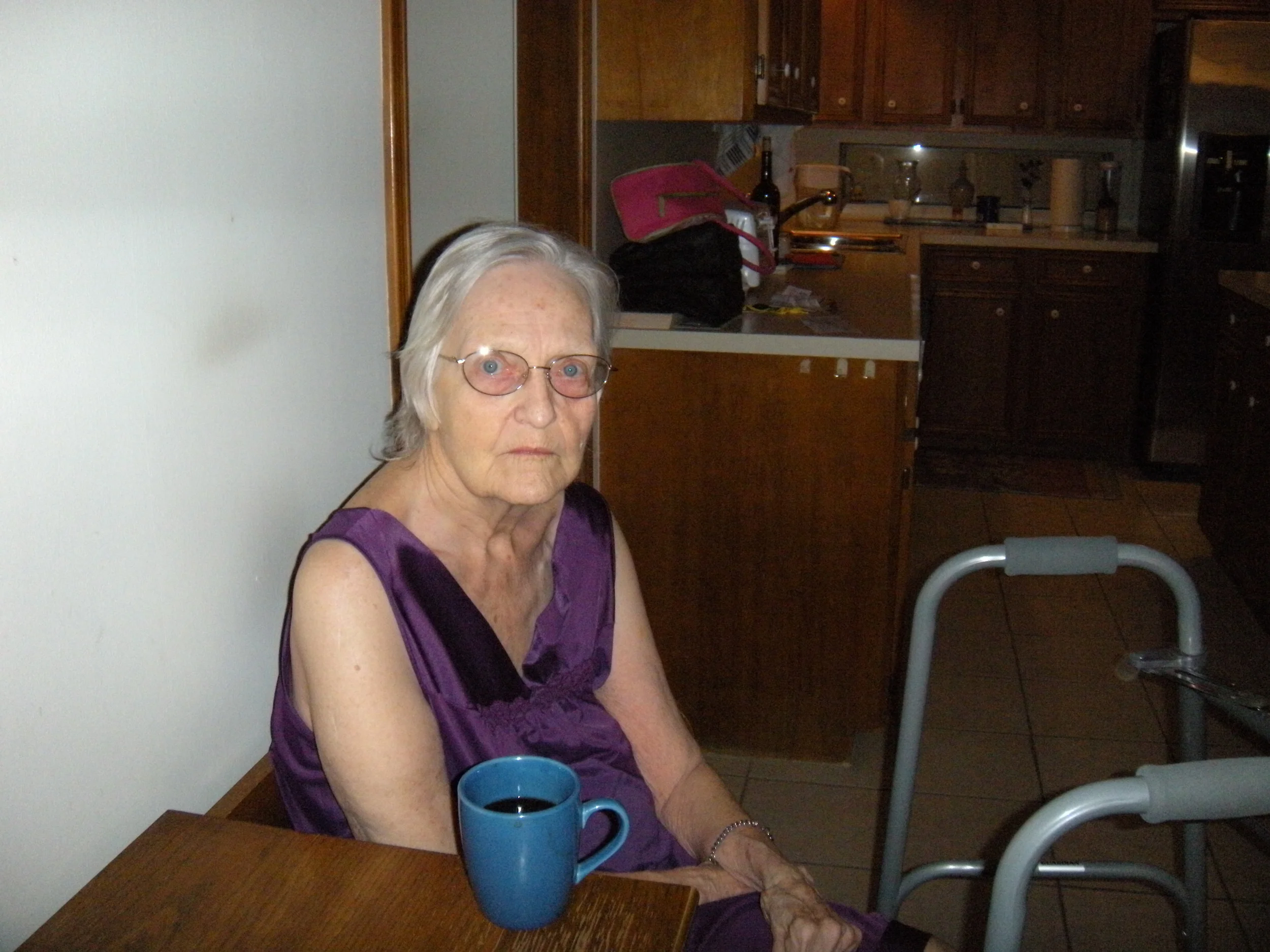
Momma and her coffee.  The corked wine in the background is mine.

Momma and her coffee.  The corked wine in the background is mine.

Trina getting ready for work.  

Trina getting ready for work.  

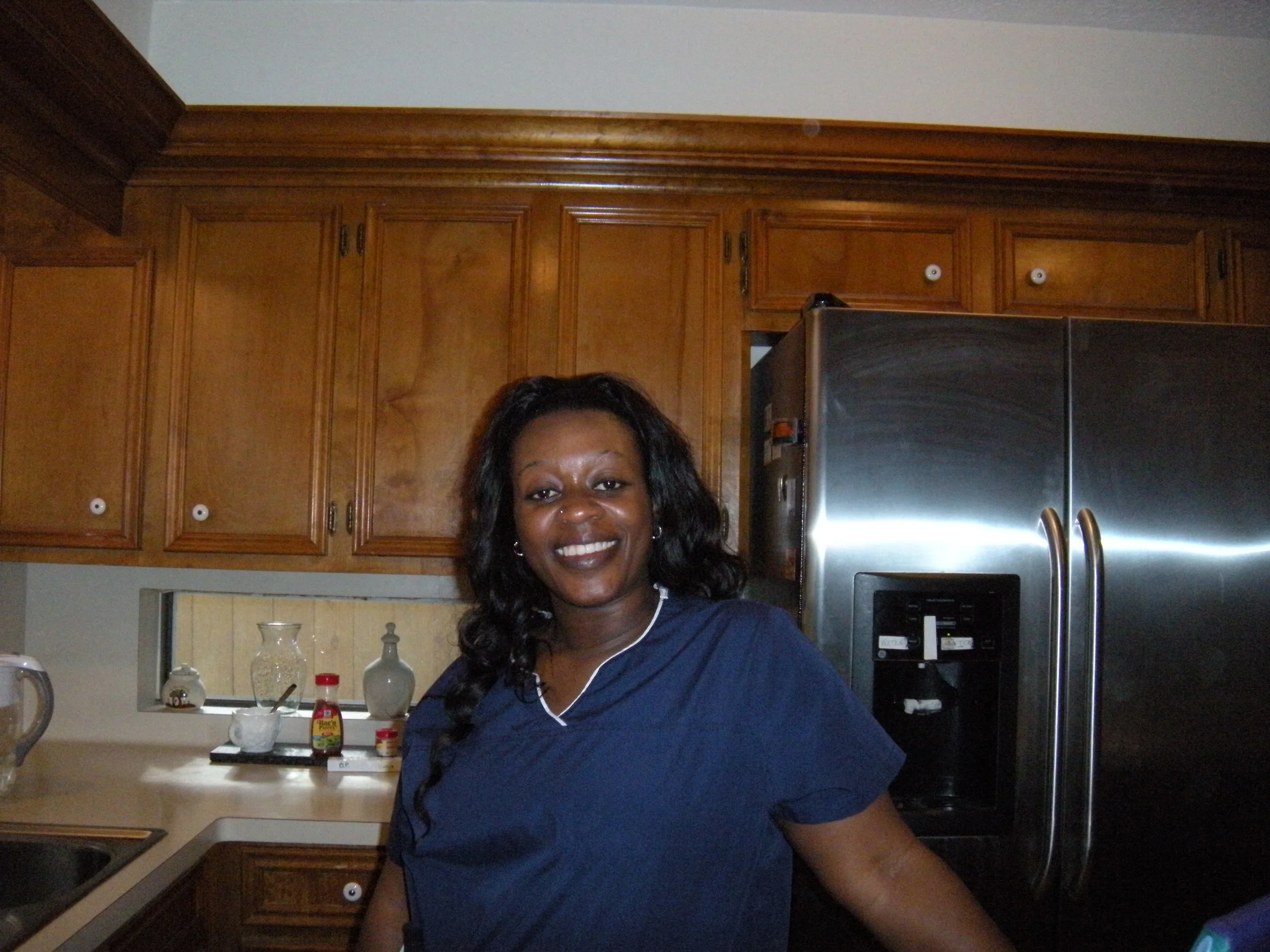
Diana, the three-times-a-week helper.  She's very good with Momma.  

Diana, the three-times-a-week helper.  She's very good with Momma.  

Hyatt Martini Bar

On some Fridays, after he gets off work, David likes me to meet him at the Hyatt martini bar on Scotts Road, where martinis are half-price every weekday until seven o’clock.  We like Grey Goose.  Also, they serve peppered cashews, which are yummy. 

Friday is their busiest evening and David likes me to get there before he does to get seats.  This is the plan today.  I change from my shorts to a skirt, comb my hair, and make the walk up the hill, down the other side, and across the elevated walkway.  But when I get to the bar all the seats are being saved.  There are several seating areas, each comprised of chair-and-couch arrangements, cozy pods for convivial drinking.  But today all the seats are draped with pashminas and sweaters, stacked with purses and packages; one chair even holds a pair of shoes—and huddled in the dim corner of that pod, a thin bare-footed woman gazes at me with guilty eyes, ordered by someone from work, or by the man she’s in a relationship with, to get here early and hold places—exactly, come to think of it, as the man I’m in a relationship with expects me to do. 

On the lower level, by the window, a table and two chairs come free.  I head that way, but before I reach it, another woman slides in, drapes a shawl over the remaining chair.  A waitress approaches and asks how she can help. 

“There’s no place to sit,” I tell her, feeling conspicuous, the only person standing in the whole place, unoccupied chairs all around.  She scans the area, then motions toward the empty stool right behind me at the bar.  The man who’s sitting beside the vacant stool sees me reach for it, pulls it close, and drapes his arm across the back of it.  “It’s being saved,” I say, my voice strident, whiny with disappointment and indignation.  All these chairs, held for people who aren’t here.  It’s not polite.  It’s not reasonable.  There should be a rule. 

The man who’s saving the chair turns and addresses me—“Here, you.  I don’t like the way you’re talking to this girl, like you think you’re better than her.”  Australian, buzz cut, blunt features.

“No,” I say.  “I don’t think I’m better.  I’d just like a place to sit.” 

“You’re a snob, sailing in here like royalty, making demands, talking down to the poor waitress.”  His face is flushed with belligerence, and his tongue is thick and slow. 

I’m hurt and humiliated in front of the several people looking on.  Do I deserve his censure?  I can be shrill when I’m impatient and frustrated, but I’m not mean-spirited, not ever.  I hate it when people think I’m less than what I am.  David enters the bar.  We order our martinis and drink them standing.  I tell him we’ll need to find a new martini bar.

Two weeks later I’m out walking my dog, Trip, and I see the man who called me a snob.  He approaches, his expression one of benign inquiry, no recognition whatsoever.  “Do you know where The Ardmore is?” he asks.  “Sure,” I tell him, pointing to the cluster of tall buildings up the way.  “That group of high rises, up the street and across.”  He says thanks and heads off in that direction.  

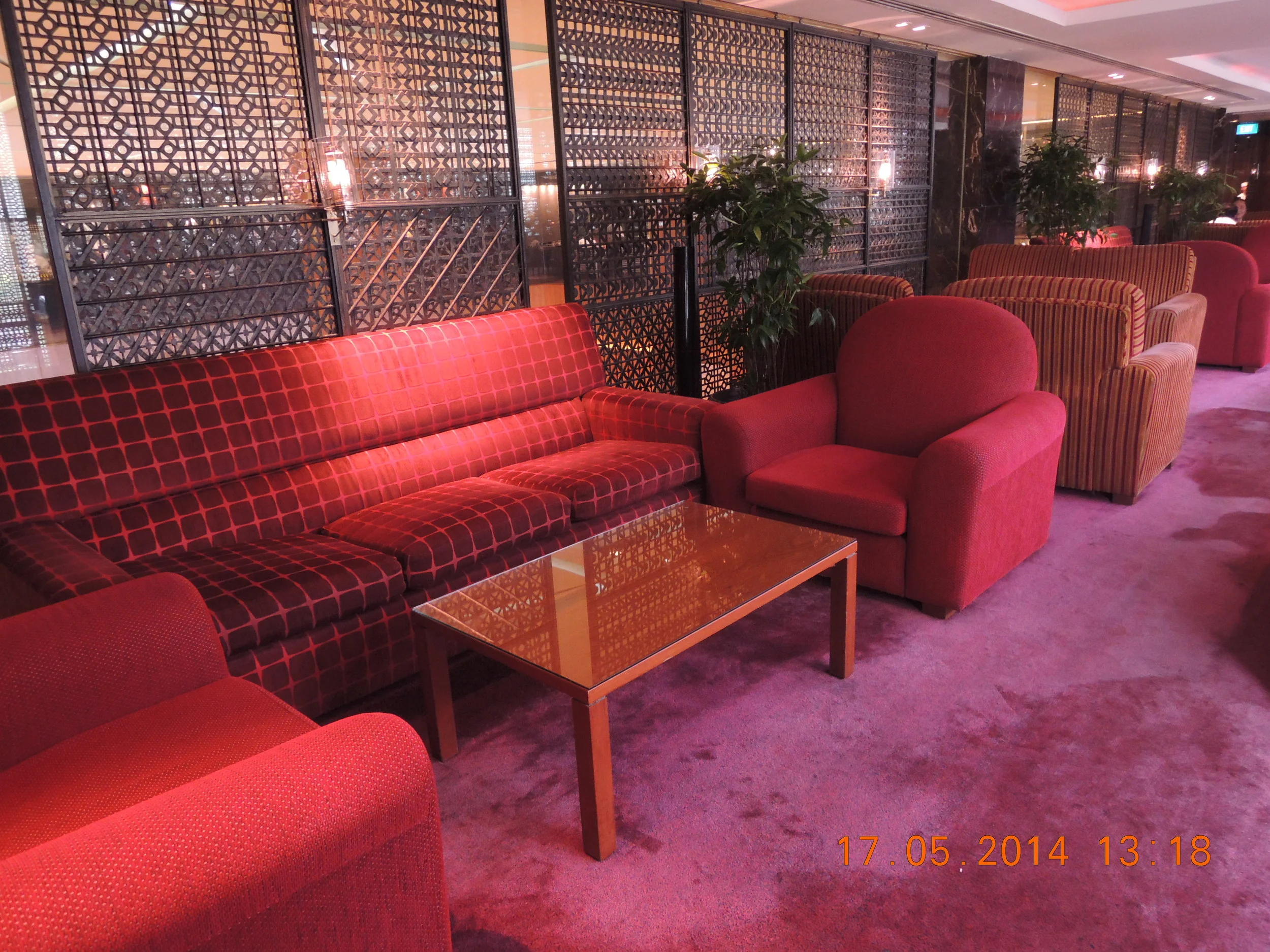
A cozy setting for a martini, when seats are available

A cozy setting for a martini, when seats are available

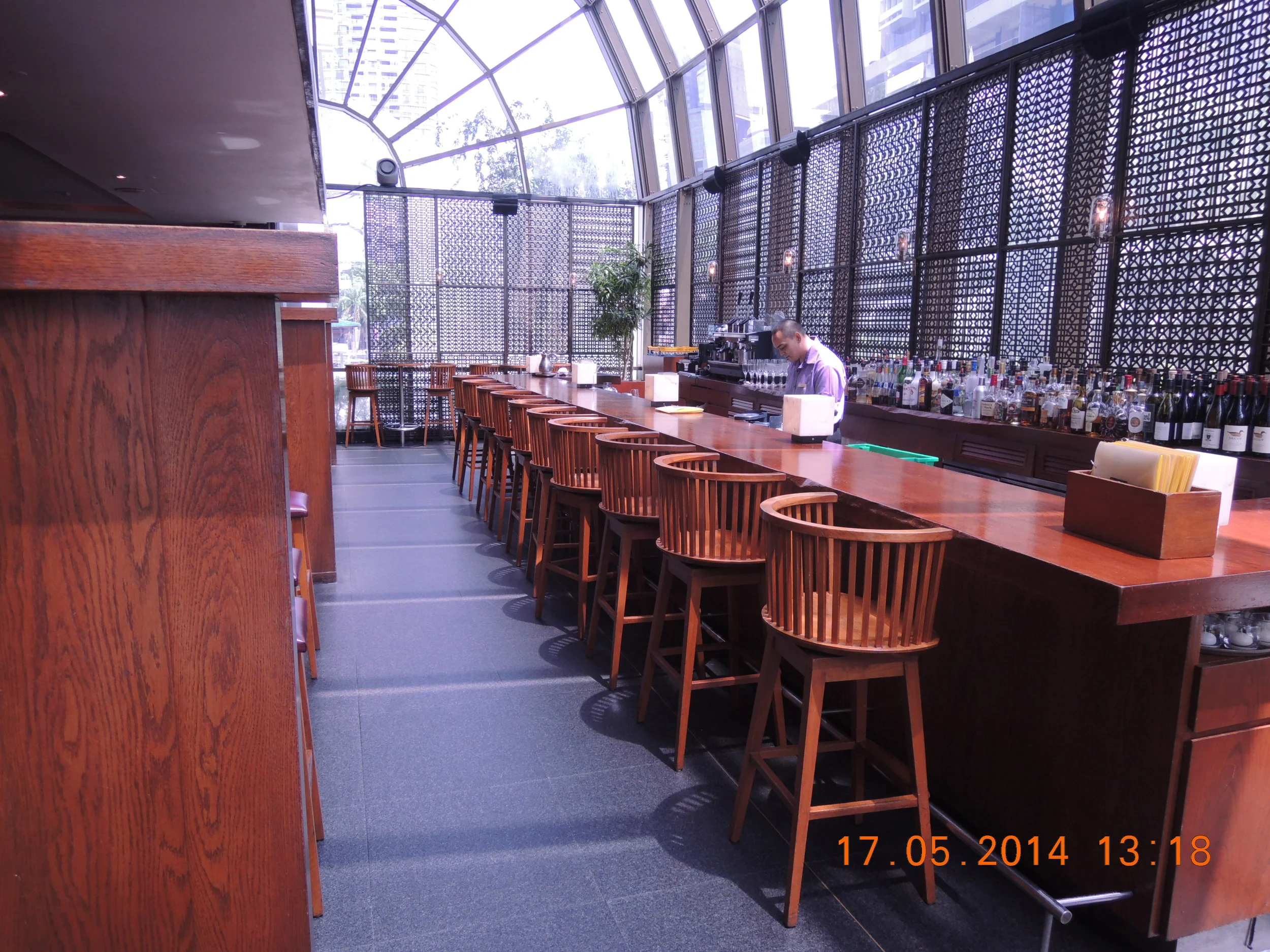
The bar extends over the sidewalk.

The bar extends over the sidewalk.

There it is from the outside, the gray-brown glass protrusion.  

There it is from the outside, the gray-brown glass protrusion.